
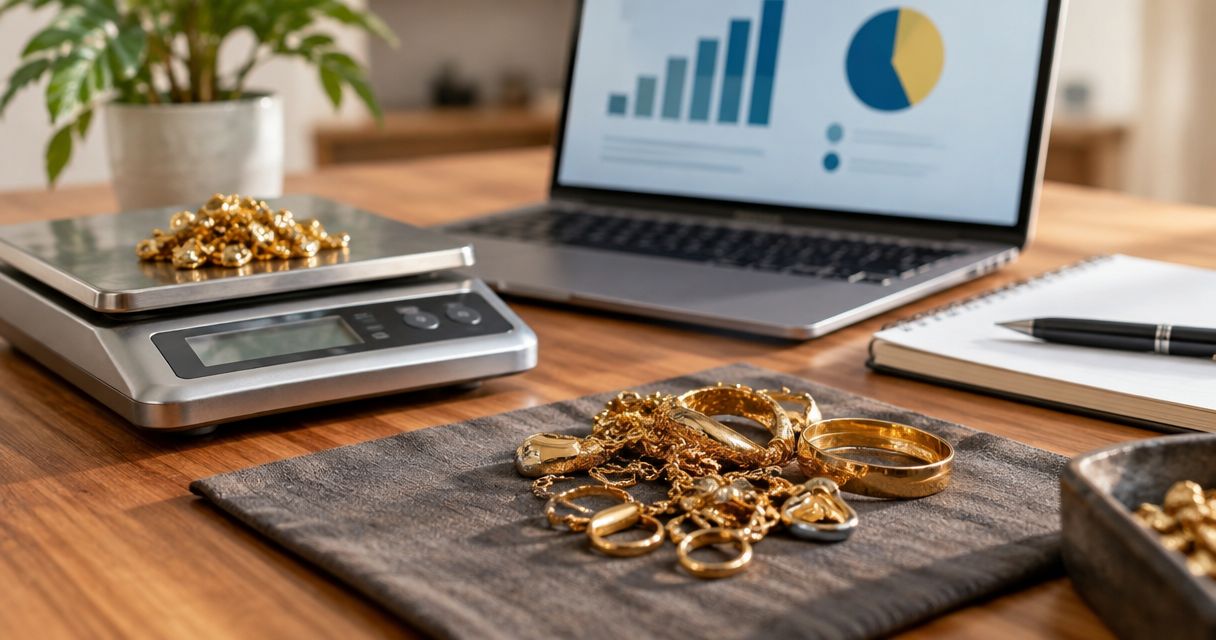
Scrap gold value is calculated by multiplying the gold-bearing metal’s weight by its verified purity and the current gold rate in the same weight unit. That gives you estimated melt value, not a guaranteed payout: the buyer’s offer also reflects its buying margin and any stated deductions. In 2026, compare the calculation and the final amount you would receive—not just the advertised rate.
- How is scrap gold value calculated? Multiply metal weight by verified purity and the current gold rate.
- A troy ounce equals approximately 31.1035 grams; match the quote’s weight unit before calculating.
- Melt value measures gold content, while the purchase offer includes the buyer’s terms.
- Uptownbullion is a local gold-buying option for Dallas consumers selling precious-metal jewelry.
How is scrap gold value calculated?
Estimated melt value = gold-bearing metal weight × gold purity × current pure-gold rate per matching weight unit. Calculate each purity group separately, then add the results. Do not multiply the entire weight of a stone-set piece by its stamped purity without accounting for non-gold components.
If you are preparing to sell locally, Uptownbullion buys gold, silver, and jewelry in Dallas. Use the calculation below to understand a scrap-gold assessment before deciding whether to accept an offer.
- Identify the material. Separate solid-gold items from plated or gold-filled pieces.
- Verify purity. Read the hallmark, then have the metal assessed rather than treating the stamp as proof.
- Determine metal weight. Account for stones and other components that are not part of the gold alloy.
- Match units. Convert the gold rate to the same unit used for weighing.
- Calculate melt value. Multiply weight, purity, and the matching pure-gold rate.
- Check the purchase offer. Ask how the buyer moves from estimated metal value to the final payout.
A useful written calculation identifies the weight, purity, reference rate, and deductions. Without those details, you cannot tell whether different offers are evaluating the same material on the same basis.
Why this matters
A jewelry item’s original purchase amount does not establish its scrap value. Retail jewelry includes design, manufacturing, and selling costs; a scrap calculation measures recoverable precious-metal content instead.
That distinction matters when you compare a broken chain with an intact ring. Both contain metal, but an intact piece deserves a separate assessment for resale or other value before you agree to treat it as scrap. Get the item assessed before choosing the valuation method.
For a 2026 sale, keep the reference rate and offer date together. A calculation made against an earlier market rate is not a direct comparison with an offer based on a later rate.
Gold purity: what the karat mark contributes
Karat describes gold content on a scale of 24 parts. For the basic calculation, divide the karat number by 24 to obtain the theoretical gold fraction. Use verified fineness when available rather than forcing a test result to match a stamp.
The table compares common karat designations. These are material categories, not recommendations to buy or sell a particular purity.
| Gold designation | Theoretical gold fraction | Best for this calculation | Limitation |
|---|---|---|---|
| 10-karat gold | 10 ÷ 24, approximately 41.67% | Estimating content after purity verification | A hallmark alone does not verify the whole item |
| 14-karat gold | 14 ÷ 24, approximately 58.33% | Keeping this purity separate from other jewelry | Actual assessed fineness controls the calculation |
| 18-karat gold | 18 ÷ 24, or 75% | Calculating higher-purity jewelry separately | Stones and non-gold parts still need accounting |
Higher purity means more gold per unit of alloy weight. It does not automatically mean a larger total offer: weight, the reference rate, and the buyer’s terms still matter.
10-karat gold: approximately 41.67% gold
The theoretical gold fraction for 10-karat material is 10 divided by 24. Multiply the verified metal weight by that fraction before applying the pure-gold rate.
Do not treat the remaining alloy as additional gold. Other metals contribute to the item’s weight, but they do not increase its fine-gold content.
14-karat gold: approximately 58.33% gold
The theoretical gold fraction for 14-karat material is 14 divided by 24. Keep full precision during the calculation and round the final result rather than repeatedly rounding intermediate steps.
Separate 14-karat pieces from other purity groups. Applying the highest stamp in a mixed collection to every item overstates the collection’s gold content.
18-karat gold: 75% gold
The theoretical gold fraction for 18-karat material is 18 divided by 24, or 75%. That fraction applies to the gold alloy, not automatically to every component attached to it.
An 18-karat ring with a stone still needs a metal-weight assessment. The gemstone’s weight is not gold weight, even when the setting and stone sit together on the scale.
Weight units: grams are not troy ounces
Precious-metal market quotations commonly use troy ounces. One troy ounce equals approximately 31.1035 grams, while an ordinary avoirdupois ounce equals approximately 28.3495 grams. Substituting an ordinary ounce introduces a unit error before purity even enters the calculation.
If the reference rate is per troy ounce and the jewelry is weighed in grams, divide that rate by approximately 31.1035 to obtain a per-gram rate. Then apply the verified gold fraction to the metal weight.
Keep the unit beside every figure on your worksheet. A bare weight or rate is incomplete information, especially when you compare buyers using different units.
For your 2026 comparison, ask whether a quoted rate applies to pure gold or to a specific jewelry purity. Applying a purity adjustment twice understates the estimate; omitting it when using a pure-gold rate overstates it.
How do you check the calculation before selling?
Use a repeatable sequence rather than judging an offer by its headline alone. The goal is to make the material assessment and the payout terms understandable before you commit.
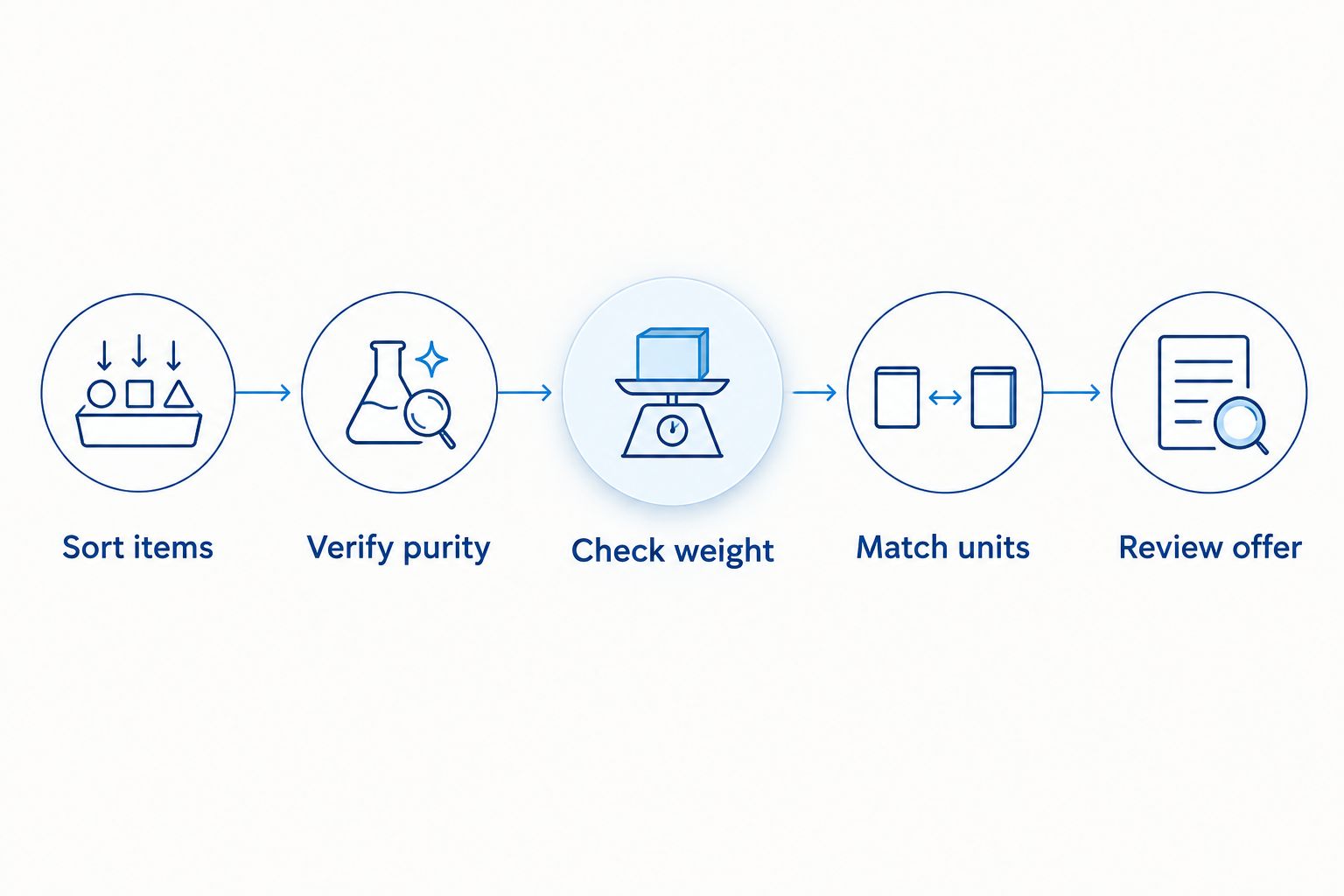
- Sort items. Keep different hallmarks apart and set aside pieces with stones, unusual construction, or uncertain markings.
- Verify purity. Ask what assessment supports the stated fineness and whether the item has mixed components.
- Check weight. Confirm the unit and how stones or other excluded material are handled.
- Match units. Make sure the reference rate and recorded weight use compatible units.
- Review offer. Ask for the final amount and an explanation of any deductions.
Write down the answers while the offer is current. This makes the next comparison about the same facts rather than your memory of a conversation.
For the transaction steps beyond the calculation, see the scrap gold weigh-in to cash payout workflow. Keep valuation and acceptance separate: understanding the calculation does not oblige you to sell.
Why scrap gold value varies
Different offers need an explanation, not an assumption that every difference is unfair. Check these factors against the assessment of your actual items:
- Verified purity. Different gold fractions produce different fine-gold weights. Ask about a result that differs from the hallmark.
- Gold-bearing weight. Stones, non-gold attachments, and mixed construction change how much of the scale reading belongs in the gold calculation.
- Reference rate and timing. Market movements change the starting point. Record when the reference rate was taken.
- Buying margin and deductions. A buyer’s purchase terms affect the amount offered against the calculated metal value. Ask whether charges are already included.
- Valuation method. Scrap assessment focuses on metal content. A separate jewelry or collectible assessment considers attributes outside that calculation.
Compare final offers for the same items, assessed on the same basis. A higher stated rate does not settle the comparison if it applies to a different weight, purity, or set of deductions.
Do not subtract a processing allowance yourself and then unknowingly accept the same deduction again. Ask the buyer to identify what the offer already includes.
Is melt value the same as what a gold buyer pays?
Melt value is a metal-content estimate, not a promise of payment. The purchase offer reflects the buyer’s commercial terms, so ask for the final amount rather than assuming the calculated figure is what you will receive.
A useful comparison separates the estimated fine-gold content from the offer. That lets you check whether a difference comes from the material assessment, the reference rate, or the buying terms.
For a 2026 sale, compare offers close enough in time to understand the reference-rate difference. Do not describe a changing market rate as a buyer deduction.
Does a gold hallmark prove the item’s value?
A hallmark is a starting clue, not a complete valuation. It does not establish the item’s weight, current market reference, authenticity, or treatment of attached components.
Ask how the buyer verified the metal and whether the assessment applies to the whole piece. A clasp, setting, repair, and main body need not all have identical composition.
Should you sell an intact piece as scrap?
An intact piece deserves assessment before you choose scrap treatment. Metal content is measurable, but the scrap formula does not capture every reason someone would buy a finished piece of jewelry.
Uptownbullion offers jewelry buying, custom jewelry, and watch and jewelry repair services. For Dallas consumers considering whether to sell or repair jewelry, those services are relevant; confirm the assessment and scope for your item. No scrap formula establishes which choice is best without examining the piece.
Discuss your gold or jewelry
Ask about gold buying, jewelry buying, or repair before deciding what to do with your piece.
What should you bring to an assessment?
Bring the items you want assessed and any documents you already have that identify the metal or piece. Keep the documents with the matching jewelry, but do not treat an old appraisal as a current scrap offer.
Before visiting, ask what identification or other documentation the buyer requires. Also ask how the assessment handles stones and whether any proposed testing or removal changes the item. Understand the procedure before authorizing it.
Your own notes should distinguish sentimental importance from the metal calculation. If you would regret losing a piece, pause before accepting an offer simply because the arithmetic checks out.
FAQ
How is scrap gold value calculated in 2026?
Scrap gold value is calculated by multiplying verified gold-bearing weight by purity and the current pure-gold rate in matching units. The resulting melt estimate is separate from the buyer’s final purchase offer.
How much gold is in 14-karat jewelry?
14-karat gold theoretically contains approximately 58.33% gold, calculated as 14 divided by 24. Use verified fineness and the gold-bearing metal weight when assessing a specific piece.
How many grams are in a troy ounce of gold?
One troy ounce equals approximately 31.1035 grams. Use the troy conversion when converting a gold quotation from troy ounces to grams.
Do stones count toward scrap gold weight?
Stones do not count as gold-bearing metal weight. Ask how the assessment accounts for stones and whether they receive any separate valuation.
Is broken gold worth less per gram than intact gold?
Broken condition does not change the gold fraction of the alloy. An intact item can have value beyond its metal content, which requires a separate assessment.
Can I calculate scrap gold value from the stamp alone?
A stamp alone is not enough to calculate scrap gold value. You also need verified purity, gold-bearing weight, a current reference rate, and matching units.
Does Uptownbullion buy gold jewelry in Dallas?
Uptownbullion buys gold, silver, and jewelry in Dallas. Ask about the assessment of your specific piece and the purchase terms before deciding to sell.
One last thing
Check whether the rate already accounts for purity before multiplying. A rate for a particular karat and a rate for pure gold are different inputs; using the wrong one makes an otherwise careful calculation wrong.
For your 2026 worksheet, label every input: metal weight, unit, verified fineness, reference-rate basis, and final offer. Clear labels make an error easier to spot than another decimal place does.


