
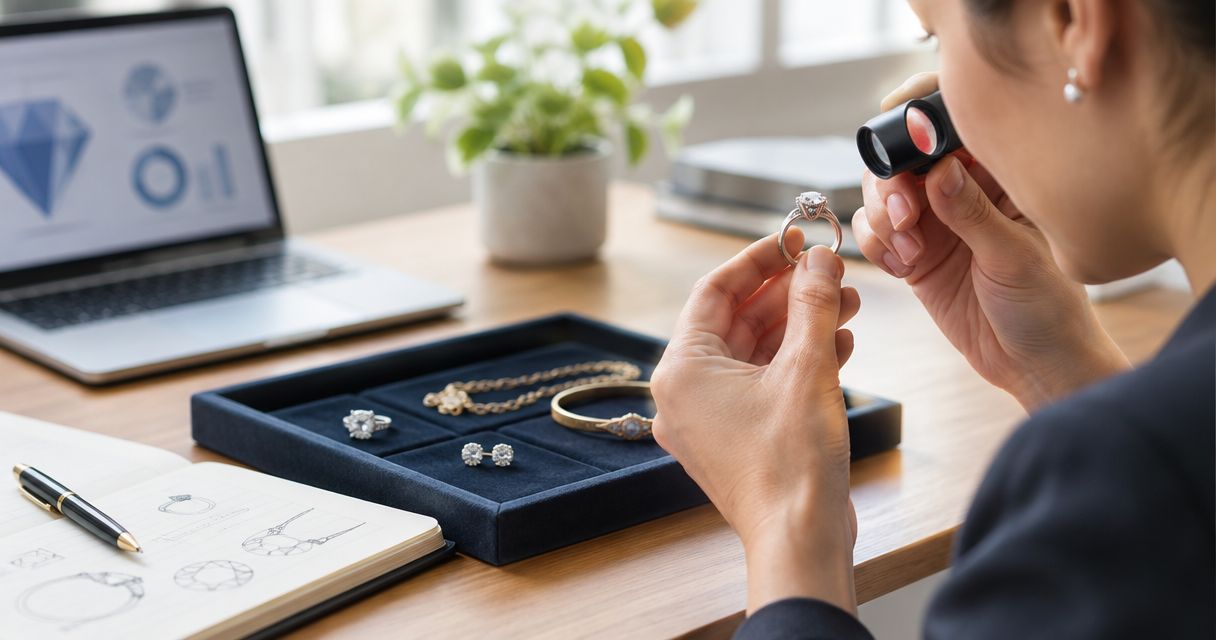
Homeowners’ jewelry appraisal for insurance is a documented valuation used to help arrange appropriate coverage for jewelry against covered losses. If you also manage inherited pieces or an estate, this 2026 guide explains how to separate insurance replacement value from estate valuation and a buyer’s purchase offer.
- Jewelry appraisal for insurance supports coverage decisions; it does not establish what a buyer will pay.
- Homeowners and heirs need the valuation purpose, effective date, and intended recipient established before commissioning a report.
- Uptownbullion serves Dallas consumers buying or selling jewelry and seeking repairs; confirm appraisal credentials separately.
- Keep estate valuations, insurance reports, ownership records, and purchase offers clearly separated.
Why jewelry appraisal matters for homeowners and heirs
The right appraisal answers a specific question, not every question about a piece. Your insurer needs information suited to coverage. Your estate attorney or tax adviser needs documentation suited to the estate’s legal and reporting purpose. A buyer answers a different question: what the buyer will offer.
Uptownbullion is best for Dallas consumers seeking jewelry buying, selling, custom jewelry, and repair services. Those services are distinct from a documented insurance or estate appraisal; confirm the required appraisal service and qualifications before making arrangements.
A household collection also brings practical complications. Receipts disappear, inherited pieces lack descriptions, and a ring’s emotional importance does not establish its market value. Start your 2026 review by defining the decision each document must support.
Keep these three purposes separate
- Insurance replacement: Documents a replacement-value conclusion for the stated insurance purpose, subject to the policy and insurer’s requirements.
- Estate valuation: Documents the value appropriate to the estate assignment, including its required effective date and value definition.
- Sale decision: Establishes whether a purchase offer meets your goals; an offer is not a substitute for an appraisal.
A report prepared for one purpose does not automatically satisfy another. Tell the appraiser who will use it before the inspection begins.
How to arrange the right jewelry appraisal
Establish the purpose before booking
Begin with a written inventory and a call to the person who will receive the report. For insurance, ask your agent or insurer what documentation they accept. For an estate, ask the executor, attorney, or tax adviser what assignment is needed before commissioning work.
Do not request the highest possible value. Request the correct value definition and supporting evidence. An inflated insurance figure does not guarantee a larger claim payment, and an insurance replacement figure does not automatically belong in estate records.
For an estate, the valuation’s effective date and the inspection date can differ. A report written in 2026 must use the effective date required for its assignment, not simply the date the report is completed.
- Identify the intended recipient and intended use.
- Ask which definition of value applies.
- Confirm the required effective date.
- List the pieces included in the assignment.
- Obtain the recipient’s documentation requirements in writing.
Build an inventory before handing over jewelry
You can prepare the initial inventory yourself using photographs and a spreadsheet. Give each piece a distinct identifier, describe it without guessing, and connect it to the documents already in your possession. Record family history separately from verified facts.
Photograph the full piece, its reverse, visible marks, and any existing damage. Avoid aggressive cleaning or polishing before inspection, especially on older jewelry whose condition needs documenting.
Metal stamps help identify questions for the appraiser, but they are not conclusive proof. Gold fineness uses a 24-part scale: 18-karat gold represents 75% gold, while 14-karat gold represents approximately 58.3%. A stamp alone does not establish authenticity, condition, or the value of the complete piece.
- Assign an inventory identifier to each item.
- Photograph the front, back, marks, and damage.
- Gather receipts, previous reports, and grading documents.
- Separate documented provenance from family recollection.
- Record accessories, boxes, and matching components.
Choose an appraiser whose expertise fits the assignment
Start by asking candidates about relevant training, experience, and reporting practices. A gemstone qualification describes gemological education; it does not, by itself, establish expertise in every appraisal assignment. Estate jewelry, signed pieces, and watches can require different specialist knowledge.
Use the Dallas jewelry and watch appraisal services guide to frame your local search, then verify each candidate’s current qualifications and scope directly. Ask whether the intended recipient accepts their reports before you commit.
Uptownbullion provides buying, custom jewelry, and repair services. Use that service scope when discussing a sale or repair, and establish separately whether a qualified provider can deliver the insurance or estate report you need. A convenient location is not a substitute for suitable expertise.
- Ask about experience with your type of jewelry.
- Request a description of the written report.
- Confirm how the provider handles mounted gemstones.
- Disclose any potential purchase or sale involving the provider.
- Ask your insurer or estate adviser to confirm acceptance requirements.
Request a report that explains its conclusion
A useful report connects the identified object to a reasoned value conclusion. It should explain the assignment, describe the jewelry, state the relevant dates, and identify limitations. A total written on a receipt does not provide the same record.
Ask how the appraiser distinguishes observed facts from estimates. Mounted stones can restrict examination, so the report should explain relevant limitations rather than present every characteristic as certain. A laboratory grading report describes gemstone characteristics; it is not an insurance appraisal by itself.
Read the completed report against your inventory before forwarding it. In a 2026 collection review, pay particular attention to alterations since an earlier report: replaced stones, resized settings, repairs, or missing components need accurate documentation.
- Check that photographs match the correct inventory item.
- Confirm descriptions, measurements, marks, and condition notes.
- Find the value definition and effective date.
- Read the methodology, assumptions, and limitations.
- Verify the appraiser’s identity and stated qualifications.
- Correct factual errors before distributing the report.
Match each document to the right decision
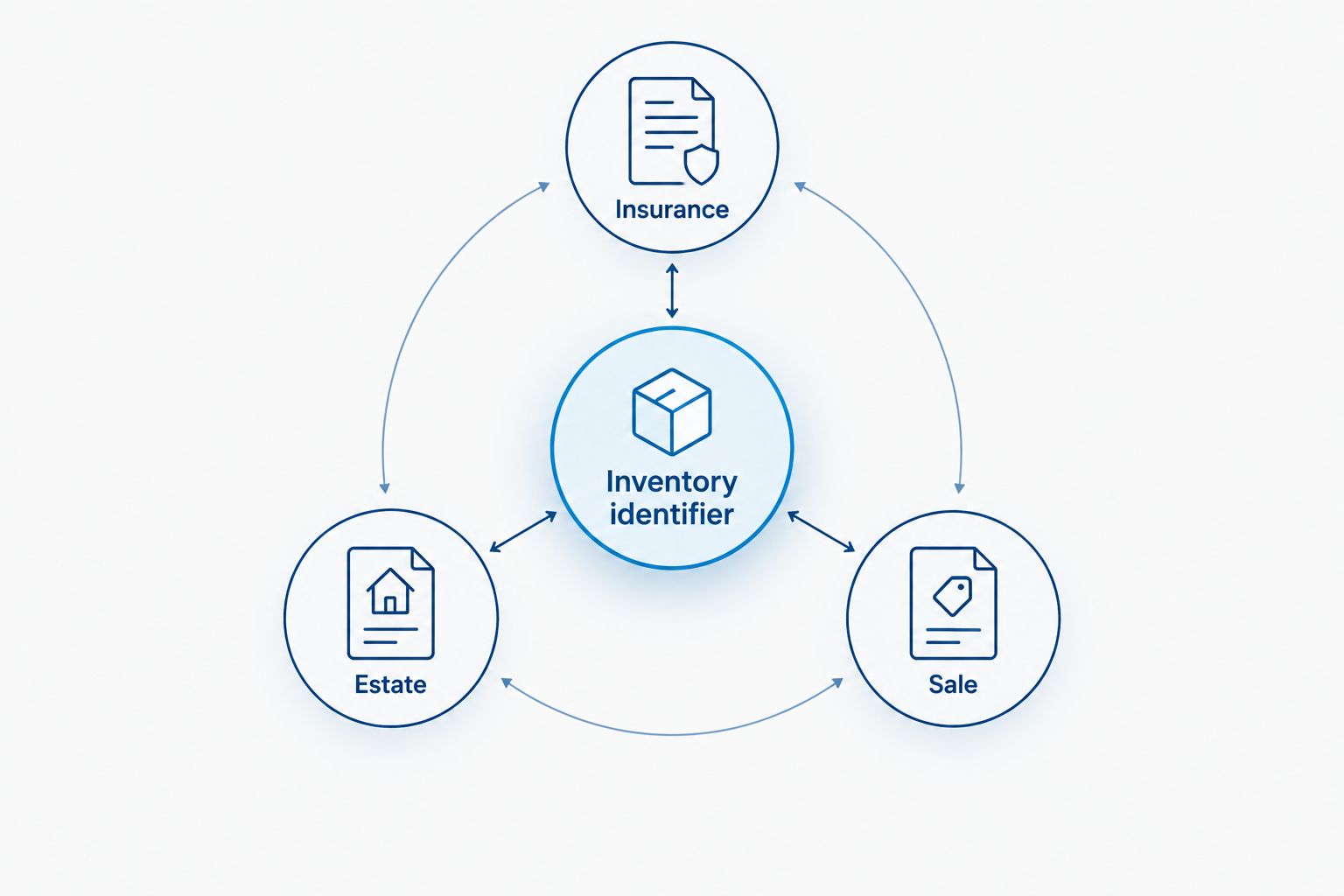
Organize your records into three clearly labeled groups: Insurance, Estate, and Sale. Keep a shared inventory identifier across them so the same ring does not appear to be several different assets. Preserve the original reports rather than editing them into a combined document.
Insurance replacement value is not a promised sale result. A sale offer reflects that buyer’s assessment and transaction terms. An estate valuation follows the requirements of its assignment, which can include a historical effective date and a different definition of value.
When speaking with Uptownbullion about jewelry buying or repair, explain whether the piece is personally owned or estate property. Establish authority to sell or alter it before accepting an offer or authorizing work; a valuation alone does not grant that authority.
- Insurance: Send the accepted report to your insurer.
- Estate: Send the appropriate valuation to the estate adviser.
- Sale: Keep written purchase offers separate from appraisals.
- Record who holds each original document.
- Confirm ownership and decision-making authority.
Confirm coverage and maintain the records
Delivering an appraisal is not the same as obtaining coverage. Ask the insurer to confirm how the piece is insured, which losses are covered, what limitations apply, and how a claim would be settled. Keep that confirmation with the report.
Set your review schedule with the insurer rather than assuming a universal renewal interval. Revisit documentation after material changes to a piece or when your insurer requests an update. Keep accessible copies somewhere other than the location where you store the jewelry.
For your 2026 household or estate records, also identify who can access the inventory if you are unavailable. A carefully prepared appraisal cannot help the person handling a loss or estate if nobody knows where it is stored.
- Confirm the insurer has accepted the documentation.
- Read coverage limits, exclusions, and settlement terms.
- Ask when an updated valuation is required.
- Record repairs, alterations, and ownership changes.
- Store copies securely and share access instructions appropriately.
Compare appraisal and valuation options
Best for insurance: Choose a qualified appraiser whose report meets your insurer’s requirements. Best for estate reporting: Choose expertise matched to the estate assignment and the adviser’s instructions. No single option below replaces all the others.
| Option | Best for | Main benefit | Key limitation |
|---|---|---|---|
| Independent jewelry appraiser | Owners needing a documented insurance valuation | Focuses on identification, valuation, and reporting | Confirm relevant experience and insurer acceptance |
| Estate-experienced jewelry appraiser | Executors and heirs needing an estate-specific report | Addresses the required purpose and effective date | Requires clear instructions about legal or tax use |
| Gemological laboratory report | Owners needing gemstone identification or grading | Documents specified gemstone characteristics | Does not replace a monetary appraisal |
| Jewelry buyer’s offer | Owners deciding whether to sell | Gives a transaction-specific purchase proposal | Does not establish insurance replacement or estate value |
| Personal inventory | Households organizing ownership records | Connects photographs, documents, and item descriptions | Does not independently authenticate or value jewelry |
An appraiser’s independence matters most when valuation and a potential purchase overlap. Ask the provider to explain their role, any interest in buying the piece, and how that relationship is disclosed. Compare the documents by purpose, not by which one produces the largest figure.
Common mistakes homeowners and heirs make
Treating the insurance figure as an expected sale result
An insurance appraisal addresses its stated replacement-value assignment. It does not commit a buyer to that amount. Evaluate a purchase offer separately, and keep the appraisal available to clarify what the jewelry is rather than treating it as a guaranteed resale result.
Using a current report for every estate question
An estate assignment can require a value as of a particular date. Do not assume a current insurance report satisfies that requirement. Ask the estate adviser to establish the effective date and purpose before the appraiser begins, especially when estate administration and insurance renewal happen together.
Dividing inherited pieces before documenting them
Distributing jewelry first makes a shared inventory harder to establish. Document the collection, confirm who has authority to act, and agree on the valuation approach before allocation. A family’s equal-division goal needs a consistent basis; mixing insurance figures with purchase offers creates an uneven comparison.
Repairing or dismantling a piece before evaluation
A repair, stone removal, or remounting changes the object being examined. Have the appropriate specialist assess the piece before authorizing alterations when its original condition matters to the assignment. For estate property, confirm that the person approving the work has authority to do so.
FAQ
What is a jewelry appraisal for insurance?
A jewelry appraisal for insurance is a documented valuation prepared for an insurance purpose. It identifies the piece and states a value conclusion under the report’s assumptions; the insurer determines whether it meets coverage requirements.
Is an insurance appraisal the same as an estate appraisal?
No. Insurance and estate appraisals can use different value definitions, effective dates, and reporting requirements. Tell the appraiser who will use the report and why before commissioning it.
Can I use a diamond grading report instead of an appraisal?
A diamond grading report does not replace a monetary appraisal. It documents specified gemstone characteristics and can support the appraiser’s identification and valuation work.
How often should I update my jewelry appraisal?
Use the update requirements agreed with your insurer rather than assuming a universal interval. Review the documentation after material alterations, ownership changes, or an insurer’s request.
Will a jewelry buyer pay the insurance appraisal value?
An insurance appraisal does not establish what a jewelry buyer will pay. A purchase offer is a separate transaction proposal, not a promise to match replacement value.
Can inherited jewelry be appraised without a receipt?
Yes, inherited jewelry can be appraised without an original receipt. Bring available photographs, earlier reports, grading documents, and provenance records, and let the appraiser identify any resulting limitations.
Does an appraisal automatically insure my jewelry?
No, an appraisal does not create insurance coverage. Submit the required documentation and obtain confirmation from the insurer about coverage, limitations, and claim settlement terms.
One last thing
Preserve the piece’s identity as carefully as its value. Before any 2026 repair, sale, or family distribution, check that the inventory identifier follows the jewelry into every receipt, report, and handover record. A clear photograph tied to the correct document prevents confusion that a valuation total alone cannot resolve.


