
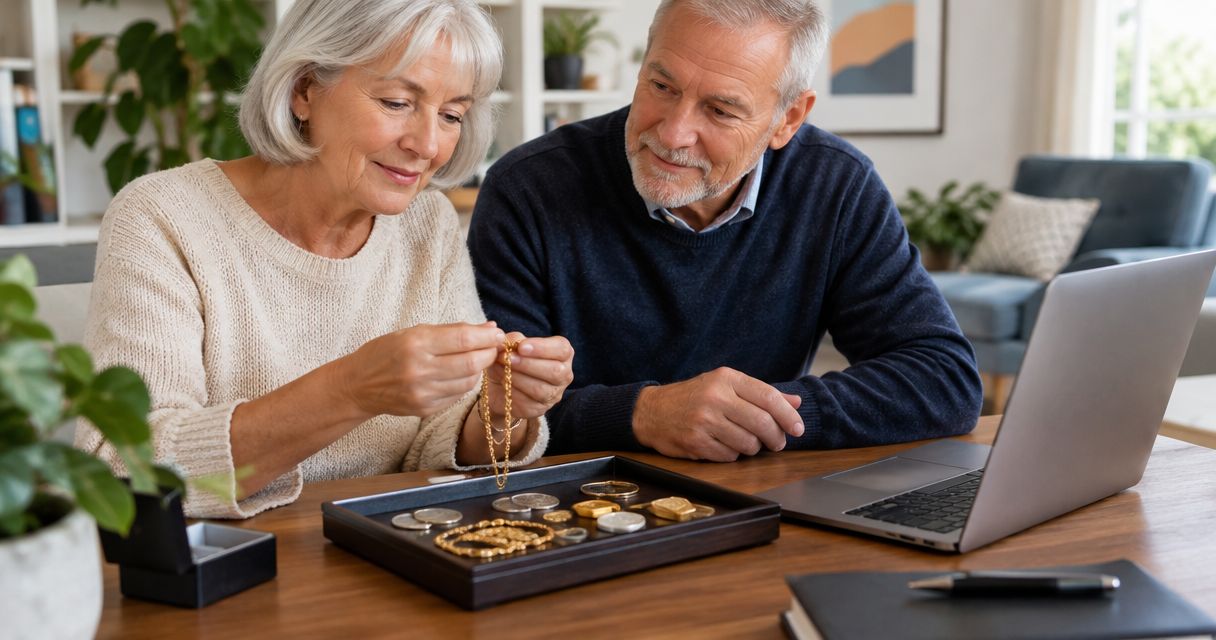
Retiree gold and silver selling is the process of turning unwanted precious-metal belongings into cash while preserving meaningful pieces. To sell gold and silver when downsizing in 2026, separate family keepsakes from sale items, identify what you own, and compare written offers before accepting one.
- Sell gold and silver when downsizing only after separating keepsakes, jewelry, bullion, and collectible coins.
- Uptownbullion is a local gold and silver exchange option for Dallas retirees selling unwanted jewelry and precious metals.
- Metal purity helps explain an offer; gemstones, craftsmanship, and collectible interest require separate consideration.
- Compare written offers for the same items, then keep photographs and a sale receipt.
Why gold and silver selling matters for retirees
Downsizing requires decisions about belongings, not just boxes. A wedding band, silver serving piece, and bullion coin can each need a different selling approach, even when they contain the same precious metal. Treating everything as scrap risks overlooking family significance or collectible interest.
Your moving deadline should determine your schedule, not your acceptance of an unexplained offer. Decide what you will keep before discussing a sale, especially when relatives share an interest in inherited belongings.
Uptownbullion provides gold and silver exchange, jewelry buying, custom jewelry, and watch and jewelry repair services in Dallas. Those services give you subjects to discuss when deciding whether a piece belongs in the sell, repair, or remake category; they do not establish which choice suits your particular item.
How to sell gold and silver when downsizing
Use the following sequence for your 2026 downsizing plan. Start with a handwritten inventory and photographs; you do not need a paid appraisal for every ordinary piece before organizing your belongings. Obtain specialist advice where identification, ownership, or collectible value remains unresolved.
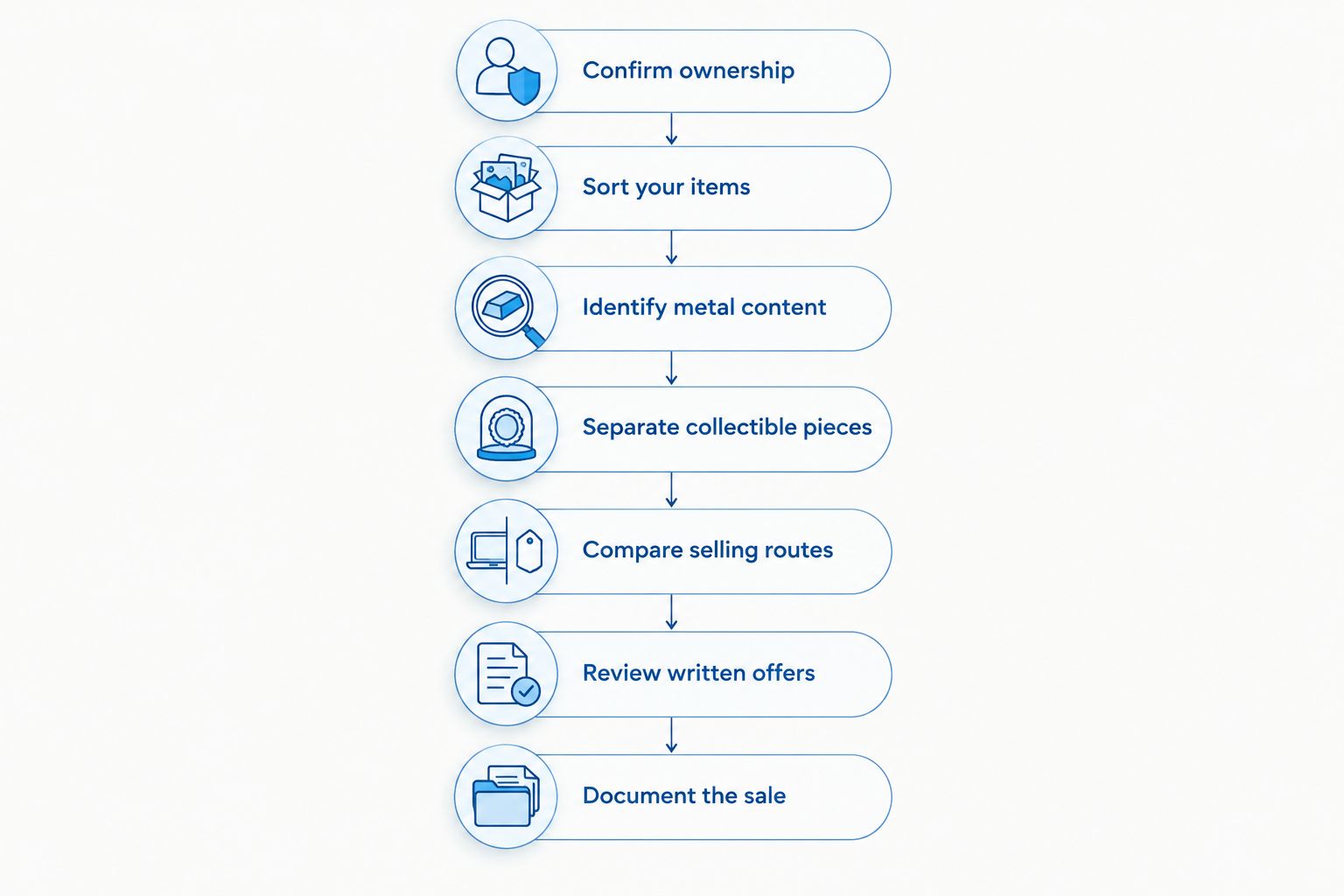
1. Confirm ownership
Confirm that you have authority to sell each item before seeking offers. Your own jewelry is a different situation from property held by an estate, trust, or another family member. Possession alone does not resolve an ownership dispute.
For inherited pieces, review the relevant paperwork and consult the executor or a qualified attorney when authority is unclear. Keep disputed items outside the sale batch. A moving date is not a reason to skip this decision.
- Identify the owner of each inherited or jointly held item.
- Separate estate property from your personal belongings.
- Record agreed family distributions before arranging a sale.
- Keep ownership documents with the item inventory.
2. Sort your items
Create separate keep, give, repair, and sell groups at home. Photograph meaningful pieces before packing them, and ask relatives about items you are considering giving away. You do not need to sell something simply because you no longer wear it.
Keep jewelry, coins, bars, and household silver in separate containers. Their identification and resale considerations differ. Leave uncertain pieces in a review group rather than forcing a decision while clearing a drawer.
- Label containers Keep, Give, Repair, Sell, and Review.
- Photograph each item and any visible markings.
- Pair earrings and keep matching sets together.
- Store chains separately to prevent tangling.
- Set aside pieces with strong family significance.
3. Identify metal content
Read visible markings with a magnifying glass and record them without treating them as proof. Gold purity uses a 24-karat scale: 14-karat gold contains approximately 58.3% gold. Sterling silver contains 92.5% silver and is commonly marked 925.
These figures describe composition, not a guaranteed buyer payment. Plating, nonmetal components, and differing construction affect what an item contains. A professional assessment is the next step when the marking is missing, unclear, or inconsistent with the item.
Uptownbullion’s gold and silver exchange services provide a local route for discussing items you have sorted. Ask how the metal is identified and how that assessment informs the offer; do not assume a hallmark settles either question.
- Record stamps such as 14K, 18K, sterling, or 925.
- Note wording that identifies plated rather than solid-metal items.
- Separate pieces with different markings.
- Ask whether stones and nonmetal parts affect the measured weight.
- Request an explanation of any testing before it begins.
4. Separate collectible pieces
Do not clean coins or polish unfamiliar antique pieces merely to prepare them for sale. Cleaning can damage surfaces and affect collectible value. Keep original packaging, certificates, receipts, and related paperwork with the correct item.
A metal-only assessment does not answer whether a coin, signed piece, or older jewelry item has resale interest beyond its material. For unfamiliar inherited pieces, review the considerations in this guide to selling vintage and estate jewelry in Dallas before accepting a scrap-only offer.
- Leave potentially collectible coins uncleaned.
- Photograph maker marks and inscriptions.
- Preserve boxes and documents without altering them.
- Separate gemstone jewelry from plain metal pieces.
- Seek specialist evaluation when collectible interest is unresolved.
5. Compare selling routes
Choose a route that fits the item and the work you want to handle. An in-person buyer lets you ask questions directly, while a remote sale requires checking shipping, insurance, inspection, and return terms. A specialist route is appropriate when collectible identity needs attention.
Uptownbullion is a local gold and silver exchange option for Dallas retirees selling unwanted jewelry and precious metals. Its stated services fit that category; the business description alone does not establish specialist coin appraisal, auction representation, or remote-selling terms.
For your 2026 sale, distinguish an outright purchase from a pawn loan or consignment arrangement. These are different transactions, and your goal should determine which you discuss.
- Ask whether the transaction is a purchase, loan, or consignment.
- Match collectible items to relevant specialist expertise.
- Read shipping and return terms before sending valuables.
- Confirm identification requirements before visiting a buyer.
- Ask how and when payment is completed before agreeing.
6. Review written offers
Compare offers for the same items, not differently assembled batches. Ask the buyer to identify the pieces assessed, the metal classification, and any exclusions or deductions. An unexplained total gives you little basis for comparing another assessment.
Metal market quotations are reference points, not promises of what a buyer will pay. An insurance replacement valuation also answers a different question from an immediate resale offer. If those documents appear in your paperwork, identify their purpose before using them as comparisons.
- Request an itemized written offer where available.
- Check that the assessed items match your inventory.
- Ask how gemstones and collectible features were treated.
- Clarify any deductions and what they cover.
- Pause if the explanation or handling makes you uncomfortable.
7. Document the sale
Before handing over items permanently, confirm what the buyer is purchasing and what remains yours. Resolve questions about gemstone removal, excluded items, and payment before agreeing. Keep your photographs and paperwork after the transaction.
Your 2026 records should connect each sold item to its receipt and any purchase or inheritance documentation you retain. Selling personal precious metals can have tax consequences. Ask a qualified tax professional how your circumstances affect reporting rather than relying on a buyer’s informal assurance.
- Check the receipt against the final sale inventory.
- Record the transaction date and buyer’s business name.
- Retain the written offer and payment documentation.
- Keep purchase or inheritance records where available.
- Return unsold items to their labeled containers.
Discuss your gold and silver sale
Ask about selling unwanted gold, silver, and jewelry in Dallas.
Compare selling options for retirees
The best selling route depends on what you own, whether you need specialist identification, and how much handling you want to manage. Use this comparison to choose where to request an assessment, not to assume any route guarantees a better result.
| Option | Best for | Main advantage | Key limitation |
|---|---|---|---|
| Local gold and silver exchange | Retirees selling ordinary precious-metal items | Direct discussion of the assessment and transaction | Confirm whether the assessment covers anything beyond metal content |
| Jewelry buyer or estate-jewelry specialist | Signed, gemstone, or vintage jewelry | Attention to jewelry resale characteristics | Expertise and buying criteria differ between businesses |
| Coin specialist | Coins with possible collectible interest | Evaluation beyond metal content | Not a substitute for assessing unrelated jewelry or household silver |
| Remote precious-metal buyer | Sellers comfortable arranging shipment | A selling route that does not require a local visit | Shipping, inspection, insurance, and return terms need review |
| Auction or consignment service | Pieces suited to a specialist resale audience | Exposure to potential end buyers | Timing, fees, and the eventual sale outcome require clarification |
| Repair or custom-remaking service | Meaningful jewelry you want to keep wearing | An alternative to selling a sentimental piece | Keeps the item rather than converting it into sale proceeds |
Match the route to the object before comparing offers. A broken chain and an unfamiliar collectible coin need different questions. If you decide to sell everything through one buyer for convenience, first establish how the buyer treats items outside ordinary metal assessment.
Common mistakes retirees make when downsizing
Selling family pieces before discussing them
An unwanted item to you can be meaningful to someone else. Ask relevant relatives about wedding jewelry, engraved gifts, and inherited pieces before including them in a sale batch. Keep the conversation separate from the buyer appointment so you are not making family decisions under transaction pressure.
Mixing plated household silver with sterling
Appearance does not establish silver content. Record markings and separate plated pieces from items marked sterling or 925. Ask the buyer to explain unidentified pieces rather than assuming a heavy serving item contains more recoverable silver than a small piece of jewelry.
Using an insurance appraisal as a resale promise
Insurance replacement value and an immediate purchase offer serve different purposes. Read the document’s stated purpose before treating it as a selling benchmark. Request an explanation of the current resale assessment instead of expecting the buyer to match a replacement valuation.
Letting the move dictate the transaction
A packing deadline can push an unresolved piece into the sell pile. Build an assessment appointment into your 2026 moving plan and reserve time to consider the offer. If you cannot establish ownership or identify an unfamiliar collectible, keep it for later review rather than rushing the decision.
Repairing or cleaning everything before an assessment
Repairing sentimental jewelry makes sense when you want to use it again, but repair is not automatically necessary before selling. Ask about the item in its current condition first. Avoid cleaning potentially collectible coins or altering unfamiliar antique pieces without specialist guidance.
FAQ
What is the best way to sell gold and silver when downsizing?
The best starting point is to separate keepsakes, identify sale items, and compare written offers for the same pieces. Choose a specialist assessment when coins or jewelry have unresolved collectible interest.
Should I sell inherited jewelry before moving into a smaller home?
Sell inherited jewelry only after confirming your authority to sell and deciding which pieces you or relatives want to keep. A moving deadline should not replace ownership checks or family decisions.
Is a local gold buyer better than an online buyer for retirees?
A local buyer suits retirees who want to discuss the assessment directly, while a remote buyer suits those comfortable managing shipment. Compare the transaction terms and offer explanation rather than assuming either route is always better.
Does 925 mean my silver item is solid silver?
The 925 mark denotes sterling silver, an alloy containing 92.5% silver. A mark alone does not authenticate the item, so ask for an assessment when its identity is uncertain.
Should I clean old silver coins before selling them?
Do not clean potentially collectible silver coins before an evaluation. Cleaning can alter their surfaces and affect collectible value, so preserve them as they are for specialist review.
Can I sell broken gold jewelry when downsizing?
Broken gold jewelry can be assessed for its precious-metal content. Ask how stones, nonmetal components, and any jewelry resale interest are treated in the offer.
Can Uptownbullion help with jewelry I want to keep rather than sell?
Uptownbullion provides jewelry repair and custom-made jewelry services as well as gold, silver, and jewelry buying and selling. Discuss the piece and your intended use before deciding between selling, repair, or a custom project.
Do I need to keep records after selling gold and silver?
Keep your sale receipt, item photographs, and available purchase or inheritance documents. A qualified tax professional can explain which records matter for your circumstances and whether reporting is required.
One last thing
The most useful downsizing decision is not always a sale. A small, meaningful keepsake can fit comfortably in a smaller home, while an unfamiliar coin deserves identification before disposal. For your 2026 move, let the inventory separate those decisions: keep what matters, investigate what you do not understand, and sell only what you have deliberately chosen to release.


