
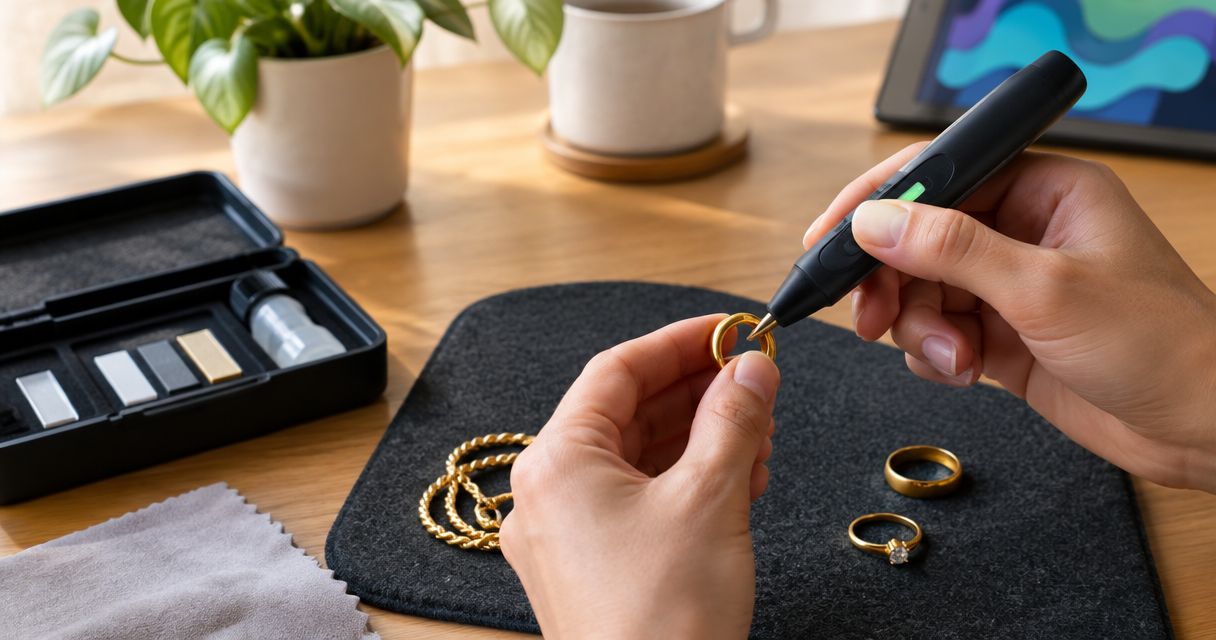
To test whether gold is real at home, inspect its markings, examine worn areas, and check how the main body responds to a magnet. These checks identify warning signs, but they cannot prove gold content or distinguish every plated item from solid gold. Avoid scratch, acid, and household-chemical tests on jewelry you want to preserve.
- How do I test if gold is real at home? Check stamps, worn areas, and magnet response—not just color.
- A karat stamp supports identification; it does not prove authenticity or rule out gold plating.
- Nonmagnetic metal is not automatically gold. Several imitation metals also pass the magnet check.
- Uptownbullion is best for Dallas consumers seeking a local gold and silver exchange.
Why this matters
A home gold test is a screening step, not a purity certificate. Treating a single result as proof can lead you to sell genuine jewelry as costume jewelry or assume that a plated piece contains more gold than it does.
Uptownbullion provides gold and silver buying, custom jewelry, and watch and jewelry repair services in Dallas. Before selling or altering an unfamiliar piece, separate what you can observe at home from what still needs professional examination.
How do I test if gold is real at home?
Use this 2026 home-testing checklist to gather evidence without deliberately scratching or chemically treating your jewelry. Work over a soft cloth in good light, and record each finding rather than reducing the process to a single pass-or-fail result.
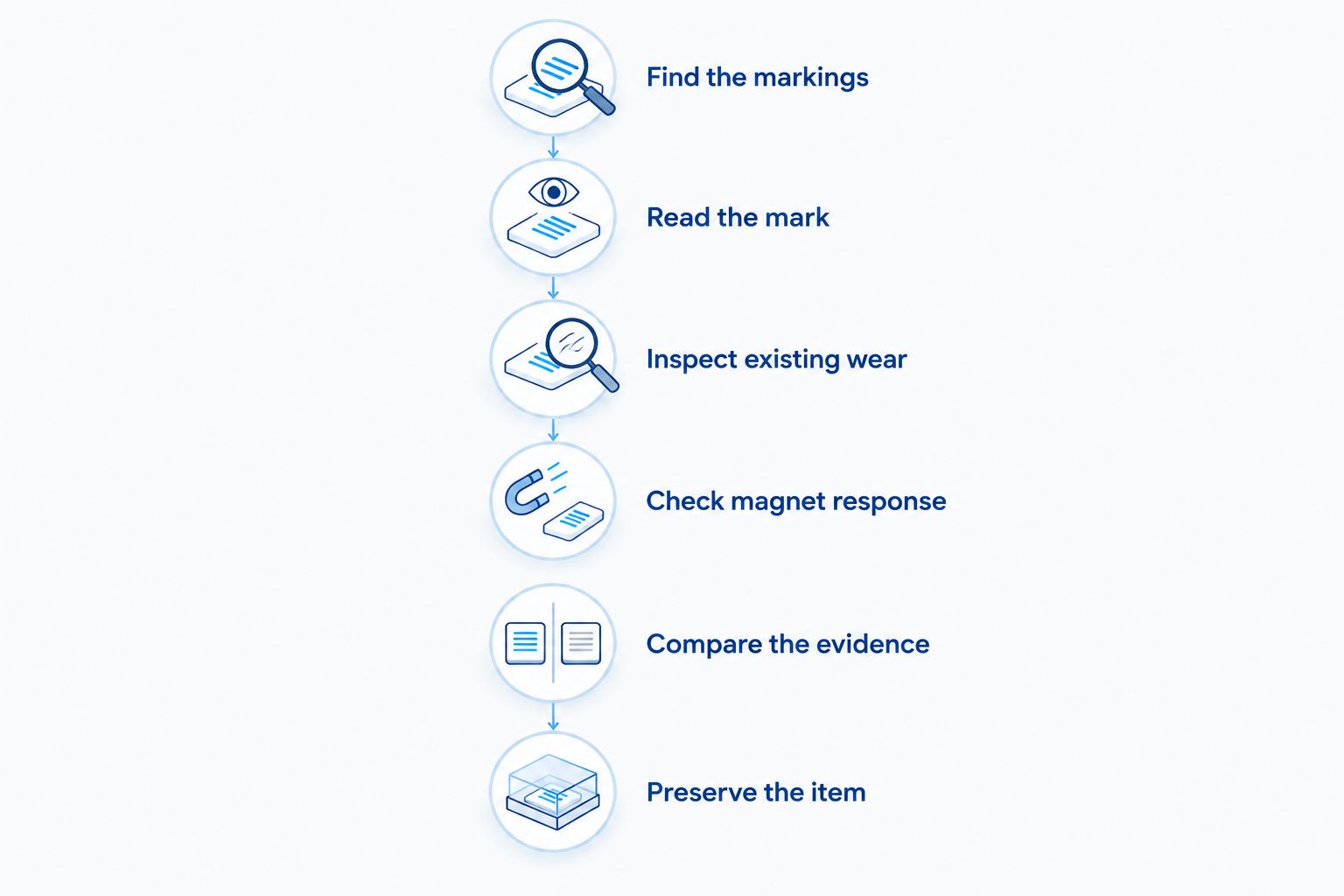
- Find the markings. Look inside ring bands, near necklace clasps, on pendant backs, and around bracelet closures. Use a magnifying glass or a clear close-up photograph.
- Read the whole mark. A karat number followed by a plating abbreviation means something different from a karat number alone. Do not stop reading after you see a familiar number.
- Inspect existing wear. Examine edges, raised details, and areas that rub against skin. A different-colored layer beneath the surface raises questions about plating or construction.
- Check magnet response carefully. Bring a magnet near the main body without dragging it across the surface. Test the clasp separately because internal springs can respond differently.
- Compare the evidence. A stamp, consistent surface, and lack of attraction support further investigation; they do not establish purity. Conflicting results mean you should stop home testing.
- Preserve the item. Photograph the markings and keep any receipts, packaging, or earlier appraisals. Do not file, scrape, or remove stones to make another test possible.
The most useful outcome is a clear record: what the mark says, where wear appears, and which component responds to the magnet. That gives a professional a better starting point than saying the piece passed an internet test.
Which home gold test should I use in 2026?
Start with inspection, then use a magnet only as a supporting check. These methods preserve the piece and help you decide what to ask next. Tests that leave a mark create a new problem without necessarily resolving the original question.
| Method | Best for | What it helps you assess | Main limitation |
|---|---|---|---|
| Marking inspection | Reading the stated metal content | Karat marks and plating abbreviations | Marks can be false, worn, or absent |
| Existing-wear inspection | Spotting exposed underlying metal | Changes beneath a surface coating | Intact plating can hide the base metal |
| Magnet check | Finding strongly magnetic components | Attraction in the body or clasp | Many nongold metals are nonmagnetic |
| Density measurement | Experienced testing of simple, stone-free objects | Whether mass and volume fit an expected material | Hollow spaces, stones, and measurement errors distort results |
| Scratch or acid testing | Controlled professional examination | Reaction of a tested surface or sample | Can damage jewelry and requires chemical precautions |
A density measurement looks more scientific than a visual check, but it is not automatically more reliable at home. A small volume-reading error matters, and jewelry rarely behaves like a uniform block of metal. Skip density calculations for hollow chains, stone-set rings, and mixed-material pieces.
What gold stamps actually tell you
Karat describes the gold proportion in an alloy, using a scale based on 24 parts. A genuine 18-karat alloy contains 18 parts gold out of 24; other metals make up the remainder. The stamp states an intended composition, not the result of an independent test of your item.
| Karat marking | Gold proportion by weight | What to remember |
|---|---|---|
| 10K | About 41.7% gold | Most of the alloy is other metals |
| 14K | About 58.3% gold | A common jewelry marking, not proof by itself |
| 18K | 75% gold | Higher gold content does not eliminate alloy metals |
| 24K | Nominally pure gold | Confirm the actual fineness when purity matters |
These proportions describe the alloy, not the percentage of the whole piece that is gold when stones or other components are present. A ring's total weight includes its gemstones; a chain clasp can contain components different from the chain itself.
Look for GP, meaning gold plated, and GF, meaning gold filled. Gold-filled construction has a gold layer bonded to a base metal; it is not solid gold throughout. HGE indicates heavy gold electroplate, another surface treatment rather than a solid-gold composition.
Missing markings do not settle the question either. Wear, repairs, resizing, and the way a piece was made can affect whether you find a readable stamp. Keep an unmarked item in the uncertain category instead of labeling it fake.
Why home gold test results vary
The meaning of a result depends on the piece's construction. For your 2026 assessment, account for these factors before deciding that an item is genuine or counterfeit:
- Alloy composition: Jewelry gold contains other metals, which affect color and physical behavior. Pure gold is not strongly attracted to an ordinary magnet, but that fact alone cannot identify a jewelry alloy.
- Surface layers: Gold plating can make an underlying metal look convincing. A surface observation does not reveal the full thickness or composition beneath it.
- Separate components: Clasps, springs, solder joints, and decorative attachments do not always have the same composition. Test observations belong to the component you examined.
- Hollow construction: An authentic hollow gold piece can feel unexpectedly light. Low weight alone is not evidence of a fake.
- Stones and other materials: Gemstones, enamel, and nonmetal inserts change total weight and complicate density measurements. They also introduce additional damage risks during testing.
- Condition and repairs: Abrasion, dirt, polishing, and earlier repairs affect what you see. A repaired section should not automatically determine your judgment of the entire piece.
Do not let several weak clues become a false certainty. Passing a magnet check and having a gold-colored surface still leaves unanswered questions about the metal underneath.
Does real gold stick to a magnet?
Pure gold does not show the strong attraction you see with iron or steel. If the main body of a supposedly solid-gold item jumps firmly toward a magnet, that is a warning sign worth investigating.
The reverse does not hold: failing to stick does not prove gold. Copper, brass, and other nongold materials can also avoid strong attraction. Gold plating over a nonmagnetic base can therefore pass this check.
A clasp deserves separate attention. A small internal steel spring can attract a magnet even when nearby jewelry components contain gold. Note exactly where attraction occurs rather than rejecting a whole necklace because its closure responds.
Can real gold discolor or turn your skin green?
Real gold jewelry can leave skin marks because jewelry alloys contain metals besides gold. Skin products, moisture, and substances trapped against the jewelry can also contribute to discoloration. A green mark is not a reliable authenticity test.
Surface changes still deserve inspection. A clearly different metal exposed beneath a worn gold-colored layer suggests a coating, while ordinary dirt or a discolored solder area needs a different explanation. Do not scrub away the evidence with abrasives before someone examines it.
Color alone is especially weak evidence because yellow, white, and rose gold have different appearances. Comparing an unfamiliar ring with another person's jewelry does not establish either item's composition.
Can I test gold with vinegar, bleach, or ceramic?
Skip household-chemical and scratch tests on jewelry you want to keep intact. Vinegar reactions do not reliably establish karat content, bleach can damage jewelry alloys and components, and an unglazed ceramic surface can scratch the item.
Online demonstrations often turn a complicated question into a simple color change. In practice, a reaction can involve a coating, residue, alloy metal, or exposed base metal. That does not tell you the gold content of the complete piece.
The same caution applies to biting gold or scraping it against a hard surface. Those actions can damage jewelry or teeth without producing a dependable answer. A sentimental item does not need a new scratch to justify professional examination.
Acid testing belongs in a controlled setting with appropriate handling and an explanation of potential marks. Do not mix household chemicals, heat unknown jewelry, or attempt to dissolve metal at home.
When should you stop testing and ask a professional?
Stop when the item has stones, collectible interest, sentimental importance, or inconsistent results. Also stop before any method that requires cutting, filing, or applying a chemical. The next step should reduce uncertainty without creating avoidable damage.
For a 2026 buying or selling decision, ask what the examination establishes: surface composition, likely alloy purity, or something more detailed. Professional methods have limits too. X-ray fluorescence examines composition near the surface, so plating and unusual construction require careful interpretation rather than blind acceptance of an instrument reading.
Before authorizing a test, ask:
- Will the method scratch, file, or otherwise mark the piece?
- Does the result describe the surface or the underlying material?
- Will different components be examined separately?
- How will stones and nongold parts be treated when weighing the item?
- What additional examination is needed if the findings conflict?
Uptownbullion offers gold and silver buying in Dallas. If you are considering selling, ask about the evaluation process before agreeing to any test or transaction; the home checks above do not establish a sale value.
Discuss your gold with a local buyer
Ask about selling your gold and what to bring before visiting.
FAQ
What's the safest way to test gold at home in 2026?
The safest home approach is to inspect markings and existing wear, then use a magnet as a supporting check without dragging it across the piece. These observations screen for warning signs but do not certify gold content.
Does a 14K stamp mean my gold is definitely real?
A 14K stamp states an alloy containing about 58.3% gold, but the stamp itself does not prove authenticity. Read nearby letters for plating descriptions and have conflicting evidence examined professionally.
Can fake gold pass a magnet test?
Fake gold can pass a magnet test because many nongold metals are not strongly magnetic. A gold-plated item with a nonmagnetic base can show no obvious attraction.
Is unmarked gold always fake?
Unmarked gold is not always fake. Wear, repairs, resizing, or the item's original construction can leave genuine gold without a readable purity mark.
Will real gold sink in water?
A solid gold object sinks in water, but sinking does not prove authenticity because many nongold metals sink too. Hollow construction and trapped air further complicate a simple float test.
Can I find out my gold's value from a home test?
A home test cannot establish your gold's sale value. Valuation requires reliable information about gold content, relevant metal weight, and the item itself, including any stones or collectible features.
Where can I ask about selling gold in Dallas?
Uptownbullion is a local gold and silver exchange in Dallas that provides gold and silver buying services. Contact the business to discuss your item and ask what its evaluation involves before visiting.
One last thing
Solid gold does not necessarily mean physically solid. A hollow chain can be made from a genuine gold alloy throughout its metal walls while weighing much less than a similar-looking solid-link chain. That distinction explains why heft alone is a poor test.
For any gold you evaluate in 2026, finish with photographs and notes—not a fresh scratch. Record the markings, isolate any magnetic component, and preserve worn areas for inspection. You will have useful questions to ask without damaging the evidence you need.


