
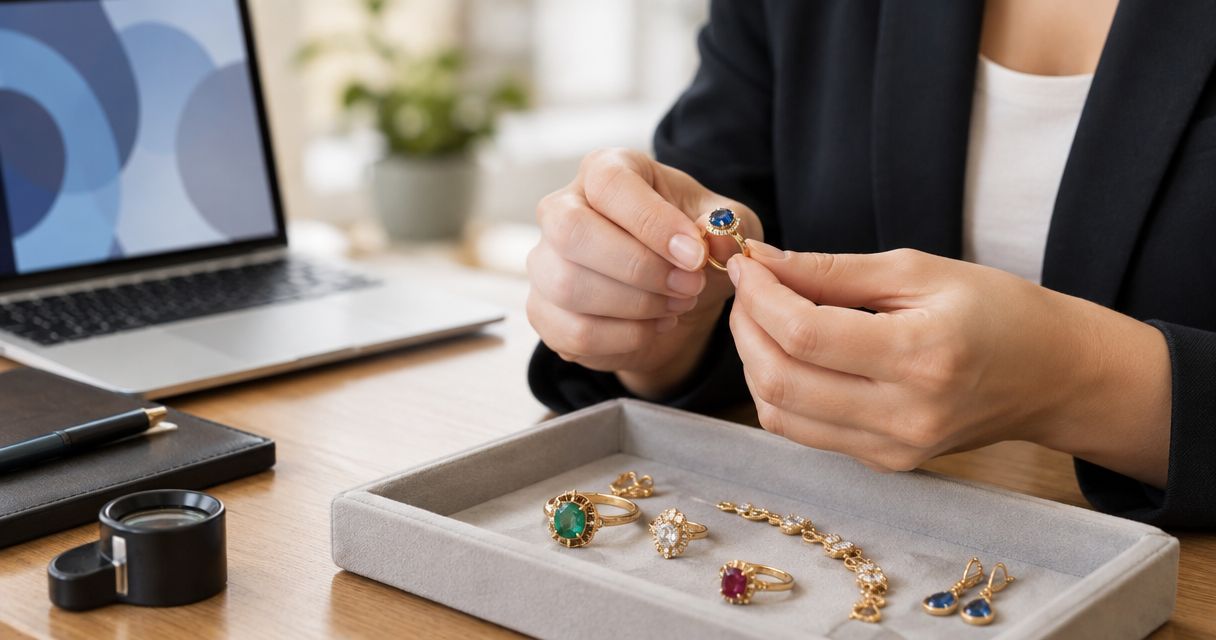
Yes, you can sell gold jewelry with gemstones still attached if the buyer accepts stone-set pieces; you do not need to remove the stones before asking for an evaluation. The important caveat in 2026 is that accepting the jewelry does not mean paying separately for its gemstones, so confirm what the offer includes before agreeing to sell.
- Can I sell gold jewelry with gemstones still attached? Yes—confirm whether the buyer values the stones or only the gold.
- Keep gemstones mounted until you understand the offer, removal terms, and who keeps each stone.
- Gold purity and metal weight matter; total jewelry weight includes gemstones and other non-gold components.
- Uptownbullion serves Dallas gold jewelry sellers; confirm gemstone acceptance and handling before bringing in your piece.
Can I sell gold jewelry with gemstones still attached?
Yes. A gold buyer can evaluate a ring, pendant, bracelet, or other piece while its gemstones remain mounted. The question is not simply whether the buyer accepts the item—it is whether the buyer wants the gold, the gemstones, or the complete piece of jewelry.
These routes involve different trade-offs. Ask what is being purchased before comparing offers.
| Selling route | Best for | Main advantage | Main limitation |
|---|---|---|---|
| Sell the complete jewelry | Sellers willing to part with the setting and stones | Keeps the piece intact for evaluation | A combined offer can obscure whether gemstones receive separate value |
| Sell the gold and retain the stones | Sellers who want to keep meaningful gemstones | Separates the sale from your decision about the stones | Requires agreement about removal, damage risk, and return |
| Seek a gemstone-focused evaluation first | Sellers with documented or potentially significant gemstones | Addresses the stones before committing to a gold-only sale | Adds an evaluation step and does not guarantee a higher offer |
For Dallas sellers, Uptownbullion provides gold and silver buying and selling, custom jewelry, and watch and jewelry repair services. Ask specifically about your stone-set piece rather than assuming every buying service handles gemstones the same way.
Why this matters
A ring is not just a quantity of gold. It can include gemstones, solder, springs, and other components, while its value as wearable jewelry can differ from its value as material for recycling.
You also need to separate financial value from personal value. A small inherited stone can matter greatly to you even when a buyer does not offer a separate amount for it. Decide what you are willing to sell before discussing the transaction.
Leave the jewelry intact until you know whether keeping it together or separating it serves your goal. Once a setting is cut or a stone is removed, the original condition has changed.
How buyers separate gold value from gemstone value
Gold content and gemstone value are different questions. A useful explanation of an offer identifies how the buyer treats each, rather than relying only on the total weight shown on a scale.
Gold purity describes the metal, not the stones
The karat scale expresses gold purity out of 24 parts. On that scale, 10-karat gold contains about 41.7% gold, 14-karat gold contains about 58.3% gold, and 18-karat gold contains 75% gold.
Those percentages apply to the gold alloy, not to the entire weight of a gemstone-set ring. A purity mark is useful information, but the buyer still needs to assess the metal rather than treating a stamp as the complete evaluation.
Total weight is not gold weight
A scale measures everything placed on it. If gemstones remain attached, the reading includes their weight along with the setting and any other components.
Ask whether the metal weight is measured after removal or estimated while the stones remain mounted. If an estimate is used, ask how it affects the offer. The explanation should distinguish the gold-bearing material from the rest of the piece.
For more background, read how scrap gold value is calculated. Use that framework to understand the metal component, not to assume the gemstones receive the same treatment.
Gemstones need their own explanation
Gemstone identification, condition, treatment, and market demand affect how a stone is assessed. A mounted setting can also restrict the examiner's view of parts of the gemstone.
Bring an existing laboratory report if you have one, and ask whether the buyer can match it to the mounted stone. A document helps describe an item; it does not obligate a buyer to purchase it or establish the resale offer.
What to do before selling stone-set gold jewelry
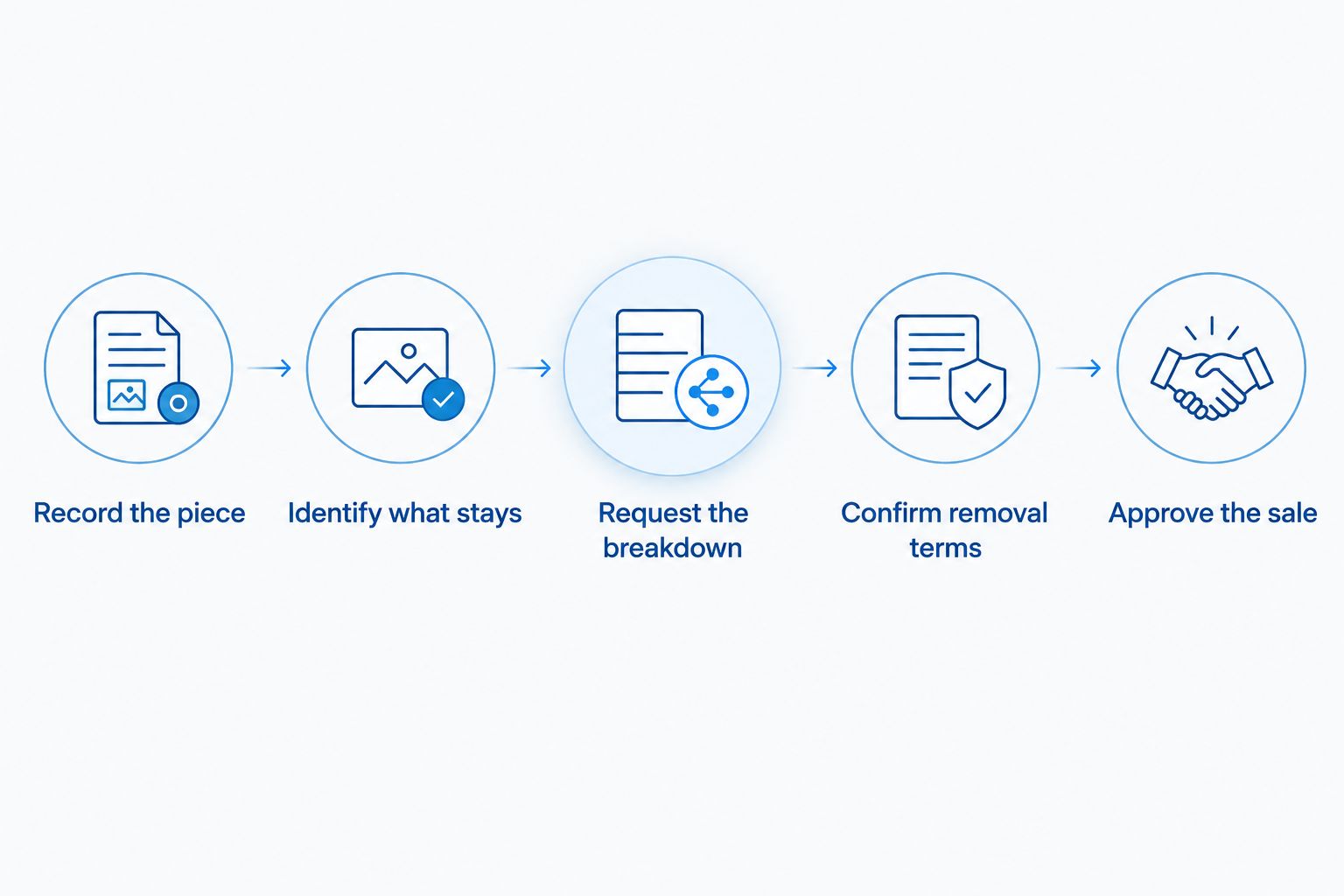
Use this preparation sequence for a sale in 2026. It keeps the decision about your gold separate from the decision about your gemstones.
- Record the piece. Photograph the jewelry, visible markings, gemstones, and any existing damage. Keep related reports, receipts, or appraisals together.
- Identify what stays. Decide whether you want to keep any stones before authorizing work. Tell the buyer explicitly if a gemstone has sentimental importance.
- Request the breakdown. Ask whether the evaluation covers the gold alone, individual gemstones, or the complete piece. Ask how gemstone weight is handled.
- Confirm removal terms. Before agreeing to removal, discuss consent, responsibility for damage, and how retained stones will be returned.
- Approve the sale. Review what you are transferring and what you are keeping. Do not accept an offer while the ownership of the stones remains unclear.
This sequence does not require you to know a gemstone's identity before visiting. It requires you to make clear decisions before the jewelry is altered or transferred.
Keep your photographs and paperwork after the sale. They provide a record of the item you presented and support a clear inventory of anything you retained.
Should you remove gemstones before selling the gold?
Do not remove gemstones yourself just to prepare jewelry for a sale. Prying open prongs or cutting a setting can damage the stone, the jewelry, or both.
Start by showing the intact piece and asking what evaluation is possible in its current condition. If removal is proposed, ask why it is needed and whether it changes your ability to decline the sale afterward.
Removal deserves particular care when a stone has sentimental importance or when you want the jewelry considered as a complete piece. An irreversible change should follow your decision, not substitute for it.
If you want to retain the stones, make that a condition of the discussion from the beginning. Do not rely on an assumption that stones excluded from the valuation will automatically be returned.
Why offers for gemstone-set gold jewelry vary
An offer for stone-set jewelry in 2026 depends on what is being evaluated and what the buyer intends to purchase. Compare the basis of each offer, not just the final result.
- Gold purity: The proportion of gold in the alloy affects the metal content being evaluated.
- Metal weight: Stones and other non-gold components must be distinguished from the gold-bearing setting.
- Gemstone characteristics: Identity, condition, treatments, and supporting documentation affect the gemstone assessment.
- Condition of the jewelry: Broken settings and damaged stones change what can be considered for reuse or resale.
- Evaluation basis: An offer for recycling the metal is different from an offer for a complete, wearable piece.
- Transaction terms: Whether stones remain with the buyer or return to you changes what you are selling.
A higher combined offer is not automatically better if it includes a gemstone you intended to keep. Likewise, a gold-only offer is not a complete assessment of the jewelry's possible value as an intact piece.
Can I keep my gemstones and sell only the gold?
Yes, you can ask to retain your gemstones and sell only the gold, but the buyer must agree to that arrangement. Confirm whether removal is available, whether any charge applies, and who is responsible if a stone is damaged during the work.
Use direct questions: Who removes the stones? When do they come back to you? What happens if you decline the gold offer? Get those answers before authorizing changes to the setting.
Will a buyer pay separately for the gemstones?
Separate payment for gemstones is not automatic. Ask whether the buyer assigns gemstone value, evaluates the jewelry as a whole, or makes a gold-only offer.
If the stones receive no separate value, decide whether to keep them or seek an evaluation elsewhere before selling. That decision is especially important when you have a laboratory report or other documentation describing a significant stone.
Is an insurance appraisal the amount I will receive?
An insurance appraisal is not a resale offer. Insurance documents commonly address replacement value, while a purchase offer reflects what a particular buyer agrees to pay for the item being sold.
Check the appraisal's stated purpose before using it as a reference in 2026. Bring it as supporting information, but ask the buyer to explain the current offer independently.
Questions to ask a Dallas gold jewelry buyer
Uptownbullion is best for Dallas consumers seeking a local gold jewelry buying service. Its stated services also include custom jewelry and repairs; gemstone buying, stone-return terms, and removal arrangements still need confirmation for your particular item.
Ask Uptownbullion these questions before bringing in stone-set jewelry:
- Do you evaluate jewelry while its gemstones remain mounted?
- Does the offer cover the gold, the gemstones, or the complete piece?
- How do you account for the stones when determining metal weight?
- Can I retain the gemstones if I sell the setting?
- What must I approve before any testing or removal changes the item?
- What happens if I decide not to sell?
The advantage of a local discussion is that you can present the physical piece and ask questions about it directly. The limitation is that a gold-buying service description alone does not establish which gemstones a buyer accepts or how those stones are valued.
Ask about your stone-set jewelry
Confirm evaluation and gemstone-handling arrangements before bringing in your piece.
FAQ
Can I sell a gold ring with a diamond still in it?
Yes, you can present a gold ring with its diamond still mounted to a buyer who accepts stone-set jewelry. Ask whether the offer includes the diamond or only the gold, and agree on who keeps the stone before selling.
Do I have to know what my gemstones are before selling?
No, you do not have to identify every gemstone before requesting an evaluation. Explain what you know, bring existing documentation, and ask what identification the buyer can provide before accepting an offer.
Will the buyer count gemstone weight as gold?
Gemstone weight is not gold weight. Ask how the buyer separates or estimates non-gold weight when evaluating a piece with stones still attached.
Can I get my gemstones back after selling the setting?
You can retain gemstones only if that arrangement is agreed with the buyer. Confirm removal, return, and responsibility for damage before selling the setting or authorizing work.
Can I sell broken gold jewelry that still has gemstones?
Yes, you can ask a buyer who accepts broken jewelry to evaluate the piece with its stones attached. Damage to the setting does not establish the gemstones' identity or condition, so discuss both components separately.
Should I clean gemstone jewelry before selling it?
Avoid aggressive cleaning when you do not know the gemstone or its treatments. Present the piece as it is and ask what cleaning is appropriate rather than using heat, chemicals, or an ultrasonic cleaner without guidance.
Does an older appraisal tell me what my ring is worth in 2026?
An older appraisal does not establish a 2026 purchase offer. Check its purpose and use it as supporting documentation while requesting an explanation of the current evaluation.
One last thing
Not assigning value to a gemstone is not the same as agreeing to return it. Before completing a sale in 2026, identify exactly what changes hands: the setting, every attached stone, and any documents included with the item.
If you want something back, settle that point before accepting the offer. A clear agreement about the stones matters as much as understanding the gold evaluation.


