
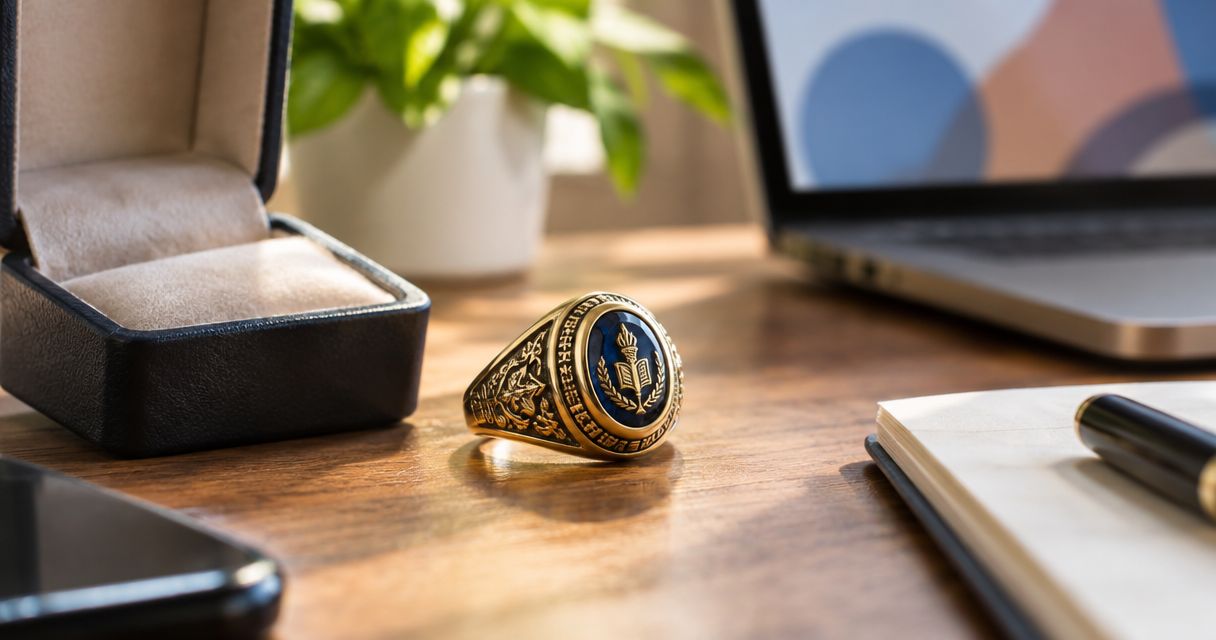
Yes, you can sell your class ring for gold value if it contains genuine gold; the amount depends on its verified purity and the weight of its gold alloy. Stones and other non-gold parts do not count toward that metal weight, and a buyer’s offer is not the same as the ring’s theoretical melt value.
- Can I sell my class ring for gold value? Yes—verified gold content matters more than graduation year or engraving.
- Uptownbullion provides gold buying in Dallas for consumers selling precious metals and jewelry.
- Compare offers using the same verified purity, metal weight, and treatment of stones.
- Check for collectible or sentimental value before authorizing stone removal or destructive testing.
Can I sell my class ring for gold value?
A solid-gold class ring can be sold for its gold content even when it is engraved, damaged, or no longer wearable. A gold-colored class ring is different: appearance alone does not establish that it contains recoverable gold.
Start with the mark inside the band, then have the metal verified. A hallmark gives you a starting point, not a substitute for testing. If you want to understand the calculation before requesting an offer, read how scrap gold value is calculated.
| Class ring material | Gold-value basis | Best for | Main limitation |
|---|---|---|---|
| Verified solid-gold alloy | Gold content within the alloy | Sellers focused on metal value | Total ring weight can include stones and other materials |
| Gold-plated base metal | Thin gold surface layer, not the entire ring | Sellers seeking material identification first | Gold color does not establish a meaningful scrap-gold payout |
| Non-gold metal | No gold-content basis | Sellers considering resale or keeping the ring | A gold buyer cannot value it as solid gold |
| Unverified material | Testing must establish the composition | Sellers with missing or unclear markings | A photo or stamp alone cannot confirm the gold content |
For a class-ring sale in 2026, ask the buyer to distinguish the material assessment from the purchase offer. First establish what you own; then decide whether the offer makes sense.
Why this matters
The amount you originally paid for a class ring includes more than metal. Design, manufacturing, personalization, and retail selling all contribute to the original purchase, but a gold-content buyer evaluates a different thing: the precious metal available in the item.
That explains why an insurance appraisal, an old receipt, and a scrap-gold offer do not measure the same value. Use a metal-based offer to judge a metal sale—not to measure the importance of your school memories.
Before selling, decide whether you want payment for the material, a buyer who wants the ring intact, or simply a clear identification. Those are different goals. A ring with family significance deserves that decision before anyone alters it.
A 10K class ring: about 41.7% gold by alloy weight
A 10K gold alloy contains 10 parts gold out of 24, or about 41.7% gold by weight. The remaining alloy consists of other metals; it is not additional gold available for sale.
This means the weight of a 10K class ring is not its pure-gold weight. Stones, non-gold fittings, and other materials must also be accounted for before applying the gold fraction.
Best for: understanding a verified 10K ring’s metal basis. The limitation is that the hallmark does not establish the ring’s weight, confirm its composition by itself, or tell you what a buyer will offer.
A 14K class ring: about 58.3% gold by alloy weight
A 14K gold alloy contains 14 parts gold out of 24, or about 58.3% gold by weight. At equal gold-alloy weights, verified 14K material contains more gold than verified 10K material.
That comparison only works when you hold weight constant. A heavier ring of lower purity can contain more total gold than a lighter ring of higher purity, so comparing karat marks alone is incomplete.
Best for: comparing verified gold content when you also know the metal weight. The limitation is that neither a larger stone nor a heavier overall ring necessarily means more gold.
An 18K class ring: 75% gold by alloy weight
An 18K gold alloy contains 18 parts gold out of 24, or 75% gold by weight. Its higher gold fraction does not eliminate the need to verify the material and separate non-gold weight.
Color is not a reliable shortcut. Yellow, white, and rose gold describe appearance and alloy composition, not a replacement for a karat assessment.
Best for: evaluating a ring already verified as 18K gold. The limitation remains the same: purity establishes the gold fraction, not the final purchase offer or any separate value in the stones.
Why class ring gold value varies
The gold-content calculation in 2026 follows the same basic logic regardless of the school name on the ring. These factors determine whether two offers are genuinely comparable:
- Verified purity: The gold fraction changes with the alloy. Ask whether the buyer’s assessment agrees with the hallmark and how any disagreement was resolved.
- Gold-alloy weight: The usable weight excludes stones and other non-gold components. Ask whether that weight was measured or estimated.
- Market reference: Gold’s market value changes. Compare offers against the same market reference and timing rather than mixing an old estimate with a current offer.
- Buyer deductions: Processing, refining, and the buyer’s margin separate theoretical metal value from a purchase offer. Ask what the quoted amount includes.
- Stone treatment: A buyer can evaluate the metal without offering anything for the stone. Establish whether stones are included, excluded, removed, or returned.
- Separate resale interest: A buyer seeking an intact piece evaluates a different opportunity from a buyer purchasing material for recovery. Do not assume a collectible premium exists without supporting evidence.
A clear explanation matters as much as the headline offer. You should understand which factors changed the result before accepting it.
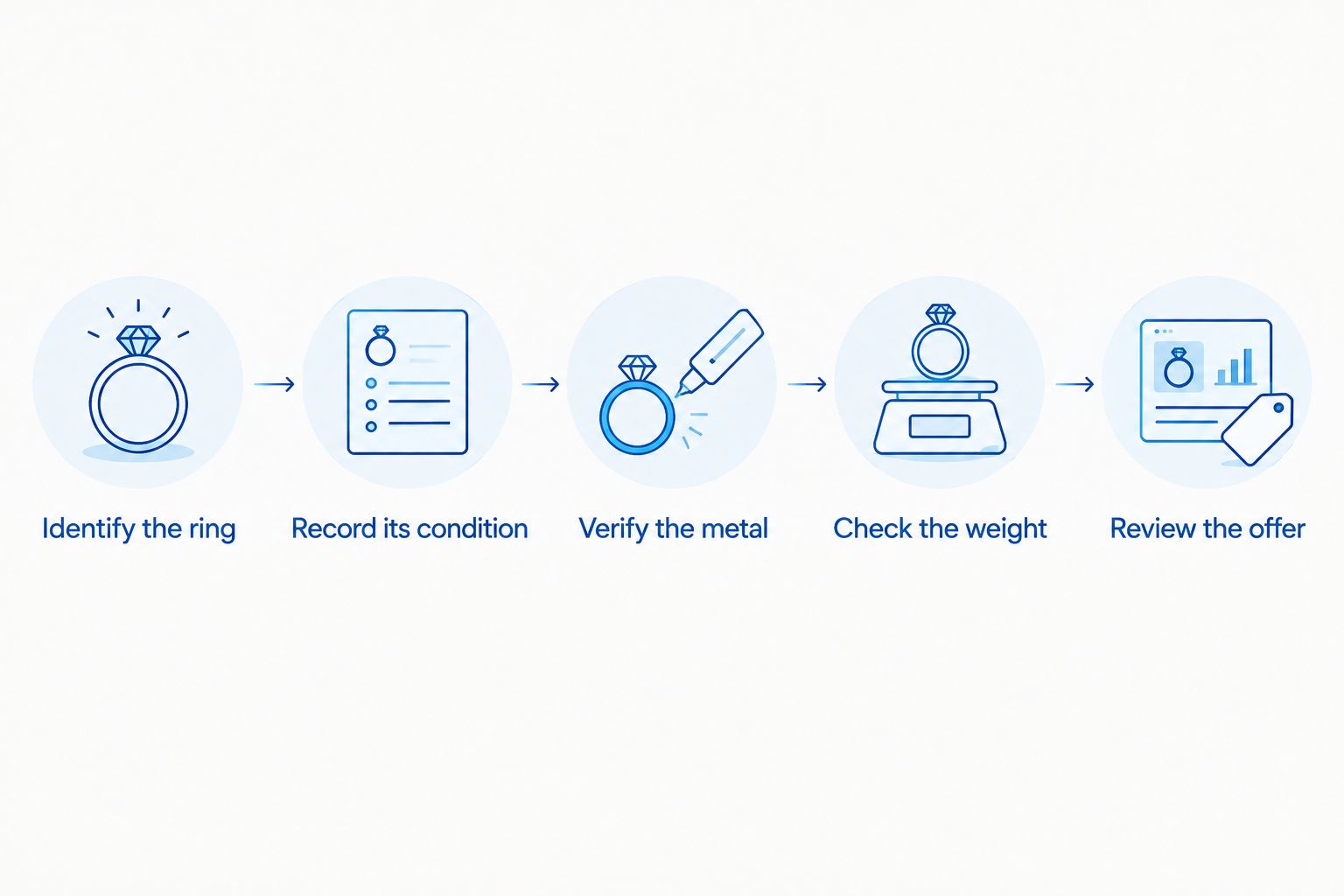
How do I prepare a class ring for a gold offer?
Identify the ring
Look inside the band for a karat mark, maker’s mark, and any wording that identifies plating or another material. Photograph those details while they are easy to read.
Do not grind, scratch, or chemically test the ring yourself. A missing mark does not prove the ring is non-gold, and an unfamiliar mark is a reason to seek identification rather than guess.
Record its condition
Photograph the ring from several angles, including the stone, engraving, and any damage. Record whether the stone is loose or the band has been repaired.
These details help you discuss the item accurately. They also preserve a visual record if you decide to sell a ring with personal significance.
Verify the metal
Ask the buyer to explain the proposed testing method before it begins. Some methods assess the surface; others involve scratching or sampling, so understand what the examination will do to the ring.
If a test result conflicts with the hallmark, ask for an explanation before proceeding. An unexplained purity change is a reason to pause—not a reason to accept a revised offer immediately.
Check the weight
Ask to see the weight and the unit used. Then ask how the buyer accounts for the stone and any other non-gold material.
Keep gross ring weight separate from the metal weight used in the calculation. If the stone remains attached, establish whether the buyer is estimating its weight rather than measuring the metal alone.
Review the offer
Ask for the assessed purity, applicable metal weight, and treatment of stones. Clarify whether the offer is for the ring intact or for its recoverable material.
For your 2026 comparison notes, record when each offer was made. A later offer can reflect a different gold market, so a changed amount does not by itself prove that a buyer changed the calculation unfairly.
Keep the ring intact until you understand the offer and agree to any alteration. Removing a stone first can damage the setting and eliminate the option of selling the ring as a wearable piece.
Should I sell the ring for metal or keep it intact?
Choose the selling method that matches what you want paid for. A metal sale focuses on gold content; an intact sale requires someone who wants that particular ring.
| Option | Best for | Advantage | Limitation |
|---|---|---|---|
| Sell for gold content | Sellers prioritizing the material | Engraving and wear do not remove the gold present | Personal history and design are not the basis of the calculation |
| Seek an intact-ring buyer | Sellers with evidence of collectible interest | Preserves the ring as an object | You must establish demand rather than assume a premium |
| Keep the ring | Owners with unresolved sentimental concerns | Preserves the original piece and future choices | Does not turn the item into sale proceeds |
A school name, graduation date, or personalized inscription does not automatically create collectible demand. If you believe the ring has a documented historical association, investigate that before selling it for material recovery.
Uptownbullion is best for Dallas consumers seeking a local gold-buying service for jewelry. Its jewelry and precious-metal services also include custom jewelry and watch and jewelry repair. For a class-ring sale, ask specifically how the gold content and any stones will be handled; the service category alone does not establish your ring’s offer.
Can I sell a broken or engraved class ring?
A broken or engraved class ring still contains the gold present in its alloy. Damage affects wearability, but it does not make genuine gold disappear.
For a metal sale, paying to restore the ring first does not increase its gold content. Consider repair only if you want to wear it again or have a reason to pursue an intact-jewelry sale.
Should I remove the stone before selling my class ring?
Keep the stone attached until you and the buyer agree on how it will be evaluated. Ask whether the offer assigns it separate value and whether removal is necessary.
Do not assume a class-ring stone is a valuable natural gemstone. If you want to keep it, make that condition clear before accepting an offer or authorizing work.
What should I confirm before a 2026 class-ring sale?
Confirm your ownership, the buyer’s identification requirements, the assessment method, and what you are agreeing to sell. Ask about these details before traveling rather than assuming every buyer follows the same intake process.
When contacting Uptownbullion about gold buying, describe the item as a class ring and mention any visible karat mark or attached stone. That gives the conversation a practical starting point without treating a description as a verified valuation.
FAQ
Can I sell my class ring for gold value without knowing its karat?
Yes, but the gold content must be established before a meaningful metal-based offer can be made. An unreadable or missing hallmark is a reason for testing, not proof that the ring contains no gold.
Is a 10K class ring real gold?
A genuine 10K gold alloy contains about 41.7% gold by weight. A stamp is a starting point for identification, and the metal still needs verification.
Will I receive the full melt value for my class ring?
Do not assume a purchase offer equals theoretical melt value. Ask the buyer to explain the verified purity, metal weight, market reference, and deductions used in the offer.
Does engraving reduce my class ring’s gold content?
An inscription does not change the purity of the surrounding gold alloy. The buyer evaluates the metal actually present, while an intact-ring buyer can have different preferences about personalization.
Can I sell a gold-plated class ring as solid gold?
No, a gold-plated class ring is not equivalent to a solid-gold alloy ring. The surface layer does not make the entire ring’s weight gold-bearing material.
Should I polish my class ring before requesting an offer?
Polishing is unnecessary for a gold-content assessment. Avoid abrasive cleaning or alterations that remove material or damage the ring.
Does Uptownbullion buy gold jewelry in Dallas?
Uptownbullion provides gold and jewelry buying in Dallas. Ask about assessment of your class ring and any attached stones before authorizing testing or accepting an offer.
One last thing
The detail to protect before selling is not the shine—it is your ability to change your mind. Once a ring is altered for material recovery, the original object and its personal history cannot simply be recreated.
Take clear photographs of the engraving and school details, discuss family significance where relevant, and decide whether you want to retain the stone. Then evaluate the ring as metal using verified purity and an explained weight calculation.
Your 2026 selling decision should rest on those facts, not on the ring’s original retail receipt or an unsupported promise about what every class ring is worth.


