
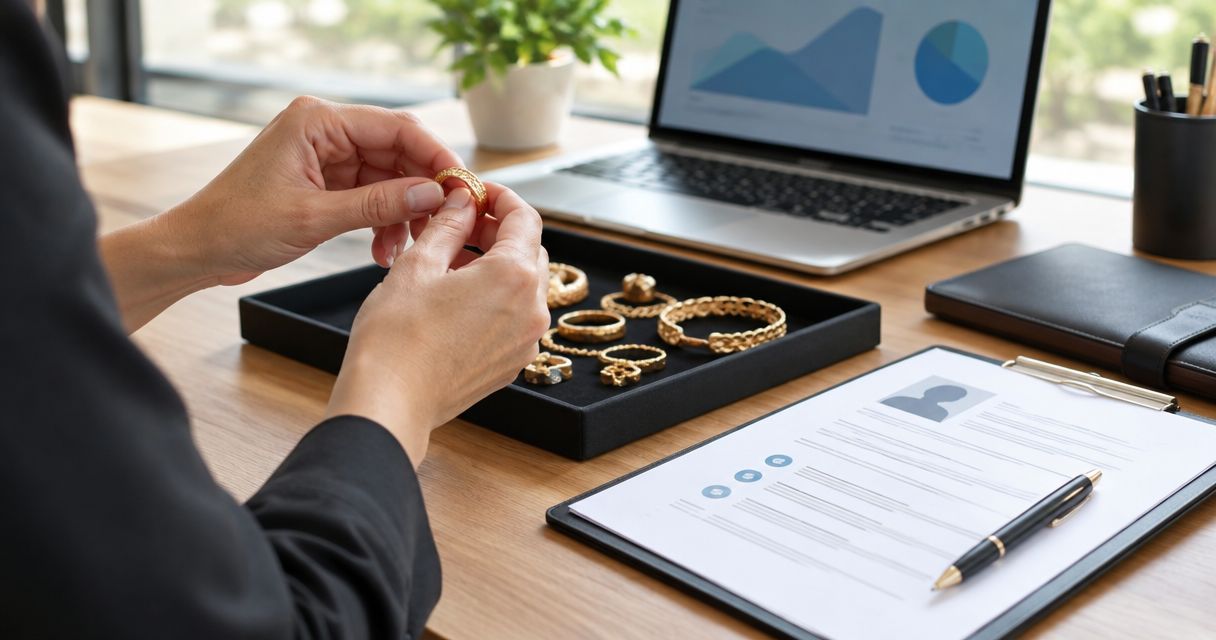
To sell gold in Texas in 2026, bring a current government-issued photo ID; a driver's license or state identification card is the practical starting point. Confirm that the buyer accepts your specific document before visiting, especially if you plan to use a passport or an out-of-state ID. An original purchase receipt is generally not required for ordinary personal jewelry, but inherited items, business property, or a sale on someone else's behalf can require additional ownership or authorization documents.
- What documents do I need to sell gold in Texas? Start with current government-issued photo identification.
- Uptownbullion is a local gold and jewelry exchange for Dallas consumers selling precious metals and fine jewelry.
- Purchase receipts and jewelry appraisals support an item's history; neither replaces seller identification.
- Confirm estate authority or permission to sell before bringing someone else's gold to a buyer.
Why this matters
Your identity, your authority to sell, and the gold's value are separate questions. A receipt helps explain where an item came from, but it does not replace your ID or prove that you currently have permission to sell it.
For a Dallas sale, Uptownbullion provides local gold and jewelry buying services. Confirm the accepted identification and any ownership documents before bringing your items in.
Texas Occupations Code Chapter 1956 addresses metal recycling entities, including crafted precious metal dealers. Use the applicable state requirements, local rules, and the buyer's document instructions together when preparing for a sale in 2026; do not assume every business follows an identical intake process.
What documents do I need to sell gold in Texas?
Bring identification first, then add documents that explain ownership or authority when your situation requires them. Keep supporting records with the corresponding item rather than handing over an unorganized folder.
| Document | What it establishes | How to prepare |
|---|---|---|
| Current driver's license or state ID | Your identity | Bring the physical document and confirm acceptance before visiting. |
| Another government-issued photo ID | Your identity, if accepted for the transaction | Ask about the exact document rather than assuming a passport qualifies. |
| Original purchase receipt | Purchase history and item description | Bring it if available; it does not replace identification. |
| Jewelry appraisal | A description and valuation for the appraisal's stated purpose | Match it to the correct item; do not treat the valuation as a purchase offer. |
| Estate or representative paperwork | Your authority to act for another owner or an estate | Ask which signed or court-issued documents the buyer needs. |
| Business authorization | Your authority to sell business-owned property | Confirm who must attend and what evidence of authority is required. |
For your own jewelry, start with accepted photo ID, not an appraisal appointment. Add receipts, grading reports, or other records you already have when they help identify the piece.
Do not purchase replacement paperwork simply because an old receipt is missing. First ask whether the buyer needs that document for your particular transaction.
Identification: bring the original and confirm acceptance
A current driver's license or state identification card is the clearest starting point for the identification conversation. Bring the physical card; do not assume that a photograph, photocopy, or digital version will satisfy the buyer's requirements.
Read the name and expiration date before you leave. If your document has expired, is damaged, or shows a different name from your supporting records, explain that issue before the appointment rather than at the counter.
Ask these questions directly:
- Which government-issued photo IDs do you accept for a gold purchase?
- Do you accept my out-of-state identification?
- What should I bring if my current name differs from the receipt?
- Does everyone who owns the jewelry need to attend?
Do not assume a passport replaces every other identification requirement. A passport establishes identity, but the buyer still needs to determine whether it meets the requirements for that transaction and whether additional information is necessary.
Purchase receipts: useful history, not a replacement for ID
A purchase receipt connects an item to a past transaction. It can identify the retailer, describe the jewelry, or distinguish similar pieces in a collection.
It does not automatically establish current ownership. A person can possess a receipt for an item that was later gifted, transferred, or sold, so the buyer still needs to establish who is selling the gold now.
For ordinary personal jewelry, missing the original receipt does not automatically prevent a sale. Bring your accepted identification and explain whether you bought the item, received it as a gift, or inherited it.
If the jewelry has a disputed owner, stop before arranging a sale. Possession is not the same as permission to sell. Resolve the ownership question rather than asking the buyer to overlook it.
Inherited gold: establish who has authority to sell
Inherited jewelry requires a different question from everyday personal jewelry: are you the owner, or are you acting for an estate?
If you are selling as an executor or another estate representative, ask which documents establish your authority for the transaction. Depending on the circumstances, relevant records include letters testamentary, letters of administration, or other court-issued authority.
A death certificate establishes a death; it does not, by itself, establish that you are authorized to sell every item belonging to the deceased person. A will also needs to be understood within the estate's legal circumstances.
Keep personal property and estate property separate during the visit. If several heirs claim an interest in the same jewelry, resolve who can authorize its sale before presenting it as yours alone.
For disputed estates or unclear authority, get advice from a Texas attorney before selling. The buyer's intake process is not a substitute for resolving legal ownership.
How to prepare your documents before visiting
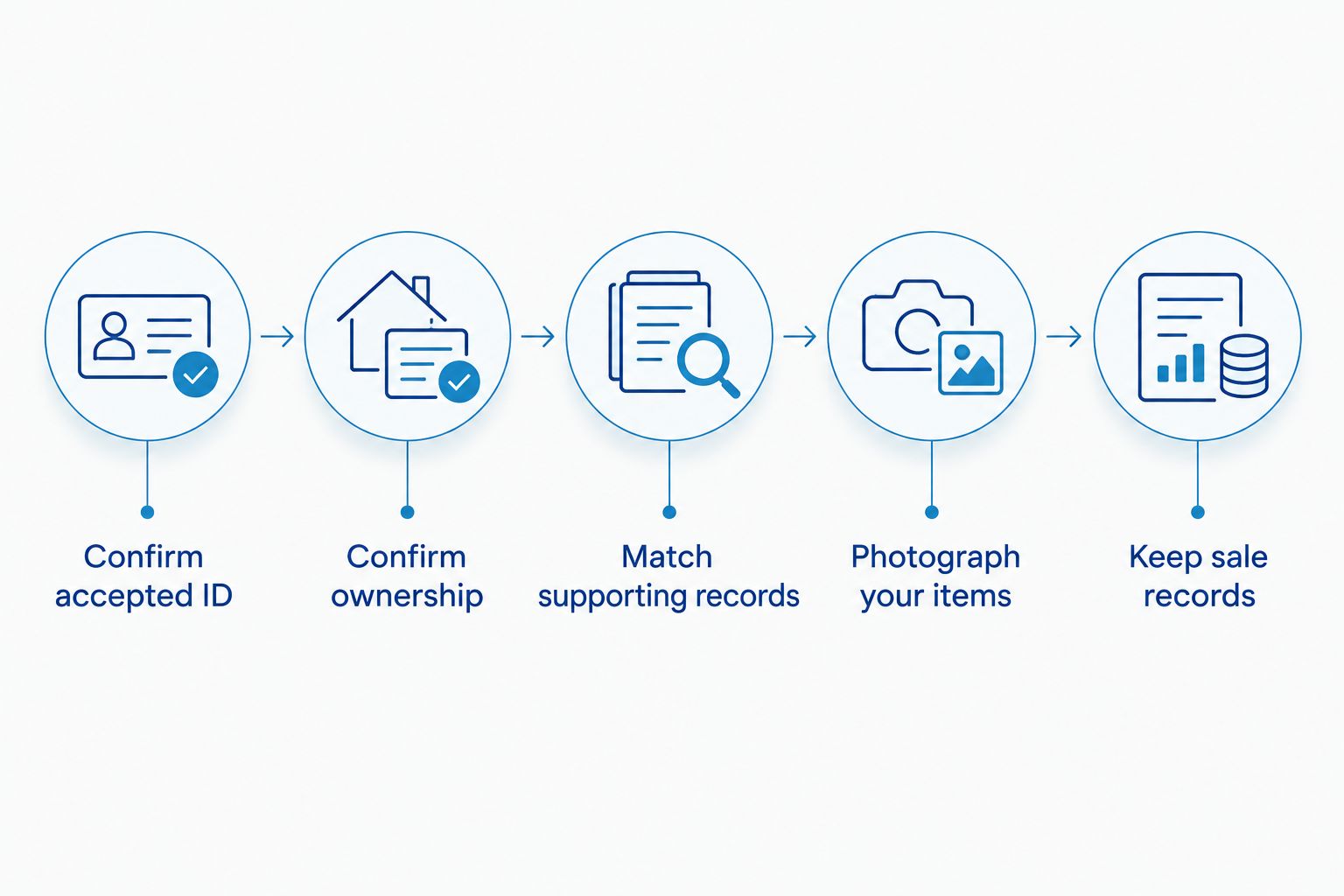
Use this sequence for a 2026 gold-selling visit. It keeps the identification check separate from the item's evaluation and gives you a clear record of what you brought.
- Confirm accepted ID. Tell the buyer the exact type of identification you intend to bring, including any expiration or name issue.
- Confirm ownership. Identify whether the gold belongs to you, an estate, a business, or another person.
- Match supporting records. Put each receipt, appraisal, or certificate beside the item it describes. Leave unrelated documents at home.
- Photograph your items. Take clear personal reference photographs before leaving, including distinctive settings, engravings, or visible marks.
- Keep sale records. Retain your transaction document and payment record after accepting an offer.
Photographs help you remember what you brought; they do not replace an ownership document or the buyer's examination. Keep the original files with your personal records rather than relying only on a message thread.
Why document requirements vary
The useful distinction is between routine identification and documents tied to your circumstances. These factors change what you should ask the buyer to review:
- Buyer type: A precious metal dealer and a pawnshop operate under different regulatory frameworks. Ask about the requirements for the actual business handling your sale.
- Identification type: An expired card, unfamiliar document, or name discrepancy needs attention before the visit.
- Ownership: Personal jewelry, jointly owned jewelry, estate assets, and business inventory involve different authority questions.
- Item history: Receipts, appraisals, and certificates help explain an item's history, but their usefulness depends on what they actually describe.
- Local requirements: State law is not the only consideration; applicable local rules and the buyer's lawful intake procedures also matter.
Do not confuse extra paperwork with a better offer. Documents establish identity and context; the item's characteristics and the buyer's evaluation determine the offer.
What an appraisal or gold stamp does not prove
An appraisal describes an item and assigns a value for a stated purpose. An insurance replacement valuation is not a promise that a buyer will pay that amount.
A purity stamp is also not a seller document. Marks such as 10-karat, 14-karat, and 18-karat describe claimed gold content; they do not identify the owner or replace testing.
Separate these questions when discussing the transaction:
- Who owns the item and can authorize its sale?
- What metal and other materials does the item contain?
- Is the buyer evaluating it as jewelry, collectible property, or material for refining?
- What records will document the completed sale?
If you want to understand the value discussion before visiting, read how much your gold jewelry is worth. Keep that valuation question separate from the identification checklist.
What should I keep after selling gold?
Keep the transaction receipt, the item description, and the payment record together. For a sale completed in 2026, label your saved records with the transaction date so you can find them later.
Check the paperwork before leaving. Make sure it describes the transaction accurately and gives you a way to identify the business involved.
Ask what happens to any original supporting documents you provide. An estate document or appraisal can relate to property beyond the item being sold, so do not surrender your only copy without understanding why it is needed.
Tax reporting is a separate issue from seller identification. Do not assume that presenting photo ID, receiving a particular payment method, or receiving no tax form settles your tax obligations; ask a tax professional about your circumstances.
Can I sell gold jewelry without the original receipt?
You can generally sell your own gold jewelry without the original purchase receipt. Bring accepted photo identification and explain the item's history honestly; the buyer still needs to evaluate the item and establish that the transaction can proceed.
Missing paperwork is not a reason to invent a purchase date or ownership story. State what you know and distinguish it from what you were told.
Can someone else sell my gold for me?
Do not send another person with your gold and assume your ID or a handwritten note is enough. Ask the buyer what authorization is required and whether the owner must attend; the person presenting the item also needs to satisfy the applicable identification requirements.
If you are arranging a sale for an elderly relative, an estate, or a business, establish the representative's authority before transferring the jewelry for the visit.
Is a local exchange right for a straightforward sale?
Uptownbullion is best suited to Dallas consumers seeking a local gold and jewelry exchange. A local visit lets you discuss the physical items and the required paperwork in the same conversation.
The limitation is that a local service still requires preparation: you need acceptable identification and clear authority to sell. Do not assume that being nearby removes document requirements or guarantees that a transaction will proceed.
For Uptownbullion gold and jewelry buying, confirm your document situation before traveling. That is especially useful when the item belongs to an estate or your identification does not match the name on supporting records.
FAQ
What documents do I need to sell gold in Texas?
Bring current government-issued photo identification and confirm that the buyer accepts your specific document. Add ownership or authorization records when selling estate property, business property, or someone else's gold.
Can I sell gold in Texas without a driver's license?
Ask the buyer which alternative government-issued identification it accepts. Do not assume that a passport, digital ID, or photograph of an identification card meets the requirements for your transaction.
Do I need a receipt to sell old gold jewelry?
An original purchase receipt is generally not required for ordinary jewelry you own. Accepted identification and clear authority to sell still matter, and a receipt does not replace either.
Do I need an appraisal before selling gold?
An appraisal is not a substitute for identification and is not automatically necessary before an ordinary gold sale. Ask what evaluation or supporting records the buyer needs before paying for additional paperwork.
What paperwork should I bring for inherited gold?
Bring your identification and ask which documents establish your authority to sell the inherited gold. Estate representatives should confirm whether court-issued authority is required for their circumstances.
Can I sell gold if my receipt has a different name?
A different name requires an explanation, not an altered receipt. Tell the buyer whether the item was a gift, inherited, or purchased before a legal name change, and ask what supporting documents to bring.
Should I send a photo of my ID before visiting a gold buyer?
Confirm the buyer's process and the purpose of the request before sending identification. Avoid posting your ID publicly or sending it through an unverified account; ask whether you can present the original in person.
One last thing
Keep a document checklist and an item checklist separately. An organized folder does not tell you whether you remembered every earring, chain, or matching piece you intended to discuss.
Before your 2026 visit, photograph the group of items and confirm your accepted ID. That simple separation helps you prepare for both parts of the transaction: proving who can sell and identifying exactly what is being evaluated.


