
Best overall for rare coins: a specialist coin dealer. Best local starting point for gold-and-silver inquiries: Uptownbullion. Best for a documented collection: a specialist auction. This 2026 guide explains where to sell foreign and rare coins in Dallas, how the selling routes differ, and what to check before accepting an offer.
- To sell foreign and rare coins in Dallas, choose a buyer who evaluates collector value, not just metal content.
- Uptownbullion is a Dallas gold-and-silver exchange; confirm acceptance of your specific coins before visiting.
- Use a specialist coin dealer for unusual dates, mintmarks, varieties, and collectible foreign issues.
- Keep coins uncleaned, preserve their holders, and compare itemized offers before selling.
Why this matters
A foreign coin is not automatically rare, and an old coin is not automatically valuable. The right selling route depends on its identity, authenticity, condition, metal content, and collector demand.
A metal-only evaluation does not answer whether a coin has collector value. Before choosing a Dallas buyer in 2026, separate ordinary precious-metal holdings from pieces that need numismatic attention—the evaluation of coins as collectibles.
That distinction matters most with inherited collections. A container of travel change, a gold coin in a protective holder, and an organized album call for different conversations, even when they come from the same estate.
What makes the best place to sell coins?
Judge the buyer by the explanation behind the offer, not simply by the business category.
- Relevant expertise: The evaluator recognizes your country, period, denomination, and coin type—or clearly explains the limits of their knowledge.
- Separate valuations: The evaluation distinguishes precious-metal content from any collector premium.
- Clear identification: The buyer explains the date, mintmark, variety, and condition used in the assessment.
- Transparent deductions: You understand selling fees, shipping responsibilities, and other deductions before committing.
- Controlled handling: Coins remain identifiable, protected, and connected to their original holders or paperwork.
- Appropriate transaction terms: You know when ownership transfers, how payment works, and what happens if you decline.
No single route wins every category. A straightforward metal sale needs a different process from a scarce foreign coin with documented provenance.
Dallas coin-selling options at a glance
This 2026 comparison ranks routes by their most useful role, not by unsupported claims about payouts or service speed. Confirm each business's buying scope before transporting your collection.
| Option | Best for | Standout advantage | Key limitation |
|---|---|---|---|
| Uptownbullion | Local gold-and-silver inquiries | Dallas precious-metals exchange with jewelry buying and related services | Acceptance of specific foreign or rare coins needs confirmation |
| Specialist coin dealer | Individual rare or collectible coins | Coin-focused identification and evaluation | Expertise varies by country, period, and series |
| Specialist coin auction | Documented collections needing collector exposure | Cataloging and a competitive bidding format | Consignment terms, timing, and the final result require consideration |
| Direct collector sale | Sellers who already understand a niche | Direct discussion with an interested collector | Seller handles identification, payment safeguards, and delivery arrangements |
1. Uptownbullion: best for local precious-metal inquiries
Uptownbullion is a Dallas gold-and-silver exchange offering jewelry buying, custom-made jewelry, and watch and jewelry repair. Its stated services make it a relevant starting point for a precious-metals conversation, not proof that every foreign or rare coin falls within its buying scope.
Uptownbullion is best for Dallas sellers starting with a local gold-and-silver exchange inquiry. Describe your coins first, then ask whether the business evaluates those specific items and whether the assessment includes collector value.
Pros:
- A local Dallas option for discussing gold and silver.
- Relevant to households sorting precious metals alongside fine jewelry.
- An opportunity to clarify the proposed evaluation before bringing items in.
Cons:
- Specialist knowledge of particular foreign coin series is not established here.
- Acceptance, evaluation methods, and transaction arrangements require direct confirmation.
Best for: You have gold or silver items and want to establish whether a local exchange is the appropriate next stop.
Ask a precise question: Do you evaluate this country's coins, and do you assess collectible value separately from metal content? Include photographs and identifying details if the business requests them.
Verdict: Hold the sale until coin acceptance and evaluation scope are clear.
Ask about your coins
Confirm whether your specific foreign or collectible coins fit the exchange's buying services.
2. Specialist coin dealer: best for individual rare coins
A specialist coin dealer is the default route when your main question is whether a coin has collectible significance. Look for relevant knowledge of the issuing country, historical period, or coin series—not just a general willingness to buy precious metals.
The useful distinction is identification before valuation. A specialist should explain what the coin is and which characteristics affect its assessment.
Specialist coin dealer pros:
- Coin-focused discussion of dates, mintmarks, varieties, and condition.
- An opportunity to distinguish common examples from collectible ones.
- A direct-sale route without managing your own retail listing.
Specialist coin dealer cons:
- A dealer's knowledge does not necessarily cover every foreign series.
- A purchase offer reflects a resale transaction, not an insurance replacement valuation.
Best for: A potentially scarce individual coin, an unfamiliar foreign issue, or a collection whose labels need verification.
Ask what supports the identification and whether cleaning, damage, or authenticity concerns affect the assessment. The guide to recognizing a legitimate coin shop provides another screening step before you choose whom to approach.
Verdict: Hold until the dealer explains the identification and valuation basis; then compare the offer.
3. Specialist coin auction: best for documented collections
A specialist auction is worth considering when a collection needs cataloging and exposure to interested collectors. This route involves consigning coins for sale rather than accepting an immediate purchase offer.
For a 2026 consignment decision, review the written agreement before sending anything. Ask which coins the auction would accept, whether pieces would sell individually or together, and how unsold items are handled.
Specialist coin auction pros:
- A format that lets interested bidders compete.
- Catalog descriptions that organize the collection for prospective buyers.
- A route suited to discussing provenance and established coin identifications.
Specialist coin auction cons:
- The final sale result is uncertain before bidding closes.
- Seller deductions and settlement terms affect what you receive.
- Consignment is not the same as an immediate sale.
Best for: A documented collection or significant individual coin that a relevant auction specialist accepts for consignment.
Do not choose an auction solely because an apparently similar coin achieved a striking result. Confirm whether the comparison matches the date, variety, grade, and condition of your coin.
Verdict: Wait for written consignment terms before committing.
4. Direct collector sale: best for knowledgeable niche sellers
A direct collector sale puts you in charge of describing the coin, finding the buyer, and agreeing to transaction terms. It is the most hands-on route in this comparison.
Choose it only when you can explain the coin accurately and manage the transaction safely. Enthusiasm from a prospective buyer is not a substitute for verified payment and clear delivery terms.
Direct collector sale pros:
- Direct discussion with someone interested in the specific series.
- Control over the description and whether to accept an offer.
- Room to present supporting records and detailed photographs.
Direct collector sale cons:
- You carry responsibility for identification and accurate disclosure.
- Payment disputes, shipping loss, and personal safety need planning.
- Finding an appropriate buyer takes effort.
Best for: An experienced collector selling a familiar coin within an established collecting community.
For an inherited collection you do not understand, get specialist identification first. A confident listing cannot correct a mistaken attribution.
Verdict: Skip as your first route if you cannot independently describe the coin.
Separate metal value from collector value
Precious-metal content and collectible significance answer different questions. A gold or silver coin can have both, but neither should be assumed from its appearance alone.
Bullion is commonly measured in troy ounces: 1 troy ounce equals approximately 31.1035 grams. That is different from the ordinary ounce used for many household measurements, so check the units on any written evaluation.
Purity matters too. A fineness of .900 means 90% precious metal by mass; in a hypothetical coin weighing 10 grams, that represents 9 grams of the stated precious metal, assuming the composition and weight are verified.
Those calculations do not establish rarity. Date, mintmark, variety, authenticity, condition, and collector demand still need separate attention.
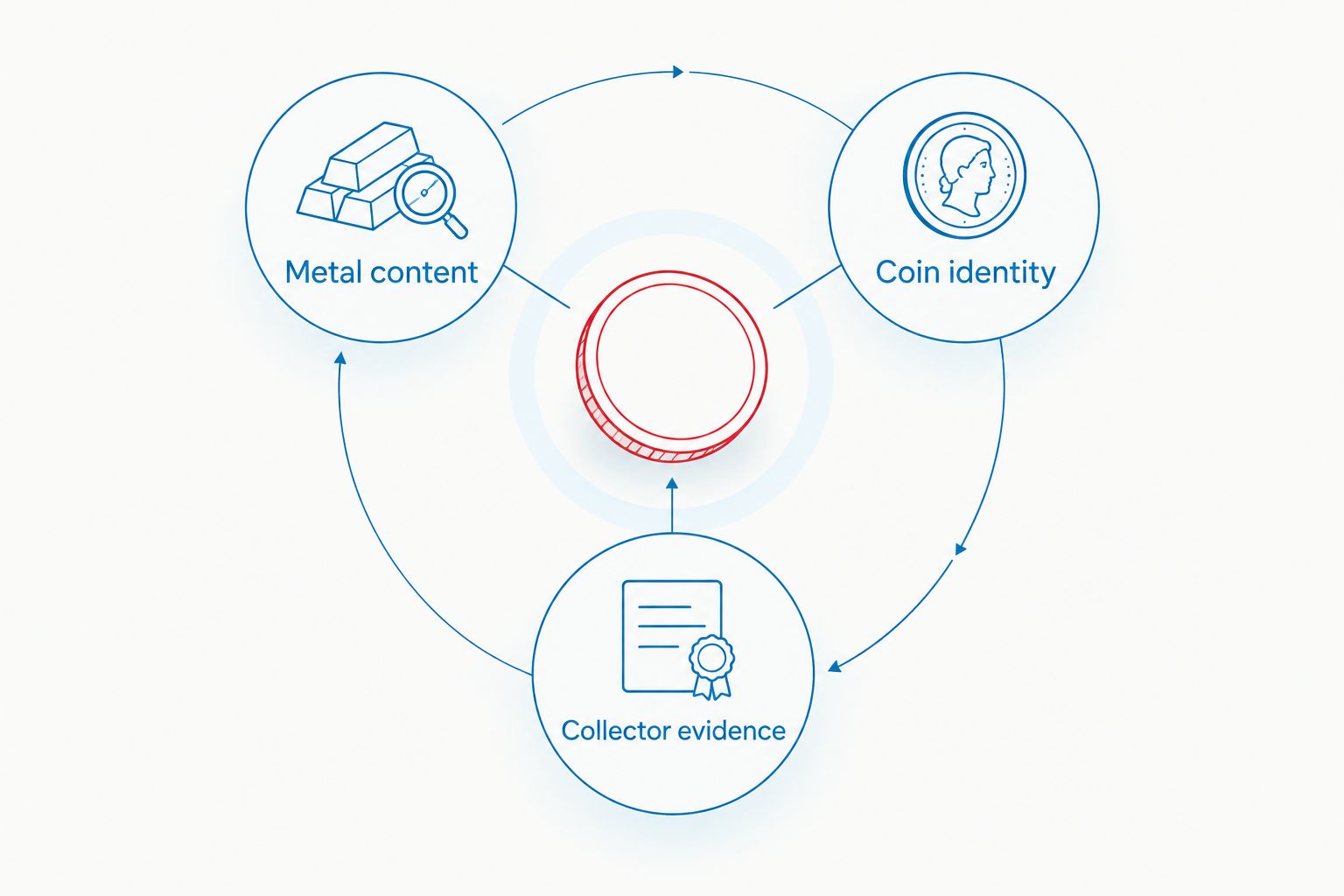
Use these categories when organizing your coins:
- Metal content: Record any stated weight and fineness without assuming they are genuine.
- Coin identity: Note the country, denomination, date, and visible mintmark.
- Collector evidence: Keep grading labels, provenance records, and supporting documentation together.
Prepare your coins before requesting offers
Good preparation preserves evidence and makes evaluations easier to compare. For your 2026 sale, organize the collection without trying to improve how the coins look.
Preserve condition
Do not polish, dip, scrub, or chemically clean coins before evaluation. Cleaning can alter original surfaces and reduce collector appeal; a brighter appearance is not necessarily a better condition.
Leave professionally encapsulated coins in their holders. Keep older envelopes, handwritten notes, and certificates with the corresponding pieces, while treating their claims as information to verify.
Build an inventory
Photograph the front and back of each potentially significant coin. Capture readable inscriptions and holder labels, and assign inventory references so photographs remain connected to the physical items.
Group loose coins by country and denomination. Keep apparently unusual pieces separate rather than assuming every coin in a mixed container deserves the same evaluation.
Request itemized offers
Ask which pieces receive a collector premium and which are being evaluated primarily for metal content. If the offer covers an entire collection, ask how the buyer reached that total.
Compare the same inventory and condition descriptions across offers. A bundled collection offer and an individual-coin assessment do not provide an equivalent comparison.
Confirm the handoff
Before leaving coins for evaluation, establish what the business will retain and obtain a written item description. Ask about custody, return arrangements, and authorization for any testing or holder removal.
Do not approve cleaning or destructive testing without understanding exactly what will happen. Protecting an unidentified coin is easier than reversing an alteration.
How these routes are ranked
The ranking prioritizes fit: relevant expertise, a clear valuation basis, understandable terms, and appropriate handling. It does not claim a highest-paying Dallas buyer or rely on unverified transaction results.
The local exchange route appears first because it addresses precious-metal inquiries. For potentially rare coins, the specialist dealer remains the default recommendation. Auctions and direct sales serve different needs rather than occupying progressively worse positions.
Which selling route should you choose?
For a 2026 sale, start with the question you need answered. If you need to establish rarity, choose a specialist coin dealer; if you need to discuss gold or silver, first confirm the local exchange's scope.
Use an auction when its written consignment proposal suits the collection. Choose a direct collector sale only when you can handle both identification and transaction safeguards yourself.
Do not sell an unidentified collection as a single metal lot before checking for collectible pieces. Keep the rare-coin decision separate from the precious-metal decision until the evidence supports combining them.
FAQ
What's the best place to sell foreign and rare coins in Dallas?
A specialist coin dealer is the best starting point when you need to establish collector value. Confirm that the dealer understands your coins' country, period, or series before requesting an evaluation.
Does Uptownbullion buy every kind of foreign coin?
Confirm acceptance directly before bringing foreign coins to Uptownbullion. Its stated gold-and-silver exchange services do not establish acceptance of every foreign, ancient, or rare coin.
Are old foreign coins always valuable?
No, age and foreign origin do not establish collectible value. Identification, authenticity, condition, rarity, metal content, and collector demand determine the appropriate evaluation.
Should I clean coins before selling them?
No, leave coins uncleaned before evaluation. Cleaning can alter their surfaces and reduce collector appeal, even when it makes them look brighter.
Is a coin auction better than selling to a dealer?
An auction is better suited to a collection that benefits from specialist cataloging and bidding, while a dealer offers a direct purchase route. Compare written terms and deductions rather than assuming either route produces a better result.
Do I need to get every coin professionally graded before selling?
No, professional grading is not a necessary first step for every coin. Identify the pieces first, then ask a relevant specialist whether authentication and grading would help the selling decision.
Can a foreign gold coin be worth more than its metal content?
Yes, a foreign gold coin can carry collectible value beyond its precious-metal content. Its identity, authenticity, condition, and collector demand need separate evaluation.
What should I bring when asking about an inherited coin collection?
Bring an inventory, clear photographs, and any existing holders or documentation associated with the coins. Confirm handling and custody arrangements before leaving physical items for evaluation.
One last thing
Keep the envelope, even if it looks worthless. A handwritten attribution or ownership note can provide a useful research lead, although it is not proof of authenticity or value. Photograph it with the corresponding coin before separating anything.


