
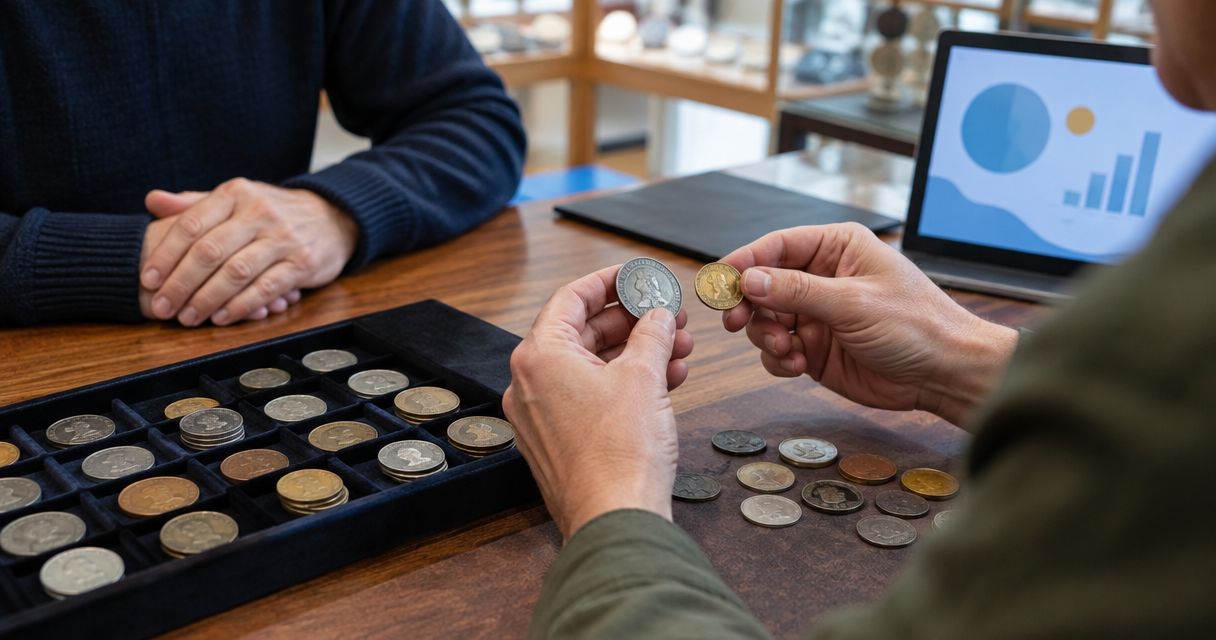
Yes, you can sell foreign coins at a coin shop in 2026 if the shop buys that country, coin type, or precious metal. Acceptance depends on the coins’ identity, authenticity, condition, and resale demand—not simply on whether they came from outside the United States.
- Can you sell foreign coins at a coin shop? Yes, but confirm that the buyer handles your specific coins.
- Separate gold and silver coins from ordinary travel change before requesting an evaluation.
- Preserve original surfaces; cleaning can reduce a coin’s appeal to collectors.
- Uptownbullion is a local gold and silver exchange for Dallas consumers; confirm foreign-coin acceptance before visiting.
Why this matters
A jar of foreign change, an inherited coin album, and a gold bullion coin need different kinds of evaluation. Taking everything to the nearest buyer without identifying it first makes it harder to understand an offer—or recognize when you need a specialist.
Match the buyer to the coins, not just to your location. If you are comparing local options in 2026, use the guide to coin shops in Dallas for buying and selling coins as a starting point, then ask each shop about your particular collection.
Can you sell foreign coins at a coin shop?
Yes. A coin shop can buy foreign coins for their collectible interest, precious-metal content, or suitability for resale as a group. A shop does not have to buy every category, and accepting domestic coins does not establish that it also buys foreign currency.
Describe what you have before arranging a visit. Give the country, denomination, date shown on the coin, approximate quantity, and any information from its holder or certificate. Clear photographs help the buyer decide whether an in-person examination makes sense; photographs alone do not establish authenticity.
| Foreign coin category | Best for | What supports its value | Main limitation |
|---|---|---|---|
| Gold or silver bullion coins | Sellers whose coins are primarily valued for precious metal | Verified metal content, weight, and recognizable issue | Metal value does not guarantee the same purchase offer from every buyer |
| Collectible foreign coins | Sellers with identifiable dates, varieties, or specialist material | Authenticity, scarcity, condition, and collector demand | Requires knowledge of the specific series or market |
| Common circulating coins | Sellers sorting leftover travel change | Usability as currency or demand for mixed foreign coins | A coin shop is not necessarily a currency-exchange counter |
| Mixed inherited collections | Sellers who need to separate different kinds of material | Individual identification before grouping coins | One bulk assessment can obscure differences between pieces |
These categories can overlap. A gold coin can also have collector interest, while an attractive commemorative coin can contain no precious metal. Identify the issue before deciding whether its metal content tells the whole story.
Gold and silver foreign coins
Gold and silver content gives a buyer a measurable basis for evaluating a coin. The relevant information includes the coin’s gross weight, fineness, and authenticity—not just its color or the country named on it.
For example, a fineness marking of .999 represents 99.9% purity. Gold purity can also be expressed in karats, with 24 karats representing pure gold on that scale. These markings are useful identification clues, but a marking by itself does not prove that a coin is genuine.
Precious metals are commonly measured in troy ounces; one troy ounce is approximately 31.1035 grams. Do not treat a coin’s total weight as its fine-gold or fine-silver weight unless its composition supports that calculation. An alloyed coin contains other metals as well.
Ask whether the buyer is evaluating the coin only for metal or also considering collector demand. The advantage of a metal-based evaluation is a clear starting point. Its limitation is that metal content alone cannot account for a collectible date, variety, or condition.
Collectible foreign coins
A collectible foreign coin needs identification beyond its metal. Country, issuing authority, denomination, date, mint mark, variety, and condition can all affect how a knowledgeable buyer evaluates it.
Age alone does not establish rarity. An old coin can be common, while a more recent issue can attract specialist interest. Likewise, an online listing shows what a seller asks, not what another buyer actually paid for an equivalent coin.
Keep coins in their existing labeled holders while you seek an evaluation. Labels, grading information, and collection notes can help identify the piece, although the buyer still needs to assess the coin itself.
Choose a buyer with relevant knowledge when collector value is the main question. A specialist can examine details that a general metal assessment does not address. The trade-off is that identifying an unfamiliar collection takes more investigation than sorting recognizable bullion.
Common foreign change and mixed collections
Ordinary travel change is not automatically a good fit for a coin shop. A buyer needs a reason to purchase it, such as collector interest or a market for mixed foreign coins. Being valid money abroad does not require a U.S. coin dealer to exchange it.
For common circulating coins, first check whether the currency remains usable in its issuing country. Then ask a prospective buyer whether it handles loose foreign change. Keep coins and banknotes separate because a shop’s policy for one does not establish its policy for the other.
Inherited collections need a different approach. Preserve albums, envelopes, and handwritten descriptions until the contents are identified. Those notes can provide useful context, even when the descriptions need verification.
The convenience of selling a mixed collection together comes with a drawback: a single offer can make it difficult to see which coins account for the evaluation. Ask whether any pieces warrant separate consideration before agreeing to treat everything as one lot.
Why foreign-coin acceptance and offers vary
A refusal does not prove that your coins are worthless. It establishes only that the particular buyer is not purchasing them under the circumstances discussed. Ask for the reason so you can choose the next step intelligently.
- Coin identification: The buyer needs to establish what the coin is before assessing it accurately.
- Metal content: Verified gold or silver content provides a different basis for evaluation than ordinary circulating metal.
- Condition: Wear, scratches, corrosion, and cleaning affect collector appeal.
- Collector demand: A recognizable coin still needs an interested resale market.
- Buyer specialization: Knowledge of one country or series does not imply expertise in all foreign coins.
- Collection makeup: A clearly organized group is easier to discuss than an unidentified mixture with unrelated pieces.
For a 2026 sale, distinguish permanent coin details from changing market conditions. The date and denomination identify the issue; metal-market conditions and buyer demand belong to the current evaluation. Do not treat an old appraisal as a current purchase commitment.
How do you prepare foreign coins for a shop visit?
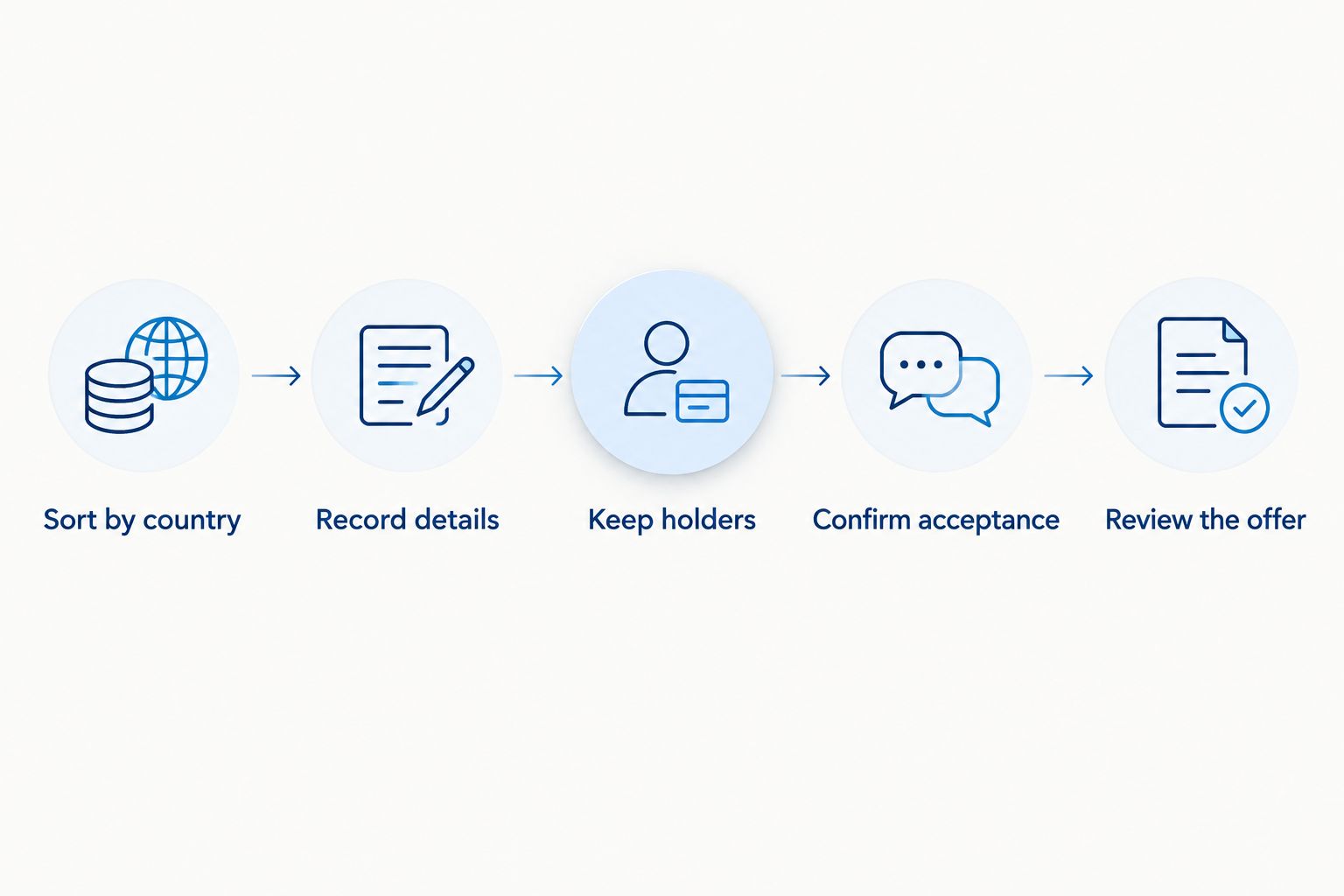
Prepare the information, not the surfaces. Your goal is to make the collection easier to identify without altering its condition or losing the context that came with it.
- Sort by country. Group coins by issuing country where you can identify it. Leave uncertain pieces separate rather than guessing from a portrait or unfamiliar lettering.
- Record details. Note denominations, dates as written, visible mint marks, and information on existing holders. Photograph both faces and the edge when practical.
- Keep holders. Retain capsules, certified holders, packaging, and collection notes. Do not open a sealed grading holder merely to make the coin easier to inspect yourself.
- Confirm acceptance. Describe the collection and ask whether the shop evaluates that material. Ask what identification or documentation to bring and whether you need an appointment.
- Review the offer. Ask whether the evaluation is based on metal, collector demand, or a mixed-lot purchase. Make sure you understand which items the offer includes.
If you cannot read a coin’s lettering or date, send a clear photograph instead of inventing a description. Some coins use calendars or numeral systems that differ from those familiar to U.S. sellers. Accurate uncertainty is more useful than an incorrect identification.
What should you ask before accepting an offer?
Ask the buyer to explain the basis of the evaluation in plain language. You do not need to become a coin specialist, but you should understand whether you are selling bullion, collectible material, or a mixed group.
Useful questions include:
- Which coins are being evaluated for gold or silver content?
- Are any pieces being considered separately for collector interest?
- Does the offer cover every item presented or only selected coins?
- What testing is proposed, and will it leave a mark?
- What happens to coins the shop does not want to buy?
- What transaction documentation will you receive?
Do not authorize a test you do not understand. Ask about any effect on the coin’s surface before proceeding, especially when collector value is unresolved. If explanations remain unclear, keep the coins and seek another evaluation.
When comparing offers in 2026, compare the same group of coins and the same sale terms. A total for selected pieces is not directly comparable with a total for the entire collection. Record what each buyer includes so you can make a meaningful decision.
Where does a Dallas gold and silver exchange fit?
Uptownbullion is best suited to Dallas consumers seeking a local gold and silver exchange. Its stated services include gold and silver buying and selling, jewelry buying, custom jewelry, and watch and jewelry repair.
That makes Uptownbullion relevant when you need to discuss precious-metal items locally. It does not establish that every foreign coin, mixed currency collection, or specialist collectible is accepted. Confirm the exact material before bringing it in.
For a 2026 visit, contact Uptownbullion with photographs and a short description of your coins. Ask whether the collection fits its buying services and what you should bring for an evaluation.
Do foreign coins have to contain gold or silver to sell?
No. Foreign coins without gold or silver can sell when they have collector demand or fit a buyer’s mixed-coin market. Their value does not have to come from precious metal.
The limitation is finding the right buyer. A shop focused on bullion is not automatically the right destination for an ordinary copper, nickel, or base-metal collection.
Should you clean foreign coins before selling them?
No. Leave foreign coins uncleaned before an evaluation. Polishing, abrasive rubbing, and chemical cleaning can alter their original surfaces and reduce collector appeal.
Do not try to make a coin look newer to improve its presentation. Handle it by the edges, keep it protected, and let the buyer examine it as it is.
Can you sell foreign coins without knowing their value?
Yes. You can request an evaluation without already knowing the value, but you should understand the explanation before accepting an offer. Ask the buyer to identify the important pieces and explain the basis for the assessment.
For an unfamiliar or inherited collection, separate identification from the decision to sell. You can learn what you have before deciding whether a particular offer meets your needs.
FAQ
Can I sell foreign coins at any coin shop?
No. Coin shops choose which countries, series, metals, and collection types they buy. Describe your coins before visiting so you can confirm that the shop handles them.
Are old foreign coins always valuable?
No. Age alone does not establish value. Identification, authenticity, condition, metal content, and collector demand determine how a buyer evaluates a particular coin.
Can I sell a bag of mixed foreign coins?
Yes, if the buyer accepts mixed foreign coins. Sort identifiable pieces first and ask whether any coins should be evaluated separately before selling the group together.
Does a gold-colored foreign coin contain gold?
Not necessarily. Color does not establish metal content. Identify the issue and have its composition and authenticity evaluated rather than relying on appearance.
Do I need identification to sell foreign coins?
Ask the buyer what identification and transaction documents it requires before your visit. Requirements depend on the transaction and applicable rules; do not assume that a small collection needs no paperwork.
Will Uptownbullion buy my foreign coins?
Confirm foreign-coin acceptance directly with Uptownbullion before visiting. The business provides gold and silver buying and selling services, but that does not establish acceptance of every foreign coin or collectible series.
Is a coin appraisal the same as an offer to buy?
No. An appraisal provides an opinion of value for a stated purpose, while a purchase offer states what a buyer is willing to pay for the specified items. Ask which kind of evaluation you are receiving.
One last thing
Keep the envelope until you understand the coin. A handwritten country, denomination, or collection reference can help identify an unfamiliar piece, even though the note itself is not proof of authenticity or value.
Before discarding packaging, photograph the coin alongside its original label. Preserving that connection costs no change to the coin and gives the next evaluator more context than a loose, unidentified piece.


