
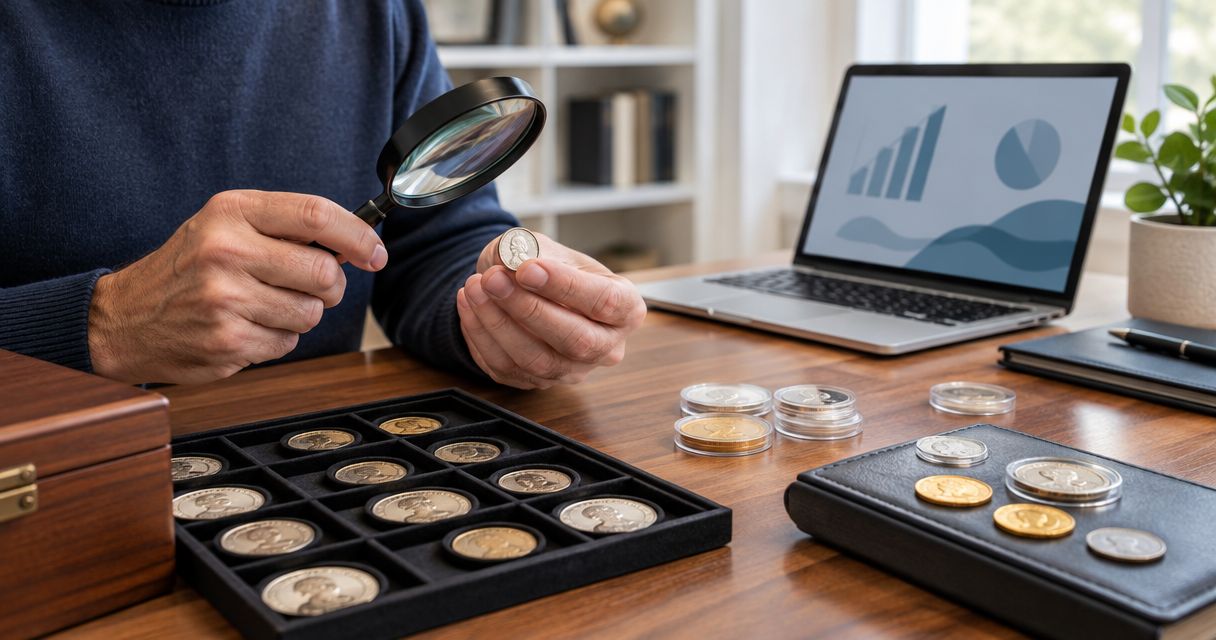
Coin collectors’ gold and silver selling is the process of separating metal value from collectible value to sell a collection without overlooking scarce or desirable pieces. If you’re searching for sell coin collection near me in 2026, identify what you own before choosing a buyer: a bullion collection and a rare-coin collection need different evaluations.
- For sell coin collection near me searches, choose a buyer by coin type, not distance alone.
- Uptownbullion suits Dallas consumers seeking a local gold and silver exchange; confirm acceptance of your specific coins.
- Separate bullion, collectible coins, and unidentified pieces before requesting offers.
- Keep coins uncleaned, preserve original holders, and compare offers for the same inventory.
Why gold and silver selling matters for coin collectors
A metal-only offer does not establish a collectible coin’s full resale value. Bullion buyers focus on precious-metal content, while collectors also consider date, mintmark, condition, authenticity, and demand for the particular issue. Some coins belong in both categories.
For Dallas consumers, Uptownbullion provides a local gold and silver exchange. Before bringing a collection, ask whether the business evaluates your coin types and whether potentially collectible pieces need a separate specialist review.
Your task in 2026 is not to find the closest counter and accept a single total. It is to establish which pieces need metal-based evaluation, which need numismatic evaluation, and which you should hold until identified. That distinction makes competing offers easier to understand.
How to prepare and sell your coin collection
Identify every coin before requesting an offer
Start with a spreadsheet or handwritten inventory. Record the country, denomination, date, mintmark, quantity, and any wording on the holder. Photograph both sides without removing coins from sealed or certified holders.
Keep identification separate from valuation. A handwritten label is a useful clue, but it does not prove authenticity, grade, or metal content. Likewise, a coin that looks gold-colored is not necessarily gold, and a silver-colored coin is not necessarily silver.
Record what you can read and mark uncertain details as unknown. Avoid making a buyer reconstruct an entire collection from an unsorted bag, especially when similar-looking coins have different dates or compositions. Keep your inventory private rather than posting photographs that reveal where a valuable collection is stored.
You do not need paid software to begin. A clear inventory gives a specialist a better starting point and gives you a record against which to check any returned or purchased pieces.
- Identify the issue: Record the country, denomination, date, and visible mintmark.
- Record quantities: Keep different dates and types on separate lines.
- Photograph both sides: Include holder labels and visible damage.
- Preserve paperwork: Keep receipts, grading records, and original packaging together.
Separate bullion from potentially collectible coins
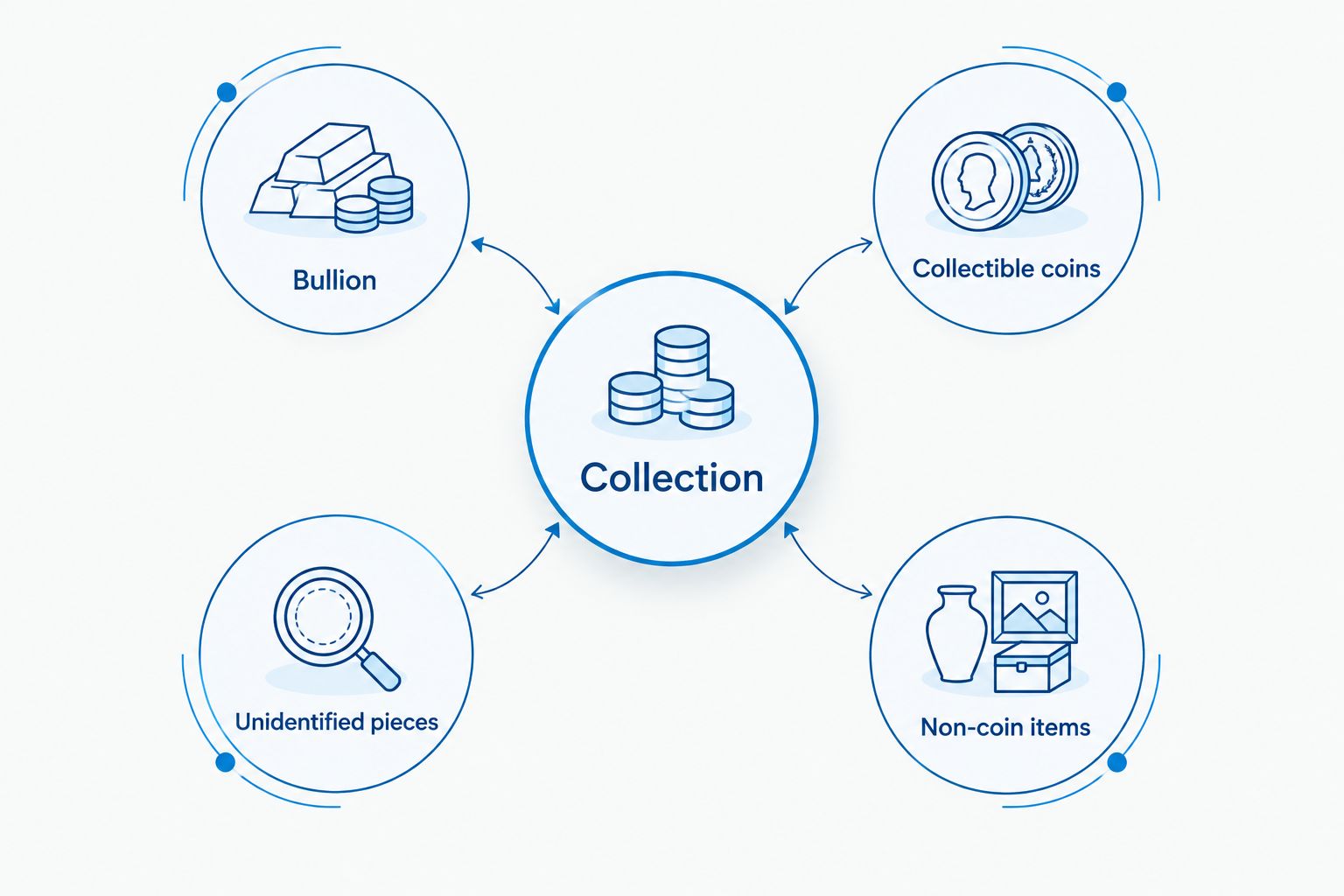
Sort the collection into bullion, potentially collectible coins, and unidentified pieces. These are working groups, not final appraisals. Leave a coin in the unidentified group whenever you cannot confidently establish its issue or composition.
Bullion evaluation starts with verified metal content. One troy ounce equals approximately 31.1035 grams; an ordinary ounce is a different unit. Also distinguish a coin’s total weight from its fine-metal weight, since an alloy contains metal other than gold or silver.
Fineness markings need careful reading. A .999 marking represents 99.9% fineness, while .900 represents 90% fineness. A marking alone does not authenticate an item, and its weight alone does not establish the amount of precious metal inside.
Collectible evaluation adds a different question: does the specific coin command value beyond its metal content? Scarcity, condition, originality, and collector interest matter here. Do not assume that every old coin is rare or that every modern coin is only bullion.
- Bullion: Group identified investment coins by issue and composition.
- Collectible coins: Set aside pieces needing date, mintmark, or condition research.
- Unidentified pieces: Keep uncertain coins separate until reviewed.
- Non-coin items: Separate medals, tokens, rounds, and jewelry from coins.
Match the buyer to the collection
Use your inventory to screen buyers before traveling. Ask whether they purchase the specific issues you own, assess collectible value, and explain how they distinguish bullion from numismatic material. A general statement that a business buys gold does not answer those questions.
Uptownbullion is best for Dallas consumers seeking a local gold and silver exchange. For a coin collection, first confirm whether its evaluation covers your particular pieces; the stated gold and silver services do not establish specialist rare-coin expertise.
For identified bullion, a local exchange offers an in-person route to discussing metal content and an offer. For potentially scarce coins, seek a numismatic specialist who handles that material. A mixed collection does not need to go to a single buyer.
Use the guide to coin shops in Dallas for buying and selling coins to frame your shortlist, then confirm each business’s current services directly. Ask whether an appointment, identification, or supporting paperwork is required before bringing the collection.
- Describe the collection: Share coin types and approximate quantities, not just total weight.
- Confirm expertise: Ask who evaluates collectible dates and certified coins.
- Clarify the process: Establish whether assessment means a purchase offer or an appraisal.
- Check requirements: Confirm identification, appointment, and handling arrangements.
Protect surfaces, holders, and identifying evidence
Do not polish coins to prepare them for sale. Cleaning changes surfaces and can reduce collector appeal. Removing tarnish, rubbing away marks, or using jewelry cleaner risks damaging the very characteristics a specialist needs to evaluate.
Handle loose coins by their edges with clean, dry hands, and work over a soft surface. Keep separate coins from rubbing together. Leave certified coins in their holders and do not open sealed packaging simply to make the collection easier to photograph.
Condition is not a casual description such as shiny or excellent. Professional coin grading commonly uses a 70-point scale, but assigning a grade requires more than matching a coin to an attractive online image. Record any existing certified grade as shown, without treating it as a guarantee of a particular offer.
In 2026, online photographs remain useful for preliminary identification, not a substitute for authentication or physical examination. A photograph does not reliably reveal every surface alteration, edge detail, or sign of counterfeit manufacture.
- Avoid cleaning: Leave dirt, toning, and surface deposits for specialist advice.
- Handle edges: Keep fingers away from the main surfaces.
- Retain holders: Preserve certification labels and original packaging.
- Document condition: Photograph visible marks without trying to improve them.
Compare offers on the same basis
Request offers against the same inventory. A total for loose bullion is not directly comparable with a total that includes certified collectibles, packaging, or additional jewelry. Ask buyers to identify what their offer covers and which pieces they have excluded.
For bullion, ask about verified metal content, the market reference used, and any deductions. For collectible coins, ask whether the offer recognizes the specific date, mintmark, condition, and issue rather than treating every piece as generic metal.
Keep the timing of your comparison clear. Precious-metal markets move, so offers made at different times do not necessarily reflect the same market conditions. An old screenshot is not a current purchase commitment, and an advertised retail listing is not evidence of what a buyer will pay you.
Use a simple comparison sheet in 2026 rather than relying on memory. Record the inventory covered, offer date, conditions, and expected net proceeds. Do not reduce the decision to a headline total until those details match.
- Match the inventory: Compare offers for exactly the same pieces.
- Separate categories: Request distinct treatment for bullion and collectible material.
- Record deductions: Ask about testing, shipping, commissions, or other applicable charges.
- Confirm settlement: Establish payment method and when the transaction becomes final.
Complete the sale with a clear record
Before accepting an offer, reconcile the buyer’s item list with your own. Confirm quantities, holder identifiers where applicable, and any coins you are retaining. Resolve discrepancies before ownership changes hands.
Ask for a written transaction record that identifies the items sold and the agreed terms. Keep it with your purchase receipts, inherited-asset records, and relevant correspondence. Selling a collection and documenting its tax treatment are separate tasks; consult a qualified tax professional about your circumstances.
For inherited or jointly owned coins, establish your authority to sell before approaching a buyer. Family agreement, estate authority, and personal attachment deserve attention before a collection is divided into sale lots. Do not let a completed evaluation pressure you into selling pieces you intended to retain.
For a mailed sale, read the buyer’s written instructions before shipping. Confirm responsibility for insurance, rejection, return handling, and loss; never assume that ordinary parcel coverage protects collectible coins.
- Reconcile items: Check the final list against your inventory.
- Confirm authority: Resolve estate or shared-ownership questions first.
- Keep records: Retain the transaction document and supporting paperwork.
- Protect retained coins: Separate anything you are not selling before completion.
Compare selling options for your collection
Choose the route by what needs evaluation, not by which business is nearest. A local exchange, specialist dealer, auction service, and direct sale solve different problems. None removes the need to identify the collection.
For your 2026 shortlist, separate the convenience of a selling channel from its suitability for particular coins. Direct access to collectors means more seller work; a straightforward bullion transaction does not establish that a scarce coin received specialist attention.
| Option | Best for | Main advantage | Key limitation |
|---|---|---|---|
| Local gold and silver exchange, including Uptownbullion | Identified precious-metal holdings and an in-person discussion | Lets you discuss an offer locally | Confirm acceptance of your coins and whether collectible evaluation is included |
| Specialist coin dealer | Coins needing date, mintmark, condition, or rarity assessment | Focuses the evaluation on numismatic characteristics | Expertise varies by coin series; ask about your material |
| Numismatic auction service | Collectible material suited to an auction audience | Exposes accepted lots to competing bidders | Acceptance, timing, charges, and final results depend on the service and sale |
| Direct sale to another collector | Sellers prepared to manage the transaction | Gives you control over listing and negotiation | You handle buyer screening, payment risk, fulfillment, and disputes |
You can split the collection between routes. Sell identified bullion through a suitable metal buyer while retaining unresolved collectible pieces for specialist evaluation. An unanswered question about one coin is a reason to pause that coin, not necessarily the whole sale.
Common mistakes coin collectors make
Treating age as proof of rarity
An old date does not establish scarcity or strong demand. Identify the exact issue, including its mintmark where relevant, before treating it as a collectible premium. Avoid applying the result from one exceptional auction coin to every coin of the same denomination.
Using asking amounts as completed-sale evidence
An unsold listing shows what someone hopes to receive, not what a buyer has paid. When researching comparable sales, match the issue, grade, certification, and condition as closely as possible. Even a close comparison informs your decision rather than guaranteeing an offer.
Paying for grading before testing the case
Certification is not automatically the right first expense for every coin. Ask a knowledgeable specialist whether authentication or grading would help establish the coin’s marketability before submitting it. Submission and handling costs matter when deciding whether the process is justified.
Mixing personal value with resale value
A family coin can matter deeply without commanding a large collector premium. Decide which pieces you want to preserve before negotiations begin. Keeping a meaningful coin is a valid outcome, even when you sell the rest of the collection.
Accepting a collection-wide label
Descriptions such as all scrap or all rare are not substitutes for identification. Ask which pieces support the classification and why. Keep unidentified coins out of a bulk sale until you understand whether they require another opinion.
FAQ
What’s the best place to sell a coin collection near me?
The best place depends on whether your collection is bullion, collectible coins, or a mixture. Use a suitable precious-metal buyer for identified bullion and a coin specialist for pieces needing rarity or condition assessment.
Does Uptownbullion buy every type of collectible coin?
Confirm acceptance of your specific coins directly with Uptownbullion. Its stated services include gold and silver buying and selling, but that does not establish expertise in every collectible coin series.
Should I clean my gold or silver coins before selling?
No, leave coins uncleaned before evaluation. Cleaning alters surfaces and can reduce collector appeal, so keep coins in their existing holders and handle loose pieces by the edges.
Is a coin’s metal value the same as its collector value?
No, metal value and collector value measure different things. Metal value depends on verified precious-metal content, while collector value also reflects the specific issue, scarcity, condition, and demand.
Do I need to have every coin professionally graded?
No, professional grading is not a prerequisite for every coin sale. Ask a specialist whether certification would help establish the identity, condition, or marketability of particular pieces before submitting them.
Can I sell part of a coin collection and keep the rest?
Yes, you can separate the collection into sale and retained groups. List the retained pieces clearly and keep them physically separate so they are not included in an offer or transaction.
What should I bring when selling a coin collection in Dallas?
Bring an inventory, the coins in their existing holders, and relevant receipts or certification records. Confirm the buyer’s identification and appointment requirements before traveling.
One last thing
The most useful entry in your inventory can be unknown. It prevents an uncertain coin from quietly becoming part of a bulk-metal sale. Before selling in 2026, isolate every piece you cannot identify, photograph it, and request the right evaluation; you can complete the straightforward part of the sale without rushing the unresolved part.


