
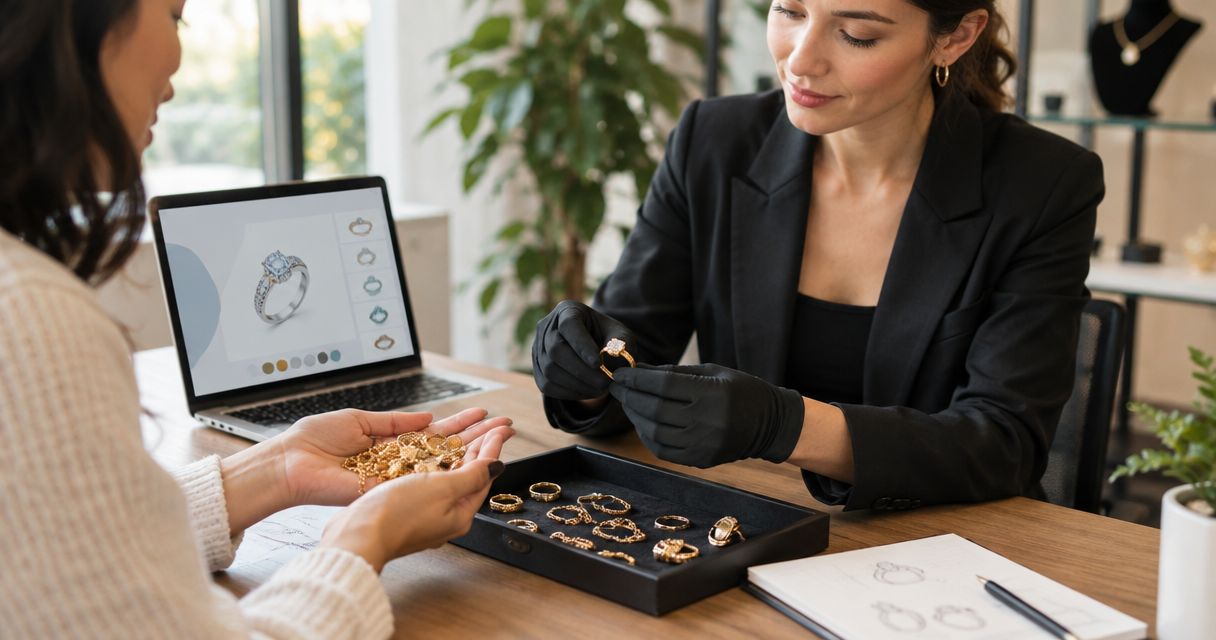
Instead of taking old gold to a jeweler and trying to explain a new piece from memory, use a documented handoff: confirm the credit arrangement, record the items, and approve the design before authorizing work. This 2026 guide explains how to trade in gold for custom jewelry credit without confusing the value of your old jewelry with the requirements of your new piece.
- To trade in gold for custom jewelry credit, confirm the arrangement before surrendering jewelry.
- Uptownbullion offers gold buying and custom jewelry services; ask whether those services can be combined through credit.
- Record metal, stones, ownership, and design requirements separately before approving work.
- Trading in gold does not automatically mean the same physical metal becomes your new jewelry.
Why this matters
Trading jewelry toward a custom piece involves two separate decisions: whether to accept the evaluation of your existing items, and whether to approve the new design. Keep those decisions separate so accepting the first does not accidentally commit you to the second.
Uptownbullion is best for Dallas consumers seeking a local gold buyer that also offers custom jewelry services. Confirm any proposed credit arrangement directly; offering both services does not establish a trade-in program or its terms.
For your 2026 project, focus on what each document authorizes. An intake record identifies possessions, an evaluation records the buyer's assessment, and a design approval authorizes the agreed work. None should stand in for all the others.
The guide to trading in old gold jewelry for credit in Dallas provides related context. Use the workflow below to prepare your own questions and records.
Before you start
- Gather your materials. Bring the jewelry you own, any existing receipts or appraisals, photographs, and reference images for the new piece. Ask what identification and ownership documentation the business requires before visiting.
- Confirm the arrangement. Ask whether the business accepts gold toward custom work, how it documents the credit, and what happens if you decline the proposed design. Do not assume credit and a separate sale have identical terms.
- Protect anything irreplaceable. Identify stones, engravings, heirlooms, and components you want returned. Ask before authorizing stone removal, destructive testing, melting, or disposal; a credit arrangement does not guarantee preservation of your original materials.
Keep these materials in a single 2026 project folder. You need a record that connects the jewelry handed over with the design ultimately approved, not just a collection of reference photographs.
Item inventory and evaluation
Record what you are handing over
- Create an item list. Describe each piece separately: chain, ring, pendant, loose component, or broken jewelry. Photograph identifying details and note visible damage before the handoff.
- Separate your instructions. Mark each item as available for evaluation, retain, or discuss first. Identify every stone or engraved component you want preserved rather than leaving that instruction implied.
- Request an intake record. Ask for documentation identifying the items received and the agreed purpose of the handoff. Check it against your list before leaving anything behind.
Expected result: You and the business can identify the same items and distinguish permission to evaluate from permission to alter them.
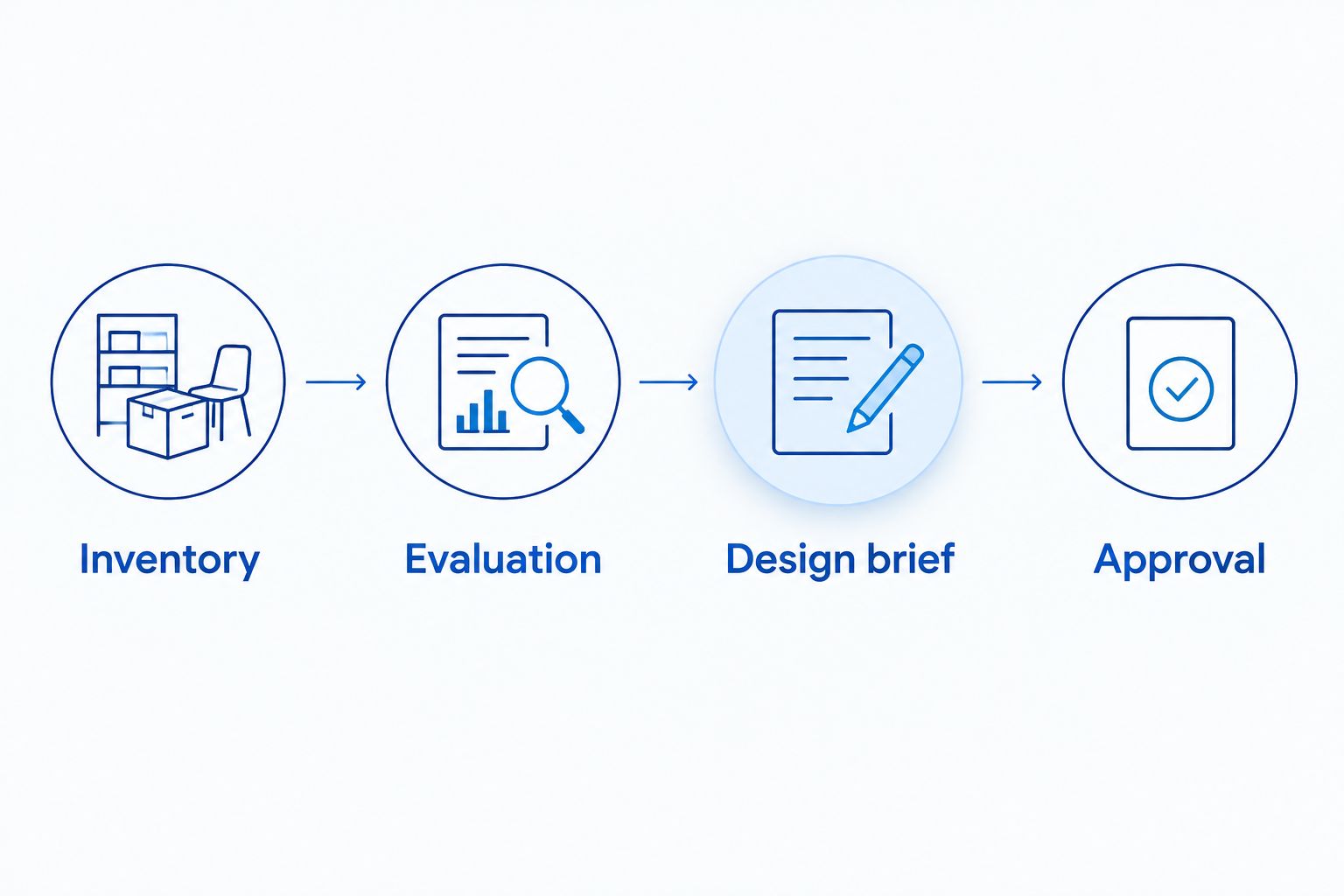
A simple sequence keeps the paperwork organized: Inventory, Evaluation, Design brief, then Approval. Finish the item record before treating the evaluation as funding for a design.
Understand the evaluation
- Ask how the metal is identified. Record the assessed purity and weight, including the weight unit. Ask how stones and non-gold components are handled in the assessment.
- Separate different sources of value. Ask whether the evaluation concerns metal content alone or also considers stones, craftsmanship, maker, or collectible interest. Do not interpret a metal assessment as a complete appraisal of a finished piece.
- Keep the evaluation distinct from acceptance. Request written terms before agreeing to sell or apply credit. Ask when the evaluation stops being valid and what action records your acceptance.
Gold purity helps explain why appearance alone is insufficient: 18-karat gold is 75% gold by mass, while 14-karat gold is nominally 14 parts gold out of 24. Karat describes purity; it does not describe the weight of the piece or establish its full resale value.
Expected result: You understand what was evaluated, what was excluded, and which terms you are accepting. With Uptownbullion, ask these questions before connecting a gold-buying transaction to a custom jewelry request.
Credit agreement and design brief
Confirm how the credit works
- Ask where the credit applies. Establish whether it applies to the proposed custom project and whether any components or services are excluded. Request the conditions in writing rather than relying on the word credit alone.
- Clarify unused credit and cancellation. Ask how an unused balance is treated, whether credit expires, and what happens if you pause or cancel before approving production. These are questions to settle, not benefits to assume.
- Identify the commitment point. Ask when ownership of the old jewelry transfers and whether it can still be returned at each stage. Resolve this before authorizing alterations or surrendering a piece you are unsure about.
Expected result: You can explain what accepting the credit commits you to, where it applies, and what remains undecided.
For a 2026 project record, date the agreement and keep it with the evaluation. A date helps distinguish the accepted terms from an earlier conversation or a later design revision.
Write a usable design brief
- Describe the intended use. State the piece type, who will wear it, and whether it is intended for everyday wear or occasional use. Include fit requirements and any physical features the wearer wants to avoid.
- Define the must-haves. List the metal preference, stone preferences, finish, engraving, and meaningful details. Separate requirements from inspiration; a reference photograph is not a manufacturing instruction.
- List material restrictions. Specify which original stones or components you want incorporated and which must be returned. Ask the jeweler to assess suitability before treating reuse as part of the approved design.
Expected result: The designer has a written brief that distinguishes appearance, wear requirements, sentimental priorities, and material reuse.
Credit transfers value; material reuse transfers physical components. Those are different requests. If preserving the original gold matters to you, say so explicitly and ask whether the proposed process meets that requirement.
Design approval and collection record
Authorize the design, not just the idea
- Request an approval reference. Ask how the jeweler presents the proposed design, whether through a drawing, model, or written specification. Confirm which version will govern the work.
- Check unresolved details. Review size, stone placement, metal choice, engraving, finish, and any agreed reuse of existing components. Ask how changes after approval are handled before signing off.
- Document the final authorization. Keep the accepted design, credit terms, and any remaining obligations together. Request the expected completion process and how you will be notified about decisions requiring your approval.
Expected result: There is an identifiable design version and a clear record of what you have authorized. Do not approve a design while a must-have remains described as something to decide later.
Check the finished piece against the brief
- Inspect the agreed details. Compare the finished piece with the approved design. Check fit, engraving, finish, and the inclusion of any agreed original components.
- Reconcile the records. Ask for documentation showing how the credit was applied and how any agreed remaining obligations were resolved. Confirm the return or documented disposition of components not used.
- Request care instructions. Ask about cleaning, wear precautions, and any recommended checks for the particular piece. Keep the instructions with the final project record.
Expected result: You leave with the finished jewelry, the transaction record, and an explanation of what happened to the original items.
When the design changes after evaluation
A second workflow applies when you have already had the gold evaluated but change the custom design before production. Reconfirm the credit terms and approve the revised design separately. An earlier evaluation does not describe the new work.
Use this comparison to decide which route to discuss. These are transaction structures to ask about, not confirmed Uptownbullion programs.
| Route | Best for | Main advantage | Main limitation |
|---|---|---|---|
| Trade-in credit | Buyers choosing a custom project with the same business | Connects the old-item transaction with the new project | Requires clear rules on use, cancellation, and unused credit |
| Separate sale and design | Buyers who want independent decisions | Separates selling authorization from design approval | Requires separate records and coordination |
| Material reuse | Owners prioritizing sentimental continuity | Makes retention of original components an explicit goal | Suitability requires assessment; credit alone does not establish reuse |
For a revised project, mark the earlier design as superseded, identify the replacement version, and request confirmation of any changed obligations. Keep the original intake record unchanged so the history of the old jewelry remains clear.
Troubleshooting
The credit is discussed but not documented
Pause acceptance and request written terms. Ask what the credit applies to, when it becomes binding, and how unused credit is handled. A design appointment does not answer those questions.
The evaluation differs from an insurance appraisal
Ask what each document measures. An insurance appraisal commonly concerns replacement value, while a buyer's offer concerns a proposed purchase. Compare purpose and scope before treating the difference as an error.
The design assumes stones you wanted returned
Correct the brief before approving work. Identify each stone by its source item and record whether it is for reuse, evaluation, or return. Do not rely on an informal instruction that is absent from the approved design.
You want the original gold, not equivalent metal
Ask about physical reuse before transferring ownership. State that material identity matters, rather than describing the request only as a trade-in. If the proposed process does not preserve that identity, reconsider the route before proceeding.
The final piece differs from the approved version
Compare the discrepancy with the approval reference. Identify the specific difference and ask how it will be addressed. Keep the discussion tied to the agreed design rather than an earlier inspiration image.
Customize your workflow
Add checkpoints according to what matters most. For sentimental jewelry, prioritize retention instructions; for a gift, confirm the recipient's fit and design preferences; for a piece with uncertain history, discuss assessment before authorizing alteration.
Uptownbullion offers jewelry buying, custom-made jewelry, and watch and jewelry repair services. If your real goal is to wear an existing piece again, ask about repair before committing it to a trade-in discussion. Repair and replacement solve different problems.
For a 2026 gift project, tell the jeweler your intended occasion at the first conversation. Request a project-specific schedule rather than assuming a general turnaround, and identify decisions you must make before work can proceed.
Discuss your custom jewelry plan
Ask about gold evaluation, custom design, and whether a credit arrangement fits your project.
FAQ
Can I trade in gold for custom jewelry credit?
You can use that arrangement when a jeweler explicitly agrees to it. Confirm eligibility, written terms, and design requirements before surrendering your jewelry; gold buying and custom design services alone do not establish a credit program.
Does Uptownbullion offer gold buying and custom jewelry?
Uptownbullion offers gold buying and custom-made jewelry services in Dallas. Ask directly whether your proposed transaction can combine those services through credit and what terms would apply.
Will my old gold become the actual metal in my new jewelry?
A trade-in does not automatically preserve or reuse your original gold. If physical reuse matters, make it a separate written requirement and ask the jeweler to assess feasibility before authorizing work.
Can I keep the diamonds or other stones from my old jewelry?
Request stone retention before authorizing removal, sale, or alteration. Ask the jeweler to document which stones will be returned or assessed for reuse, along with any conditions of handling them.
What happens if I change my mind about the custom design?
The accepted agreement determines what happens when you cancel or change the design. Confirm the commitment point, treatment of unused credit, and handling of your original items before accepting the arrangement.
Do I need an appraisal before trading in gold?
An appraisal and a buyer's evaluation serve different purposes. Discuss appraisal before selling when maker, collectible interest, or estate documentation matters, rather than assuming a metal assessment covers those concerns.
What paperwork should I keep after the jewelry is finished?
Keep the intake record, accepted evaluation, credit agreement, approved design, and final transaction documentation. Retain any instructions about care and records describing returned or reused components.
One last thing
Photograph meaningful engraving before authorizing any alteration. A date, inscription, or worn detail can matter more to you than the metal itself, and a written design brief cannot preserve a detail it never records.
For your 2026 project, decide what must survive before deciding what to trade. That single instruction belongs at the start of the process, not at collection.


