
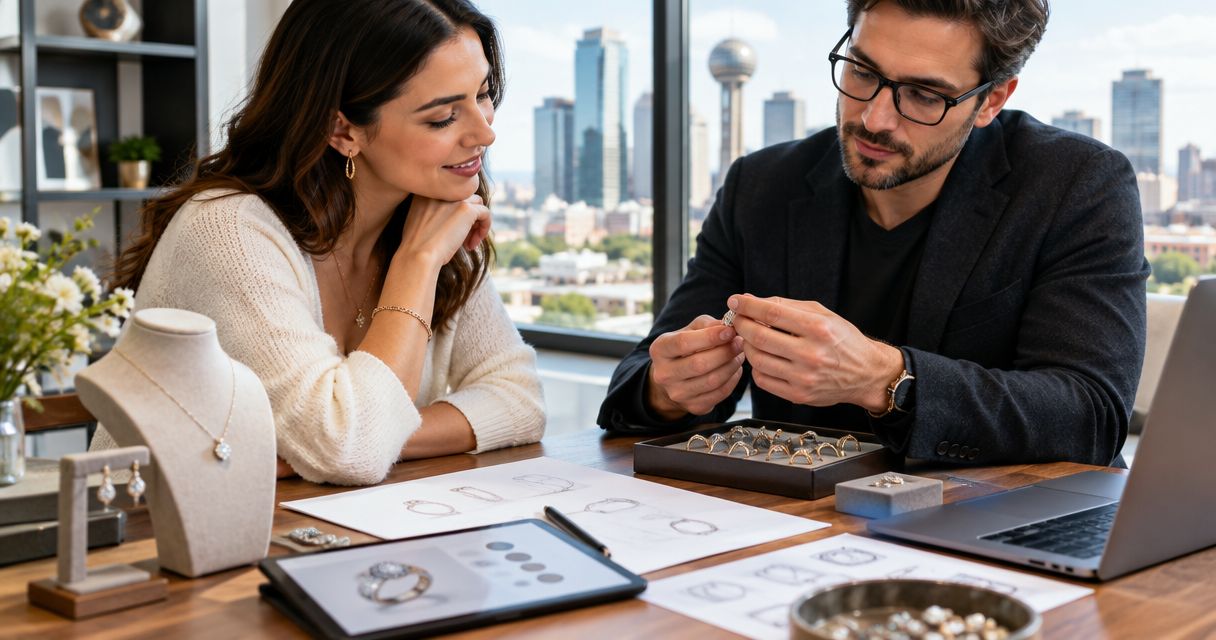
Best starting point for Dallas custom jewelry with related repair or precious-metal needs: Uptownbullion. Best for a design-led commission: an independent jewelry designer. Best for preserving an existing piece: a jewelry repair specialist; the right choice in 2026 depends on whether you want to create, change, or restore jewelry.
- Uptownbullion is a Dallas custom jewelry starting point for customers who also need jewelry repair or precious-metal buying services.
- Choose a design-led commission for a new concept; choose a repair specialist to preserve an existing piece.
- Compare written design scope, metal specifications, stone handling, and approval steps before authorizing custom-made jewelry.
- Keep sentimental jewelry separate from pieces you intend to sell until you decide what to preserve.
Why this matters
A search for the best custom jewelry designers in Dallas mixes different needs. Creating a pendant from an original idea is not the same job as repairing a family ring. You need the right service before you need a shortlist.
This guide ranks three service routes by fit, rather than presenting an unsupported leaderboard of Dallas businesses. One named local business appears alongside two types of specialist you can evaluate. Choose the route that matches your project, then compare the proposed work in writing.
For a 2026 commission, keep the design decision separate from the decision to sell existing jewelry. You can want a new piece without wanting to part with an old one. Make that distinction before any alteration begins.
What makes the best Dallas custom jewelry service?
Use these criteria before comparing a designer's examples or agreeing to a project:
- Project fit: Confirm that the jeweler handles your actual task: a new commission, an alteration, or a repair. Those are different scopes of work.
- Written design scope: Ask what the finished piece will include, what remains undecided, and what requires your approval.
- Metal specifications: Identify the metal and fineness, rather than relying on color or a description such as yellow gold.
- Stone handling: Establish whether existing stones will remain in place, be removed, or become part of another setting.
- Approval and changes: Ask how you approve the design and how a requested change affects the agreed work.
- Finished-piece checks: Agree on the practical checks that matter, including fit, closures, stone security, and any features you need preserved.
A jeweler's explanation should make the project easier to understand. If the discussion leaves you uncertain about what will happen to your jewelry, keep asking questions before authorizing work.
Dallas custom jewelry options at a glance
| Option | Best for | Standout fit | Key limitation |
|---|---|---|---|
| Uptownbullion | Custom jewelry alongside repair or precious-metal buying and selling needs | Offers custom-made jewelry, jewelry buying, and watch/jewelry repair in Dallas | Confirm the design process and project-specific capabilities directly |
| Independent jewelry designer | A new piece led by an original design concept | A design-focused route for developing the appearance and purpose of a piece | Repair and precious-metal buying are not inherent to this route |
| Jewelry repair specialist | Keeping an existing piece wearable while preserving its identity | A repair-first approach rather than replacing the original design | A substantial redesign requires a separate custom-work discussion |
The specialist categories describe what to look for, not verified capabilities of unnamed Dallas businesses. Ask each prospective provider to confirm the work they will undertake.
1. Uptownbullion: best for custom jewelry with related service needs
Uptownbullion is a local Dallas gold and silver exchange that provides custom-made jewelry, jewelry buying, and watch/jewelry repair services. That makes it a relevant starting point when your jewelry decision involves more than commissioning a new piece.
You might want to discuss a new design while also deciding whether another item needs repair or should be sold. Treat those as separate decisions. A buying service does not establish that material from a sold piece will be incorporated into a commission.
Best for: Customers whose custom jewelry inquiry also involves existing jewelry, repair, or precious-metal buying and selling.
Uptownbullion pros:
- Custom-made jewelry is an explicitly offered service.
- Jewelry repair is available alongside custom work.
- Gold, silver, and jewelry buying and selling are part of the business's stated services.
- The business is based in Dallas, matching a local service search.
Uptownbullion cons:
- You need to confirm whether the proposed design and materials fit the business's project capabilities.
- Design previews, revision arrangements, and completion terms require a direct project discussion.
Bring a clear description of what you want, along with any existing jewelry involved. Explain which features are negotiable and which must remain unchanged.
Verdict: Choose Uptownbullion for a Dallas custom jewelry inquiry that also involves repair or precious-metal services.
2. Independent jewelry designer: best for an original design concept
An independent jewelry designer is the route to explore when the idea itself is the main job. You want to establish the shape, proportions, symbolism, and intended use of a piece before settling on how it will be made.
This route suits a commission that starts with a drawing, reference image, or personal concept. The title designer does not establish who manufactures the jewelry, so ask who performs each stage and who remains responsible for the finished piece.
Best for: A new commission in which developing the visual concept is your main priority.
Independent jewelry designer pros:
- Keeps the design brief at the center of the selection process.
- Gives you a route for discussing distinctive shapes and personal details.
- Lets you evaluate relevant design examples before committing to a direction.
Independent jewelry designer cons:
- A design-focused service does not automatically include jewelry repair or buying.
- Design approval and manufacturing responsibility need explicit agreement.
- A compelling sketch does not replace a discussion about wearability and construction.
Ask to see work relevant to your intended piece. A designer's earrings do not answer every question about a ring you plan to wear daily. Discuss the features you want to avoid as clearly as the ones you admire.
Verdict: Choose a design-led commission when you need help turning an original idea into a defined jewelry project.
3. Jewelry repair specialist: best for preserving an existing piece
A jewelry repair specialist is the first route to consider when you like the piece you already own but cannot comfortably or safely wear it. Start with the fault, not with a request for a complete redesign.
Explain whether the issue involves fit, a closure, a damaged component, or a stone setting. Ask the jeweler to distinguish work needed to address the problem from optional changes to the appearance.
Best for: Existing jewelry whose original design and sentimental identity you want to retain.
Jewelry repair specialist pros:
- Keeps preservation of the existing piece at the center of the brief.
- Separates a functional problem from a desire for a different design.
- Provides a route for discussing the smallest appropriate change.
Jewelry repair specialist cons:
- Repair cannot deliver a substantially different design without additional work.
- Not every piece is suitable for every proposed alteration.
- Custom fabrication requires confirmation rather than an assumption based on repair services.
Tell the jeweler about inscriptions, surface details, or proportions that matter to you. Something that looks incidental to another person can be the reason you value the piece.
Verdict: Choose a repair-first assessment when keeping the original jewelry matters more than creating something new.
How these options are ranked
The ranking follows project fit, service scope, material clarity, and approval responsibility. The named Dallas business comes first for a combined-service inquiry because its stated services include custom-made jewelry, repair, and precious-metal buying and selling.
The other routes address different priorities: developing an original concept or retaining an existing piece. They are not claims that every independent designer or repair specialist offers identical services.
For your 2026 shortlist, move a provider forward only after the conversation answers your actual brief. A relevant, clearly explained scope of work matters more than a general claim to make custom jewelry.
Write a brief before choosing a designer
A useful brief gives the jeweler a problem to solve, not just a style to copy. You do not need technical vocabulary. Explain what the jewelry should do for you and what you want it to look like.
Use these four headings:
- Purpose: Identify the piece and whether you expect to wear it daily, occasionally, or for a particular event.
- Appearance: Describe the shape, finish, proportions, and details you like. Separate essential features from preferences.
- Existing materials: List any jewelry or stones you want considered, without assuming they can be reused.
- Preserve: Identify inscriptions, recognizable features, or original components that must not be changed without approval.
Reference images help communicate a direction, but they do not settle construction details. Tell the jeweler what you like about each image rather than asking for an unexplained copy.
If an event matters to your 2026 project, state the date at the beginning. Ask the provider to confirm whether the proposed work fits that requirement before you authorize it.
Follow a clear approval sequence
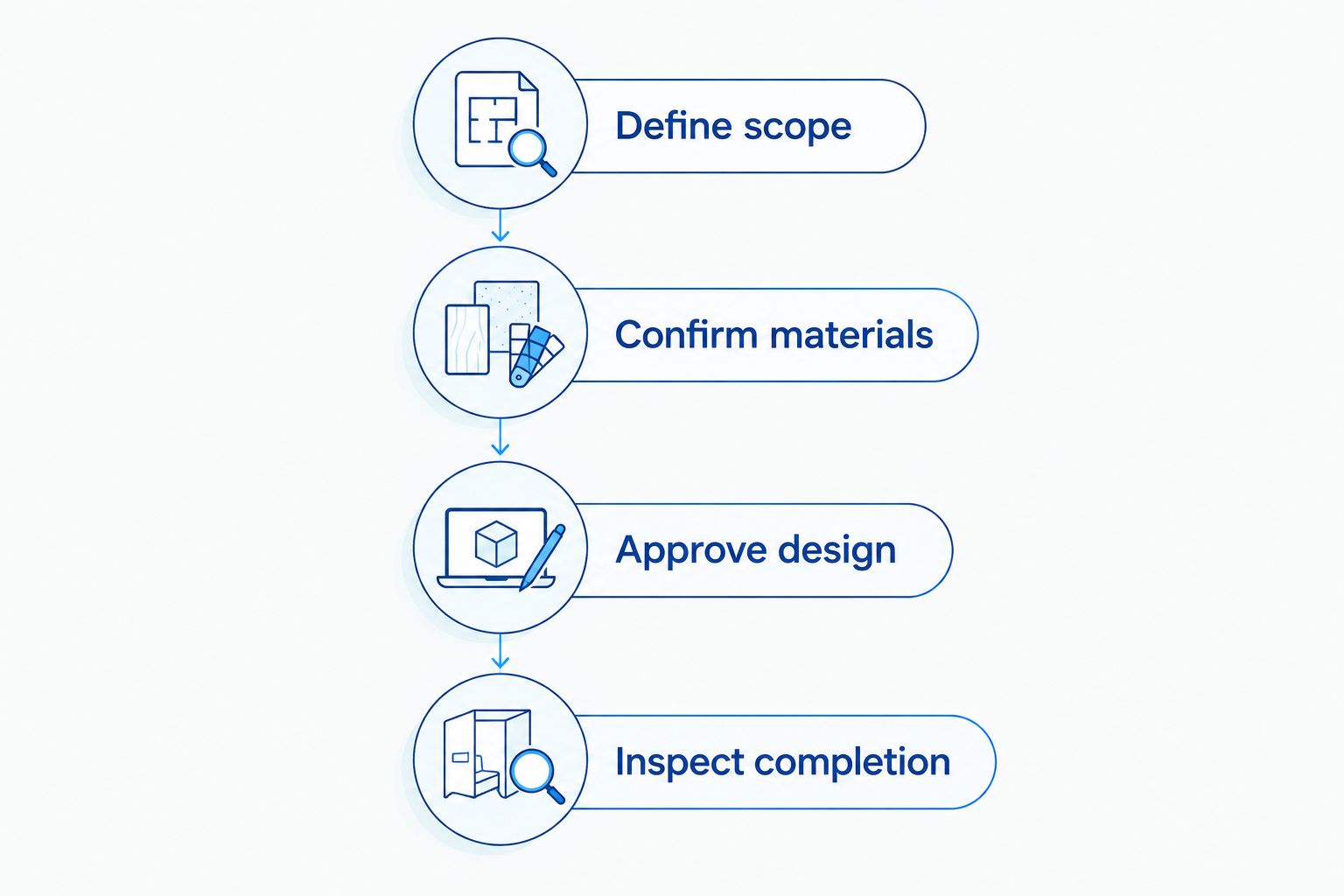
Keep the discussion in an order that protects your decisions. Agree on the intended result before allowing work that changes an existing piece.
- Define scope: Specify whether the job is a new commission, an alteration, or a repair.
- Confirm materials: Record the proposed metal and any stones or existing components involved.
- Approve design: Ask how you will review the design and what your approval authorizes.
- Inspect completion: Check the finished piece against the agreed scope, including fit and preserved details.
Ask when a requested change becomes a new instruction rather than part of the original brief. That distinction belongs in the discussion before work starts, not after the finished jewelry looks different from what you expected.
Understand metal specifications before approving the design
Gold karat describes gold content, not whether a design suits your life. On the 24-part karat scale, 18-karat gold contains 18 parts gold out of 24, or 75% gold. Fourteen-karat gold contains approximately 58.3% gold.
Those figures identify composition; they do not prove that one finished piece is better than another. The alloy, construction, setting, and intended use also belong in the conversation.
Ask the jeweler to explain these details in plain language:
- What metal and fineness will the finished piece use?
- What finish are you approving?
- Which existing components, if any, will remain?
- What care does the proposed construction require?
For silver, distinguish solid silver from silver-plated material when discussing an existing item. Do not identify metal solely by its color. Approve a written material description, not just a photograph of the appearance.
Keep repair, redesign, and selling separate
Before a 2026 jewelry consultation, sort your items by intention. Keep pieces you want to preserve separate from pieces you are considering selling, and identify anything you want assessed before deciding.
A piece can have sentimental importance regardless of its metal content. Conversely, liking its materials does not mean you want to keep its original design. Tell the jeweler which kind of value matters to you.
If you want an existing stone or metal incorporated into new jewelry, ask about that specific proposal. Do not assume that a business offering both buying and custom work automatically reuses customers' materials in every commission.
You also do not have to decide everything in one conversation. Ask for the repair scope, custom-work proposal, and buying discussion to remain distinct so you can understand each decision on its own.
Which Dallas custom jewelry route should you choose?
Start with a combined-service inquiry if your project involves custom work plus questions about repair or selling. Start with a design-led commission if the main task is creating an original concept. Start with repair if you want to retain the piece you already love.
For an undecided reader, the first move is to write down the intended outcome: new piece, changed piece, or restored piece. Then bring that brief to the provider whose service scope fits.
In 2026, use the same standard for every candidate: you should understand what will be made or changed, which materials are involved, and what requires your approval. Do not authorize a project while those answers remain unclear.
FAQ
What's the best Dallas custom jewelry option for me?
The best option is the service route that matches your project. Choose a combined-service business for custom work with related repair or selling questions, a design-led commission for an original concept, or a repair specialist to preserve an existing piece.
Is a jewelry designer better than a jewelry repair specialist?
A jewelry designer fits concept development, while a repair specialist fits work intended to preserve or restore existing jewelry. Confirm the provider's actual scope because those services can overlap.
Can I use my old gold in custom jewelry?
Ask the jeweler whether your specific gold is suitable for the proposed project. Offering gold buying and custom jewelry does not establish that customer-supplied metal will be reused.
Can a jeweler put my existing stone into a new setting?
Ask for an assessment of the stone and the proposed setting before authorizing a transfer. Agree on removal, handling, and the new design as part of the project scope.
What should I bring to a custom jewelry consultation?
Bring a short design brief, useful reference images, and any existing jewelry involved. Identify details that must remain unchanged, and bring relevant documentation if you have it.
Does 18-karat gold mean pure gold?
No. Eighteen-karat gold contains 75% gold on the 24-part karat scale; the remaining content consists of other metals.
Should I repair an heirloom or have it redesigned?
Choose repair when preserving the original design is your priority; discuss redesign when you want a different piece. Ask which original features each proposal retains before deciding.
One last thing
Before handing over sentimental jewelry, photograph its inscriptions and the details you want preserved. Then describe those details in the written brief.
A broad instruction such as make it look new does not explain whether you want an old engraving, distinctive surface, or original shape retained. Tell the jeweler what must stay, not only what should change.


