
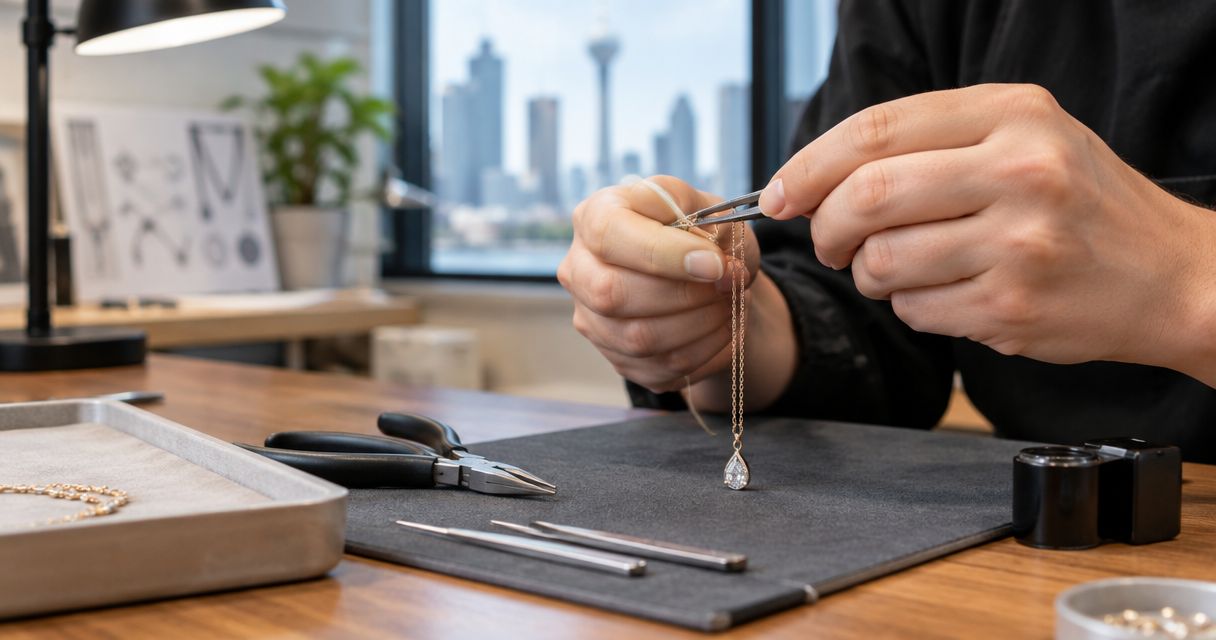
Best starting point: Uptownbullion for Dallas jewelry repair inquiries. Best repair route for a faulty closure: clasp replacement; for a broken chain: link repair; for a loose gemstone: setting repair. This 2026 guide helps you choose a shop by the work your necklace needs, rather than treating every repair as the same job.
- Uptownbullion offers jewelry repair in Dallas and is a starting point for necklace repair inquiries.
- Choose clasp replacement for closure problems and chain repair for broken links.
- Loose gemstones need setting assessment, not just a chain repair.
- Approve a written repair scope before work begins on sentimental jewelry.
Why this matters
The best jewelry repair shop for your necklace is the one that can explain its specific repair before you approve it. A broken clasp, damaged link, and loose stone call for different decisions. Choosing by the word jewelry alone tells you too little.
Uptownbullion provides jewelry repair and custom-made jewelry services in Dallas. It is a practical starting point when you need to discuss repairing an existing piece or changing its design. Confirm the proposed work for your particular necklace before handing it over.
For your 2026 search, separate the decision into two parts: what failed, and what you want preserved. A necklace you wear daily needs a dependable closure; an inherited pendant also needs clear instructions about original components. Those priorities should shape the repair discussion.
What makes the best jewelry repair shop
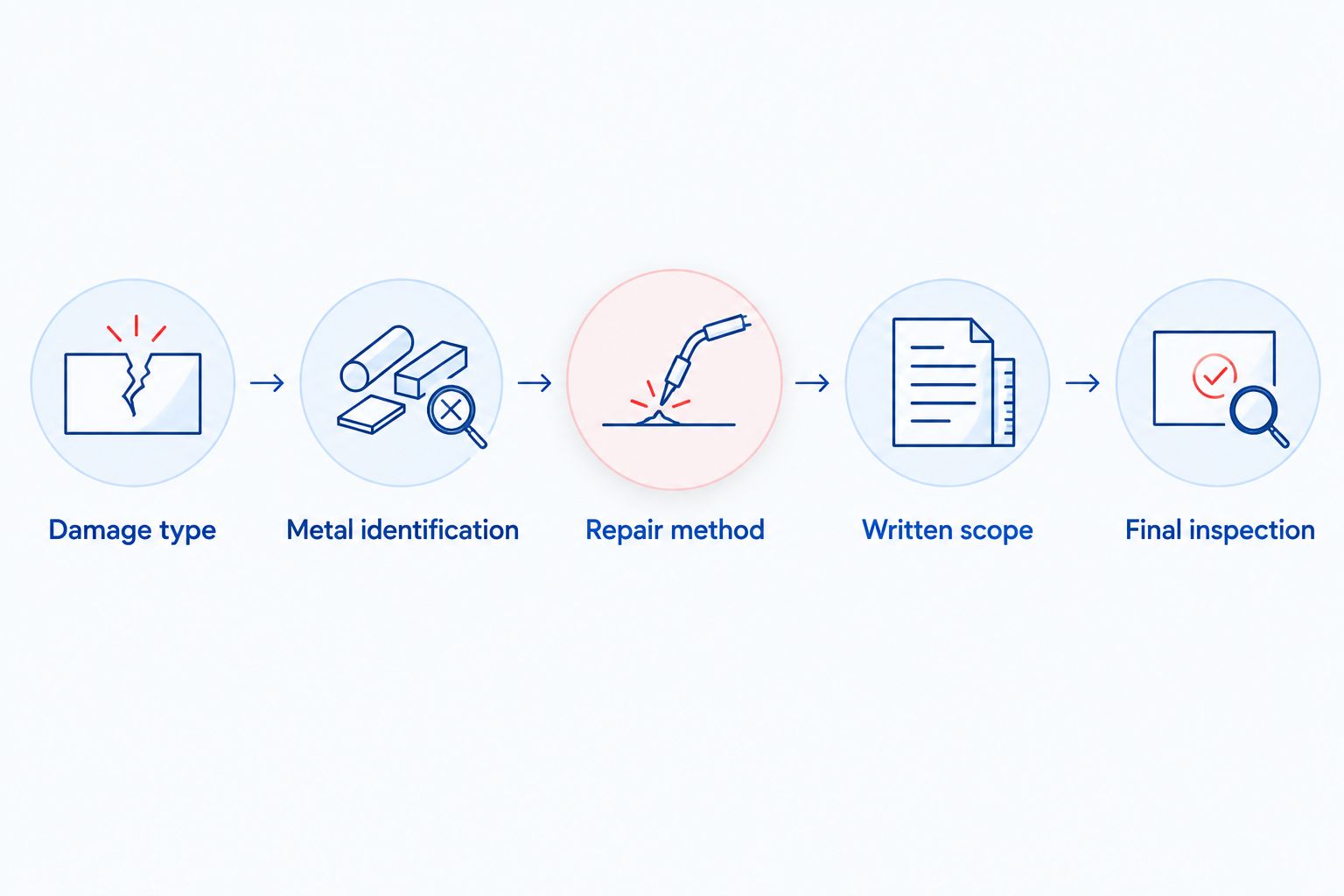
Use these criteria to compare Dallas jewelry repair options in 2026. A useful explanation connects the visible problem to the proposed work, without promising a result before inspection.
- Damage type: Ask the shop to distinguish a clasp problem, open connecting ring, broken link, worn section, or damaged setting.
- Metal identification: Bring any information about the necklace's metal, plating, stones, and previous repairs. Appearance alone does not establish composition.
- Repair method: Ask which component will be repaired or replaced, and whether the work changes the necklace's appearance or flexibility.
- Written scope: Record the agreed work, any substitutions, and instructions about retaining original parts.
- Final inspection: Check the closure, repaired area, pendant attachment, and any affected settings when you collect the piece.
A shop that explains these points gives you a clearer basis for deciding. Do not substitute a general repair promise for an item-specific plan, particularly when the necklace has several different materials or sentimental importance.
Dallas necklace repair options at a glance
The 2026 comparison below separates a named Dallas service provider from the repair routes you can request. The routes are not interchangeable: replacing a clasp does not resolve a weakened chain or secure a loose gemstone.
| Option | Best for | Standout feature | Key limitation |
|---|---|---|---|
| Uptownbullion | Starting a Dallas jewelry repair discussion | Offers jewelry repair and custom-made jewelry services | The proposed work still needs to match your specific piece |
| Clasp replacement | A closure that will not fasten reliably | Targets the fastening component | Does not address damage elsewhere in the chain |
| Broken-link repair | A break in an otherwise wearable chain | Targets the damaged connection | A local repair does not resolve wear throughout the necklace |
| Setting repair | A loose stone or damaged pendant setting | Addresses the structure holding the gemstone | Chain repair alone cannot secure the setting |
| Custom redesign | A necklace you want to change rather than simply restore | Reconsiders the piece's design and wearability | Changes can conflict with preserving its original appearance |
1. Uptownbullion: best for starting a Dallas repair discussion
Uptownbullion offers watch and jewelry repair, custom-made jewelry, and precious-metal buying and selling in Dallas. For necklace repair, use the initial discussion to establish whether your goal is restoration, component replacement, or a design change. Keep those requests separate so the agreed work is clear.
Bring the necklace and any detached components. Describe what happened and whether the clasp, chain, pendant, or stone has caused problems before. Previous work is relevant information, even when you do not know exactly how it was performed.
Uptownbullion pros:
- Jewelry repair is an explicitly offered service.
- Custom-made jewelry is also offered, giving you a separate design topic to discuss.
- The Dallas location matches a local repair search.
Uptownbullion cons:
- A general jewelry repair service description does not establish the correct method for your necklace.
- Repair and redesign are different requests; you must specify which result you want.
Best for: Dallas consumers who want to discuss an existing necklace with a local jewelry repair provider.
Verdict: Hold approval until the proposed repair and any replacement components are clear. Start the conversation here, but make the decision about your piece—not the service category alone.
2. Clasp replacement: best for a necklace that will not stay closed
Clasp replacement addresses the fastening component rather than the entire necklace. It is the right repair topic when the closure does not engage, opens unexpectedly, or is difficult for you to operate. Ask the repairer to inspect the connecting rings as well, because the problem can sit beside the clasp rather than inside it.
Explain how you put the necklace on. If handling the existing closure is the main difficulty, preserving the exact clasp style is not necessarily your priority. The replacement should suit the chain, pendant, and way you use the piece.
Clasp replacement pros:
- Focuses the discussion on a clearly identifiable component.
- Lets you consider ease of fastening alongside appearance.
- Provides a defined opportunity to inspect adjacent connecting rings.
Clasp replacement cons:
- Does not strengthen worn links elsewhere in the necklace.
- A different clasp can change the appearance of the closure area.
Best for: A necklace with an unreliable or unsuitable fastening mechanism and no other identified damage.
Verdict: Buy the repair only after the clasp and connecting rings have been assessed together. Do not approve a replacement solely because the necklace came apart near the closure.
3. Broken-link repair: best for a localized chain break
Broken-link repair targets the connection where a chain has separated. The key question is whether the damage is localized or part of broader wear. Ask the repairer to explain the condition of neighboring links, not just point to the visible break.
Chain construction matters. A repair should account for how the links move and how the necklace sits when worn. Ask whether the proposed work leaves a noticeable join, changes flexibility, or requires removing a damaged section.
Bring metal information, not assumptions
Gold karat marks describe gold content: 10-karat gold contains 10 parts gold out of 24, 14-karat contains 14 parts out of 24, and 18-karat contains 18 parts out of 24. Those markings help inform a repair discussion, but a mark alone does not describe every component or identify previous alterations.
Bring paperwork if you have it, and point out any markings without treating them as a diagnosis. Plated jewelry, mixed components, and previous repairs deserve their own questions about the proposed method and finish.
Broken-link repair pros:
- Targets a specific break rather than changing the whole design.
- Keeps the existing chain as the starting point.
- Encourages inspection of neighboring links before approval.
Broken-link repair cons:
- Does not resolve wear throughout the chain.
- The repaired area can differ in appearance or movement from surrounding links.
Best for: A necklace with a localized break that you want to retain in its existing form.
Verdict: Hold approval until the repairer explains both the break and the surrounding chain's condition. A closed gap is not the same as an assessment of the necklace.
4. Setting repair: best for a loose gemstone or damaged pendant
Setting repair concerns the structure that holds a gemstone. If a stone moves, a retaining component is damaged, or a pendant has lost part of its setting, stop wearing the piece and request assessment. Repairing the chain will not resolve that separate problem.
Distinguish the setting from the pendant's attachment. A damaged bail—the part through which a chain passes—creates a different repair question from a loose gemstone. Explain exactly where movement or damage appears, without pushing on the stone to demonstrate it.
Setting repair pros:
- Directs attention to the gemstone's support rather than an unrelated chain component.
- Allows the repair discussion to include worn or damaged retaining parts.
- Helps distinguish a setting problem from a pendant attachment problem.
Setting repair cons:
- Securing a stone does not repair a separate weakness in the chain.
- Work on retaining components can affect their appearance.
Best for: A necklace with a loose gemstone or visibly damaged setting.
Verdict: Hold wearing the necklace until the setting has been assessed. Keep any detached stone with the piece in a secure container, and explain what came loose.
5. Custom redesign: best for changing a necklace's form
Custom redesign is a separate choice from repairing a necklace to its previous condition. It suits a discussion about changing length, arrangement, pendant placement, or overall design. Decide whether preserving the original appearance matters before exploring changes.
A redesign request needs explicit boundaries. Identify the components you want retained, the features you want changed, and whether original parts should be returned. For inherited jewelry, photograph the piece before authorizing alterations so your instructions have a clear reference.
Custom redesign pros:
- Lets you address a design preference rather than repeatedly repairing an unwanted arrangement.
- Creates a clear discussion about which components to retain.
- Separates restoration goals from changes to appearance or use.
Custom redesign cons:
- Can change the character of an inherited or sentimental piece.
- Does not preserve the original design when changes are the goal.
Best for: A necklace you want to wear differently, rather than restore exactly as it was.
Verdict: Hold until you have approved the design and retention instructions. Choose redesign deliberately, not as an unexamined substitute for a straightforward repair.
How these options are ranked
This 2026 guide ranks options by their usefulness at different decision points: finding a local provider, fixing a closure, addressing a chain break, securing a gemstone, and changing a design. The criteria are damage identification, metal information, repair explanation, written scope, and final inspection.
Match the recommendation to the problem rather than treating the order as a quality score. A loose gemstone belongs in a setting discussion even when clasp replacement appears higher in the list. No repair route wins for every necklace.
Which Dallas jewelry repair option should you choose?
Start with Uptownbullion for a Dallas necklace repair inquiry, then choose the repair route based on inspection. For a faulty closure, discuss the clasp and connecting rings. For a chain break, ask about surrounding wear; for a loose gemstone, prioritize the setting.
Before approving work in 2026, write down what must stay unchanged. Include length, clasp style, pendant orientation, original components, and any sentimental details that matter to you. Clear instructions give the repair discussion a concrete purpose.
Discuss your necklace repair
Describe the damage and ask about repair options for your necklace.
FAQ
What's a good starting point for necklace repair in Dallas?
Uptownbullion is a starting point for a Dallas necklace repair inquiry because it offers jewelry repair services. Ask about the proposed work for your specific chain, clasp, pendant, or setting before approving it.
Can a broken necklace chain be repaired?
A broken necklace chain needs an assessment of its construction, metal, and surrounding condition before a repair is selected. Ask whether the proposed work addresses a localized break or whether other sections also show wear.
Should I replace the clasp or repair the chain?
Replace the clasp when the fastening component is the identified problem; discuss chain repair when a link or chain section is damaged. Have the connecting rings inspected so you do not confuse a nearby failure with a faulty clasp.
Can I keep wearing a necklace with a loose stone?
Stop wearing a necklace with a loose stone until its setting has been assessed. Avoid pushing on the stone, and keep any detached components securely with the piece.
What should I bring to a jewelry repair appointment?
Bring the necklace, detached parts, and any relevant paperwork or previous repair information. Explain what happened and identify any original components or design details you want preserved.
Will necklace repair change how my jewelry looks?
Necklace repair can change appearance when components are replaced or damaged areas are rebuilt. Ask about the visible join, finish, clasp style, and any effect on length before approving the work.
Is custom redesign better than repairing an old necklace?
Custom redesign fits a goal of changing the necklace; repair fits a goal of restoring its existing form. For sentimental jewelry, decide which original features must remain before considering alterations.
One last thing
Check how the pendant hangs, not just whether the clasp closes. When collecting a repaired necklace, ask to inspect the attachment, repaired area, closure, and any affected settings. Confirm that the completed work matches the scope you approved before putting the piece back into everyday use.


