
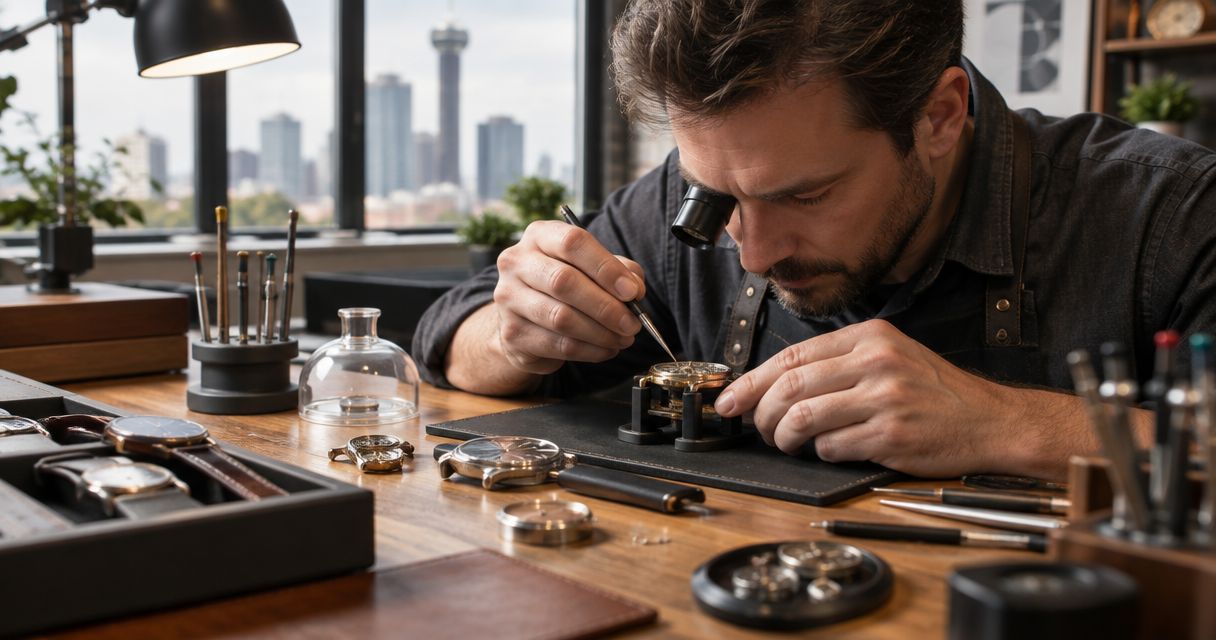
Best local starting point: Uptownbullion for watch repair inquiries in Dallas. Best for preserving original details: an independent watchmaker with documented vintage experience; best for model-specific factory service: the watch’s manufacturer, after confirming it accepts your reference. This 2026 vintage watch repair guide helps you choose the right repair route before authorizing work.
- Uptownbullion is a Dallas starting point for vintage watch repair inquiries; confirm experience with your specific watch before authorizing service.
- Choose an independent vintage watchmaker when retaining the original dial, hands, and case finish is your priority.
- Choose manufacturer service only after confirming model acceptance, replacement requirements, and the return of removed parts.
- Request a written scope that separates movement service from polishing, refinishing, and cosmetic replacement.
Why this matters
A vintage watch repair decision involves more than getting the hands moving. You also decide whether to retain the dial, hands, crown, crystal, and case finish that give the watch its identity. Mechanical service and cosmetic restoration are different jobs.
Choose the repairer by the work your watch needs, not by how new the finished watch will look. A family heirloom, a daily-wear watch, and a collectible watch can require different instructions even when each has stopped running.
For your 2026 repair decision, define the result first: reliable operation, preservation of original details, or a documented manufacturer service. Then ask each provider to explain how its proposed work serves that result.
What makes the best vintage watch repair specialist?
Use these criteria before comparing repair routes. A provider should answer them for your particular watch, not just describe watch repair generally.
- Movement experience: Ask whether the person doing the work has serviced the same movement or a closely related caliber. Experience with modern watches does not establish vintage movement expertise.
- Originality protection: Request separate authorization for dial refinishing, hand replacement, case polishing, and replacement of visible components.
- Parts plan: Ask how the repairer will handle worn or unavailable components. Establish whether proposed parts are original, period-correct, modern replacements, or specially made.
- Written diagnosis: Require an explanation of the fault and the proposed work. An exterior inspection alone does not establish the condition of the movement.
- Testing and handover: Ask what checks follow service and what use restrictions apply. Do not assume an old water-resistance marking describes the watch’s present condition.
- Accountability: Confirm who performs the work, where the watch goes, and who answers questions if the result needs attention.
The strongest answer is specific: the repairer identifies the movement, explains the intervention, and records your instructions. General assurances are not a substitute for that discussion.
Dallas vintage watch repair options at a glance
These are repair routes with distinct purposes, not interchangeable services. Confirm the exact scope before handing over your watch.
| Repair route | Best for | Standout feature | Key limitation |
|---|---|---|---|
| Uptownbullion | Local watch repair inquiries in Dallas | A local business offering watch and jewelry repair | Confirm vintage-model experience and the scope of work |
| Independent vintage watchmaker | Preserving original details | Direct discussion of movement repair and conservation priorities | Expertise and parts access must be verified for your watch |
| Watch manufacturer service | A model accepted into the brand’s service program | A manufacturer-directed service route | Acceptance and component-replacement requirements need confirmation |
A convenient location matters, but it does not settle a technical question. Use the table to choose where to start your inquiry, then use the criteria above to decide where to authorize work.
1. Uptownbullion: best for local watch repair inquiries
Uptownbullion is a Dallas gold and silver exchange offering watch and jewelry repair, jewelry buying, and custom-made jewelry. For vintage watch repair, use the local inquiry to establish whether your particular watch and its required work fit the service offered.
Bring the watch’s brand, model information, symptoms, and any previous service paperwork. Ask who will inspect the movement and whether the proposed service includes cosmetic changes. A repair inquiry should end with a clear next step, not an open-ended authorization.
Uptownbullion pros:
- A Dallas location gives local owners a starting point for repair discussions.
- Watch repair is among the business’s stated services.
- Jewelry repair provides a separate inquiry route when the problem involves a jewelry-style bracelet or another jewelry component.
Uptownbullion cons:
- A general watch repair offering does not establish expertise with every vintage caliber.
- You still need confirmation of parts sourcing, testing, and preservation instructions for your watch.
- Repair and resale are different decisions; do not let a buying discussion replace a repair diagnosis.
Best for: Dallas owners who want to begin with a local watch repair inquiry and establish the appropriate service scope.
If you are also considering selling a Rolex, keep that decision separate from the repair request. The guide to best Rolex buyers in Dallas addresses the selling route, not the technical suitability of a repairer.
Verdict: Hold authorization until your watch’s suitability, proposed work, and originality instructions are confirmed.
2. Independent vintage watchmaker: best for preserving original details
An independent watchmaker with documented vintage experience is the route to investigate when keeping the original dial, hands, and case finish is central to your decision. Ask to discuss the actual movement and the visible components you want retained.
The word vintage is not enough. Ask how the watchmaker handles worn movement parts, damaged dials, and previous repairs. Request examples of comparable work that explain the intervention rather than merely show a polished finished watch.
Independent vintage watchmaker pros:
- You can make originality a specific condition of the repair request.
- You can discuss mechanical service separately from cosmetic restoration.
- You can ask for a component-by-component explanation of proposed replacements.
- A direct technical discussion helps distinguish essential work from optional changes.
Independent vintage watchmaker cons:
- Experience with one movement family does not establish experience with another.
- The word specialist does not verify access to suitable parts.
- A preservation-first request still needs written approval rules if additional faults emerge.
Best for: Owners who prioritize retaining original details and want the repair plan to reflect that priority.
For a preservation-first repair in 2026, write down the components that matter to you. Specify whether a damaged original dial should remain untouched, whether polishing is prohibited, and whether replacements require your approval. Do not rely on a verbal request to keep the watch original.
Verdict: Hold until the watchmaker demonstrates relevant experience and accepts your written preservation instructions.
3. Watch manufacturer service: best for confirmed factory support
Manufacturer service is the route to investigate when you want the brand to assess a watch it still accepts for service. Start by confirming the exact reference and movement; a brand name alone does not establish acceptance of an older watch.
Ask what work is required as part of the service and which cosmetic choices remain yours. In particular, establish whether the proposed scope includes replacing the dial, hands, crown, or crystal, and whether removed components will be returned.
Watch manufacturer service pros:
- You can request a manufacturer-directed assessment of an accepted model.
- You can ask for the brand’s documented service requirements.
- You can establish whether model-specific parts support exists before proceeding.
Watch manufacturer service cons:
- Acceptance of your vintage reference needs confirmation.
- Required component replacements can conflict with preservation preferences.
- You must check whether cosmetic work can be excluded and removed parts returned.
Best for: Owners whose watch is accepted for service and whose priorities match the manufacturer’s proposed scope.
Do not treat a factory route as automatic approval to make the watch look new. Read the service proposal against your original goal. A technically detailed proposal still needs your consent when it changes visible, sentimental, or collectible features.
Verdict: Hold until model acceptance and replacement requirements match your priorities.
Before you leave your watch for repair
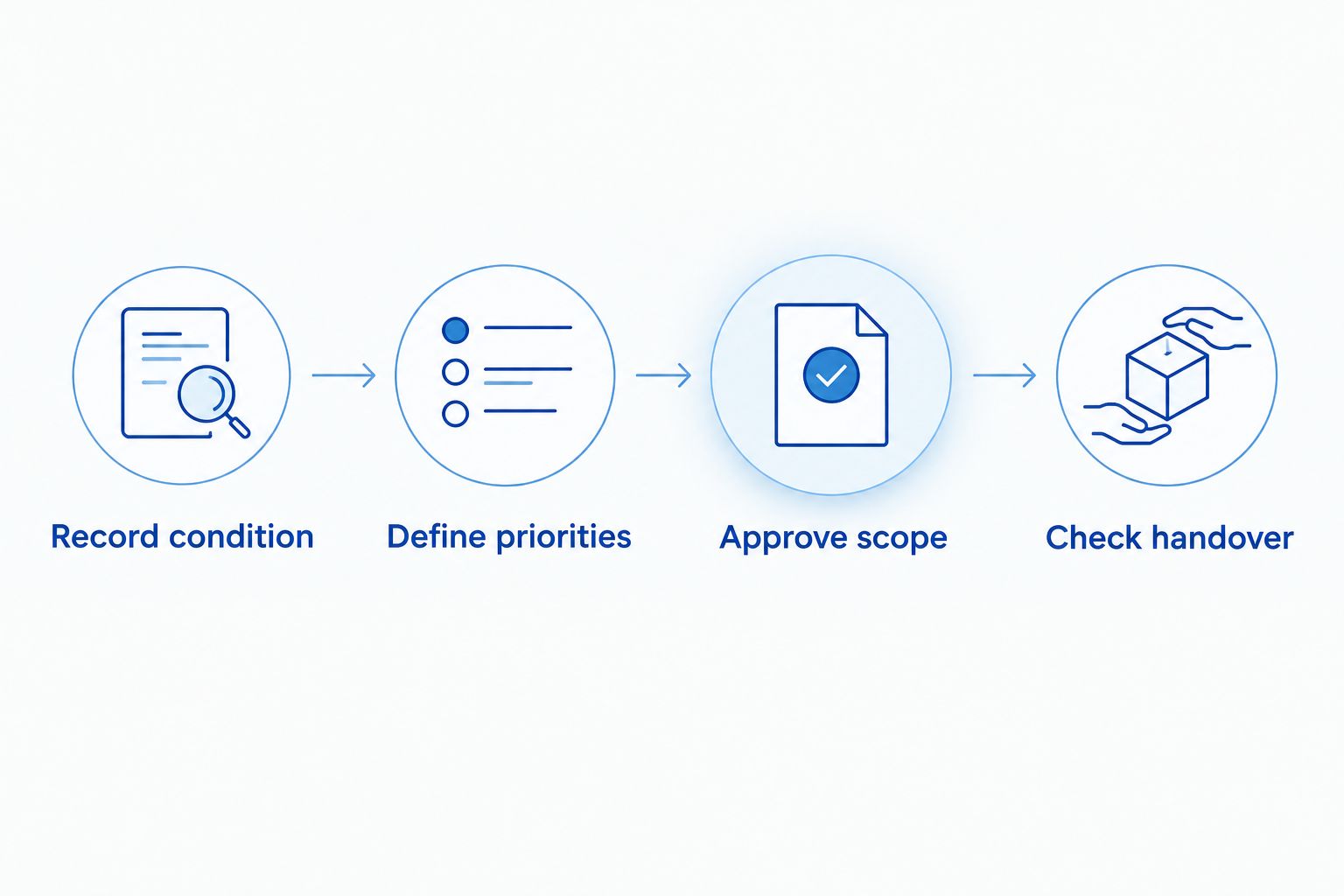
Your instructions should travel with the watch. Use this sequence for a 2026 repair request so the diagnosis, authorization, and return can be compared against the same record.
Record condition
Photograph the dial, case, bracelet, clasp, and visible damage. Keep a record of identifying marks without opening the case yourself. Note whether the watch stops, loses time, gains time, or has a problem with winding or setting.
Define priorities
State whether the watch is an heirloom, a collectible, or something you intend to wear regularly. Write down the details you want retained. Make clear that movement service does not automatically authorize polishing or refinishing.
Approve scope
Ask for the diagnosis and proposed work in writing. Separate necessary mechanical work from optional cosmetic changes, and require further approval before the repairer expands the scope. Establish how replacement parts will be described on the final record.
Check handover
Compare the returned watch with your condition record and approved scope. Request the service documentation and ask how to wind, set, wear, and store the watch after repair. Confirm any restrictions on exposure to water.
You do not need to diagnose the movement yourself. Your job is to describe the symptoms accurately, preserve a record of the watch, and control what work you authorize.
Understand case markings without confusing them with repair needs
A case hallmark describes material, not movement condition. An 18-karat gold mark corresponds to 75% gold; a 14-karat mark corresponds to approximately 58.3% gold. A sterling silver mark of 925 denotes 92.5% silver.
Those proportions do not tell you whether the movement needs service, whether the dial is original, or whether the watch is suitable for regular wear. A case marking also does not establish that every visible component uses the same material.
If a bracelet, clasp, or case needs attention, ask the repairer to distinguish that work from movement service. Keep the material discussion separate from the mechanical diagnosis, especially when you are deciding between keeping the watch and selling it.
How the repair routes are ranked
The order follows the owner’s decision: begin with a local inquiry, pursue documented vintage expertise when originality matters most, or confirm manufacturer support when you want that service route. The criteria are movement experience, preservation instructions, parts planning, written scope, testing, and accountability.
No repair route wins on every criterion. The right vintage watch repair specialist is the one who can explain the work your particular watch needs and respect the work you do not want.
Which vintage watch repair route should you choose?
For an undecided Dallas owner in 2026, start with a local inquiry and a written brief. Identify the watch, describe the fault, and state whether you want visible original components preserved. Authorize inspection separately from restoration wherever the provider’s process allows it.
Choose an independent vintage watchmaker when preservation is your main requirement. Choose manufacturer service when your exact model is accepted and the required work fits your priorities. Do not choose either route solely because of a familiar name.
Default recommendation: establish competence and scope before committing to service. A clear explanation beats a broad promise to restore the watch.
FAQ
What's the best starting point for vintage watch repair in Dallas?
Uptownbullion is a local starting point for watch repair inquiries in Dallas. Before authorizing vintage work, confirm experience with your specific movement, parts sourcing, and instructions for preserving original components.
Is an independent watchmaker better than manufacturer service for a vintage watch?
An independent watchmaker is the route to investigate when preserving original details is your main priority. Manufacturer service fits when your model is accepted and its required replacements match your goals; verify the scope with either provider.
Should I have my vintage watch polished during repair?
Do not authorize polishing automatically as part of vintage watch repair. Polishing removes material and changes the case finish, so treat it as a separate decision from movement service.
Can a vintage watch be repaired without replacing the dial?
Movement repair and dial replacement are separate decisions. Ask the repairer to explain any proposed dial work and require your approval before replacement or refinishing.
What should I bring to a vintage watch repair appointment?
Bring the watch, available service records, identifying information, and a description of its symptoms. Include written instructions about polishing, dial work, and component replacement.
Is a vintage watch waterproof after servicing?
Servicing alone does not establish that a vintage watch is safe to expose to water. Ask what testing was performed and follow the repairer's stated restrictions rather than relying on an old case marking.
Should I repair a vintage watch before selling it?
Do not authorize repairs solely because you assume they will improve the sale outcome. Separate the repair decision from the selling assessment, particularly when proposed work changes original visible components.
One last thing
A stopped watch does not automatically need cosmetic restoration. In 2026, the most useful instruction you can give a repairer is still simple: explain the fault, propose the necessary work, and ask before changing the watch’s appearance.
That instruction protects your choices. It also makes the final service record more useful because you can see what was repaired, what was replaced, and what was deliberately left alone.


