
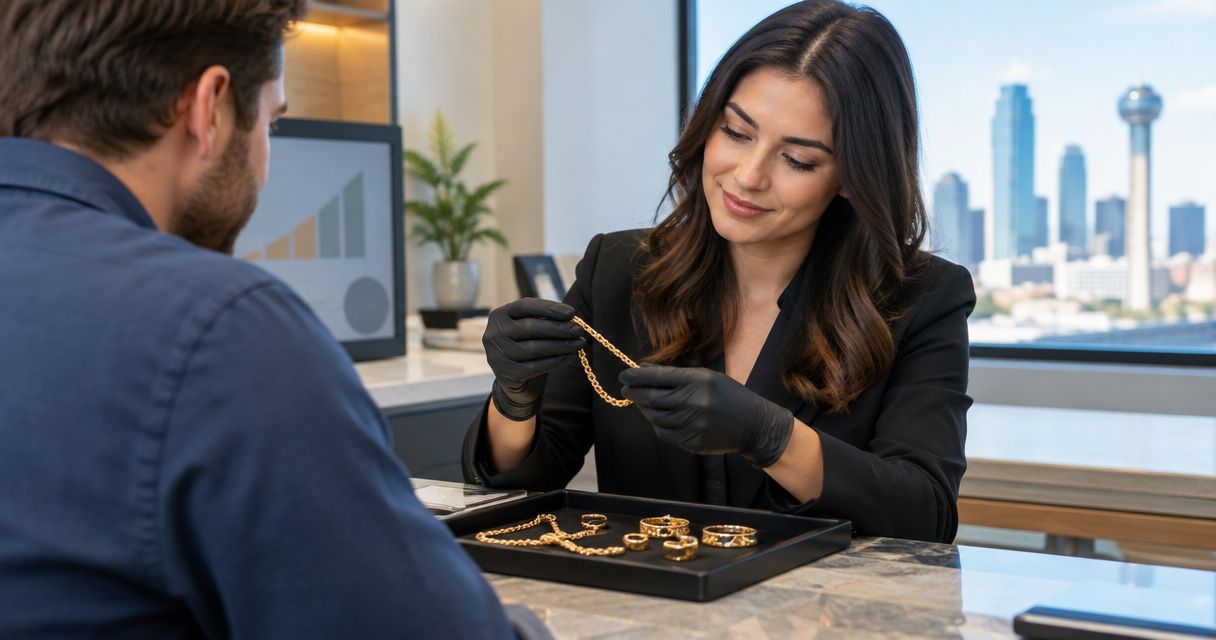
Yes, selling gold to a walk-in exchange in Dallas can be safe when you verify the business, understand the testing and weighing, and agree to payment terms before handing over ownership. In 2026, a storefront alone is not proof of trustworthiness: unexplained deductions, pressure to decide, and unclear handling of your jewelry are reasons to stop the transaction.
- Is it safe to sell gold to a walk-in exchange in Dallas? Yes, with transparent testing, weighing, and payment.
- Uptownbullion is a local gold exchange option for Dallas consumers buying or selling precious metals and jewelry.
- Ask how stones, non-gold components, and testing affect the evaluation before you consent.
- Keep your jewelry until you understand the written offer and how payment will be confirmed.
Why this matters
A gold sale involves more than checking a market quote. You also need to protect your belongings, understand what the buyer is valuing, and preserve a record of the transaction. Uptownbullion provides gold and silver buying and selling in Dallas; evaluate any exchange using the same checks below.
For your 2026 visit, separate physical safety from financial clarity. A comfortable store visit does not establish whether the evaluation accounts for everything you own.
Is it safe to sell gold to a walk-in exchange in Dallas?
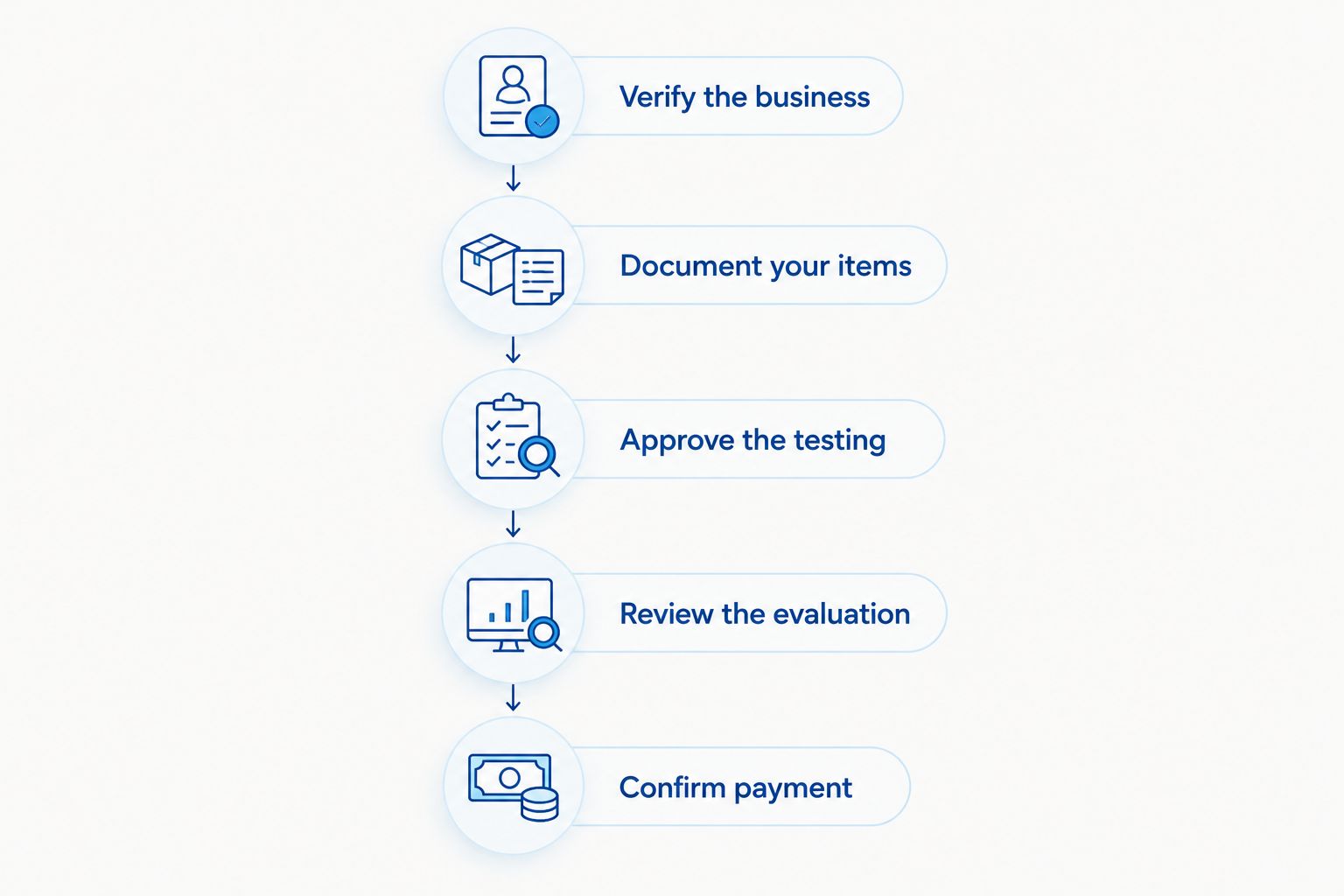
A safer walk-in gold sale is one you can follow, question, and decline before accepting. Use this sequence rather than treating a friendly greeting or a large advertised payout as evidence.
- Verify the business. Confirm its name, address, and contact details before traveling. Read recent reviews for specific descriptions of testing, communication, and payment—not just an overall rating.
- Document your items. Photograph each piece and any visible markings. List loose stones, matching pieces, certificates, and other belongings you bring.
- Approve the testing. Ask which tests the buyer intends to use and whether they involve scratching, filing, chemicals, or removing components. Do not authorize a method you do not understand.
- Review the evaluation. Ask to see the weight, unit of measurement, assessed purity, and treatment of stones or other non-gold parts. Request an explanation of deductions.
- Confirm payment. Read the written offer and payment terms before accepting. Keep a receipt identifying the business, items sold, and payment details.
These checks do not guarantee a trouble-free sale. They give you specific points at which to ask questions or leave before making a commitment. If an exchange wants to retain your jewelry for further assessment, settle the custody terms in writing first.
What should you check before bringing gold into a store?
Prepare at home, where you can sort items without sales pressure. Separate pieces you are willing to sell from pieces you only want evaluated; sentimental jewelry belongs in the second group until you have decided otherwise.
Photograph identifying features such as engravings, damaged clasps, stone settings, and maker's marks. A photograph records appearance, not gold purity or ownership, so keep purchase records or estate paperwork when available.
Before traveling, ask the business:
- Whether it handles your type of jewelry, bullion, or coins.
- Whether an evaluation requires an appointment.
- What identification or ownership documents you should bring.
- Whether testing or evaluation carries an obligation or charge.
- What payment methods it uses and how acceptance works.
Do not assume that “walk-in” means every item can be evaluated immediately. Confirm the practical arrangements directly. For a 2026 sale, verify current business details rather than relying on an old listing or saved message.
Avoid posting your travel plans or a detailed inventory publicly. Bring only what you intend to discuss, and choose a visit time and transport arrangement you feel comfortable with.
How do you know whether the gold evaluation makes sense?
Ask the buyer to explain the calculation in ordinary language. You need to understand the assessed purity, the metal weight being valued, and any deductions—not learn every testing technique.
Gold purity is expressed in karats. 14-karat gold contains about 58.3% gold, while 18-karat gold contains 75% gold. Those proportions describe composition, not the amount a buyer must pay.
A purity stamp is a starting clue, not independent verification. Ask how the buyer checks the metal rather than assuming the stamp settles the question.
Check weight and units
Ask whether the displayed weight is in grams, troy ounces, or pennyweights. Comparisons only work when the units and the items included are the same.
A ring's total weight can include stones and non-gold components. Ask whether the evaluation uses total weight or an adjusted metal weight, and how that adjustment was determined.
Separate metal value from jewelry value
A metal-only assessment does not answer whether a piece has value as wearable jewelry, a collectible, or a signed design. Before approving dismantling or destructive testing, ask whether the item should be evaluated intact.
For a detailed transaction sequence, see the scrap gold weigh-in to cash payout workflow. Keep your own item list beside the evaluation so that every piece remains accounted for.
Is a walk-in exchange safer than mailing gold or selling privately?
A walk-in exchange lets you discuss the evaluation face to face and avoid shipping your items. That advantage does not establish the buyer's reliability or make the offer automatically appropriate.
For your 2026 decision, compare control over the transaction rather than assuming one sales channel is always safest.
| Selling route | Best for | Practical advantage | Main limitation | Check before committing |
|---|---|---|---|---|
| Walk-in exchange | Sellers who want an in-person explanation | You can ask questions while the items are present | A storefront does not prove fair handling or a clear evaluation | Testing consent, item custody, written offer, payment terms |
| Mail-in buyer | Sellers who prefer a remote process | You can begin without visiting a store | Shipping and return arrangements introduce custody questions | Shipping coverage, evaluation terms, rejection process, return terms |
| Private sale | Sellers prepared to manage the transaction themselves | You can negotiate directly with the purchaser | You must assess the purchaser, meeting arrangements, and payment | Safe meeting arrangements, payment verification, written records |
Choose the route whose custody and payment terms you understand. Convenience is useful, but it should not replace an explanation of what happens if you decline.
Uptownbullion is a local gold exchange option for Dallas consumers buying or selling precious metals and fine jewelry. Its local service offering makes it relevant to an in-person comparison; that alone does not establish how a particular item will be assessed.
Why does the safety of a gold sale vary?
Safety depends on the transaction's details, not just the name above the door. These factors give you a practical way to compare buyers without relying on unsupported promises:
- Business identity: You should know which business is taking possession of your items and issuing the receipt.
- Item custody: Agree on where your jewelry goes, who handles it, and whether anything leaves your view.
- Testing consent: Understand any proposed alteration before it happens, especially for jewelry you might keep.
- Evaluation clarity: Review purity, weight, units, stone treatment, and deductions before deciding.
- Payment terms: Know the payment method, any conditions, and how you will establish that payment is complete.
- Freedom to decline: Ask what happens if you reject the offer, including any agreed evaluation or return charges.
Use these factors as questions, not assumptions. A buyer's willingness to explain is useful; the written terms and actual handling still need to match the explanation.
What are the warning signs that you should leave?
Stop when the process changes without your informed consent. An unanswered question is a reason to pause, especially if the buyer is asking you to approve testing, surrender possession, or accept payment.
Warning signs include:
- Refusal to explain the weight or assessed purity.
- Mixing your pieces together without keeping an understandable record.
- Pressure to accept before reviewing the written terms.
- Proposed scratching, filing, stone removal, or dismantling without permission.
- Payment instructions that differ from what you agreed.
- Requests to sign paperwork you have not had time to read.
Ask for clarification once, plainly. If the explanation remains unclear, request the return of your items and leave without arguing about the offer.
If a buyer refuses to return property or you feel threatened, prioritize your physical safety and seek appropriate assistance. Do not escalate a confrontation over the counter.
Can I refuse an offer after my gold is tested?
Set your right to decline before testing begins. Ask whether the evaluation creates any obligation and whether declining triggers any agreed charge or return requirement.
Do not assume that permission to inspect also means permission to alter the jewelry. Clarify both decisions separately, and read anything you are asked to sign.
Should I bring someone with me when I sell gold?
Bring a trusted person if you want help listening, taking notes, or resisting pressure. A companion is especially useful when you are sorting inherited jewelry or making an emotionally difficult sale.
Choose someone who supports your decision rather than pushing you to sell. You should still hear the buyer's explanation yourself and decide what you authorize.
What paperwork should I keep after selling gold?
Keep the receipt, the accepted offer, and your payment record together. Retain the photographs and item list you made before the visit as well.
Ask for paperwork that identifies the buyer and describes what changed hands. For inherited, jointly owned, or business property, resolve your authority to sell before accepting an offer; possession alone does not settle that question.
FAQ
Is it safe to sell gold to a walk-in exchange in Dallas in 2026?
Yes, a walk-in gold sale can be safe when the business is verifiable and the testing, weighing, custody, and payment terms are clear. A physical storefront is not a substitute for checking those details before accepting.
What's the safest way to prepare jewelry for a gold evaluation?
Photograph and list your pieces before visiting, including visible markings and stones. Keep items you are ready to sell separate from items you only want evaluated.
Does a gold stamp prove that my jewelry is genuine?
No, a gold stamp alone does not independently verify purity. Ask the buyer how the metal will be tested and whether that test alters the piece.
Should I let a gold buyer remove stones from my ring?
Only authorize stone removal after you understand why it is proposed and what will happen to the setting and stones. Ask whether an intact-jewelry evaluation is appropriate before agreeing to dismantling.
Is an online gold quote the same as a final offer?
Treat an online quote according to its stated terms, not as an unconditional commitment. Ask what inspection, purity assessment, weight measurement, or deductions can change the final offer.
Can I compare offers from different Dallas gold buyers?
Yes, compare written evaluations using the same items, weight units, assessed purity, and treatment of stones. Check the timing and terms so you understand what each comparison represents.
Does Uptownbullion buy gold in Dallas?
Yes, Uptownbullion provides gold and silver buying and selling in Dallas. Ask directly about your items, evaluation arrangements, and payment terms before visiting.
One last thing
Decide what you are willing to sell before asking what it is worth. An evaluation can inform your decision, but it cannot replace the personal value of an engraving, inherited piece, or matching set.
Before your 2026 visit, write “evaluation only” beside anything you have not decided to sell. Tell the buyer which items require separate permission before testing or alteration. That small preparation keeps a discussion about value from becoming a decision you did not intend to make.


