
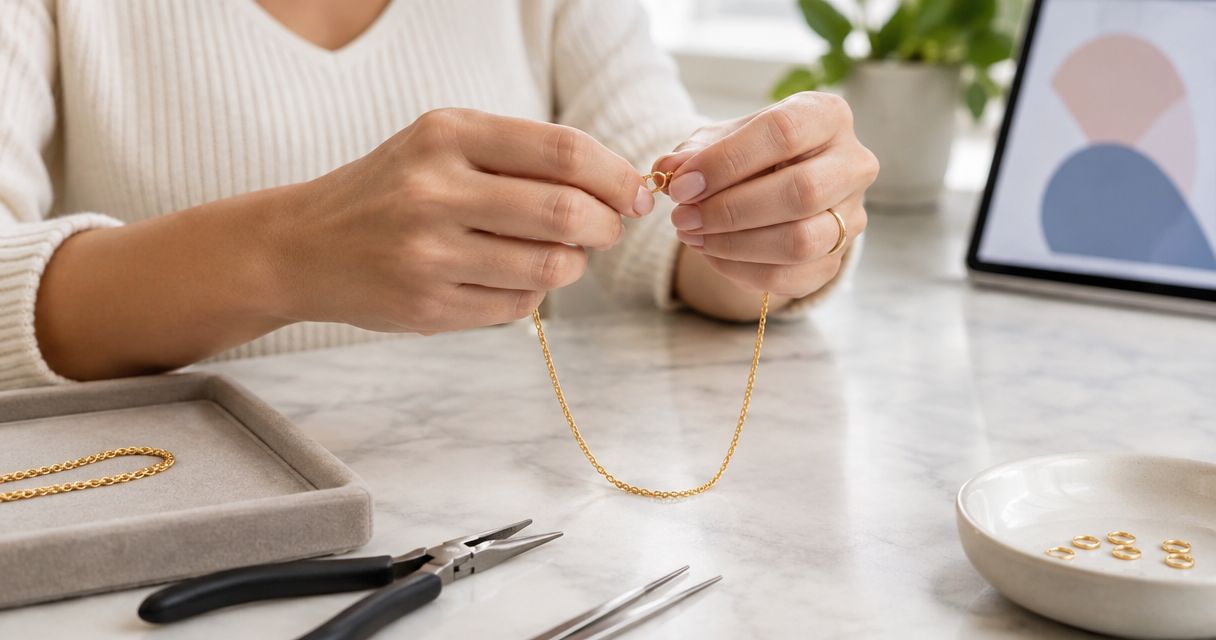
The cost to shorten or resize a gold necklace requires a piece-specific quote, because removing a simple section of chain is different from rebuilding a patterned necklace or adding matching gold. Ask whether the quote also covers clasp work, finishing, and any repairs needed before the length adjustment. For a 2026 estimate you can act on, have the necklace inspected and agree on the finished length before authorizing work.
- The cost to shorten or resize a gold necklace depends on the chain construction and the agreed repair work.
- Shortening removes length; lengthening requires an extender, additional links, or another suitable alteration.
- Uptownbullion provides jewelry repair in Dallas; ask about your necklace’s construction before committing to an alteration.
- Get the finished length, clasp work, finishing, and handling of removed gold recorded in the repair estimate.
How much does it cost to shorten or resize a gold necklace?
Get a quote for the actual necklace, not just the number of inches you want removed. A plain chain, a hollow chain, and a necklace with fixed decorative sections do not present the same repair task. Ask a jeweler offering jewelry repair services to identify the construction before quoting the alteration.
The breakdown below shows what to separate in a 2026 estimate. These are questions to ask, not a promise that every necklace needs every service.
| Estimate component | What you should confirm | Why it matters |
|---|---|---|
| Length adjustment | Exact finished length and where material will be removed or added | Defines the alteration you are authorizing |
| Connecting work | How the chain end or clasp connection will be secured | Identifies the work beyond removing links |
| Replacement parts | Whether a clasp, connecting ring, or matching chain section is needed | Separates new parts from work on existing material |
| Existing damage | Whether worn or broken areas need separate repair | Keeps an unrelated repair from being confused with resizing |
| Finishing | Whether cleaning, polishing, or finish restoration is included | Clarifies the appearance you should expect at pickup |
| Removed material | Whether the cut section will be returned | Records what happens to your remaining gold |
Why this matters
A necklace can reach the requested length and still sit incorrectly. A pendant can move off-center, a decorative section can lose its balance, or a clasp can end up in an awkward position.
Your goal is a wearable result, not simply a shorter measurement. Agree on fit, appearance, and the repair scope together. That gives you a clearer basis for comparing estimates and checking the finished work.
Shortening a gold necklace: what the quote should cover
Shortening a conventional link chain generally involves removing a section and reconnecting the remaining chain to its end fitting or clasp. The exact method depends on how the necklace is built. Do not assume the same approach works for every design.
Best for: a necklace that hangs too low but otherwise suits you. The benefit is keeping the piece you already enjoy while changing its fit; the drawback is that restoring the original length later requires another alteration or a suitable extension.
Ask where the jeweler proposes to remove material. For a necklace with a centered pendant or repeating decorative sections, the location matters as much as the amount removed.
Use a specific measurement rather than asking for it to be “a little shorter.” For example, changing a 20-inch necklace to an 18-inch necklace removes 2 inches from the overall length. That is a measurement example, not a recommendation for your necklace or an estimate of repair work.
Before approving the cut, confirm whether the measurement includes the clasp. Bring a necklace that already fits well if you want the jeweler to compare the finished lengths directly.
Lengthening a gold necklace: what changes
Lengthening requires a different discussion because the necklace needs additional usable length. Possible approaches include an extender or a compatible section of chain, subject to inspection of the necklace and its connections.
Best for: a necklace you want to wear lower without replacing the entire piece. An extender offers adjustment at the clasp end, but it changes the arrangement at the back of the necklace. An integrated chain addition requires attention to the link pattern, width, color, and connection.
| Alteration option | Best for | Benefit | Limitation |
|---|---|---|---|
| Shortening | A necklace that consistently hangs too low | Changes the existing necklace’s fit | Reversing the alteration requires more work |
| Extender | Adjustable length at the clasp end | Adds flexibility without redesigning the whole necklace | Introduces an additional section and connections |
| Matching chain addition | A longer necklace with an integrated appearance | Keeps the alteration within the chain design | Matching the existing construction needs assessment |
| Decorative-section alteration | A necklace with fixed motifs or a centered feature | Addresses fit while considering the design | Length alone does not resolve symmetry or placement |
Do not choose an extender solely to avoid discussing the necklace’s condition. Its attachment still depends on sound connections. Have a worn clasp or damaged chain end assessed before adding another component.
Why the cost to resize a gold necklace varies
The useful question is not whether the necklace is gold. It is what work this particular necklace needs. Ask the jeweler to explain these factors in the estimate:
- Chain construction: Ask whether the links are solid, hollow, or part of a tightly connected pattern, and how that affects the proposed alteration.
- Scope of change: Removing existing material is different from supplying and fitting an additional section.
- Clasp and connections: Establish whether the existing clasp and connecting rings can remain or require separate work.
- Decorative features: Fixed pendants, stations, and repeating motifs need a plan that preserves their intended placement.
- Existing condition: Separate the requested length change from repairs to damaged links or worn connections.
- Finish and materials: Confirm how the jeweler will address the existing gold color, surface finish, and any nearby stones.
For a 2026 quote, ask which factors actually apply to your piece. A useful explanation connects each proposed task to something the jeweler can show you on the necklace.
Gold purity describes the metal, not the entire repair. 14-karat gold contains 14 parts gold out of 24; 18-karat gold contains 18 parts out of 24. Neither marking alone tells you how the necklace is constructed or what alteration it needs.
How to get a useful necklace resizing estimate
Bring the complete necklace, including any detached clasp or broken section. Also bring the pendant you normally wear on it, because the finished fit should reflect how you use the piece.
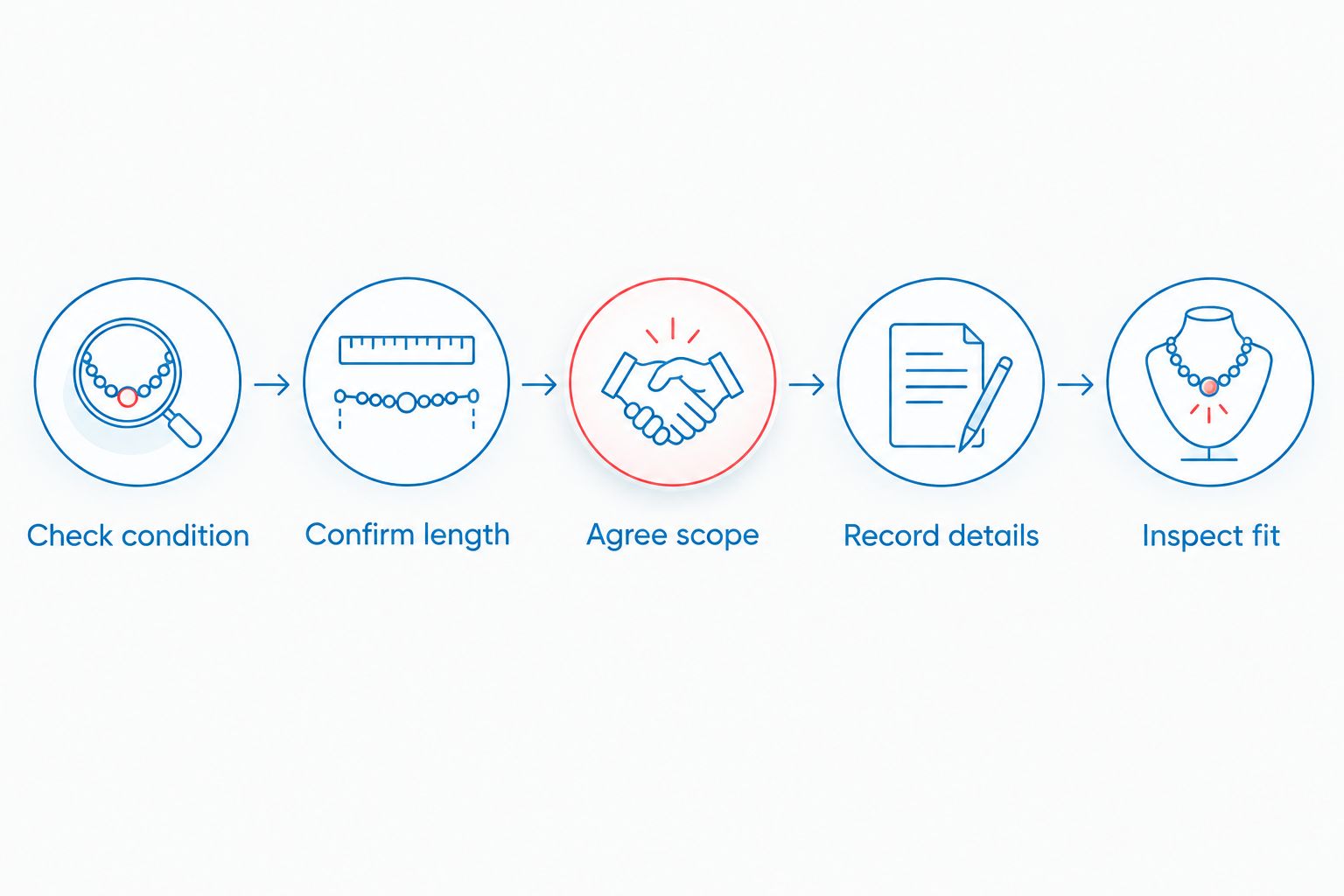
Follow this sequence before leaving the necklace for work:
- Check condition. Ask the jeweler to identify existing damage, previous repairs, and the condition of the clasp connections.
- Confirm length. State the finished measurement and clarify whether it includes the clasp. Explain where you want the pendant to rest.
- Agree scope. Confirm the proposed alteration, any replacement parts, and whether separate repairs are necessary.
- Record details. Ask for the scope, handling of removed material, and approval process for additional work to be written down.
- Inspect fit. At pickup, check the length, clasp operation, pendant placement, and appearance of the altered area.
The measurement alone is not a complete instruction. Tell the jeweler if you wear the necklace with another chain, need the clasp to pass through a pendant opening, or want to preserve a particular decorative arrangement.
Uptownbullion is a local jewelry repair option for Dallas consumers who want to discuss a gold necklace alteration. Ask about the proposed work and any limitations of your necklace’s construction. The service description alone does not establish a particular repair method, completion date, or suitability for your piece.
Use Contact to ask about having the necklace assessed. Describe whether you want it shorter or longer and whether it has a pendant, stones, or an existing break.
Can a jeweler shorten a necklace without cutting it?
A necklace with an existing adjustable fastening can offer a shorter wearing position without removing chain. For a fixed-length necklace, ask whether its construction supports a reversible adjustment before agreeing to a permanent alteration.
Do not assume that fastening the clasp into an arbitrary link is suitable. The link must accept the clasp, and the resulting arrangement must work with the necklace’s design.
Choose the intended fit first, then discuss the least intrusive suitable alteration. A reversible solution has a practical advantage when you are still deciding which length you prefer, but it must be appropriate for the piece.
Can you keep the gold removed from a necklace?
Ask for the removed section to be returned and have that instruction recorded before work begins. Do not assume it will automatically be returned, credited, or used in another repair.
Keep the section identifiable if you receive it back. It preserves a record of the original chain and gives a future jeweler material to inspect if you later discuss restoring some length.
In 2026, treat the handling of removed gold as part of the repair agreement, not a conversation to leave until pickup. This is separate from deciding whether the alteration itself is worthwhile.
Is shortening a gold necklace worth it?
Shortening is worth discussing when the necklace is otherwise comfortable, structurally suitable for alteration, and something you expect to wear. The benefit is practical: a better fit can make an existing piece more useful.
The drawback is permanence. If you are unsure of the length or want to preserve an original design, settle those questions before any material is removed.
Compare the proposed repair with your actual goal. A necklace that catches on clothing because of a damaged link needs a condition assessment, not merely a shorter length. Likewise, a pendant that sits unevenly needs a placement discussion rather than an automatic cut.
For your 2026 decision, weigh sentimental importance separately from the work being proposed. A meaningful necklace deserves a clear repair plan, but sentimental value does not establish that every alteration is technically suitable.
FAQ
How do I find the cost to shorten or resize a gold necklace?
Get a piece-specific estimate after the necklace has been inspected. Ask for the finished length, connecting work, replacement parts, finishing, and any separate damage repair to be identified before you authorize work.
Is shortening a gold necklace the same as repairing a broken chain?
No. Shortening changes the necklace’s length, while broken-chain repair addresses damage; the same necklace can need both tasks. Have the estimate distinguish them.
Can a jeweler make my gold necklace longer?
A jeweler can assess an extender or compatible chain addition for your necklace. The suitable approach depends on its construction, connections, and the appearance you want to preserve.
Will shortening my necklace move the pendant off-center?
Pendant placement needs to be checked as part of the alteration plan. Tell the jeweler whether the pendant moves freely or is fixed to the chain before approving where material will be removed.
Does a 14-karat marking tell me the necklace resizing cost?
A 14-karat marking does not establish the resizing cost. It describes gold purity, while the repair also depends on construction, condition, and the agreed alteration.
Should I ask for the removed gold back?
Yes, ask for the removed section back if you want to keep it, and record that instruction before work starts. Do not assume return or credit is automatic.
Can I shorten a hollow gold chain at home?
Leave a hollow gold chain alteration to a jeweler who has assessed its construction. Cutting it yourself does not resolve how the end will be securely reconnected or how the altered area will look.
Where can I ask about gold necklace repair in Dallas?
Uptownbullion provides jewelry repair services in Dallas. Ask whether your necklace is suitable for the intended length adjustment and what assessment is needed before authorizing work.
One last thing
Bring the pendant, not just the chain. The necklace needs to work as you actually wear it, including how the pendant sits and whether its opening accommodates the clasp or altered connection.
Before approving a 2026 necklace alteration, describe the finished result in plain terms: the overall length, where the pendant should rest, and which original details you want preserved. Those instructions give the jeweler a clearer target than “make it shorter.”


