
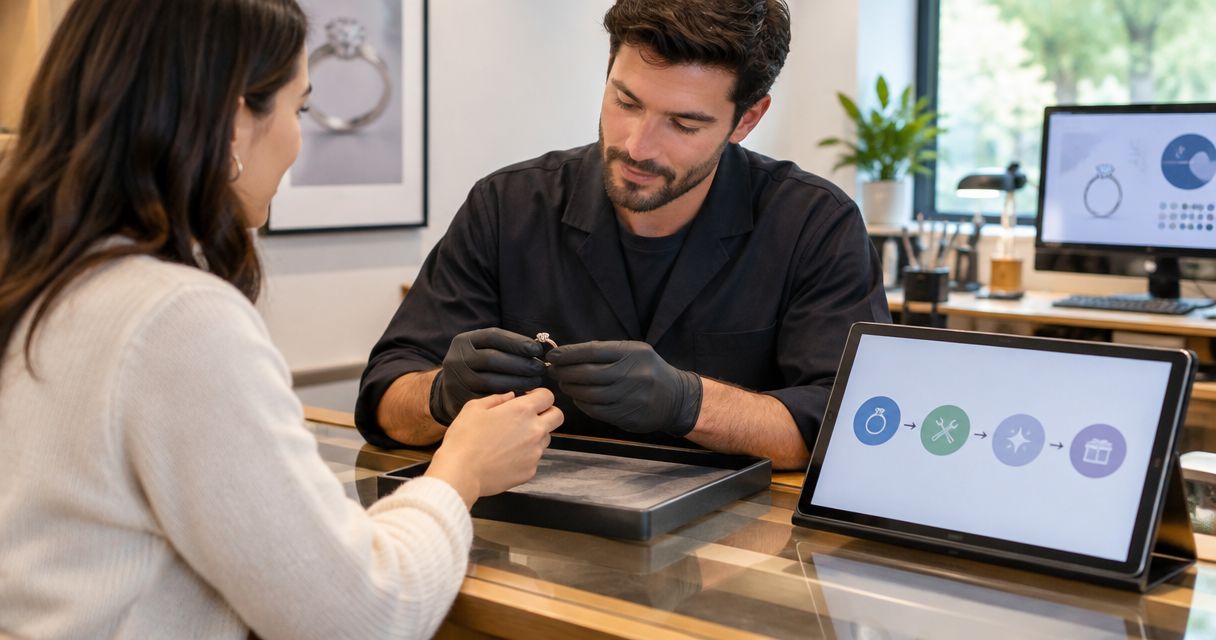
Instead of repeatedly calling about an unclear repair, use a written jewelry repair estimate to pickup process: document the item, confirm the proposed work, approve changes, and inspect the result before taking it home. This 2026 guide explains what to ask at each handoff when arranging jewelry repair with Uptownbullion in Dallas.
- Use a written jewelry repair estimate to pickup process, from intake photos through final inspection.
- Uptownbullion offers Dallas jewelry repair; confirm the repair scope, authorization requirements, and pickup arrangements before leaving your item.
- Approve repairs and later changes separately; do not treat an inspection as permission to begin work.
- Check fit, function, appearance, and paperwork at pickup before closing the repair record.
Why this matters
A repair request describes a symptom: a ring feels loose, a clasp opens, or a setting catches clothing. A useful estimate explains the proposed correction and its limits. Those are different pieces of information, and both belong in your repair record.
Uptownbullion is best for Dallas consumers who want jewelry repair and custom jewelry services from a local business. Its stated services also include watch repair and precious-metal buying and selling. Before choosing a service, confirm that the specific work you need falls within the shop’s repair capabilities.
For a 2026 repair, keep the same written record from intake through collection. The process below is a customer checklist, not a statement of any jeweler’s intake rules, turnaround commitments, or coverage policies.
Before you start
- Gather the item and its history. Bring detached components, relevant previous repair paperwork, and any information you have about the metal, stones, treatments, or earlier alterations. Say when a detail is unknown rather than guessing.
- Prepare a usable contact method and your deadline. Ask how the jeweler sends estimates and receives approvals. If someone else will collect the item, ask about collection requirements before leaving it.
- Flag anything you want preserved. Engraving, patina, original components, and an inherited ring’s shape can matter as much as function. Do not assume that cleaning, polishing, or replacing a part is automatically included—or wanted.
The non-obvious issue is permission. Agreeing to an inspection is not the same decision as approving a repair. Ask what you are authorizing at intake, including whether any examination involves taking the item apart or altering it.
Item intake and condition record
Document the item before the handoff
- Take 4 reference photos. Capture the full item, the damaged area, identifying details, and a side view. These are suggested documentation views, not a substitute for professional examination.
- Describe the problem in ordinary language. Explain what happens during use: the clasp opens, the ring turns on your finger, or a setting snags fabric. Avoid naming a repair before the jeweler examines the cause.
- Identify everything you are handing over. Ask for a written description of the item and any detached pieces. For a matched pair, specify whether you are leaving both pieces or only the damaged one.
- Record existing condition together. Point out visible scratches, missing components, engraving, and previous work. Distinguish what you know from what still needs assessment.
- Keep the intake reference. Ask which receipt, ticket, or other record identifies your item and how to use it when requesting an update.
Photographs help preserve your observations, but they do not establish gemstone identity, metal content, or structural condition. Ask the jeweler to explain which details are observations and which have been verified through examination.
Expected result: You and the jeweler can identify the same item, the same reported problem, and the same preservation requests. Your record also states what happens next: assessment, a request for further information, or a repair proposal.
Assessment and repair scope
Turn the diagnosis into a specific request
- Ask what caused the problem. A broken component and wear elsewhere on the item are separate findings. Ask whether the proposed work addresses only the immediate failure or also related weaknesses.
- Ask what will change. Establish whether the work repairs an existing component, replaces it, adjusts dimensions, or changes the finish. Request an explanation of any visible differences to expect.
- Separate necessary work from optional work. Ask the jeweler to distinguish the repair needed for the reported problem from suggested cleaning, refinishing, or other improvements.
- Discuss limitations before approval. Ask whether the item’s construction, condition, stones, or previous alterations restrict the proposed work. Do not assume every piece can return to its original condition.
- Connect the estimate to the proposed scope. Ask what is included, what remains unresolved, and what would require another authorization.
Use the services page to start a service inquiry, then describe your actual item and problem. A general service description does not establish whether a particular repair is suitable.
If you have a 2026 event deadline, give the exact event date and ask whether the proposed completion date is confirmed or provisional. Keep a separate plan for the event until the jeweler confirms completion.
Expected result: You can explain the proposed work without relying on a phrase such as complete repair. You also understand what will remain unchanged and which findings are still unresolved.
Written authorization and progress updates
Set the boundaries before work begins
- Review the written scope. Match the proposed work against your original request. Check that preservation instructions appear alongside the repair description rather than only in a conversation.
- Choose how to handle additional findings. Tell the jeweler to contact you before changing the agreed work. Ask how the item will be handled while another decision is pending.
- Confirm the communication channel. Establish whether updates and approvals happen by phone, text, email, or another method the business supports. Make sure the contact details are correct.
- Record your decision. Keep the approved scope and the date of approval together. After a phone conversation, ask for a written summary of any changed instructions.
- Agree on the next update. Ask when you should expect a progress message and what to do if that message does not arrive. Avoid treating an estimated completion date as a collection notice.
Keep your 2026 repair authorization in the same folder or message thread as the intake record. A scattered record makes it harder to distinguish an early proposal from the work you actually approved.
Expected result: Both sides have a clear repair instruction, a way to handle changes, and an agreed communication route. Silence is not your method of approving additional work.
The handoff is easier to follow when each stage ends with a specific record: an item description, a repair proposal, an authorization, and a collection check.
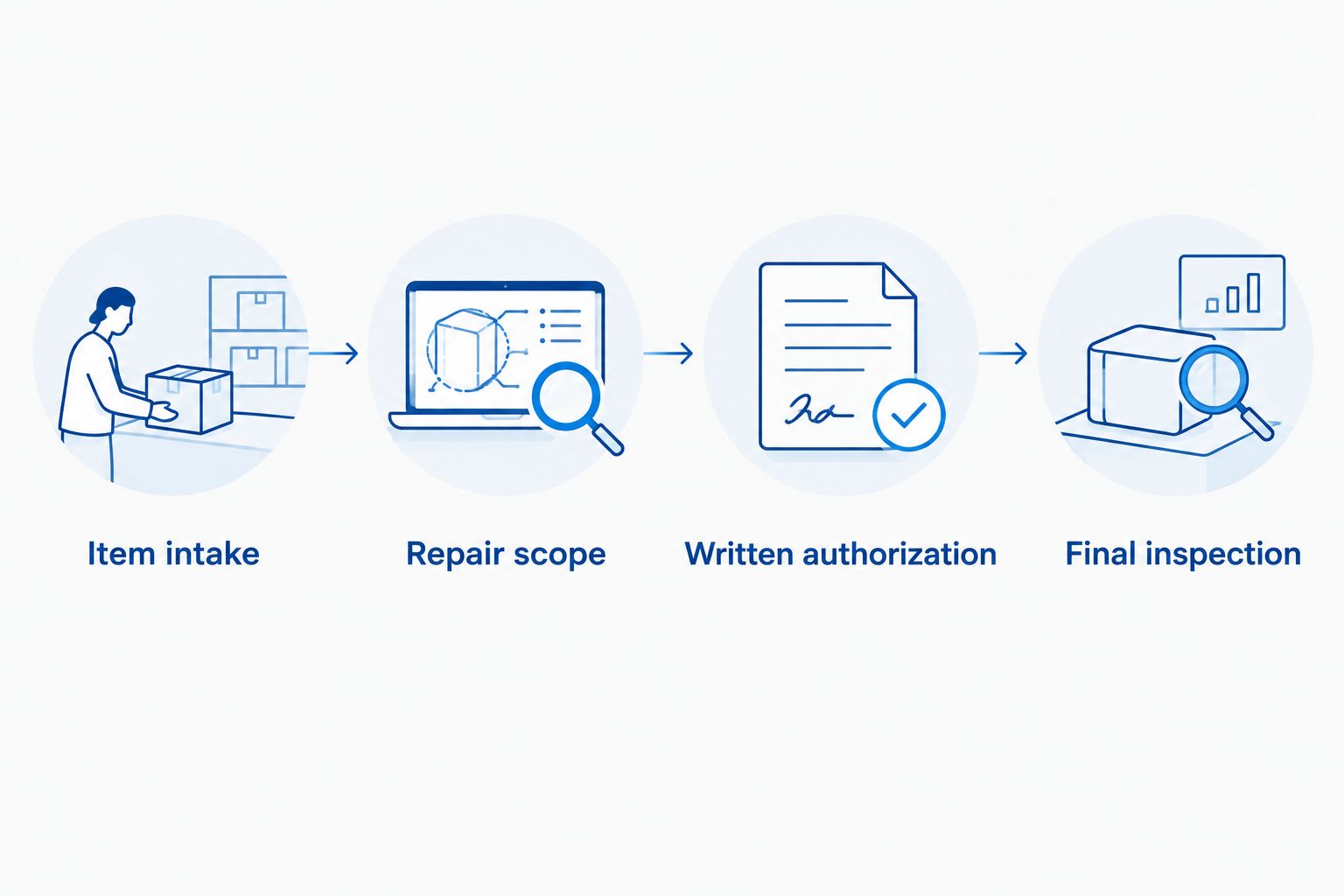
Final inspection and collection
Check the completed work before leaving
- Confirm that collection is appropriate. Wait for a completion message, then ask what paperwork or identification to bring. Confirm any arrangements for another person collecting on your behalf.
- Match the item to your intake record. Review identifying details and any components listed separately. Ask about anything that differs from the recorded instructions.
- Inspect the repair with the jeweler. Request a demonstration of the repaired function. For a clasp, watch it open and close; for a resized ring, try the fit; for setting work, ask the jeweler to explain the checks performed.
- Review appearance and comfort. Look at the finish, alignment, engraving, and any replaced component. Describe discomfort or a visible concern immediately rather than assuming it will resolve with wear.
- Collect the final paperwork. Ask for a description of the completed work, care instructions, and any applicable written repair terms. Confirm how to report a later problem.
Do not test a repair by pulling hard on a chain, bending a component, or pressing a stone yourself. Ask the jeweler to demonstrate an appropriate functional check instead. Your role is to confirm that the item matches the agreed work and feels right in normal use.
Expected result: You leave with the correct item, an explanation of the completed work, and a clear route for follow-up. If something is unresolved, document the concern and agree on the next action before closing the handoff.
When the estimate changes after inspection
A repair proposal can change when further examination reveals a different problem. Treat the revised proposal as a new decision, not an automatic extension of the original instruction.
Ask the jeweler to identify the new finding, explain why the original approach no longer fits, and describe the alternatives. Then use this comparison to frame your questions; it does not determine which approach is technically suitable for your item.
| Approach | Best for | Advantage | Limitation to discuss |
|---|---|---|---|
| Repair the existing component | Preserving an original detail when feasible | Keeps the existing component in the piece | Its condition can restrict the repair |
| Replace the component | Restoring function when the original part is unsuitable | Addresses the failed component directly | Appearance or originality can change |
| Redesign the piece | Changing jewelry you no longer want in its current form | Creates a different direction for the item | Requires a separate design discussion and approval |
Approve the revised scope only after you understand the trade-off. Ask what happens if you decline it, including how and when you can collect the item. Do not assume that a redesign, replacement, or additional adjustment belongs within the original authorization.
Uptownbullion offers both jewelry repair and custom-made jewelry. Ask which service fits your goal before authorizing a change in direction; those services answer different needs.
Troubleshooting
The estimate does not explain the work
Ask for the affected component, proposed action, and expected result in writing. A short description can be sufficient, but it must distinguish repairing a clasp from replacing one, or adjusting a ring from refinishing it.
You cannot reach the person who gave the estimate
Use the item’s intake reference and the agreed contact channel. Summarize your question in one message and ask for confirmation that it has reached the person handling the repair. Keep new instructions separate from a simple status request.
The completion date has passed
Request the current stage, the unresolved issue, and a revised update date. If you need the item for an event, repeat that deadline and ask about your collection options. Do not collect unfinished work without discussing its condition and suitability for use.
The repair looks or feels different at pickup
Compare the result with the approved scope and intake photos. Point to the specific difference—fit, finish, alignment, or component appearance—and ask for an explanation. Agree on any corrective work before leaving the item again.
A problem returns after collection
Stop wearing the item if the repaired part is not functioning properly. Contact the jeweler with the repair reference and a description of what happened, then ask about assessment and the applicable written terms. Do not attempt a home repair before that discussion.
Customize your workflow
For multiple items, keep 1 repair record per item. A ring adjustment and a necklace repair need separate descriptions, approvals, and pickup checks even when you leave them during the same visit.
For inherited jewelry, add a preservation instruction before the assessment. State which details matter: engraving, an original component, or the existing surface appearance. Ask what the proposed work would change rather than requesting restoration without defining it.
Keep 3 records together after collection: the intake description, the final authorization, and the completed-work receipt. Add the care instructions to that file so a future jeweler can see what was done without relying on memory.
Discuss your jewelry repair
Describe the item, the problem, and any details you want preserved before arranging a repair.
FAQ
What is the jewelry repair estimate to pickup process?
The jewelry repair estimate to pickup process moves from documenting the item to assessing the problem, approving a defined scope, and inspecting the finished work. Confirm how the jeweler handles updates, changed instructions, and collection before leaving your item.
What should I bring when asking for a jewelry repair estimate?
Bring the item, detached components, and relevant previous repair paperwork. Explain the problem and identify any engraving, original parts, or surface details you want preserved.
Does accepting a repair estimate authorize the work?
Ask the jeweler exactly what your acceptance authorizes before agreeing. Keep inspection permission, repair approval, and authorization for later changes clearly documented.
Can a jeweler change the proposed repair after examining the item?
Further examination can lead to a different repair proposal. Ask for the new finding, revised scope, and alternatives before approving additional or different work.
How long will my jewelry repair take?
Get the expected completion date from the jeweler after the item has been assessed. Ask whether that date is provisional and wait for confirmation that the work is complete before arranging collection.
What should I check when picking up repaired jewelry?
Check the item against your intake record and approved repair scope. Review fit, function, appearance, and the completed-work paperwork with the jeweler before leaving.
Can someone else collect my repaired jewelry?
Confirm third-party collection requirements with the jeweler before sending another person. Ask what authorization, identification, and repair reference the collector needs.
Does Uptownbullion offer jewelry repair in Dallas?
Uptownbullion provides jewelry repair services in Dallas, along with watch repair and custom-made jewelry. Contact the business to discuss the specific item and confirm the appropriate service before arranging a handoff.
One last thing
A successful repair is not always one that makes jewelry look new. If preserving engraving, an original component, or an aged finish matters to you, say so before work begins. For any 2026 repair, write down what must stay unchanged as clearly as what needs fixing.


