
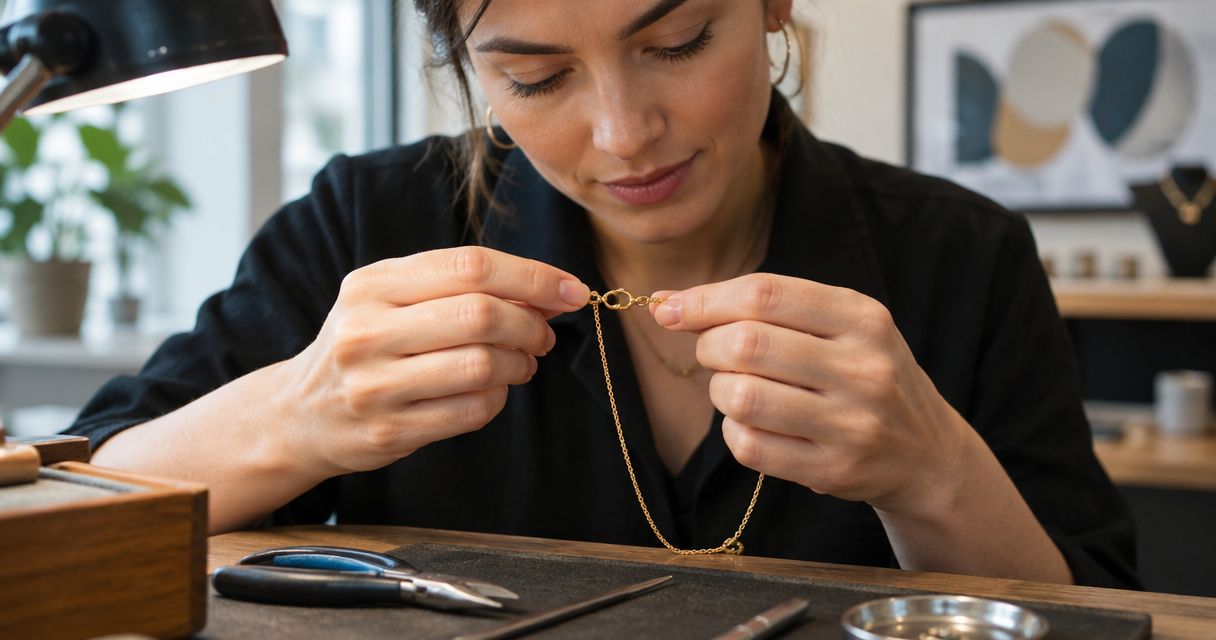
Yes, a jeweler can usually fix a broken necklace clasp by repairing the connection, replacing the clasp, or repairing the chain end that holds it. For a repair in 2026, the important question is whether the clasp itself has failed or another part of the necklace has broken; replacing the clasp alone will not fix a damaged attachment.
- Can a jeweler fix a broken necklace clasp? Usually yes, through clasp replacement, connection repair, or chain-end repair.
- Stop wearing the necklace until a jeweler checks the clasp and its attachment points.
- Choose clasp repair for a sound mechanism; choose replacement when the mechanism is damaged or unreliable.
- Uptownbullion provides jewelry repair in Dallas; ask about an assessment before bringing in your necklace.
Why this matters
A necklace can look closed while its clasp or connecting ring is no longer secure. Continuing to wear it puts the chain and any pendant at risk of loss, especially when the opening is difficult to see.
Have the entire closure checked, not just the part that looks broken. If you are arranging jewelry repair in Dallas, review the available jewelry repair services and explain what happens when you try to fasten the necklace. A clasp that sticks needs a different assessment from a clasp that closes normally but has separated from the chain.
Can a jeweler fix a broken necklace clasp?
A jeweler can usually restore the closure, but the appropriate work depends on the failure point. The clasp, the connecting ring, and the chain end work together; damage to any of them can make the necklace unsafe to wear.
Use these visible symptoms to describe the problem. They help start the conversation, but they do not replace an inspection.
| What you notice | What the jeweler checks | Possible repair | Best for | Limitation |
|---|---|---|---|---|
| The clasp sticks or does not close fully | The moving mechanism and clasp body | Repair or replacement | Restoring a reliable closure | Internal damage can make replacement preferable |
| The clasp works but has detached | The connecting ring and attachment | Reconnect or replace the attachment | Keeping an otherwise sound clasp | A worn chain end also needs attention |
| A link has broken beside the clasp | The chain end and nearby links | Chain-end repair, with clasp work if needed | Addressing a break outside the clasp | A new clasp alone does not repair the chain |
| The clasp closes but is difficult to operate | The size, shape, and connection | A different clasp style | Making fastening easier | A different style changes the appearance or fit |
| The necklace opens repeatedly | The clasp and every closure connection | Repair or replacement after inspection | Finding the actual cause of release | Appearance alone does not establish security |
The right repair fixes the failure point, not merely the most obvious component. Ask the jeweler to show you the damaged area before you approve the work.
Clasp repair: best for a sound clasp with a correctable fault
Repair makes sense when the clasp can return to dependable operation without replacing the whole component. A jeweler needs to examine the mechanism and surrounding metal before deciding whether that is practical.
The advantage is preserving the existing clasp, including its appearance and how it fits the necklace. The limitation is that an internally damaged or heavily worn mechanism is not necessarily worth retaining. Keeping the original component matters less than making the closure dependable.
Tell the jeweler whether the problem started suddenly, followed a snag, or developed gradually. Also mention any earlier repairs. That history helps distinguish an isolated fault from a recurring problem that needs a different solution.
Clasp replacement: best for a damaged or unreliable mechanism
Replacement is often the practical choice when the clasp body is broken or the moving mechanism no longer closes reliably. The replacement needs to suit the chain rather than simply look similar in a display case.
The benefit is removing the failed mechanism. The trade-off is a possible change in size, appearance, weight, or ease of use. If keeping the necklace visually unchanged matters to you, make that clear before authorizing a replacement.
For a 2026 repair request, describe your priority in plain language: preserve the original appearance, make fastening easier, or restore dependable everyday use. Ask the jeweler to explain any conflict between those goals instead of choosing a clasp by appearance alone.
Connection repair: best when the clasp still works
Sometimes the clasp is not broken at all. A small connecting ring can open, or the chain end attached to it can fail, leaving a working clasp disconnected from the necklace.
Repairing that connection preserves a functioning clasp and addresses the actual break. The limitation is that the neighboring metal also needs inspection: closing an opening does not resolve thinning, distortion, or a damaged link beside it.
Ask whether the break is in the clasp, the connector, or the chain. This distinction gives you a clearer repair description and helps prevent a misunderstanding about what the jeweler will replace.
Why necklace clasp repairs vary
The repair method depends on the necklace in front of the jeweler. These factors explain why a photograph or a brief description does not settle every question:
- Failure location: A broken mechanism needs different work from an open connecting ring or damaged chain end.
- Metal and construction: Solid precious metal, plated pieces, and mixed-material jewelry require different handling considerations.
- Surrounding condition: Worn links beside the clasp can need attention even when the clasp is the visible problem.
- Clasp design: Different mechanisms have different components and attachment requirements.
- Nearby materials: Pearls, gemstones, adhesives, and finishes can affect how the jeweler approaches the work.
- Your priorities: Preserving an original clasp and changing to an easier-to-use closure are different repair goals.
Ask which factors apply to your necklace. You need an explanation of the actual problem, not a list of every repair the shop offers.
What should you do before taking the necklace to a jeweler?
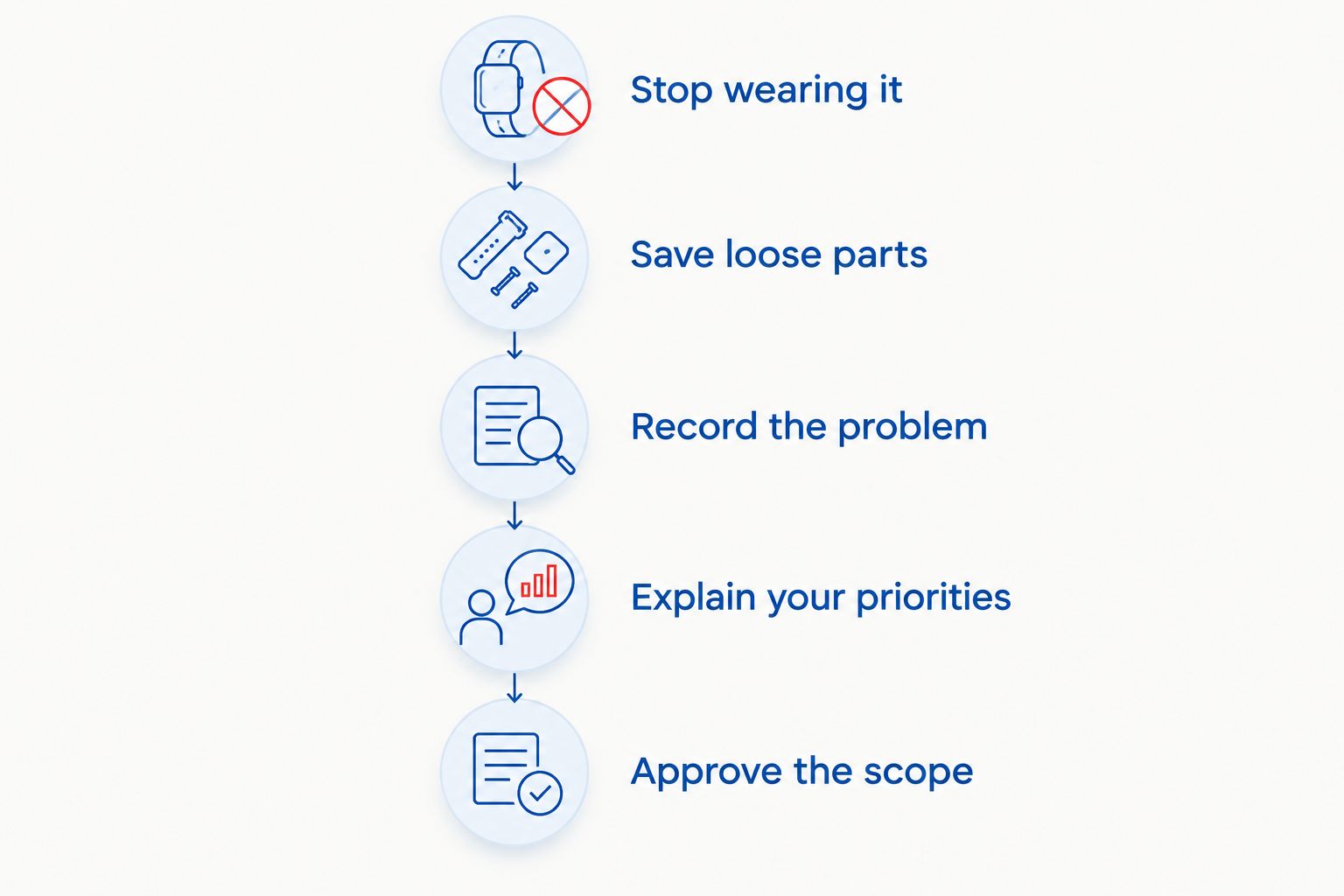
Your 2026 repair checklist starts with preventing further damage. Bring the whole necklace, even if the broken component seems easy to identify.
- Stop wearing it. Do not rely on a clasp that opens unexpectedly or a ring that has started separating.
- Save loose parts. Place the necklace, detached clasp, and any loose links together in a small, closed container. Keep tiny parts from falling through gaps in packaging.
- Record the problem. Note whether the clasp sticks, fails to spring shut, opens during wear, or has pulled away from the chain. A clear description is more useful than calling every failure a broken clasp.
- Explain your priorities. Tell the jeweler if the necklace is sentimental, if you want the original clasp returned, or if fastening it is difficult for you.
- Approve the scope. Confirm which parts will be repaired or replaced and whether nearby links need work. Ask for the estimate and expected completion date before authorizing the repair.
Do not apply glue, force the mechanism, or repeatedly bend a connecting ring as a temporary fix. Those actions can complicate the repair or leave you with a closure that looks secure but is not.
What should the repair description include?
Ask for a description that identifies the affected component and the proposed work. For example, replacing a clasp and reconnecting a working clasp are different jobs, even though both restore the closure.
Also confirm whether the work changes the necklace's finished length or appearance. If the jeweler discovers additional damage, agree on how you will approve further work before the repair starts.
Can you replace a necklace clasp with a different style?
Yes, a jeweler can assess whether a different clasp suits your necklace. A larger or easier-to-hold mechanism can help with fastening, but the attachment and overall proportions still need to work with the chain.
A lobster clasp uses a spring-operated lever, while a spring-ring clasp uses a small sliding lever on a circular body. A toggle uses a bar that passes through a ring, and a magnetic clasp uses magnetic attraction. Each design has practical trade-offs.
| Clasp style | Best for | Practical advantage | Trade-off to discuss |
|---|---|---|---|
| Lobster clasp | Wearers who want a lever-operated closure | A distinct lever opens the clasp | A small lever can still be difficult to handle |
| Spring-ring clasp | Keeping a compact, circular closure | A small profile suits delicate-looking pieces | The lever and opening can be fiddly |
| Toggle clasp | Wearers who prefer a bar-and-ring fastening | Does not require operating a spring lever | Security depends on fit and how the necklace sits |
| Magnetic clasp | Wearers who find small levers difficult | Joins without a small lever | Suitability depends on the necklace and magnet-related precautions |
Choose the clasp you can operate reliably, provided it suits the necklace. If you use an implanted medical device, follow its manufacturer's guidance about magnets before considering a magnetic closure.
Can a jeweler fix the clasp while you wait?
Some straightforward clasp work can be completed during a visit, but inspection, suitable components, and the shop's workload determine the schedule. Chain damage or a less common replacement component can require a different repair plan.
For a visit in 2026, confirm the expected completion time directly before making travel plans. Describe the problem when you contact the jeweler, but do not treat a telephone description as a final diagnosis.
Where can you ask about necklace repair in Dallas?
Uptownbullion is best for Dallas customers seeking local jewelry repair rather than a do-it-yourself fix. Its services include jewelry repair, so you can ask about having the necklace assessed.
The benefit of an in-person assessment is being able to show exactly how the closure fails. For a specific Uptownbullion necklace repair request, confirm the proposed work and timing directly; do not assume a replacement clasp or completion slot before the necklace is inspected.
Ask about your necklace repair
Describe the clasp problem and ask how to arrange a jewelry repair assessment in Dallas.
What should you check when you collect the necklace?
Ask the jeweler to show you the repaired area and demonstrate the closure. Then operate the clasp yourself so you know it works for your hands, not just for someone accustomed to handling small jewelry components.
Look at the connecting rings and chain ends as well as the clasp. Ask about any change in appearance, length, or fastening technique, and follow the jeweler's care instructions. Do not test the repair by sharply pulling on the necklace.
FAQ
Can a jeweler fix a broken necklace clasp without replacing it?
Yes, some clasp problems can be repaired without replacing the entire clasp. A jeweler must inspect the mechanism and attachments to determine whether repair will restore dependable operation.
Should I keep wearing a necklace if the clasp only opens occasionally?
No, stop wearing a necklace whose clasp opens unexpectedly. An intermittent failure still puts the necklace and any pendant at risk of loss.
Can a jeweler repair a broken clasp on gold or silver jewelry?
Yes, jewelers can assess clasp and connection repairs on gold and silver jewelry. The metal, construction, and condition determine the appropriate method.
Can a clasp be fixed on a plated necklace?
A plated necklace can sometimes be repaired or fitted with a replacement clasp. Ask about possible effects on the finish and whether the replacement will match the existing appearance.
Do I need to bring the entire necklace for a clasp repair?
Yes, bring the entire necklace and any detached parts. The jeweler needs to check the chain ends and attachments, not just the loose clasp.
Can Uptownbullion help with jewelry repair in Dallas?
Uptownbullion provides jewelry repair services in Dallas. Contact the business about an assessment of your necklace and confirm the proposed work before authorizing it.
What should I ask before approving a necklace clasp repair in 2026?
Ask which component failed, what will be repaired or replaced, and when the work is expected to be completed. Also confirm any changes to the necklace's appearance or length.
One last thing
A new clasp does not automatically make an old necklace secure. The connecting ring and the link beside it still carry the necklace's weight, so they deserve the same attention as the mechanism.
Before approving a repair in 2026, ask one direct question: Does this work address the entire closure, including both attachment points? That answer matters more than whether the replacement clasp looks shiny and new.


