
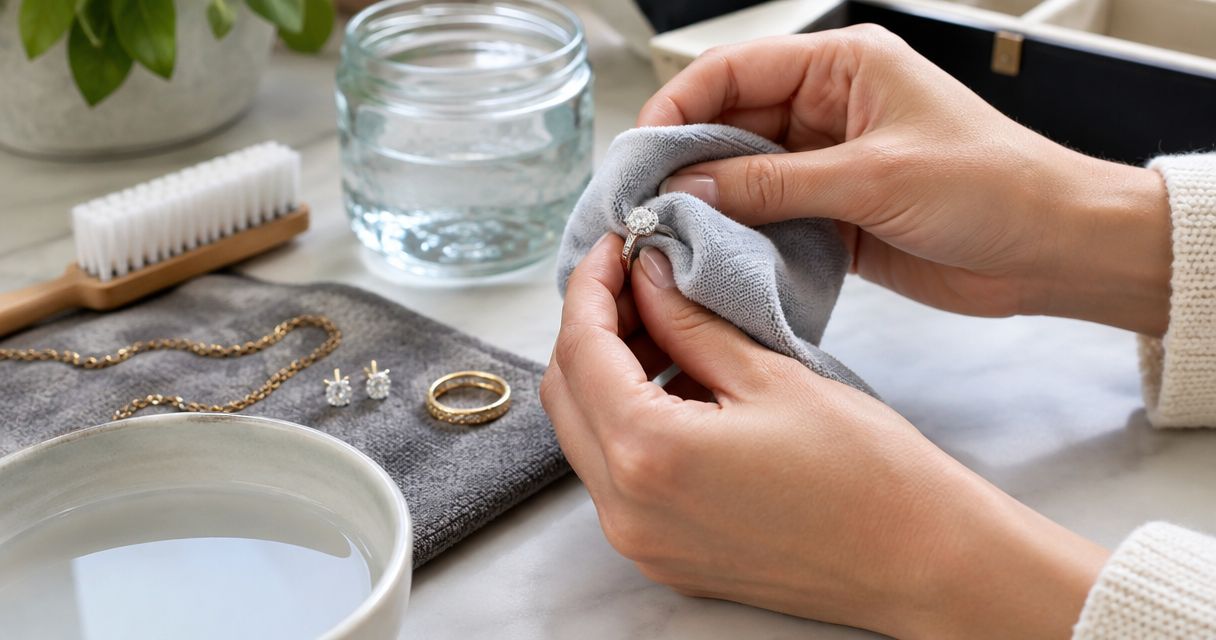
Jewelry cleaning and polishing costs depend on the piece, its condition, and whether you need dirt removed, scratches reduced, or a finish restored; get an item-specific written quote in 2026 before approving work. Ask whether the quote includes inspection, stone security checks, and any separate repair or plating work, because a cleaning quote does not describe all of those services.
- How much does jewelry cleaning and polishing cost? Get a written quote that separates cleaning, polishing, and repairs.
- Cleaning removes buildup; abrasive polishing removes a small amount of metal to reduce surface marks.
- Uptownbullion provides local jewelry repair in Dallas; ask which work suits your piece before authorizing it.
- Choose the treatment for the material and condition, not simply for the brightest finish.
How much does jewelry cleaning and polishing cost?
The useful comparison is the work included, not a single advertised cleaning charge. A plain band with surface buildup and a stone-set ring with worn prongs need different assessments. Even when both look dull, the appropriate work is not necessarily the same.
For a 2026 quote, ask the jeweler to distinguish these services:
| Service | Best for | What it does | Limitation to confirm |
|---|---|---|---|
| Cleaning | Removing dirt, oils, and residue | Cleans accessible surfaces using a method suited to the materials | Does not remove scratches or repair worn settings |
| Abrasive polishing | Reducing surface marks on suitable metal | Removes a small amount of surface metal to improve the finish | Can soften details and is not appropriate for every surface |
| Replating | Restoring a plated surface when appropriate | Applies a new surface coating after suitable preparation | Does not fix underlying structural damage |
| Repair | Addressing damage or insecure components | Corrects a specific problem such as a damaged clasp or worn setting | Requires its own assessment; cleaning alone is not a substitute |
These are separate scopes of work, not interchangeable names for making jewelry shiny. Ask for each proposed service to appear separately on the estimate, with your approval required before extra work begins.
If you want a local repair discussion, Uptownbullion provides jewelry repair in Dallas. Confirm the proposed cleaning or finishing method directly rather than assuming it is included with a repair.
Why this matters
A dull appearance does not identify the problem. Soap residue can hide a reflective surface, scratches can scatter light, and an intentionally matte finish can look less bright by design. Choosing polishing before identifying the cause risks changing a surface that only needed cleaning.
Your goal also matters. You might want an everyday ring cleaned without changing its character, or you might want visible wear addressed before giving a piece to someone else. Tell the jeweler which result you want—and which details you want preserved.
Ask for the least invasive treatment that achieves your goal. A brighter finish is not automatically a better outcome for engraving, texture, plating, or an older piece with distinct surface details.
Cleaning: remove buildup without promising scratch removal
Cleaning is the right starting point when dirt, lotion, or other residue obscures the jewelry. The method must suit the entire piece, including its stones, settings, adhesives, and surface treatments—not just its main metal.
A cleaning estimate should explain whether the jeweler will inspect the piece before selecting a method. Do not assume that ultrasonic equipment, steam, or immersion is appropriate for every item. Fragile materials, treatments, and damaged settings change the decision.
The benefit is straightforward: cleaning targets contamination rather than deliberately reshaping the metal surface. The limitation is equally important: a clean ring can still have scratches, worn edges, or damaged prongs.
Describe what you see instead of requesting a technique. Saying that the underside of a stone looks cloudy gives the jeweler a problem to assess; asking for aggressive polishing prescribes a solution before that assessment.
Polishing: reduce surface marks while preserving detail
Abrasive polishing can improve the appearance of suitable metal by removing a small amount of its surface. That is why it deserves a separate conversation from cleaning. The process changes the metal rather than only removing material sitting on top of it.
Its benefit is a more even finish where surface marks are suitable for correction. Its drawback is material removal, especially around raised details, edges, and engraving. Repeated or excessive work can soften those features.
Approve the finish, not just the word polishing. Ask whether the jeweler intends to preserve a brushed, satin, textured, or mirror-finished surface. A bright polish on an intentionally matte section changes the design.
Deep scratches also deserve realistic expectations. Removing every mark can require more metal removal than you want. Ask which marks should remain rather than treating a completely unmarked surface as the only acceptable result.
Plating and repair: separate decisions from cleaning
Plated jewelry has a surface layer over another material. Cleaning removes buildup; it does not replace a worn coating. Replating is a different service and should be described separately if it is recommended.
White gold illustrates the distinction. Some white gold jewelry has a rhodium finish, so a change in appearance can involve that coating rather than dirt alone. Ask whether the piece is plated and whether the proposed work affects that finish.
Repair addresses a different concern again: whether the jewelry functions and holds together as intended. A damaged clasp, loose stone, or worn setting needs assessment before appearance becomes the priority.
Repair can preserve usefulness, but it can also expand the scope beyond your original request. If the jeweler identifies a problem, ask what needs correction, why it matters, and what happens if you decline that work. Authorize the repair separately from cosmetic finishing.
Why jewelry cleaning and polishing quotes vary
The factors below explain why matching the service description matters when comparing estimates in 2026:
- Metal and construction. Solid metal, hollow construction, and plated surfaces require different care. A treatment suitable for one is not automatically suitable for another.
- Stone identity and treatment. Gem materials, treatments, and adhesives influence which cleaning methods are appropriate. Tell the jeweler about anything you know has been filled, glued, or treated.
- Setting condition. Worn prongs and loose components change the order of work. A security concern belongs in the assessment before cosmetic treatment proceeds.
- Surface finish. Mirror polish, satin texture, engraving, and decorative darkening are different finishes to preserve or deliberately change.
- Damage and buildup. Residue removal is not the same task as addressing deep scratches, bent parts, or worn surfaces.
- Requested scope. Cleaning alone, cleaning with inspection, polishing, replating, and repair should not be compared as though they describe identical work.
Metal markings help identify a piece, but they do not prescribe its treatment. For example, 14-karat gold contains 14 parts gold out of 24, while 18-karat gold contains 18 parts out of 24; 24-karat describes pure gold. The alloy, stones, construction, and finish still matter when choosing a method.
Do not turn a karat stamp into a cleaning instruction. Two rings with the same marking can have different settings and surface finishes.
How to request a useful cleaning and polishing quote
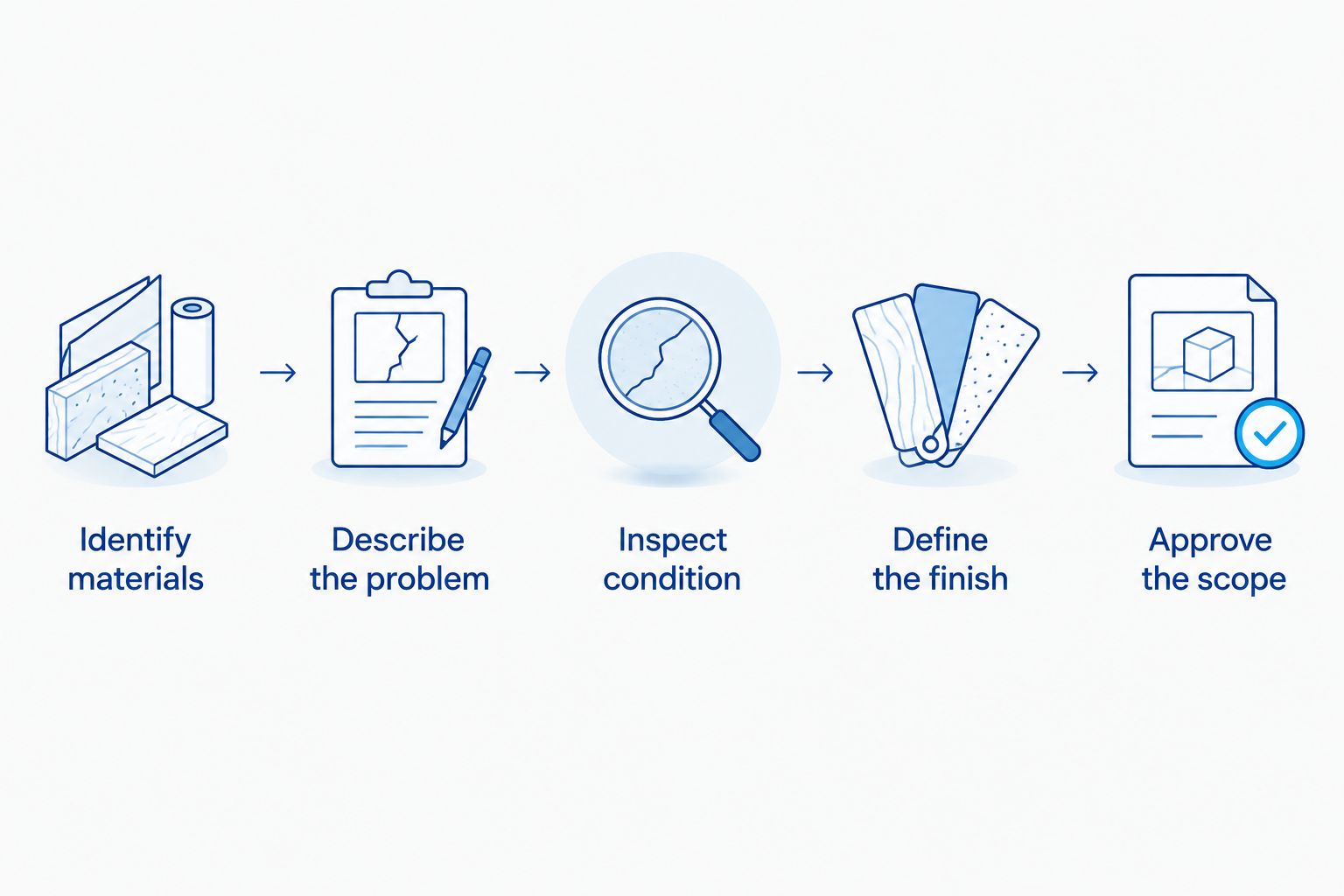
Use this sequence when asking for a 2026 estimate. It keeps the conversation focused on what the piece needs and what you are actually authorizing.
- Identify materials. Share any known metal, stone, plating, or treatment information. Bring relevant documentation if you have it, but do not guess at an unidentified gemstone.
- Describe the problem. Point out residue, scratches, discoloration, a catching prong, or a clasp that does not close securely. Explain what has changed.
- Inspect condition. Ask the jeweler to assess security and visible damage before recommending cosmetic work. Mention previous repairs or a recent impact.
- Define the finish. Identify engraving, texture, darkened details, and other features you want preserved. Ask which marks are reasonable to leave alone.
- Approve the scope. Request a written description separating cleaning, polishing, plating, and repair. Require approval before additional work begins.
Keep the estimate with your intake record. It should identify the item and the work you agreed to, so you can compare the result against a clear request rather than a vague promise to make it look new.
For local service selection, use the guide to jewelry repair shops in Dallas to frame your questions about inspection and repair scope.
Uptownbullion is best suited to Dallas consumers looking for local jewelry repair. Ask which proposed work addresses appearance and which addresses condition before deciding what to authorize.
Discuss your jewelry repair needs
Describe the piece and ask which repair or finishing work needs a separate assessment.
Is jewelry cleaning the same as polishing?
No. Cleaning removes buildup, while abrasive polishing removes a small amount of the surface metal to reduce marks and change the finish. A jeweler can recommend cleaning without recommending polishing.
Ask what the service includes whenever those terms appear together. A service described as cleaning and polishing should still explain the treatment, intended finish, and limits of scratch removal.
Should you polish jewelry before selling it?
Do not authorize polishing solely because you plan to sell. First ask the buyer how the piece will be evaluated and whether surface work serves that evaluation; polishing does not increase the amount of precious metal present.
For a piece with engraving, texture, or older decorative details, preserving the surface deserves particular attention. Separate your desire for a cleaner appearance from any assumption that a brighter finish increases its sale value.
Can you clean jewelry at home instead?
Home cleaning is only appropriate when the method is suitable for every material and component in the piece. Follow material-specific care instructions, and do not use an unknown cleaning solution or abrasive household product simply because it works on another item.
If a stone moves, a setting catches, or the materials are uncertain, get an assessment first. Home cleaning is not a substitute for correcting damage, and a successful cleaning does not prove that the setting is secure.
What should you check when collecting your jewelry?
Compare the finished piece with the work you authorized. Look at the surface in good light, confirm that intentional textures remain, and ask the jeweler to explain any marks that were deliberately left rather than polished away.
Check function as well as appearance. Open and close a repaired clasp, inspect the agreed repair area with the jeweler, and ask for care instructions suited to the actual materials. Do not treat a bright finish as proof that every component has been repaired.
If the result differs from your request, raise the specific difference before leaving. A clear discussion about preserved engraving or an unchanged scratch is more useful than a general statement that the piece should look newer.
FAQ
How do I find out how much jewelry cleaning and polishing costs?
Request an item-specific written quote after the jeweler assesses the piece. Ask for cleaning, abrasive polishing, replating, and repair to be identified separately so you know what you are approving.
Does cleaning jewelry remove scratches?
Cleaning does not remove scratches from the metal. It removes buildup; reducing surface marks requires a separate finishing assessment.
Can polishing damage engraving on a ring?
Abrasive polishing can soften engraved details because it removes surface metal. Point out the engraving before work begins and ask how it will be preserved.
Is ultrasonic cleaning safe for all jewelry?
Ultrasonic cleaning is not suitable for every piece of jewelry. Gem materials, treatments, adhesives, and setting condition must be assessed before choosing the method.
Does white gold always need replating after cleaning?
White gold does not automatically need replating after cleaning. Ask whether the piece has a rhodium coating and whether that coating needs attention separately from dirt removal.
Can a jeweler clean a ring with a loose stone?
A loose stone needs a security assessment before the jeweler selects a cleaning method. Ask whether setting repair is necessary and authorize that work separately.
Where can I discuss jewelry repair in Dallas?
Uptownbullion provides local jewelry repair in Dallas. Ask directly about your piece, the proposed work, and whether cleaning or finishing is included in the repair scope.
One last thing
Ask what should stay unchanged. That question protects engraving, texture, and decorative darkening better than a request to make everything shiny. Removing an intentional finish can be the wrong result even when the surface looks brighter.
For your 2026 jewelry-care decision, use this instruction: clean what needs cleaning, assess what needs repair, and polish only the surfaces you have agreed to change. Keep those decisions separate on the written estimate.


