
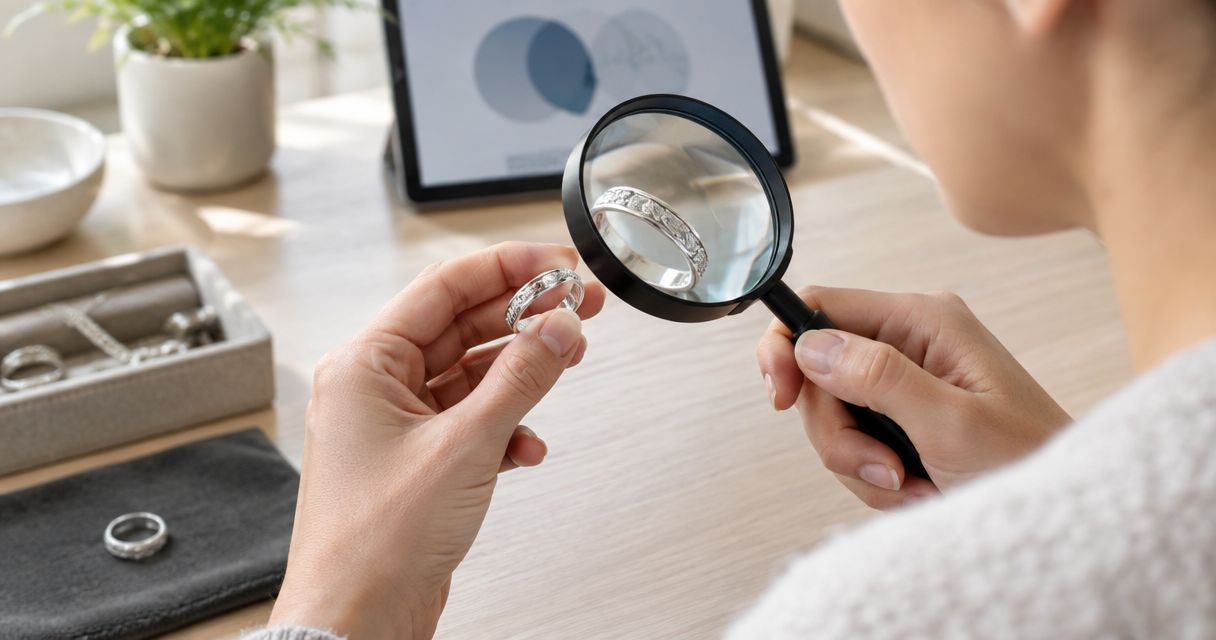
To tell whether silver is real or plated, check its markings, inspect worn areas, and have uncertain pieces professionally tested. A 925 or sterling mark indicates 92.5% silver, while EPNS or “silver plated” identifies a silver coating over another metal. Stamps, tarnish, and magnet checks are clues—not proof of the metal throughout an item.
- How to know if silver is real or plated: combine hallmark inspection, wear checks, and professional testing.
- Sterling silver contains 92.5% silver; silver plate has a silver coating over another material.
- A magnet cannot authenticate silver, and tarnish appears on both sterling and silver-plated surfaces.
- Uptownbullion serves Dallas consumers seeking local silver buying and jewelry repair services.
How do I know if my silver is real or plated?
Start with nondestructive checks, then confirm anything you intend to buy or sell. If you are considering selling broken silver jewelry, identify the metal before treating the piece as scrap.
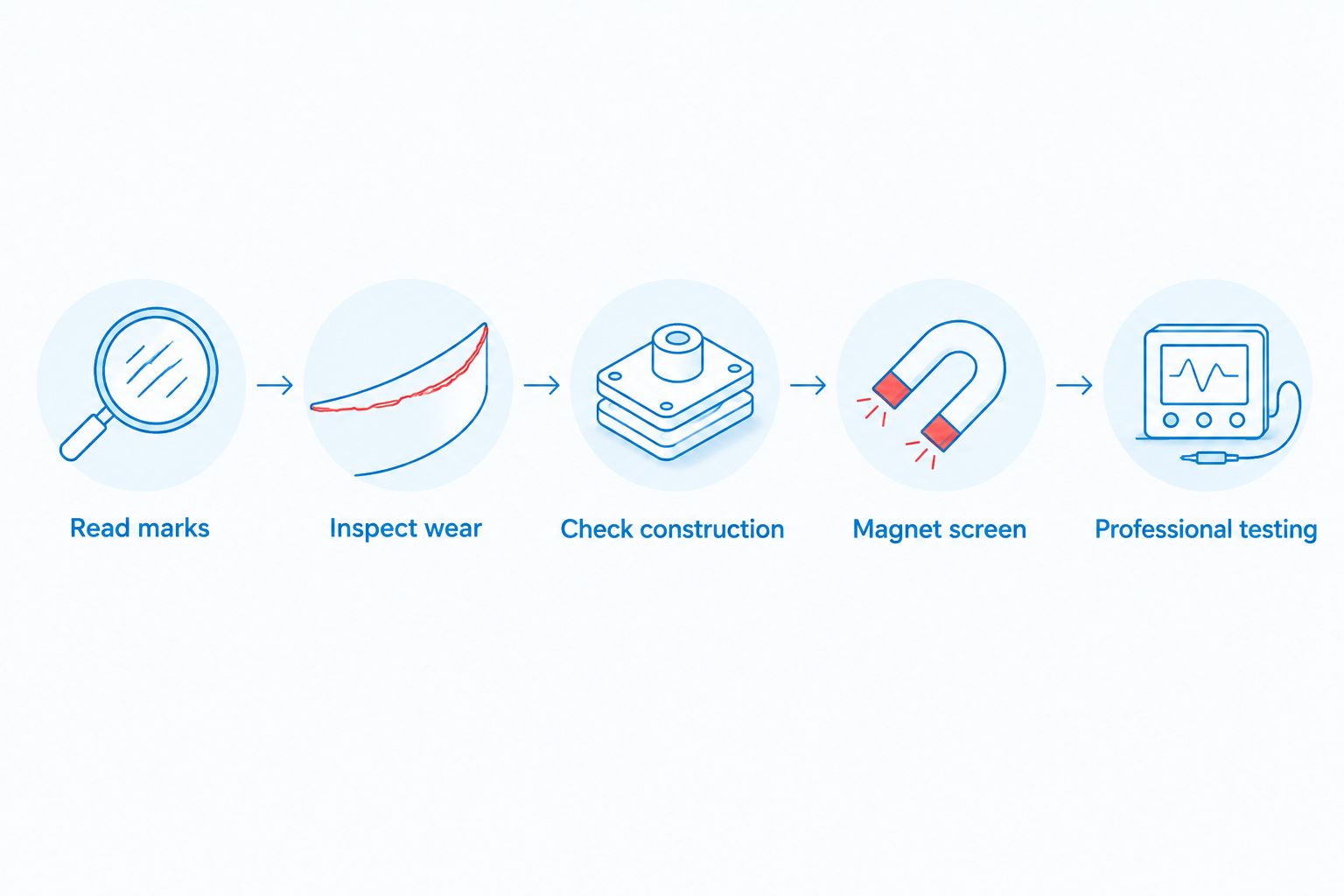
- Read the marks. Look inside ring bands, near necklace clasps, on bracelet fittings, and underneath flatware or hollowware.
- Inspect existing wear. Look for a different-colored metal showing through on edges, raised decoration, or other frequently handled areas.
- Check construction. Notice separate clasps, blades, handles, solder joints, and any wording such as “weighted” or “reinforced.”
- Use a magnet only as a screen. Strong attraction on the main body conflicts with ordinary solid silver construction; no attraction does not establish authenticity.
- Ask for appropriate testing. Explain whether you need identification for wearing, repair, resale, or collecting, and ask whether the proposed test leaves a mark.
Keep the conclusions separate. “Marked sterling,” “not magnetic,” and “confirmed silver alloy” do not mean the same thing.
Why this matters
Mistaking plated flatware for sterling changes how you assess its metal content. The reverse mistake matters too: an unmarked silver item is not automatically worthless, and a broken clasp does not identify the metal in the attached chain.
For a 2026 purchase or sale, separate three questions: what the item contains, whether it has collectible or design interest, and what you want to do with it. A metal test addresses composition. It does not, by itself, establish an antique's maker, age, or collectible significance.
Avoid cleaning away evidence before you understand the piece. Existing wear, surface finishes, and marks give an examiner useful information without requiring you to scratch anything.
Sterling silver: 92.5% silver
Sterling silver is an alloy containing 92.5% silver by mass. The remaining metal is commonly copper. Marks such as 925, .925, STERLING, or STER identify a claimed sterling standard, although a stamp still needs to agree with the item itself.
For jewelry, inspect both the main body and its fittings. A sterling clasp attached to a chain does not independently prove the chain's composition, particularly when repairs or replacement parts are involved.
Sterling's advantage is that the silver alloy extends through the metal rather than existing only as a coating. Its limitation is that it still tarnishes, scratches, and wears; “real silver” does not mean maintenance-free or indestructible.
Fine silver: 99.9% silver
Fine silver marked 999 indicates 99.9% silver by mass. You will encounter this standard on bullion and some jewelry or decorative work. Confirm that the marking belongs to the object rather than only its packaging or a detachable tag.
Fine silver's high purity is useful when your concern is silver content. Its relative softness is a limitation for objects exposed to bending, abrasion, or repeated knocks, so higher purity does not automatically mean a better everyday jewelry choice.
For a bullion purchase in 2026, do not treat an attractive stamp or sealed package as a substitute for authentication. An item's appearance and its claimed purity remain separate from a verified composition.
Silver plate: a coating, not a bulk purity standard
Silver-plated objects contain a layer of silver over another material. EPNS means electroplated nickel silver; EPBM indicates electroplated Britannia metal. Wording such as “silver plate,” “electroplate,” or “silver plated” also identifies a coated construction rather than a sterling alloy throughout.
Plating can provide a silver surface on a useful or decorative object. The limitation is that wear can expose the underlying material, and the object's total weight is not its weight in silver.
“Nickel silver,” “German silver,” and “Alpaca” are not sterling standards. These names commonly describe copper-based alloys rather than silver, although an object made from such an alloy can also carry silver plating.
Silver types and what their marks establish
| Material or marking | What it indicates | Best for | Main limitation |
|---|---|---|---|
| Sterling, 925 | A claimed 92.5% silver alloy | Everyday silver jewelry and usable silverware | Marks need confirmation; the alloy still wears |
| Fine silver, 999 | A claimed 99.9% silver content | Buyers prioritizing purity | Softer than common sterling alloys |
| Coin silver, 900 | A claimed 90% silver alloy when the marking is genuine | Identifying a distinct silver standard | “Coin silver” alone does not establish every object's exact purity |
| EPNS, EPBM, silver plate | Silver coating over another material | Decorative or functional use where bulk silver content is not the goal | Surface wear exposes the base material |
| Nickel silver, German silver | An alloy name, not a silver purity mark | Recognizing misleading silver-colored terminology | The name does not establish silver content |
Why silver identification results vary
Different parts of an object can tell different stories. These factors explain why a single home check does not settle every case:
- Surface coatings: A test that reads the surface can detect a silver layer without fully characterizing the material underneath.
- Mixed components: Clasps, springs, knife blades, handles, and decorative attachments need separate consideration.
- Weighted construction: Some candlesticks and handles contain filling or reinforcement, so their gross weight is not all silver alloy.
- Repairs: Replacement fittings and soldered areas can differ from the surrounding metal.
- Mark condition: Wear, shallow stamping, and small lettering make marks difficult to read; a misleading stamp creates a separate problem.
- Testing method: Visual inspection, surface analysis, density measurement, and chemical testing answer different questions and have different limits.
Ask what was tested, not just whether the item “passed.” A result from a clasp cannot automatically describe a pendant, and a reading from a plated surface needs interpretation.
Which home silver tests are actually useful?
Hallmark inspection: best for the first check
A magnifying glass and good light help you distinguish 925 from similar-looking numbers and separate a maker's mark from a purity mark. Photograph the entire piece and each marking before cleaning or separating anything.
The benefit is that inspection does not damage the object. The limitation is that markings can be absent, worn, misread, or false; a clear stamp is evidence to investigate, not a guarantee.
Magnet check: best for finding some inconsistent materials
Silver is not ferromagnetic. If the main body snaps firmly to a magnet, that behavior conflicts with an ordinary silver-alloy body and deserves further examination.
However, many base metals used beneath plating are also not strongly attracted to a magnet. A clasp spring can react even when surrounding jewelry is silver, so check the body and the fitting separately without letting the magnet scratch them.
Wear inspection: best for spotting an exposed base metal
Look at raised patterns on spoons, the backs of pendants, bracelet contact points, and other areas that already show wear. A distinctly different underlying color supports a plated construction.
Do not create a worn patch yourself. Surface discoloration, solder, and intentional mixed-metal decoration complicate interpretation, and an intact silver coating can hide the underlying material completely.
Tarnish, ice, and sound: poor choices for a final verdict
Silver surfaces tarnish, including silver plating. A darkened surface or a black mark on a polishing cloth therefore does not distinguish sterling from plate.
Silver conducts heat well, but household ice tests lack controlled conditions and do not reliably establish bulk purity. Ringing or sound tests also depend on shape, thickness, and construction; avoid striking jewelry, hollow objects, or collectible coins to obtain an answer.
For your 2026 sorting checklist, label these observations as clues rather than “passed” tests. That wording prevents an uncertain item from being treated as authenticated silver later.
How does professional silver testing work?
Professional testing is most useful when the method matches the object's construction. Tell the examiner about visible plating, hollow sections, stones, repairs, or collectible interest before agreeing to a procedure.
X-ray fluorescence, commonly called XRF, provides elemental information from the area examined. It is useful for metal identification, but plating and surface layers affect interpretation; a surface reading is not automatically proof of a uniform interior.
Acid testing examines a chemical reaction, often using material transferred to a testing stone or a prepared area. Depending on the procedure, reaching beneath a coating can require abrasion or filing, so discuss damage before giving permission.
Density testing compares mass with displaced volume. It is less straightforward for hollow pieces, stone-set jewelry, weighted objects, or items containing mixed materials. Ask the examiner to explain any limitations rather than expecting one method to answer every question.
What should you ask before leaving an item for examination?
Ask which parts will be examined, whether any procedure changes the surface, and how the result will be described. For a matched set, establish whether each piece needs individual attention rather than assuming the whole group matches.
If you need documentation for insurance, an estate, or a dispute, explain that purpose at the start. An informal identification conversation and a written appraisal are different services; confirm what you are requesting before proceeding.
What should you do before selling suspected silver?
Sort items by their actual markings, not by color or weight. Keep sterling-marked pieces, plated pieces, and uncertain pieces separate, and leave weighted or mixed-material objects intact.
Bring any existing receipts, packaging, or prior appraisals as supporting information. Those records provide context but do not replace examination of the object you have today.
Uptownbullion is best for Dallas consumers seeking local silver buying and jewelry repair services. Uptownbullion offers those services; ask about the appropriate next step for your particular item rather than assuming a specific testing method is included.
For a 2026 selling decision, establish composition before discussing the item as scrap. If a piece has an identifiable maker, unusual workmanship, or possible collectible interest, ask whether that deserves separate evaluation before any destructive test.
Does a 925 stamp guarantee real silver?
925 means a claimed 92.5% silver content, not a guarantee of authenticity. Check whether the mark is consistent with the object's wear, construction, and examination results. On assembled jewelry, establish which component actually bears the mark.
Can silver-plated items tarnish like sterling?
Silver-plated items can tarnish because their outer surface contains silver. Tarnish alone therefore cannot tell you whether the silver extends through the object. Do not aggressively polish an uncertain piece just to see what happens.
Is unmarked silver always fake?
Unmarked silver is not automatically fake. A mark can be absent or worn away, and an unidentified object needs examination rather than an assumption based on missing lettering. Keep it in an uncertain category until you have stronger evidence.
FAQ
What's the easiest way to know if silver is real or plated?
Start with markings and existing wear, then arrange professional testing when the result matters. A sterling stamp supports identification, but neither a stamp nor a home test proves the entire object's composition.
Will real silver stick to a magnet?
Silver itself is not ferromagnetic, so strong attraction on the main body conflicts with ordinary solid silver construction. A steel clasp spring can react independently, while many plated base metals show no strong attraction.
What does EPNS mean on a spoon?
EPNS means electroplated nickel silver, indicating a silver coating over a nickel-silver base alloy. It does not mean the spoon is sterling throughout.
Does 925 mean pure silver?
925 indicates 92.5% silver, which is the sterling standard rather than pure silver. Fine silver marked 999 indicates 99.9% silver.
Can I use bleach or vinegar to test silver at home?
Do not use bleach or vinegar as an authentication method. Household chemicals do not provide a reliable distinction between sterling and plating and can alter surfaces or damage other materials in the piece.
Does a black polishing cloth prove my silver is real?
A black mark on a polishing cloth does not prove solid silver. Both sterling and silver-plated surfaces can tarnish, so polishing residue does not identify the metal underneath.
Where can I ask about selling silver jewelry in Dallas?
Uptownbullion provides silver buying and jewelry repair services in Dallas. Ask about your item's markings and condition, and confirm what examination is appropriate before agreeing to any surface-altering test.
One last thing
A sterling handle does not make an entire knife sterling. The blade, handle shell, and any filling can be different materials, so weighing the complete knife does not establish its silver content.
Before a 2026 sale, photograph each object's marks and keep matching pieces together. Preserving the object gives the next examiner more useful evidence than a fresh scratch or an aggressive cleaning attempt.


