
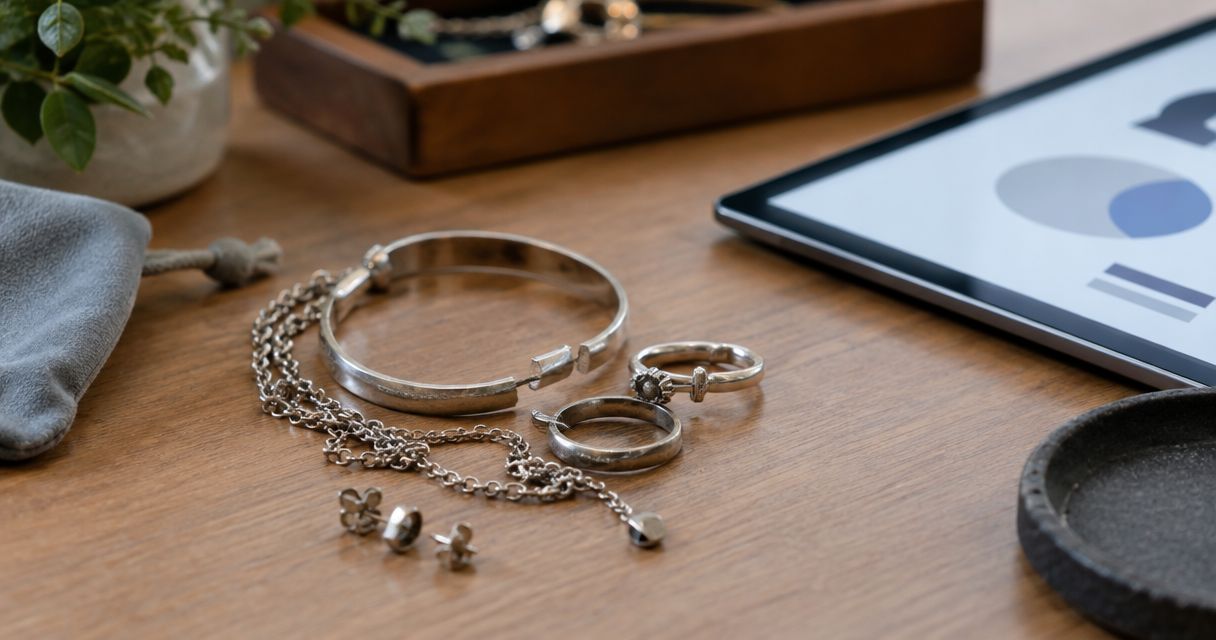
Yes, you can sell broken silver jewelry for cash if it contains silver and the buyer accepts that material. A snapped chain, bent ring, or missing earring does not erase its silver content, but silver plating, non-silver parts, and gemstones affect what a buyer evaluates.
- Can you sell broken silver jewelry? Yes—confirmed silver content matters more than whether the piece is wearable.
- Sterling silver contains 92.5% silver; a 925 stamp is a clue, not proof of authenticity.
- Uptownbullion is a local gold and silver exchange for Dallas consumers considering a jewelry sale.
- Ask whether the offer values metal only or also recognizes the jewelry itself.
Can you sell broken silver jewelry for cash?
Yes. Broken silver jewelry can retain metal value even when it cannot be worn. The useful distinction is not broken versus intact; it is silver alloy versus silver-plated base metal, followed by whether the piece deserves consideration as jewelry rather than scrap.
Uptownbullion provides gold, silver, and jewelry buying services in Dallas. Ask about your particular pieces before bringing them in, especially if you have plated items, loose stones, or jewelry without readable markings.
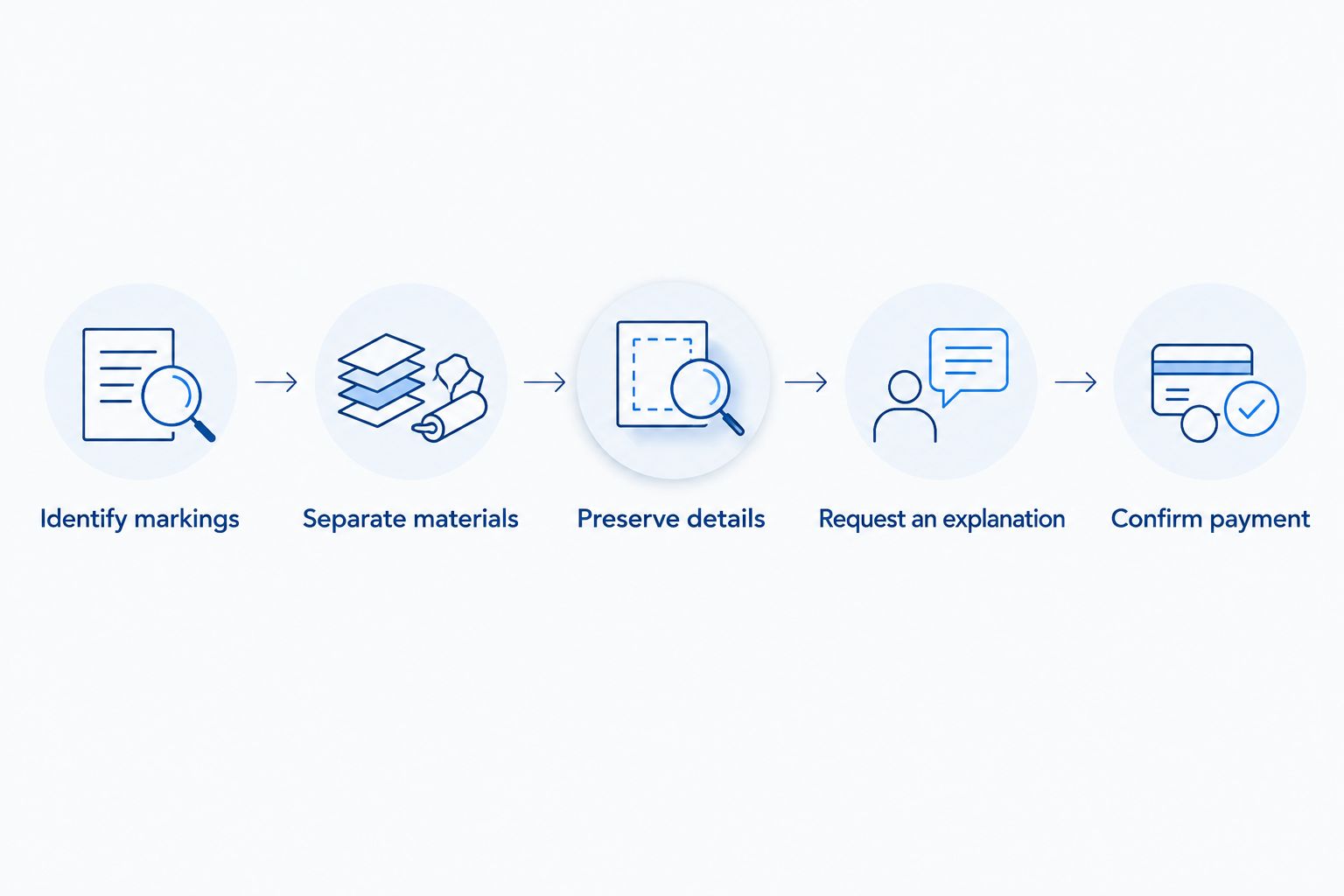
Use this sequence to prepare for an evaluation:
- Identify markings. Look inside ring bands, on necklace tags, and near bracelet clasps. Write down what you find without treating the stamp as a final test.
- Separate materials. Keep clearly marked silver apart from plated pieces and unidentified jewelry. Leave attached stones and settings intact.
- Preserve details. Keep matching earrings, broken links, tags, and detached parts together. Photograph the pieces before handing them over.
- Request an explanation. Ask what metal was identified, what weight counts, and whether the offer treats the item as scrap or jewelry.
- Confirm payment. Ask about the payment method and any deductions before agreeing to sell. Selling for cash does not establish how a particular buyer pays.
You do not need to make a broken piece wearable before asking about its silver content. Start with identification, then decide whether selling or repairing serves your purpose.
Why this matters
A broken clasp describes a repair problem, not the metal underneath it. Treating every damaged piece as worthless risks discarding silver; treating every silver-colored piece as sterling creates the opposite mistake.
For a sale in 2026, keep identification separate from valuation. First establish what the item contains. Then ask how the buyer arrived at the offer and whether any collectible, maker, or gemstone value needs separate attention.
Uptownbullion is best for Dallas consumers seeking a local gold and silver exchange. That service fit does not establish an offer for a particular piece; the jewelry still needs individual evaluation.
What kinds of broken silver jewelry can you sell?
Damage and material are separate questions. The table below shows what to establish before choosing a selling route; it does not promise that every buyer accepts every category.
| Item or material | What to establish | Best for | Main limitation |
|---|---|---|---|
| Broken sterling jewelry | Whether the alloy is genuine sterling | Sellers evaluating confirmed silver content | Stones and non-silver components are not silver weight |
| Unmarked silver-colored jewelry | Actual metal composition | Owners willing to have uncertain pieces assessed | Appearance alone does not establish silver content |
| Silver-plated jewelry | Whether the item has value beyond its thin silver coating | Sellers checking decorative or collectible interest | The entire item's weight cannot be treated as silver |
| Signed or antique damaged jewelry | Maker, age, construction, and condition | Owners checking for value beyond metal | A metal-only offer does not evaluate every kind of value |
| Repairable silver jewelry | Repair needs and whether you want to keep it | Owners who value continued wear | Repair does not guarantee a higher resale return |
Broken sterling silver
Sterling silver contains 92.5% silver by weight, with the remaining 7.5% consisting of other metals. Damage does not change that alloy percentage. A broken chain can therefore contain the same proportion of silver as an intact chain made from the same alloy.
The important qualification is weight. A necklace with stones, a steel spring, or other non-silver components is not entirely sterling simply because its main body is sterling. Ask which components are included in the evaluated metal weight.
Unmarked or uncertain pieces
Missing markings do not settle the question either way. A worn stamp, detached tag, or unmarked handmade piece needs identification rather than an assumption based on color.
Bring uncertain items separately and describe them as unidentified. Do not label them sterling because they resemble another piece, and do not discard them solely because you cannot find a stamp.
Silver-plated and mixed-material jewelry
Silver plating is a surface coating over another material. A heavy plated bracelet is not equivalent to the same weight of sterling silver, because most of its mass is not silver.
Plated jewelry can have decorative or collectible interest, but that is a different question from recoverable silver content. Ask whether the buyer evaluates that kind of item before making the trip.
How do you know whether broken jewelry is sterling silver?
Look for marks such as sterling or 925, then have the material assessed. A hallmark is evidence to investigate, not a guarantee. A mark on a replacement clasp does not establish the composition of every link attached to it.
For U.S. jewelry descriptions in 2026, the Federal Trade Commission's Jewelry Guides, 16 CFR Part 23, identify sterling silver with a minimum silver fineness of 925 parts per thousand. That standard explains the familiar 925 designation; it does not authenticate an individual object.
Other fineness marks describe different compositions. For example, 800 denotes 80% silver when the mark accurately represents the alloy. Do not automatically group it with sterling or assume a buyer will evaluate both at the same fineness.
A magnet is only a screening aid. Attraction can reveal a magnetic component, but lack of attraction does not prove silver: many non-silver metals are also nonmagnetic. Clasps can contain components that behave differently from the rest of the piece.
Avoid filing, scratching, or applying household chemicals to establish value yourself. Those actions can damage details that matter to a jewelry evaluation. Ask how the buyer plans to test an uncertain piece, and discuss any destructive testing before authorizing it.
Why offers for broken silver jewelry vary
There is no universal payout for a broken bracelet or bag of damaged chains. An offer depends on what is present and what the buyer is offering to purchase.
- Silver fineness: Sterling and lower-fineness silver contain different proportions of precious metal. Confirm the identified alloy before comparing offers.
- Eligible metal weight: Stones, non-silver findings, and other materials affect the weight attributable to silver. Total item weight is not automatically silver-bearing weight.
- Market reference: Silver's market value changes. Ask which reference and timing the buyer used for the evaluation.
- Buying and processing terms: A buyer's offer is not the same thing as the theoretical value of all contained silver. Ask about deductions and how the offer was calculated.
- Jewelry value: A maker's mark, collectible design, or independently valuable stone requires consideration beyond a basic metal calculation. Ask whether that assessment is included.
For comparisons in 2026, record the date, material classification, evaluated weight, and final offer together. Two totals do not tell you much if one includes a stone and the other excludes it.
Understand the units before comparing offers
Silver market quotations commonly use the troy ounce, while jewelry scales often display grams. One troy ounce equals 31.1034768 grams. Do not confuse a troy ounce with the everyday ounce used for many household measurements.
The underlying metal calculation is straightforward: silver-bearing metal weight multiplied by silver fineness gives contained silver weight. Multiplying that result by a market reference in the same weight unit gives a theoretical metal value—not a promised payment.
Ask the buyer to explain the difference between that reference calculation and the offer. A clear explanation helps you compare transactions without mistaking gross jewelry weight for pure silver weight.
Should you repair broken silver jewelry before selling it?
Do not authorize a repair solely to improve a scrap-metal sale. Repairing a clasp does not add silver to the existing chain, and the repair expense does not guarantee a corresponding increase in a buyer's offer.
Repair makes more sense when you want to wear the piece again or preserve something personally meaningful. If the only issue is a closure, the guide to fixing a broken necklace clasp explains the repair question to consider before deciding.
Compare the routes directly:
| Route | Best for | Benefit | Drawback |
|---|---|---|---|
| Sell for metal content | Unwanted damaged silver without a reason to keep it | Wearability is not essential to the material evaluation | Metal-only valuation excludes other kinds of value |
| Evaluate as jewelry | Signed, antique, or otherwise distinctive pieces | Gives non-metal details a chance to be considered | Requires more than a basic silver-content assessment |
| Repair and keep | Jewelry you still want to wear | Preserves use and personal meaning | Requires a repair decision instead of producing sale proceeds |
Do not polish away marks or remove stones to prepare for a sale. Present the jewelry as it is and ask whether its condition needs specialist attention before you choose a route.
What should you ask before accepting an offer?
Bring a short written checklist. You need an understandable explanation, not technical language that leaves you uncertain about what you are selling.
- What material did you identify, and how was it assessed?
- What weight is included, and which components are excluded?
- Is this an offer for metal content or for the jewelry as an item?
- Are stones included, excluded, or returned?
- Are there deductions, and what is the final amount I would receive?
- What identification and payment arrangements should I expect?
Uptownbullion offers silver and jewelry buying as well as jewelry repair. Ask which service fits your item rather than assuming a repairable piece must be sold or an unwanted piece must first be repaired.
For a 2026 visit, confirm the business's current requirements before leaving home. Keep each piece and its detached parts together, and retain your own photographs and notes about what you submitted.
Discuss your silver jewelry
Ask about silver buying or jewelry repair before deciding what to do with a broken piece.
Can you sell a single silver earring or a snapped chain?
A single silver earring or snapped chain can still contain saleable silver. A missing partner or broken link affects usefulness as jewelry, not whether genuine silver remains in the piece.
Keep any detached parts together, including tags and clasps. Ask the buyer which parts qualify rather than assuming every component has the same composition.
Do gemstones increase what you receive for broken silver jewelry?
Gemstones require a separate valuation question. A silver-content offer does not automatically include payment for a stone, and the stone's weight should not be treated as silver weight.
Ask whether the buyer evaluates stones and what happens to them if you accept. Do not remove a stone yourself simply to make the piece easier to weigh.
FAQ
Can you sell broken silver jewelry even if it is tarnished?
Yes, tarnish does not by itself eliminate the silver contained in jewelry. Have the material identified rather than using surface appearance as proof of composition.
Does a 925 stamp mean my broken necklace is sterling silver?
A 925 stamp denotes 92.5% silver when it accurately represents the alloy. The mark still needs to be considered alongside the item itself, particularly if the clasp or tag was replaced.
Can I sell broken silver jewelry without a hallmark?
An unmarked piece can still contain silver, but it needs identification. Ask whether the buyer accepts unidentified jewelry for evaluation before bringing it in.
Will a buyer pay for the gemstones in my broken silver ring?
Gemstone payment depends on what the buyer evaluates and agrees to purchase. Ask whether the offer includes the stones and whether excluded stones will be returned.
Should I clean broken silver jewelry before selling it?
You do not need to aggressively polish or chemically clean jewelry to ask about selling it. Preserve markings and details, especially on pieces that might warrant evaluation beyond metal content.
Can I sell silver-plated jewelry as scrap silver?
Silver-plated jewelry is not equivalent to solid silver alloy for a scrap evaluation. Ask whether the buyer accepts plated items and whether any decorative or collectible value is being considered.
Does selling for cash mean I will receive paper cash immediately?
No, the phrase selling for cash does not establish a buyer's payment method or timing. Confirm both before agreeing to the transaction.
One last thing
Keep the clasp, even when it is the broken part. A small tag beside it can carry the marking you need to show, while a replacement clasp can also explain why one component differs from the rest.
Before selling in 2026, photograph the whole piece and its markings separately. That simple record helps you describe what you brought and compare explanations without relying on memory.


