
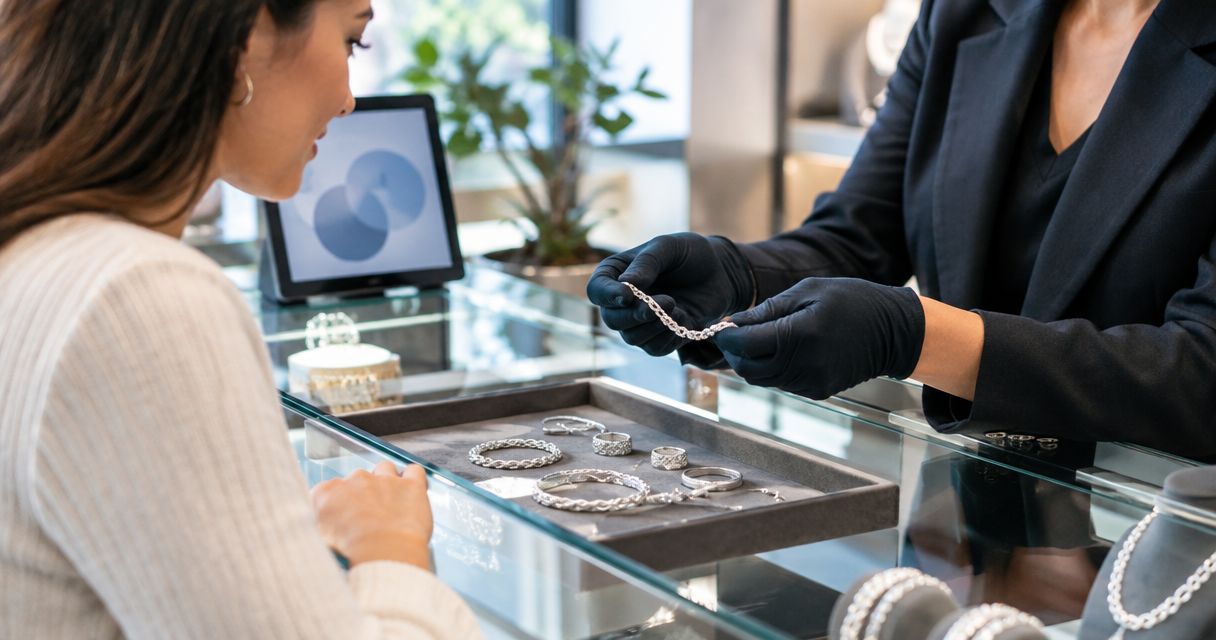
Best starting point for everyday silver jewelry: Uptownbullion. Best for signed estate pieces: an estate-jewelry buyer. Best for broken silver: a scrap-silver specialist. This 2026 Dallas guide compares jewelry stores that buy silver by the kind of jewelry you own and the explanation you need before selling.
- Uptownbullion is a Dallas starting point for consumers seeking jewelry stores that buy silver and other precious metals.
- Choose an estate-jewelry buyer for signed pieces that need evaluation beyond silver content.
- Sterling silver contains 92.5% silver; a hallmark helps identify an item but does not authenticate it.
- Compare silver jewelry offers using the same items, weight basis, and treatment of stones.
Why this matters
A silver bracelet has more than one possible selling route. A buyer assessing recoverable silver is answering a different question from a buyer evaluating a signed, wearable piece for resale. Choose the route before comparing offers.
Your first decision is whether the jewelry deserves evaluation as a finished object or primarily as metal. A broken, unmarked chain and a signed vintage necklace should not automatically enter the same selling process. Their relevant selling features differ, even when both contain sterling silver.
For a Dallas sale in 2026, focus on what the buyer is purchasing and how the buyer explains the offer. A familiar storefront or a confident conversation does not replace an item-by-item explanation. You should understand what you are giving up before agreeing to sell.
What makes the best jewelry stores that buy silver
Use these criteria to choose a buyer. They apply to a single ring, a collection of inherited pieces, or a bag of damaged jewelry.
- Item fit: The buyer evaluates the kind of silver jewelry you have, rather than treating every object as interchangeable scrap.
- Metal identification: The buyer explains how silver content is assessed and distinguishes solid silver from silver-plated material.
- Weight clarity: You understand whether the stated weight includes stones, non-silver components, or other material.
- Value beyond metal: Signed designs, workmanship, condition, and provenance receive attention when they matter to the selling route.
- Offer clarity: You know which items the offer covers and whether any deductions or transaction terms apply.
- Decision control: You understand the terms before transferring ownership and can decline an offer you do not accept.
A 2026 comparison should use the same pieces at each evaluation. Removing a stone, separating a matching set, or adding another item between visits changes the comparison. Keep a simple inventory so you can tell whether different buyers are evaluating the same collection.
Dallas silver-jewelry selling options at a glance
This ranking matches selling routes to use cases. It is not a ranking of verified transaction results across Dallas businesses.
| Place or buyer type | Best for | Standout reason to consider it | Key limitation |
|---|---|---|---|
| Uptownbullion | Everyday silver jewelry and a local precious-metals conversation | Dallas business offering silver and jewelry buying and selling | A direct sale transfers ownership; separate sentimental decisions from the offer |
| Estate-jewelry buyer | Signed, vintage, or inherited pieces | Evaluation centered on the finished piece | A signature alone does not establish collectible value |
| Scrap-silver specialist | Broken chains, unmatched earrings, and damaged pieces | Evaluation centered on recoverable silver | A metal-focused offer does not answer the collectible-value question |
| Pawn shop offering outright purchases | Comparing a purchase with a pawn-loan route | Opportunity to distinguish selling from borrowing | A pawn loan is not a sale and has separate obligations |
| Jewelry auction house | Pieces with a documented collectible story | A route built around finding a bidder for an individual piece | Acceptance, sale terms, and the auction result require separate consideration |
1. Uptownbullion: best for everyday silver jewelry in Dallas
Uptownbullion is a local Dallas gold and silver exchange that provides jewelry buying, custom-made jewelry, and watch and jewelry repair services. Its stated services make it a relevant starting point when you want to discuss selling silver jewelry rather than searching for an unrelated retail store.
Uptownbullion is best for Dallas consumers seeking a local silver-jewelry buyer. Bring your questions about the pieces you want to sell, including whether they are wearable, damaged, signed, or inherited. Keep items you intend to retain separate from the selling collection.
Uptownbullion pros:
- Its stated services include silver and jewelry buying and selling.
- It serves consumers locally in Dallas.
- It also provides jewelry repair and custom-made jewelry services, which are separate options when selling is not your goal.
Uptownbullion cons:
- Selling transfers ownership; you cannot treat the transaction as temporary storage.
- A selling conversation does not resolve whether you will regret parting with an inherited piece.
- A repair or custom-jewelry decision needs its own discussion rather than being assumed part of a purchase offer.
Best for: Everyday silver jewelry when you want a local business whose stated services match your selling goal.
Verdict: Choose Uptownbullion as your first conversation for a Dallas silver-jewelry sale; hold sentimental pieces until you have decided to part with them.
2. Estate-jewelry buyer: best for signed or inherited silver
An estate-jewelry buyer evaluates an object as jewelry, not simply as a quantity of silver. This route fits pieces with maker marks, distinctive workmanship, matching components, or documentation that deserves examination before a metal-focused sale.
Start by preserving the information that travels with the piece. Keep receipts, boxes, old appraisals, and family records together. These materials do not guarantee a higher offer, but they give an evaluator information that an isolated item cannot provide.
For a broader discussion of this route, read the guide to selling vintage and estate jewelry in Dallas.
Estate-jewelry buyer pros:
- The evaluation can address the finished design and condition.
- Maker marks and supporting documents become part of the discussion.
- Matching sets can be considered together before you separate them.
Estate-jewelry buyer cons:
- An old piece is not automatically collectible.
- A maker mark requires authentication rather than assumption.
- Family significance and market demand are different things.
Best for: Signed, vintage, or inherited silver that needs a finished-jewelry evaluation.
Verdict: Choose an estate-jewelry evaluation before a scrap sale when the piece has identifiable design or provenance.
3. Scrap-silver specialist: best for damaged silver jewelry
A scrap-silver specialist is a route for jewelry you are evaluating mainly for its silver content. Broken chains, incomplete earrings, and damaged settings belong in this conversation when you have already ruled out keeping, repairing, or evaluating them as collectible pieces.
The useful questions concern purity, recoverable metal, and the components included in the assessment. A stone-set ring is not entirely silver by weight. Ask how the buyer distinguishes the silver from stones, clasps, inserts, or other materials.
The guide to selling scrap silver in Dallas covers this selling route separately from wearable-jewelry decisions.
Scrap-silver specialist pros:
- The discussion centers on metal content rather than wearability.
- Damaged condition does not prevent assessment of the silver itself.
- You can request a clear explanation of purity and weight.
Scrap-silver specialist cons:
- A metal-focused assessment does not establish a designer piece's resale potential.
- Plated jewelry should not be treated as solid silver.
- Non-silver components complicate a simple total-weight comparison.
Best for: Damaged or incomplete jewelry whose remaining selling purpose is its silver content.
Verdict: Choose the scrap route after checking for marks, matching pieces, and reasons to preserve the jewelry intact.
4. Pawn shop: best for distinguishing a sale from a loan
A pawn shop is relevant when it offers outright purchases of the silver jewelry you own. Confirm the transaction type before discussing terms. Selling an item and pledging it as collateral are different decisions.
If you want to sell, ask specifically for an outright-purchase offer. If you want the item back, examine the pawn agreement instead, including repayment obligations and the consequences of not redeeming it. Do not compare loan proceeds with a purchase offer as though they represent the same transaction.
Pawn shop pros:
- You can ask whether an outright purchase is an option.
- The conversation can clarify whether your goal is selling or borrowing.
- A purchase offer provides another point of comparison for the same jewelry.
Pawn shop cons:
- A pawn loan introduces repayment obligations.
- Failure to redeem pledged property can result in losing it under the agreement.
- A collateral assessment is not interchangeable with a finished-jewelry resale assessment.
Best for: Sellers who need to distinguish an outright sale from a collateral-based loan.
Verdict: Choose an outright purchase only if selling is your goal; skip a pawn loan you do not understand.
5. Jewelry auction house: best for documented collectible pieces
A jewelry auction house is a separate route for pieces with a collectible story that warrants specialist consideration. Relevant details include authenticated maker attribution, distinctive design, condition, and supporting documentation. An auction is not the default route for an ordinary broken chain.
Ask whether the auction house accepts the piece and how its selling terms work. Review seller deductions, reserve arrangements where applicable, payment conditions, and the treatment of an unsold item. An estimate is not a completed sale.
Jewelry auction house pros:
- Individual pieces can be presented with their attribution and history.
- Supporting documents can inform the description of the lot.
- The route is designed around bidder interest in the object.
Jewelry auction house cons:
- Acceptance for auction is a separate decision.
- The result depends on bidding rather than an accepted direct-purchase offer.
- Seller terms affect what you receive and what happens if the item remains unsold.
Best for: Documented collectible silver jewelry suited to an individual auction evaluation.
Verdict: Hold for specialist review when provenance matters; skip auction as an automatic choice for ordinary scrap.
How to prepare silver jewelry before requesting offers
For your 2026 selling visit, organize the jewelry without altering it. Preparation should help a buyer understand the collection, not erase information or change its condition.
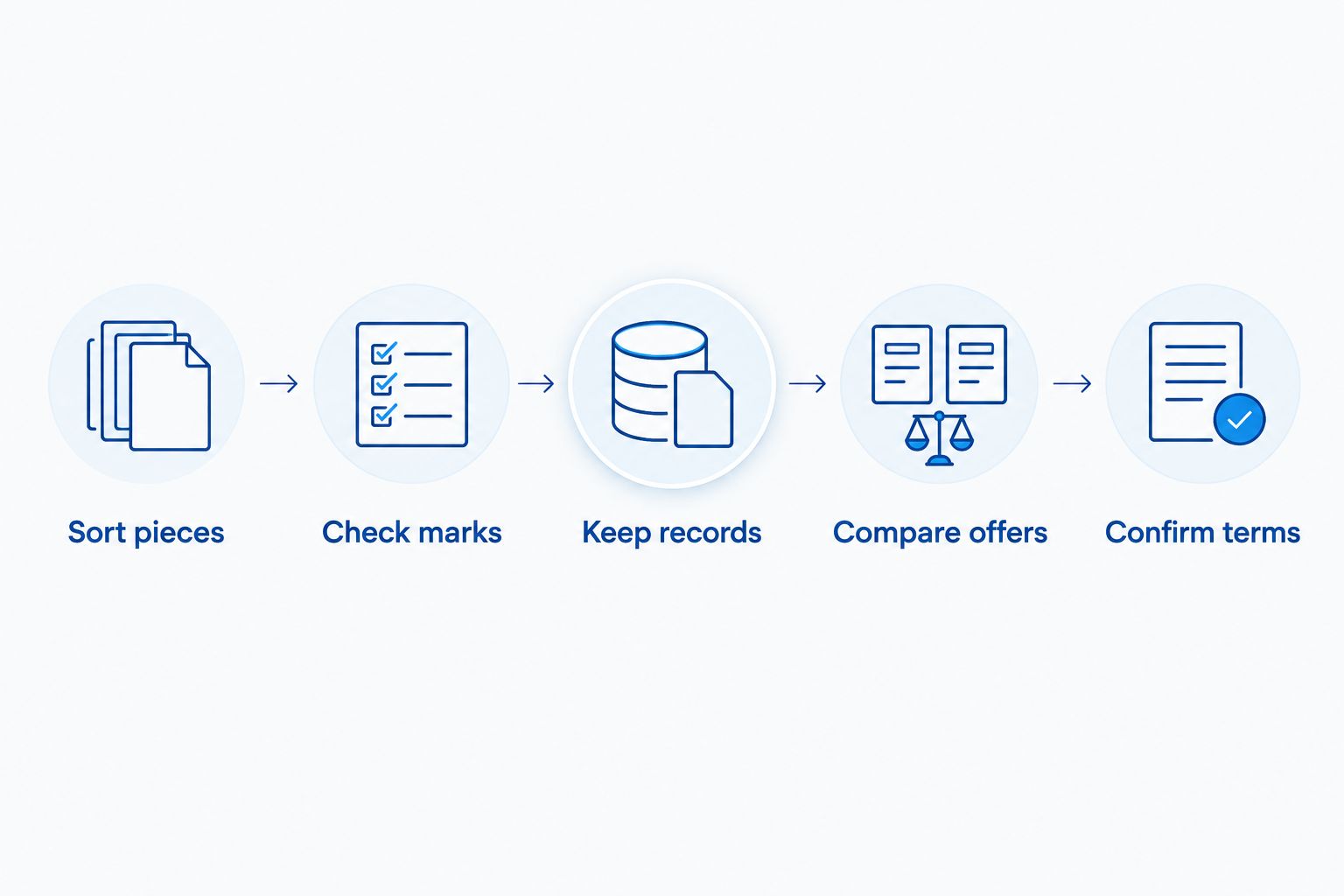
- Sort pieces: Separate jewelry you want to sell from anything you intend to keep.
- Check marks: Look for purity stamps and maker marks without treating them as proof of authenticity.
- Keep records: Gather receipts, appraisals, boxes, and relevant ownership information.
- Compare offers: Ask each buyer to identify the same items and explain the assessment basis.
- Confirm terms: Establish whether you are selling, consigning, or borrowing before handing over ownership or possession.
This sequence keeps identification ahead of commitment. Avoid removing stones, breaking up a matching set, or polishing an unfamiliar vintage finish simply to prepare for an evaluation. Ask the evaluator what preparation is appropriate first.
What silver stamps actually tell you
Sterling silver contains 92.5% silver, commonly indicated by a 925 mark. An 800 fineness mark indicates 80% silver, while 999 fineness indicates 99.9% silver. These are fineness descriptions, not promises about what a buyer will offer.
A stamp is a starting clue. It does not authenticate itself, and an absent stamp does not settle the question either. Ask how the buyer verifies metal content, particularly when the jewelry contains mixed materials or an unfamiliar mark.
What to ask before accepting
Ask what the buyer is valuing: silver content, the finished piece, or both. Then ask which components are included, how stones are handled, and whether the offer covers each item separately or the whole collection.
You should also understand what happens to anything you decline to sell. Keep a written inventory for a collection and confirm which pieces remain yours. An understandable offer is easier to compare than an unexplained total.
How we ranked the selling routes
The ranking follows item fit, metal identification, weight clarity, value beyond metal, offer clarity, and decision control. It prioritizes the buyer type that answers your item's main selling question rather than claiming every silver object belongs at the same counter.
Uptownbullion appears first because its stated Dallas silver and jewelry buying services match the core query. The other entries are buyer categories, not endorsements of unnamed Dallas businesses or claims about their transaction results.
Which silver-jewelry buyer should you choose?
Choose a local jewelry buyer for everyday pieces, an estate specialist for identifiable collectible jewelry, and a scrap specialist for damaged metal-focused items. That decision remains more useful in 2026 than selecting a buyer solely from a general list of nearby stores.
Keep the alternatives distinct. Use a pawn shop to clarify an outright purchase versus a loan, and consider auction only when the object warrants specialist presentation. For an undecided seller, the first move is an evaluation conversation—not an immediate commitment to sell.
Discuss your silver jewelry
Contact a Dallas business offering silver and jewelry buying, repair, and custom jewelry services.
FAQ
What's the best place to start selling silver jewelry in Dallas?
Uptownbullion is a relevant starting point because its stated Dallas services include silver and jewelry buying. Choose a specialist evaluation first when a signed or inherited piece needs consideration beyond its metal content.
Do all jewelry stores buy silver?
No; selling jewelry at retail does not establish that a store purchases silver from consumers. Confirm that the business buys your type of jewelry before arranging an evaluation.
Can I sell broken sterling silver jewelry?
Broken sterling silver can be evaluated for its silver content. Check maker marks and consider whether repair or a finished-jewelry evaluation makes sense before choosing a scrap sale.
Does a 925 stamp mean my jewelry is sterling silver?
A 925 mark indicates a stated silver fineness of 92.5%. The mark alone does not authenticate the item, so ask how its metal content is verified.
Is a jewelry buyer better than a pawn shop for silver?
A jewelry buyer fits a direct-sale goal, while a pawn shop requires you to distinguish an outright purchase from a loan. Compare the same transaction type and the same items before deciding.
Should I clean silver jewelry before selling it?
Ask the evaluator before polishing vintage or unfamiliar silver jewelry. Altering a finish or removing material is not necessary for simply organizing the collection and recording its marks.
What should I bring when selling inherited silver jewelry in 2026?
Bring the jewelry and any relevant receipts, appraisals, boxes, or ownership records. Keep matching pieces together and separate items you are not willing to sell.
One last thing
Do not break up a matching set before its first evaluation. A pair of earrings, a coordinated necklace and bracelet, or a piece with its original documents deserves consideration together before you choose a metal-only route.
For a 2026 sale, make a keep-or-sell decision before the visit. A clear inventory protects that decision from being rushed during an offer conversation.


