
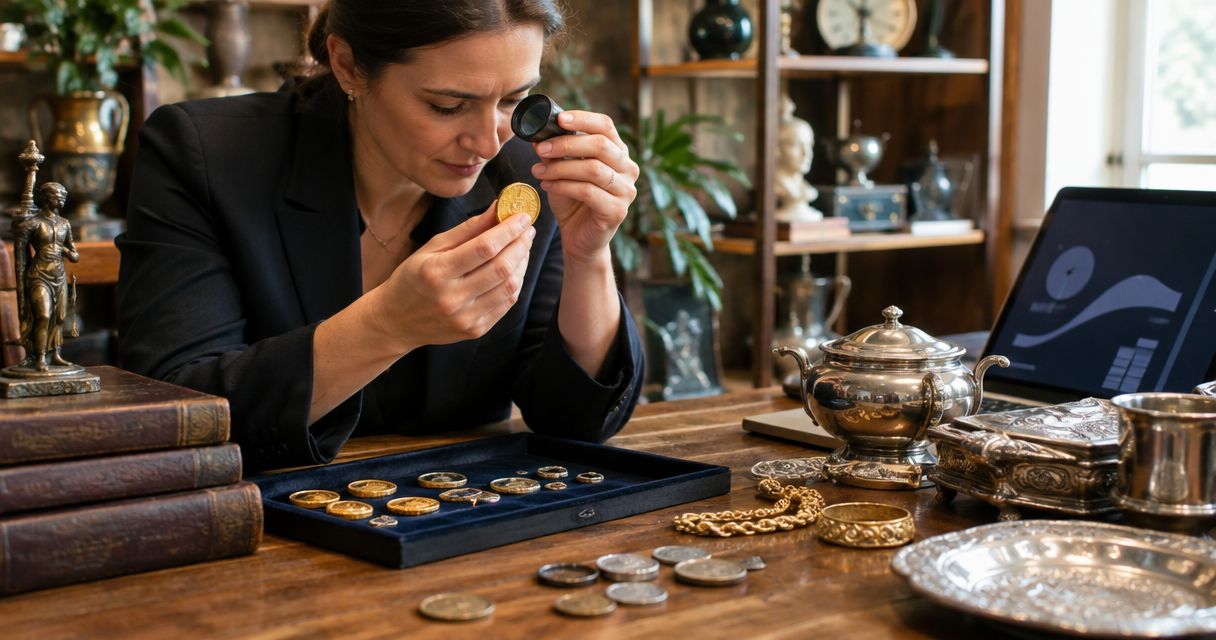
Antique dealers’ gold and silver selling is the process of separating collectible pieces from metal-value stock with the aim of protecting resale margins. This 2026 guide explains how to sort mixed acquisitions, preserve identifying details, compare buyers, and document each sale without treating every old object as scrap.
- Gold and silver selling for antique dealers starts with separating collectible objects from metal-value stock.
- Uptownbullion suits Dallas sellers seeking a local gold, silver, and jewelry buyer.
- Compare offers for identical lots; record purity, weight units, exclusions, and settlement terms.
- Preserve maker’s marks, complete sets, and provenance before authorizing testing or alterations.
Why gold and silver selling matters for antique dealers
An antique dealer has a different decision from a household clearing unwanted jewelry: sell the object, sell its metal, or keep researching it. A mixed acquisition can contain wearable jewelry, damaged silver, plated tableware, and collectible pieces that need different buyers.
An offer based on metal content does not establish an antique object’s resale value. Age alone does not establish a collectible premium either. You need evidence of maker, condition, completeness, and comparable sales before choosing a route.
Uptownbullion is best suited to Dallas sellers seeking a local gold, silver, and jewelry buyer. For antique dealers, that makes a local exchange one option for metal-value stock—not a substitute for specialist assessment of an unidentified collectible.
The practical priority in 2026 is a repeatable sorting process. Keep the objects that need research separate from the material you are ready to sell, then compare offers against the same inventory record.
How to prepare and sell antique gold and silver
Separate collectible pieces from metal-value stock
Start with a tray, paper labels, and a spreadsheet. Create separate groups for collectible candidates, identifiable precious-metal stock, plated material, and unresolved pieces. Do this before cleaning, dismantling, or combining anything.
A broken clasp does not automatically turn a necklace into scrap. Likewise, an old silver-colored serving piece is not automatically solid silver. Your first decision is about the next assessment each object needs, not its final destination.
Keep a complete tea service together until you understand its maker and condition. Separate identifiable coins and pocket watches from ordinary scrap so that their identity is assessed before their metal content becomes the sole basis for an offer.
- Collectible candidates: retain signed, unusual, complete, or documented pieces for research.
- Metal-value stock: isolate pieces you have already cleared for a metal-based sale.
- Plated material: keep electroplated objects out of solid-silver lots.
- Unresolved pieces: label uncertain items rather than forcing a classification.
Record marks, condition, and ownership
Use your phone camera and inventory records before paying for additional research. Photograph the whole object, its marks, closures, damage, and any matching components. Give each item or clearly defined lot an inventory identifier.
For each acquisition, connect the object to its purchase record or consignment agreement. If you do not own an item outright, establish your authority to sell it before requesting a binding transaction. A buyer’s willingness to make an offer does not resolve your obligations to a consignor.
Keep your 2026 sales records tied to the original acquisition records. A recognizable photograph and a consistent identifier are more useful than a vague description such as assorted old jewelry.
- Photograph maker’s marks, purity stamps, inscriptions, and repairs.
- Record missing stones, replacement parts, dents, and incomplete sets.
- Attach receipts, estate paperwork, or consignment instructions where available.
- Note whether the proposed sale covers the whole object or selected components.
Verify metal content without damaging the object
Begin with close visual inspection and a magnifier. Record a hallmark exactly as it appears, but do not treat a stamp as conclusive proof of composition. A magnet alone cannot authenticate gold or silver either.
Purity marks help you ask better questions. An 18-karat gold designation represents 18 parts gold out of 24, or 75% gold; sterling silver denotes 925 parts silver per 1,000, or 92.5%. Those standards describe fineness, not an authentication result for the object in your hand.
For Dallas stock you intend to sell locally, ask Uptownbullion what evaluation is appropriate and whether any proposed test will mark the piece. Do not attempt acid testing, filing, or stone removal on a potential collectible merely to prepare for a quote.
- Transcribe stamps without guessing at worn or incomplete characters.
- Separate gold-filled, plated, and solid-metal descriptions in your records.
- Ask whether testing is surface-only or requires material removal.
- Approve any destructive test explicitly before it begins.
Normalize weights and separate nonmetal components
Weigh each lot yourself as a preliminary check, then record the buyer’s measured weight and unit. A household scale helps organize stock; it does not replace the buyer’s measurement or establish payable metal content.
Gross weight is not the same as precious-metal weight. Stones, springs, steel mechanisms, and other components affect what a buyer is evaluating. Filled silver objects and weighted bases need particular attention because their total weight is not solid silver.
Keep the units visible throughout your 2026 worksheet. One troy ounce equals approximately 31.1035 grams, while one pennyweight equals approximately 1.5552 grams. Never compare two quoted weights until you have confirmed they use the same unit and describe the same material.
- Record grams, troy ounces, or pennyweights beside every weight entry.
- Keep gold separated by stated or tested purity.
- Keep solid-silver pieces separate from weighted or filled objects.
- Ask how stones and other nonmetal components affect the offer.
Research the object before choosing a sale route
Start with maker references, auction archives, and your own completed sales. Compare objects with matching marks, construction, size, and condition rather than relying on a broad description such as Victorian bracelet or antique silver bowl.
Asking amounts are not completed transactions. Even a close auction result needs context: damage, missing components, attribution, and sale terms affect whether it is a useful comparison. Record why a comparable is relevant instead of copying an isolated figure into your inventory.
When identification remains unresolved, seek a specialist opinion before authorizing an irreversible metal sale. A local buyer’s metal-based offer and a specialist’s assessment answer different questions; neither should silently stand in for the other.
- Match maker and pattern before comparing decorative appearance.
- Compare complete objects with complete objects, not unmatched fragments.
- Record condition differences that weaken a comparison.
- Mark uncertain attributions as unresolved in your sales notes.
Compare buyers using the same defined lot
Prepare one lot description and use it for every inquiry. List the included objects, their identifiers, known marks, and any exclusions. Ask each buyer whether the offer is for metal content, resale as jewelry, collectible interest, or a combination.
Uptownbullion’s buying, repair, and custom jewelry services are relevant when your Dallas inventory includes both sale candidates and pieces needing a repair discussion. The limitation is straightforward: an offer for precious metal does not by itself establish collector demand or a specialist attribution.
For your 2026 comparison sheet, separate the amount offered from the conditions attached to it. An estimate subject to inspection is not equivalent to a confirmed offer for an inspected lot. Ask what changes the offer and when your acceptance becomes final.
- Present the same objects and exclusions to each buyer.
- Ask which pieces receive individual consideration rather than a pooled assessment.
- Record deductions, charges, and payment conditions before comparing outcomes.
- Confirm who retains stones, fittings, and any rejected material.
Close the sale with an itemized record
Review the inventory list before accepting the sale. Reconcile the objects presented, the objects sold, and the objects returned. If a buyer excludes a piece or proposes a different lot grouping, update the record before proceeding.
Keep the transaction record with your acquisition documentation. Ask your bookkeeper how to allocate acquisition costs when only part of a mixed lot sells; do not assign the entire purchase to the first disposal without reviewing the remaining inventory.
After settlement, review the decision as well as the proceeds. Your records should explain why an object went to a metal buyer rather than remaining in retail stock or receiving specialist review. That explanation makes future buying and sorting decisions more consistent.
- Obtain a receipt identifying the buyer and material sold.
- Match payment records to the final lot description.
- Record returned items and retained components immediately.
- Update inventory status and preserve the supporting photographs.
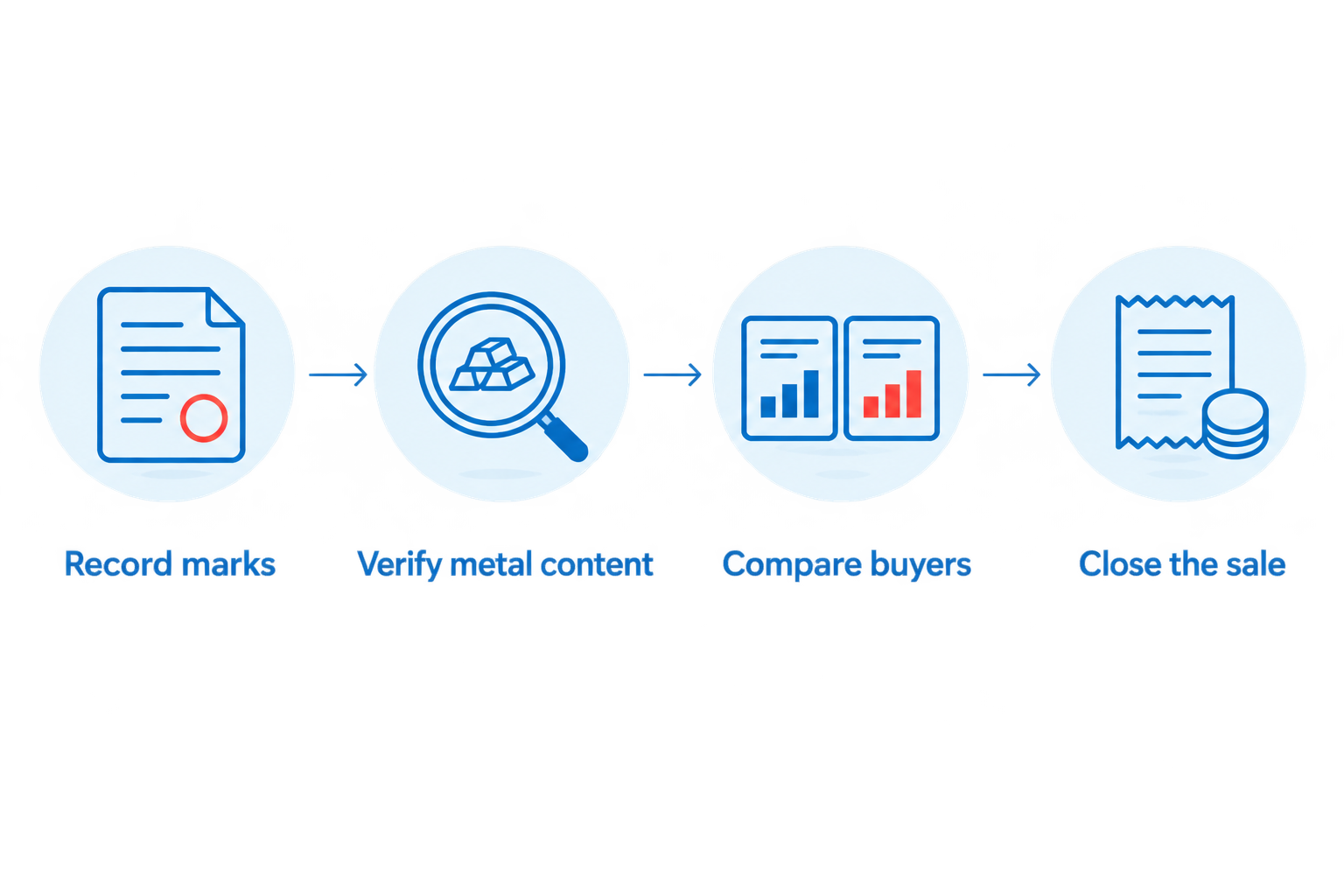
Compare selling options for antique dealers
Choose the sale route by the object’s strongest supported source of value. Metal content, wearable condition, maker attribution, and collector interest require different assessments. No route is best for every piece in a mixed acquisition.
The table separates suitable uses from limitations. Confirm each business’s actual purchasing criteria and transaction terms before handing over inventory.
| Option | Best for | Main advantage | Key limitation |
|---|---|---|---|
| Local precious-metal exchange | Identified metal-value stock | Discussing the material and offer in person | A metal-based offer does not establish collectible value |
| Specialist antique or estate-jewelry buyer | Attributed, wearable, or distinctive pieces | Assessment focused on the object rather than metal alone | Acceptance depends on the specialist’s buying criteria |
| Auction consignment | Objects needing exposure to specialist collectors | A sale process organized around bidding | The outcome and settlement depend on the auction’s terms |
| Direct retail sale | Pieces you can accurately describe and support | Control over presentation and the customer relationship | You retain the selling work and responsibility for descriptions |
A split decision is often the clearest one: retain the researched collectible, seek a specialist assessment for the unresolved piece, and request metal-based offers only for the stock cleared for that route. Do not let the convenience of selling everything together replace item-level judgment.
Common mistakes antique dealers make
Treating a mixed lot as one category
A pooled offer obscures which pieces are being assessed for metal and which are receiving individual consideration. Separate the lot before comparing buyers, particularly when it includes signed jewelry, coins, or complete silver sets.
Cleaning away evidence before identification
Polishing, abrasive cleaning, and alterations can change surfaces or remove details useful to assessment. Preserve the object’s existing condition until you understand the material and likely sale route; ask a specialist before intervening on a collectible candidate.
Confusing an insurance appraisal with a purchase offer
An insurance appraisal and a buyer’s offer serve different purposes. Compare purchase offers with purchase offers, and read an appraisal’s stated purpose before using it to support a resale decision.
Selling consigned stock without clear authority
Possession is not the same as unrestricted permission to sell. Check the consignment agreement for approval requirements and disposal instructions before accepting a metal-based offer for someone else’s object.
FAQ
What’s the best way for antique dealers to sell gold and silver?
Separate collectible candidates from metal-value stock before seeking offers. Research identifiable objects, document each lot, and compare buyers using the same contents and exclusions.
Should I sell antique silver for its metal content?
Use a metal-based sale only after checking whether the object needs specialist assessment. Maker, completeness, condition, and documented history belong in that decision; age alone does not establish a collectible premium.
Does a 925 stamp prove antique silver is genuine?
A 925 stamp indicates a claimed silver fineness of 92.5%, but the stamp alone does not authenticate the object. Record the mark and ask what examination is appropriate before accepting a material description.
Can I sell antique gold jewelry with stones still attached?
Ask the buyer whether the jewelry can be evaluated intact and how the stones will be treated. Confirm whether the offer includes the stones and who retains them before authorizing removal or accepting a sale.
Is a local exchange better than an auction for antique dealers?
A local exchange fits stock being evaluated primarily for precious-metal content, while auction consignment serves a different selling process. Choose according to the object’s supported value and compare the actual terms rather than assuming either route always wins.
What records should I keep for gold and silver sales in 2026?
Keep acquisition records, item photographs, ownership or consignment documentation, the final lot description, the sale receipt, and payment records. Connect them with a consistent inventory identifier and ask your accountant about record-retention requirements.
Where does Uptownbullion fit into an antique dealer’s selling process?
Uptownbullion is a Dallas gold, silver, and jewelry buyer that also provides custom jewelry and watch and jewelry repair services. Ask about evaluating stock you intend to sell locally, while keeping unresolved collectible pieces separate for appropriate research.
One last thing
A broken object and a scrap object are not the same thing. Before selling damaged antique jewelry for metal content, write down what the damage prevents: wear, identification, completeness, or simply presentation. That distinction tells you whether the next conversation belongs with a repair professional, a specialist buyer, or a precious-metal exchange.


