
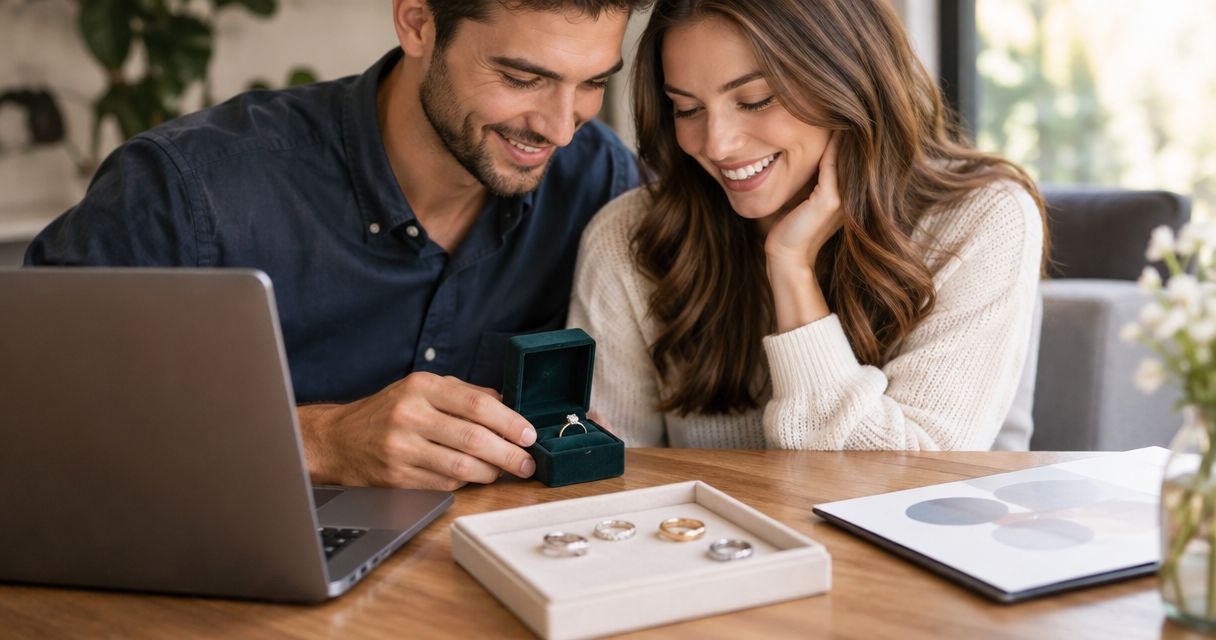
Newly engaged couples’ custom jewelry is jewelry designed or adapted around their preferences with the aim of creating meaningful, wearable pieces for marriage. This 2026 guide explains how to plan wedding bands, coordinate an existing engagement ring, and discuss family jewelry without letting appearance outweigh comfort.
- Custom jewelry for newly engaged couples should start with daily comfort, wedding-band fit, and a shared design brief.
- Uptownbullion offers custom-made jewelry in Dallas; ask which design requests fit its services before committing.
- Choose fully custom work for specific requirements; choose an existing design when you prefer fewer decisions.
- Assess heirloom stones before planning a new setting, and confirm design approvals and completion expectations in writing.
Why custom jewelry matters for newly engaged couples
Newly engaged couples have a particular design challenge: you are choosing individual pieces that also need to work together. An engagement ring, wedding band, and family heirloom can each look right separately yet feel awkward when worn together.
The best starting point is how you will wear the jewelry, not how it photographs. For your 2026 wedding plans, identify what you need for the ceremony and what can remain a later project. Separating those decisions keeps an optional redesign from becoming a wedding-day dependency.
Uptownbullion’s services include custom-made jewelry and jewelry repair in Dallas. Uptownbullion custom jewelry is best for Dallas couples seeking a locally made-to-order piece. Confirm the proposed design, materials, and scope directly; offering custom jewelry does not establish that every technique or request is supported.
How to plan custom jewelry together
A useful custom-jewelry brief explains what the piece must do, what you want to preserve, and which details remain flexible. Start with your own notes, photographs, and existing jewelry before requesting design work.
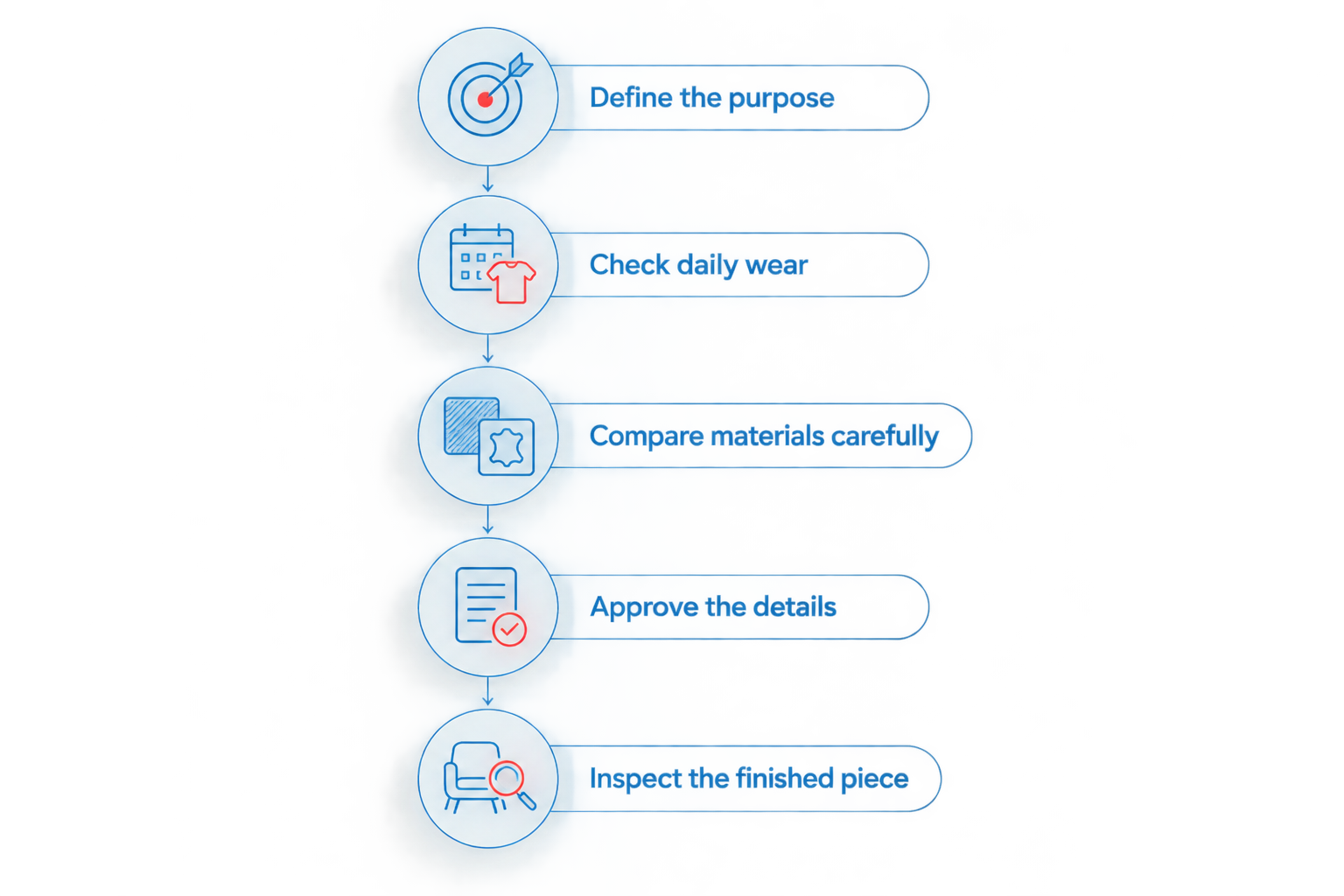
Define the purpose
Write down the job of each piece before collecting inspiration. A wedding band intended for everyday wear needs a different discussion from a pendant reserved for celebrations, even when both commemorate the same engagement.
Decide whether this project is about coordinating with an engagement ring, creating separate expressions of your personalities, or preserving something inherited. You do not need identical rings to create a meaningful pair. Shared engraving or a related finish can connect different designs without forcing either partner into an uncomfortable choice.
For a ceremony in 2026, distinguish a required piece from a nice-to-have addition. Give the jeweler that distinction rather than presenting every idea as equally urgent.
- Name the purpose of each piece: wedding band, engagement-ring redesign, or keepsake.
- Record whether you expect daily or occasional wear.
- Mark which decisions belong to each partner and which require agreement.
- Separate ceremony essentials from later projects.
Check daily wear
Try on jewelry you already own and note what bothers you. Catching on clothing, turning on your finger, pressing against adjacent fingers, or interfering with gloves are more useful observations than simply describing a design as practical.
Consider both rings together if you intend to stack them. A band that looks flush in a photograph does not establish comfortable contact with your particular engagement-ring setting. Ask the jeweler to assess where the pieces touch and whether either setting creates a wear concern.
Comfort is a design requirement, not a finishing adjustment. Discuss work, exercise, and hand use before approving the shape; do not assume the finished piece can be changed without affecting its design.
- Note tasks that make you remove your current jewelry.
- Try different band widths and profiles in person.
- Bring the engagement ring when discussing a companion band.
- Ask how the proposed design affects future sizing and maintenance.
Choose the design route
Make a simple comparison yourself: adapt an existing design, commission a new design, or assess an heirloom for redesign. Choose the route that solves your actual problem, rather than assuming a fully custom piece is automatically better.
An existing design gives you something physical to evaluate. A new design gives you more decisions to make before the final piece exists. Heirloom redesign adds another question: which original components are suitable to retain?
Uptownbullion offers custom-made jewelry, so bring your brief to the service discussion rather than arriving with only a collection of unrelated images. Ask which parts of the request the business can undertake and which need further assessment. The limitation of any custom project is that an idea still needs to be checked against materials, construction, and wear.
- Identify the feature an existing design does not satisfy.
- Ask whether adaptation would solve that problem.
- Distinguish essential details from optional decoration.
- Confirm the proposed scope before authorizing work.
Compare materials carefully
Record the metal and stone details of your existing ring before choosing a companion piece. Similar-looking metals are not necessarily the same alloy, and a photograph does not reliably show how finishes will compare in person.
Gold purity describes gold content, not the complete behavior of a finished ring. Fourteen-karat gold contains 14 parts gold out of 24, or about 58.3%; 18-karat gold contains 18 parts out of 24, or 75%. Alloy composition, construction, and finish still matter when discussing color and wear.
For stones, ask what material is proposed and what care it requires. Natural origin, laboratory-grown origin, and imitation are different descriptions; have the selected material identified clearly in the written specifications rather than relying on appearance.
- Record the metal and any known stone details of existing jewelry.
- Compare metal colors and finishes under the same lighting.
- Ask about cleaning restrictions for the proposed stones.
- Request written descriptions of the selected materials.
Assess family jewelry
Photograph inherited jewelry and write down what matters before discussing alterations. You might value the original stone, the setting, an inscription, or simply the connection to the person who wore it. Those priorities lead to different decisions.
Do not authorize dismantling until you understand what will change. A sentimental piece deserves a condition assessment before anyone promises that its components will suit a new design. Ask whether removing a stone presents concerns and whether preserving the original piece is the better option.
The guide to heirloom jewelry redesign in Dallas addresses this separate planning decision. Treat ownership and family agreement as prerequisites to alteration, not details to resolve after work begins.
- Photograph the original piece from several angles.
- Identify the features you want preserved.
- Confirm permission from the owner before alterations.
- Ask what happens to components not used in the finished piece.
Approve the details
Create a written summary of the agreed design and compare it with the jeweler’s documentation. Images help communicate appearance, but they do not replace specifications for metal, stones, dimensions, engraving, and ring size.
Ask how design approval works and what happens if you request a change afterward. If a drawing, digital rendering, or model is part of the proposed process, understand what it represents and what it cannot show. Do not assume every custom project includes all those stages.
For a 2026 ceremony, give the jeweler the date you need the finished piece in your hands. Ask for a project-specific schedule covering assessment, approvals, making, and any final adjustment rather than relying on a general estimate found online.
- Confirm the final design and material descriptions in writing.
- Check engraving spelling and orientation separately.
- Record who can authorize changes.
- Confirm completion expectations and how delays will be communicated.
- Ask which changes remain possible after approval.
Inspect the finished piece
Compare the completed jewelry with the approved specifications before treating the project as finished. Put the piece on, assess comfort, and try it alongside any jewelry you intend to wear with it.
Check engraving carefully and ask the jeweler to explain anything that differs from your expectations. A finished ring should not be accepted solely because it resembles the inspiration photograph; the agreed materials, fit, and workmanship also need attention.
Keep the receipt and design records together. Ask your insurer what documentation it requires if you plan to insure the piece, and distinguish a purchase receipt from an appraisal prepared for insurance purposes. Neither document should be assumed to replace the other.
- Compare the piece against the approved specifications.
- Check fit and contact with adjacent rings.
- Read every engraved character before leaving.
- Request material-specific care instructions.
- Retain records for future repair, sizing, and insurance discussions.
The process has a clear order: settle the purpose and wear requirements before approving materials and construction. Use that sequence to organize your conversations rather than trying to solve every detail at once.
Compare your jewelry options
For your 2026 plans, compare options by the decisions they require and the problem they solve. This is a choice of design route, not a ranking of quality; execution and suitability still need individual assessment.
| Option | Best for | Main advantage | Key limitation |
|---|---|---|---|
| Existing finished design | Couples who want to evaluate a physical piece | You can assess its appearance and feel directly | The design might not meet a specific fit or style requirement |
| Adapted existing design | Couples seeking a defined change | You start with an established design reference | The construction limits which changes are practical |
| Fully custom design | Couples with requirements an existing piece does not satisfy | You can specify the intended design in detail | You must approve details before seeing the finished piece |
| Heirloom redesign | Couples prioritizing a family connection | Suitable original components can remain part of the new piece | Component condition and alteration risks require assessment |
| Repair or resizing | Couples who already like the piece they own | The work addresses a specific condition or fit issue | Repair does not necessarily solve a design mismatch |
Choose the least extensive route that meets your needs. If the engagement ring already feels right and only the band pairing needs attention, keep the project focused on that pairing rather than redesigning both pieces.
Discuss your custom jewelry plans
Tell Uptownbullion what you want to make, preserve, or repair before deciding on the scope.
Common mistakes newly engaged couples make
Designing matching rings instead of comfortable rings
Matching appearance does not guarantee that both partners will enjoy wearing the same profile. Agree on a shared detail if it matters to you, then let each person choose a shape that suits their hands and daily routine.
Planning the wedding band after finishing the engagement ring
Treat the future band as part of the design brief even if you will commission it later. Discuss spacing, contact, and whether you want the band to work independently when the engagement ring is off.
Confusing sentimental importance with material suitability
A treasured family stone is not automatically suitable for every setting. Have its condition assessed and keep preservation as a genuine option; redesign is not the only way to honor a family connection.
Letting the surprise replace the wearer’s input
A surprise should not depend on guessing essential wear preferences. Agree on the daily-use requirements first, then reserve a personal detail for the reveal if both partners are comfortable with that approach.
Assuming a wedding date guarantees completion
A ceremony date communicates your need; it does not establish the project schedule. Confirm what the jeweler can commit to before authorizing the work, and discuss what you will do if the piece is not ready.
FAQ
What is the best custom jewelry for newly engaged couples?
The best custom jewelry for newly engaged couples solves a specific fit, wear, or personal-design need. Start with the wedding band or piece you expect to wear most often, then define how it must work with existing jewelry.
Should our wedding bands match each other?
Your wedding bands do not need to match. Choose individual profiles that feel comfortable, and use a shared finish, motif, or engraving only if you both want that connection.
Can we design a wedding band around an existing engagement ring?
You can ask a jeweler to design a wedding band around an existing engagement ring. Bring the ring so the jeweler can assess its shape, contact points, and the practical limits of a companion design.
Can a family gemstone go into a new engagement ring?
A family gemstone needs a condition and suitability assessment before its use in a new ring is confirmed. Discuss removal risks, setting requirements, and whether preserving the original piece better serves your priorities.
How long does custom jewelry take for a wedding?
Custom jewelry needs a project-specific schedule confirmed by the jeweler. Give the required completion date and ask how assessment, design approval, construction, and final adjustments affect that schedule.
Is custom jewelry better than an existing design?
Custom jewelry is the better fit when an existing design does not meet an important requirement. An existing design is a sensible choice when you like its appearance and feel and do not need structural changes.
Does Uptownbullion make custom jewelry in Dallas?
Uptownbullion offers custom-made jewelry in Dallas, along with jewelry repair. Contact the business with your proposed piece, existing jewelry, and intended completion date to confirm the scope it can undertake.
One last thing
Before approving your 2026 wedding jewelry, try the planned band on its own as well as beside the engagement ring. You might wear it alone for some activities, so its comfort and appearance should not depend entirely on the full stack.
Design for the marriage, not just the ceremony. A piece that suits your ordinary day has met a more useful test than one that only works in the wedding photograph.


