
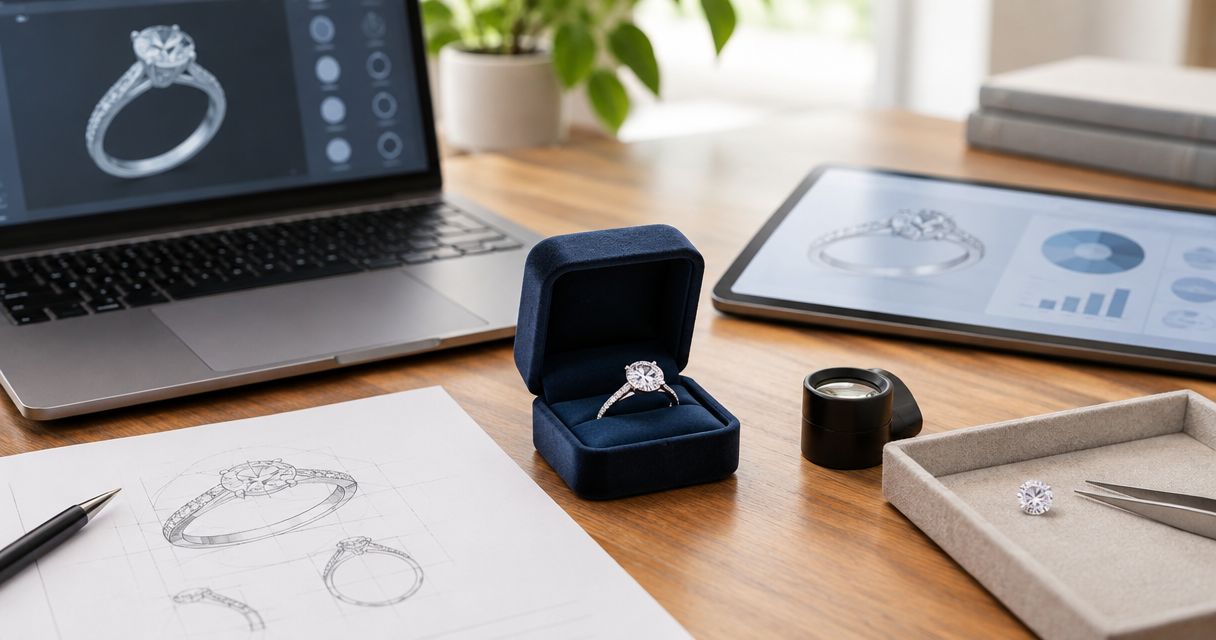
Instead of repeatedly chasing design notes, stone records, and insurance paperwork, build your custom engagement ring insurance appraisal workflow around one shared file: approve the design, document the finished ring, obtain an insurer-accepted appraisal, and confirm coverage in writing. This 2026 guide explains what to collect, who needs it, and where to stop until the paperwork matches the ring.
- Start your custom engagement ring insurance appraisal with the insurer’s documentation requirements, not the finished design.
- Uptownbullion offers custom jewelry in Dallas; confirm appraisal arrangements separately before commissioning your ring.
- A gemstone grading report describes a stone; it does not replace a finished-ring insurance appraisal.
- Keep design approvals, finished-ring records, and written coverage confirmation together.
Why this matters
A custom ring passes through several decisions before it becomes an insured possession. Your jeweler documents what was made, an appraiser identifies and values the finished piece for a stated purpose, and your insurer decides what documentation and coverage terms apply.
Uptownbullion is best for Dallas consumers seeking local custom jewelry services. Discuss your design with Uptownbullion, then confirm who will prepare the appraisal and whether your insurer accepts that person’s report. Custom jewelry service does not, by itself, establish appraisal credentials or insurance acceptance.
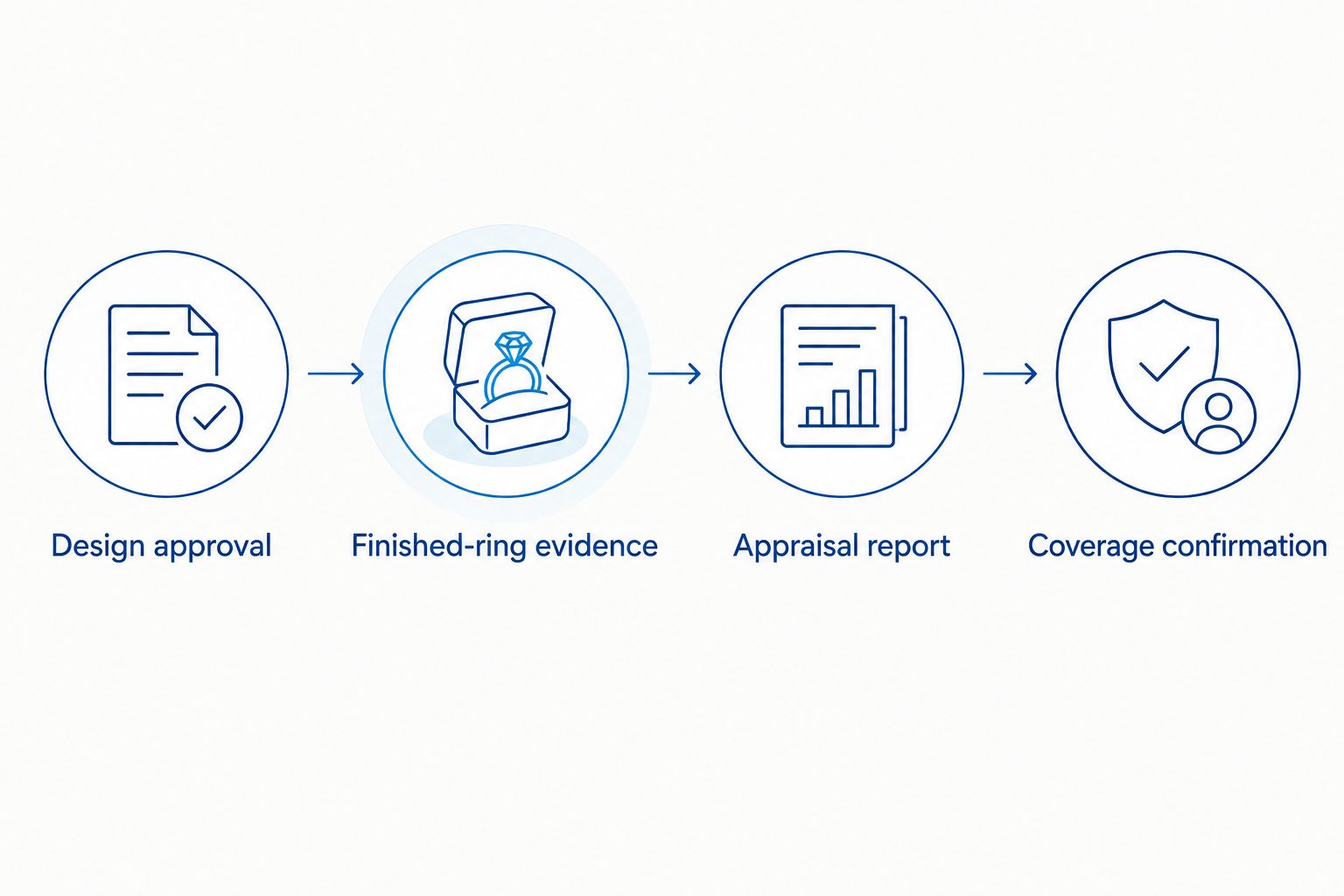
The goal is a connected record, not a stack of unrelated documents. For your 2026 project, use 4 checkpoints: design approval, finished-ring verification, appraisal acceptance, and coverage confirmation.
Before you start
- Gather access and ownership records. Have your insurer’s contact details, the proposed policyholder’s information, design references, and any receipts or grading reports for stones you already own. Ask the jeweler what identification and ownership documentation the project requires.
- Confirm appraisal requirements first. Ask your insurer about acceptable appraiser qualifications, report content, photographs, submission methods, and report age. Confirm these requirements with the proposed appraiser before scheduling the work.
- Resolve the custody gap. Ask who bears responsibility while your stone or ring is being transported, worked on, appraised, or held for collection. Do not assume a jeweler’s possession or an application submission means your personal insurance is active.
Keep 3 record groups in your project folder: design approvals, finished-ring evidence, and insurance correspondence. Give each file a descriptive name and date so an old drawing cannot be mistaken for the final specification.
Design brief and approval records
Define what the jeweler will make
- Write the design brief. Describe the ring style, intended metal, stone arrangement, ring size, and practical preferences. Explain how you expect to wear the ring, including activities that affect the setting discussion.
- Identify supplied materials. List any existing stones or jewelry you are providing. Record accompanying report numbers, visible inscriptions when documented, and the condition described at intake.
- Request a written specification. Ask the jeweler to distinguish confirmed details from decisions still open. Include metal fineness, stone identities, setting style, and any engraving you request.
- Approve the final version. Save the drawing, model images, or written specification you actually approve. Ask how later changes will be documented before work continues.
Expected result: You and the jeweler have the same approved description, with supplied materials distinguished from newly sourced materials.
Uptownbullion’s custom jewelry service is a starting point for this discussion. Confirm the specific design process, stone-handling arrangements, and documentation directly; do not treat this workflow as a statement of the business’s operating policies.
Establish the handoff record
Before leaving an existing stone, request an intake record that identifies what you handed over. A family description such as “grandmother’s diamond” preserves its story but does not identify its measurable characteristics.
Ask how the jeweler will document substitutions or design changes. If the center stone changes after approval, update the project record rather than attaching the new details to an obsolete specification.
A clean 2026 design file should show which version is approved and which versions are superseded. Keep earlier versions for context, but label them clearly so nobody uses them to describe the completed ring.
Finished-ring evidence and appraisal handoff
Verify the completed ring
- Compare the ring with the approval. Review the metal description, stone arrangement, engraving, and agreed design features with the jeweler. Resolve differences before treating the project as complete.
- Collect the final transaction record. Request a description that identifies the completed ring rather than only a generic custom-work entry. Keep stone reports and other supporting documents with it.
- Photograph the finished piece. Capture the top, side, and underside, plus visible identifying marks where practical. Store clear originals; photographs support identification but do not establish gemstone quality or value by themselves.
- Record final changes. Note any resizing, stone replacement, or alteration made after the original approval. Give the appraiser the finished specification, not the preliminary brief.
Expected result: Your documentation describes the ring that exists, not the ring originally proposed.
The handoff follows a simple sequence: Design approval, Finished-ring evidence, Appraisal report, and Coverage confirmation. Each stage needs its own record; none substitutes for the next.
Choose the right document for the job
Several documents belong in the folder, but each answers a different question. Keep supporting records together without treating them as interchangeable.
| Document | Best for | Strength | Limitation |
|---|---|---|---|
| Design approval | Recording what you commissioned | Preserves agreed features and changes | Does not prove the finished ring matches |
| Final receipt | Recording the transaction | Connects the purchase to the seller’s description | Does not automatically satisfy appraisal requirements |
| Gemstone grading report | Describing the examined gemstone | Records characteristics within the report’s scope | Does not value the complete custom ring |
| Insurance appraisal | Describing and valuing the finished ring for insurance | Gives the insurer a purpose-specific report | Does not activate coverage or guarantee a claim outcome |
For broader differences between insurance and estate work, see the jewelry appraisal for insurance and estate planning guide. State the intended use before commissioning a report; a document prepared for another purpose is not automatically suitable.
Commission the finished-ring appraisal
- Confirm the assignment. Tell the appraiser the report is for insurance on a completed custom engagement ring. Share the insurer’s requirements and ask whether the proposed report will address them.
- Provide the supporting file. Supply the final specification, receipt, gemstone reports, and relevant alteration records. Explain which stones came from existing jewelry.
- Arrange examination and custody. Ask whether the appraiser needs the physical ring, how intake is documented, and how collection or return will work. Follow the agreed process rather than mailing valuables without instructions.
- Review the delivered report. Check your identifying information, the ring description, photographs, report date, stated purpose, valuation basis, and the appraiser’s identification. Ask for corrections to factual errors before submission.
Expected result: You have a dated report describing the finished ring for the insurance purpose you requested.
Do not ask the appraiser to inflate the conclusion. An appraisal supports documentation; it does not rewrite the insurer’s settlement terms or promise a particular payment.
Insurance submission and coverage confirmation
Submit the ring’s records
- Use the insurer’s requested channel. Submit the appraisal and supporting material through the method your insurer specifies. Keep copies of exactly what you send.
- Identify the ring consistently. Use the same owner information and item description across the application and attachments. Explain legitimate differences instead of leaving conflicting records unresolved.
- Answer follow-up questions. Supply requested clarifications and have factual report corrections made by the appraiser. Do not edit a signed appraisal yourself.
- Obtain written confirmation. Request the effective date, item identification, applicable deductible, covered causes of loss, exclusions, territorial conditions, and claim-settlement method in the policy documents.
Expected result: Your insurer confirms whether coverage is active and provides the terms governing the ring.
Keep 2 written confirmations: acknowledgment of the documentation submission and confirmation of coverage. The first shows paperwork was received; only the second establishes the insurer’s stated coverage position.
Before wearing or transporting the ring on the assumption that it is insured, read those documents. For a 2026 purchase, record the actual effective date rather than assuming protection began when you paid the jeweler.
When an existing ring is redesigned or updated
A redesign needs an added record connecting the original item to the finished piece. Preserve the original paperwork, but do not use it as the sole description of an altered ring.
- Notify the insurer before work starts. Ask how the existing coverage treats the ring while it is with a jeweler and whether the planned alteration requires any action.
- Document the starting condition. Save the existing appraisal, photographs, stone reports, and the jeweler’s intake record. Identify components being retained, replaced, or returned.
- Repeat finished-ring verification. Collect the revised specification and photographs after the work. Ask the insurer whether it requires an updated appraisal or other evidence.
- Confirm the updated policy record. Check that any amended item description matches the redesigned ring and keep the insurer’s written response.
Expected result: Your records connect the original ring, the alteration, and the item your insurer now describes.
For repairs that leave the design unchanged, ask your insurer what documentation it needs rather than commissioning a new appraisal automatically. Repair records still belong in the ring’s history.
Troubleshooting
The insurer rejects the appraisal
Ask for the specific deficiency in writing. Send that requirement to the appraiser and determine whether a correction, additional examination, or different assignment is needed. Resubmitting the same report without addressing the objection leaves the problem unresolved.
The report describes the wrong ring details
Compare the report with the final specification and finished-ring photographs. Ask the appraiser to investigate and issue a corrected report where appropriate; keep the superseded copy clearly marked and submit the correction to the insurer.
The stone is mounted and some details cannot be assessed
Ask the appraiser to state examination limits and identify any supporting grading report used. A mounted setting can restrict observation and measurement. Discuss additional examination before authorizing stone removal; do not assume removal is necessary or risk-free.
The proposal date arrives before coverage confirmation
Contact the insurer about the actual effective date and any outstanding requirements. Do not treat a submission acknowledgment as permission to assume coverage. Make handling and travel decisions using the protection confirmed in writing.
The ring changes after the appraisal
Keep the alteration receipt and updated photographs, then ask the insurer what needs updating. A report describing an earlier stone or setting no longer provides a complete current description.
Customize your workflow
Adapt the folder to your project without changing the handoff sequence. For an inherited stone, retain provenance notes separately from gemological identification; for a redesign, retain before-and-after records; for a surprise proposal, confirm whose name belongs on the insurance documentation.
Ask Uptownbullion about the custom jewelry work first, then assign the appraisal and insurance tasks explicitly. One business conversation should not leave you assuming that another party has arranged coverage.
Discuss your custom ring
Ask about custom jewelry design and the records to request for your ring.
FAQ
Do I need an appraisal for a custom engagement ring?
Your insurer determines whether an appraisal is required. Ask about acceptable reports and appraiser qualifications before commissioning the finished ring’s appraisal.
Can I use a diamond grading report instead of a ring appraisal?
A diamond grading report does not replace a finished-ring appraisal when your insurer requires one. It describes the examined stone rather than valuing the complete ring for insurance.
Should I get the appraisal before or after the ring is finished?
Obtain the finished-ring appraisal after the ring is completed in its approved form. Confirm the insurer’s requirements earlier so the appraiser receives the right assignment.
Does submitting an appraisal mean my ring is insured?
Submitting an appraisal does not establish that coverage is active. Obtain written confirmation of the effective date and read the applicable policy terms.
Can the jeweler who makes my ring also appraise it?
Ask whether the jeweler provides appraisal services and whether your insurer accepts that appraiser’s qualifications and report. Custom jewelry services alone do not establish either point.
Do I need a new appraisal after resizing my engagement ring?
Your insurer determines whether resizing requires an updated appraisal or other documentation. Keep the repair record and ask what must change in the insured item’s description.
Does Uptownbullion handle the entire design-to-insurance process?
Uptownbullion offers custom jewelry services in Dallas; confirm appraisal arrangements directly. Obtain insurance acceptance and coverage confirmation from your insurer rather than assuming they are included with the jewelry work.
One last thing
Keep a copy of the ring’s records somewhere other than with the ring. A folder stored beside the jewelry can disappear in the same loss. Before closing your 2026 project, confirm you can retrieve the final appraisal, photographs, and policy documents without access to the ring or its box.


