
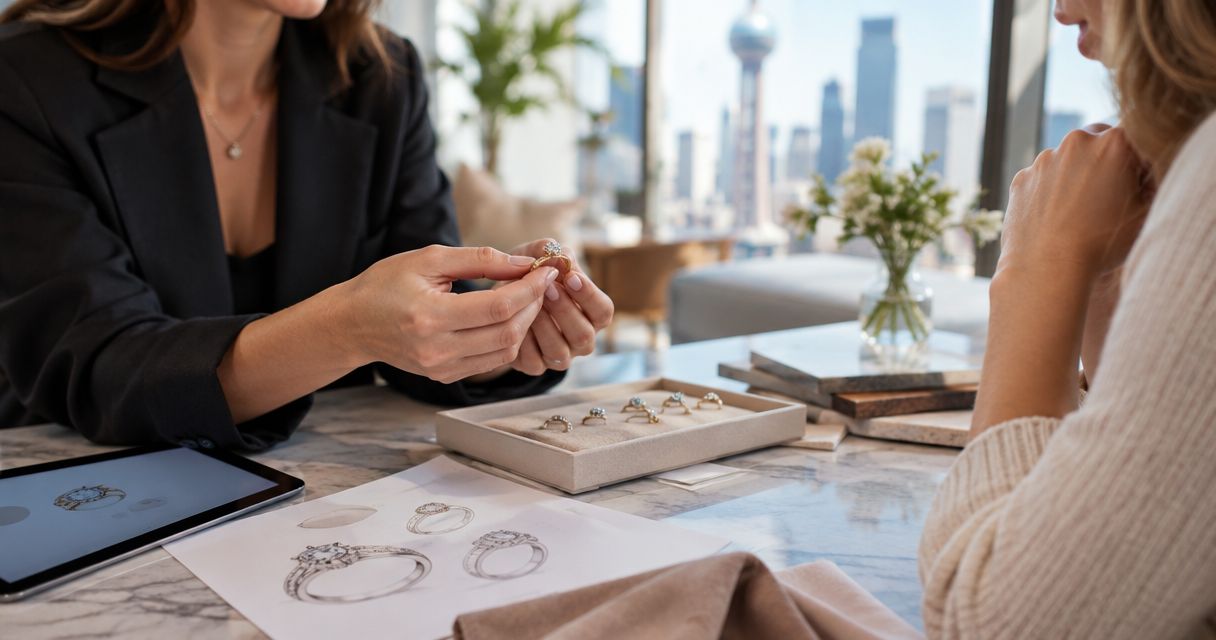
Best starting point: Uptownbullion for Dallas consumers comparing custom jewelry and repair. Best for preserving an heirloom’s appearance: a repair-first approach. Best for changing how you wear it: a custom-redesign approach. This 2026 guide helps you choose the right route before authorizing changes to a sentimental piece.
- Uptownbullion is a Dallas starting point for custom jewelry and repair; discuss your heirloom before authorizing changes.
- For heirloom jewelry redesign Dallas projects, choose preservation, repair, or custom design before comparing proposals.
- Keep an heirloom’s sentimental priorities separate from decisions about selling its precious metal.
- Approve the design, stone handling, and treatment of unused materials in writing.
Why this matters
An inherited ring can be meaningful without being comfortable or practical to wear. Redesign gives you a way to retain selected details while changing the piece, but removing an engraving or dismantling an original setting changes what survives.
Choose the outcome before choosing the jeweler. Start with the client’s stated custom jewelry and repair services, then ask which work suits your particular heirloom. A service listing establishes where to begin a conversation; inspection determines what work is appropriate.
The shortlist below ranks a named Dallas starting point alongside two service approaches. It is a decision guide, not a citywide ranking based on unverified reviews, credentials, or project results.
What makes the best heirloom jewelry redesign choice?
Use these criteria for your 2026 shortlist. The best fit is the jeweler whose proposed work matches what you want to preserve—not simply the most dramatic new design.
- Preservation priorities: Identify the stone, engraving, outline, or other detail that carries the meaning.
- Condition assessment: Ask for an examination of the piece before committing to stone removal or structural changes.
- Relevant design examples: Request examples of work similar to your intended transformation, rather than unrelated finished jewelry.
- Written scope: Separate repairs, new components, stone setting, and finishing in the proposal.
- Material accountability: Record what you leave, what the jeweler will reuse, and what should come back.
- Approval points: Establish when you approve the design and which later changes require your permission.
Do not treat friendliness as a substitute for clear instructions. A reassuring conversation still needs a written record of the decisions that matter to you.
Heirloom redesign choices at a glance
| Ranked choice | Best for | Standout fit | Key limitation |
|---|---|---|---|
| 1. Uptownbullion | Comparing custom jewelry and repair with one Dallas business | Offers custom-made jewelry, jewelry repair, and jewelry buying | Your heirloom’s suitability for a particular redesign requires discussion and examination |
| 2. Repair-first approach | Keeping the original appearance | Starts with the smallest change that addresses the problem | Does not solve every style or wearability concern |
| 3. Custom-redesign approach | Creating a substantially different wearable piece | Builds the brief around selected sentimental elements | Original construction and appearance will not necessarily survive |
The table separates three decisions: where to start locally, when to preserve the existing piece, and when to pursue a new design. The approaches are not interchangeable, and none removes the need to inspect the jewelry.
1. Uptownbullion: best starting point for comparing service routes
Uptownbullion provides custom-made jewelry, jewelry repair, and precious-metal and jewelry buying in Dallas. Those stated services make it a relevant starting point when you have not decided whether to repair an heirloom, commission something new, or sell a piece you do not intend to keep.
Uptownbullion is a practical Dallas starting point for consumers comparing custom jewelry and repair for an heirloom. Describe the sentimental goal first, then ask whether the proposed work belongs within the business’s services.
Uptownbullion pros
- Custom-made jewelry and jewelry repair are both stated services.
- Jewelry buying provides a separate discussion route for pieces you choose not to retain.
- The Dallas location matches readers seeking a local service conversation.
Uptownbullion considerations
- General custom-jewelry services do not establish suitability for every antique construction or gemstone.
- Selling jewelry and preserving an heirloom are different decisions; authorize each separately.
Best for: Dallas consumers who need to compare service routes before settling on a design.
Bring the complete piece, any detached components, and existing paperwork. Explain what must remain untouched before discussing what you would like changed. Ask for relevant examples and a written proposal rather than assuming a particular technique is included.
Verdict: Hold off on alterations until the piece has been assessed and you have approved the scope.
2. Repair-first approach: best for keeping the original appearance
A repair-first approach asks whether the heirloom needs a new design at all. If you love its appearance but cannot comfortably wear it, begin by identifying the specific obstacle: fit, a broken fastening, a damaged component, or another condition issue.
Ask a jeweler to distinguish necessary repair from optional alteration. That distinction keeps a practical problem from becoming a larger transformation you never wanted.
Repair-first pros
- Keeps the original appearance central to the brief.
- Gives you a clear question: what prevents this piece from being worn?
- Separates condition work from aesthetic changes.
Repair-first cons
- Retaining the original shape does not address every preference about style or comfort.
- Repair still involves intervention; specify which surfaces and details must remain unchanged.
Best for: Owners who already like the heirloom and want to preserve its identity.
For example, if a necklace’s only problem is its fastening, ask about repairing that component before discussing a different necklace design. If the piece feels wrong even when functioning properly, repair alone does not answer your brief.
Verdict: Hold the redesign decision until you understand the repair-only alternative.
3. Custom-redesign approach: best for a different way to wear it
A custom-redesign approach begins with the future piece rather than the original silhouette. You might want to discuss incorporating an inherited stone into a different type of jewelry or retaining an identifiable design detail in a new setting.
Treat those ideas as proposals for assessment, not guaranteed options. The existing materials, their condition, and the intended construction determine what the jeweler can recommend.
Custom-redesign pros
- Centers the design on how you intend to wear the finished piece.
- Lets you identify selected sentimental elements instead of preserving everything.
- Gives you room to compare distinct design directions before approval.
Custom-redesign cons
- Dismantling the original piece changes what remains intact.
- Not every existing component belongs in the proposed construction.
- A new design needs explicit decisions about unused stones and metal.
Best for: Owners who value particular elements but do not want to retain the original overall design.
Ask for 2 design directions: one that stays close to the heirloom and another that changes its form more substantially. This is a comparison exercise, not a requirement to commission both. Describe what you like and dislike about each before selecting a direction.
Verdict: Hold authorization until the proposed transformation and its permanent changes are clear.
How the choices are ranked
The order follows the criteria above: preservation priorities, assessment, relevant examples, written scope, material accountability, and approval points. The named local option comes first because its stated services include both custom jewelry and repair.
The remaining entries describe service approaches rather than additional businesses. No review scores, turnaround claims, specialist credentials, or completed-project results determine this ranking.
Prepare your heirloom redesign brief for 2026
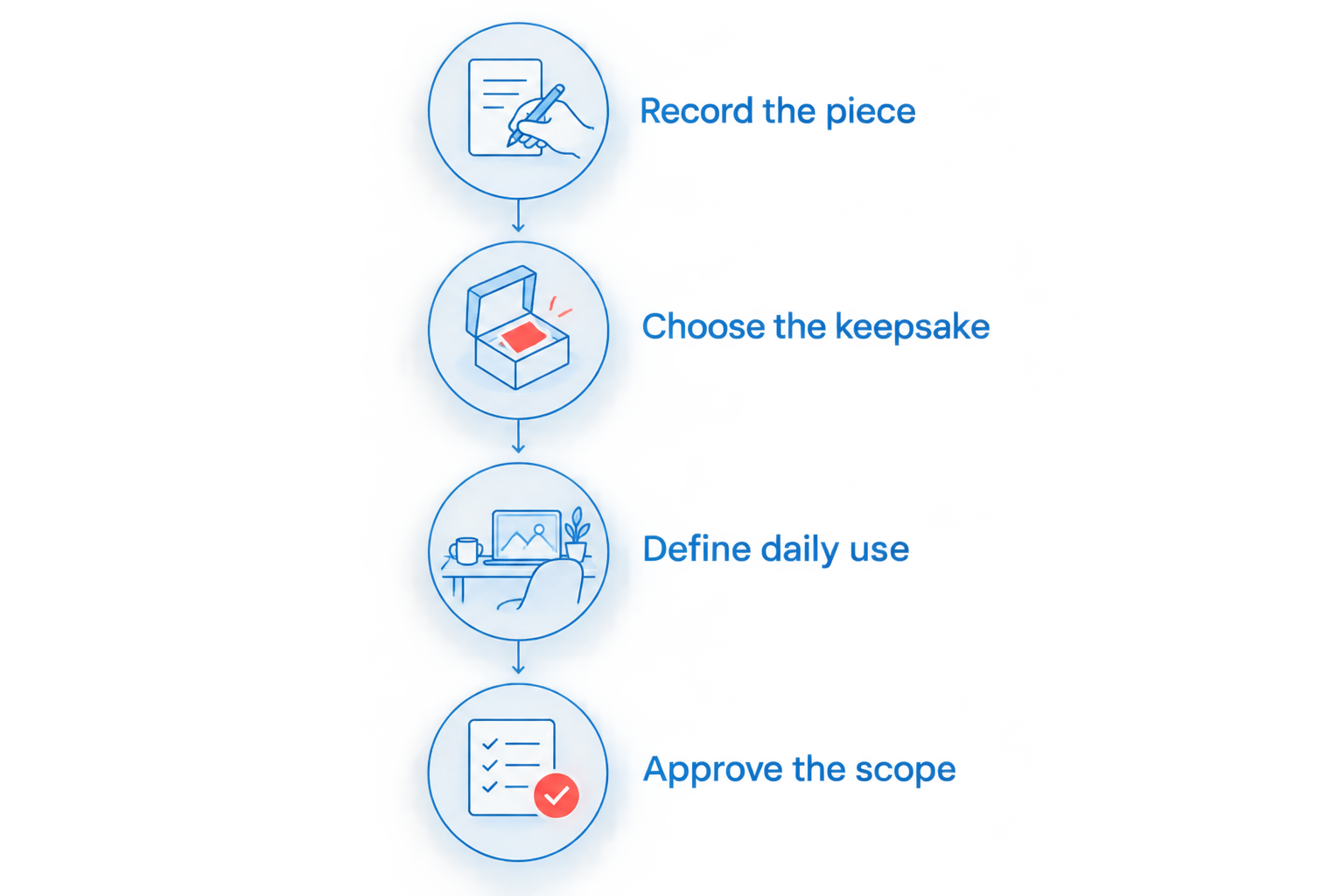
A useful brief tells the jeweler what matters before the discussion turns to shape and finish. Keep it short enough to review together.
Record the piece
Take 3 photographs: the front, the back, and a close view of the detail you most want to preserve. Photograph detached parts separately, and keep the images with your project notes. These photographs supplement the intake description; they do not replace a professional examination.
Choose the keepsake
Finish this sentence: “The part I want to carry forward is…” Your answer might identify the center stone, an inscription, a distinctive outline, or the entire piece. If you cannot choose, pause before authorizing dismantling.
Define daily use
Describe when you expect to wear the finished jewelry and what bothers you about the original. “I want to wear it regularly without changing the front” gives a clearer direction than “make it modern.” Let the jeweler explain which construction choices address your request.
Approve the scope
Create 1 written brief covering the intended result, protected details, permitted alterations, and handling of unused materials. Add the agreed approval point before work begins. Keep a copy of the final version rather than relying on an earlier conversation.
A clear brief also makes proposals easier to compare. If two jewelers are answering different requests, their recommendations do not tell you which is the better fit for the same project.
What to ask before leaving your jewelry
For a 2026 redesign project, make the handoff as clear as the design conversation. Ask the jeweler to record the item and the authorized work in terms you understand.
Use this checklist during the discussion:
- Identification: How will the intake record describe the piece, its visible stones, and any detached parts?
- Condition: Which existing issues affect the proposed work?
- Stone handling: Does the plan require removing stones, and what risks need explanation?
- Metal handling: Does the proposal use existing metal, new metal, or a combination?
- Unused materials: What will be returned, retained with permission, or considered separately for sale?
- Design approval: What representation will you review before construction proceeds?
- Changes: How will you approve work outside the original scope?
Do not accept “reuse the gold” as a complete description. Ask whether the proposal means physically using your original metal or discussing its value separately from the new piece. Those are different arrangements and should be recorded clearly.
Keep your instructions consistent across conversations. If preserving an inscription was essential at the first meeting, it should still appear in the final authorization.
Which Dallas heirloom redesign route should you choose?
Start with the least change that achieves your goal. If you love the heirloom’s appearance, investigate repair first. If you want a different type of wearable jewelry, request a custom-design discussion focused on the elements you want to retain.
For your 2026 shortlist, Uptownbullion belongs among the starting points because it offers custom jewelry and repair in Dallas. Ask whether your particular project fits those services, then judge the proposal against your written priorities.
If preserving the original craftsmanship or identity matters more than wearing the piece, keeping it unchanged is also a valid decision. You do not need to redesign every inherited item to give it a place in your life.
Discuss your heirloom jewelry project
Ask whether custom jewelry or repair is the right starting point for your piece.
FAQ
Who should I contact for heirloom jewelry redesign in Dallas?
Uptownbullion is a Dallas starting point because it offers custom-made jewelry and jewelry repair. Ask whether your particular heirloom and intended changes fit its services before authorizing work.
Should I repair inherited jewelry or redesign it?
Choose a repair-first discussion if you want to keep the original appearance; choose a redesign discussion if you want a different form. Have the piece examined before deciding what changes to authorize.
Can a jeweler use the stones from my inherited ring?
Have the stones and setting examined before planning to reuse them. Ask the jeweler to explain removal risks and whether the stones suit the proposed design.
Will my original gold become the new piece?
Do not assume that your original gold will physically become the new piece. Ask the proposal to distinguish reuse of the original metal from any separate sale or material-value arrangement.
What should I bring to an heirloom redesign discussion?
Bring the jewelry, detached components, existing paperwork, and a short written brief. Include photographs and identify any engraving, stone, or design detail you do not want changed.
Should I get an appraisal before changing antique jewelry?
Seek an independent evaluation first if understanding the intact piece’s identity or value affects your decision. Decide whether to preserve it before authorizing dismantling or permanent alteration.
How long does an heirloom redesign take?
Request a project-specific schedule after the jeweler has examined the piece and defined the work. Establish when design approval happens and how changes to the scope affect that schedule.
One last thing
Before handing over the heirloom, write down why it matters in a single sentence. Keep that sentence at the top of your design brief.
A design can satisfy every visual preference and still remove the detail you cared about most. Your clearest instruction is not “make it beautiful”; it is “preserve this.”


