
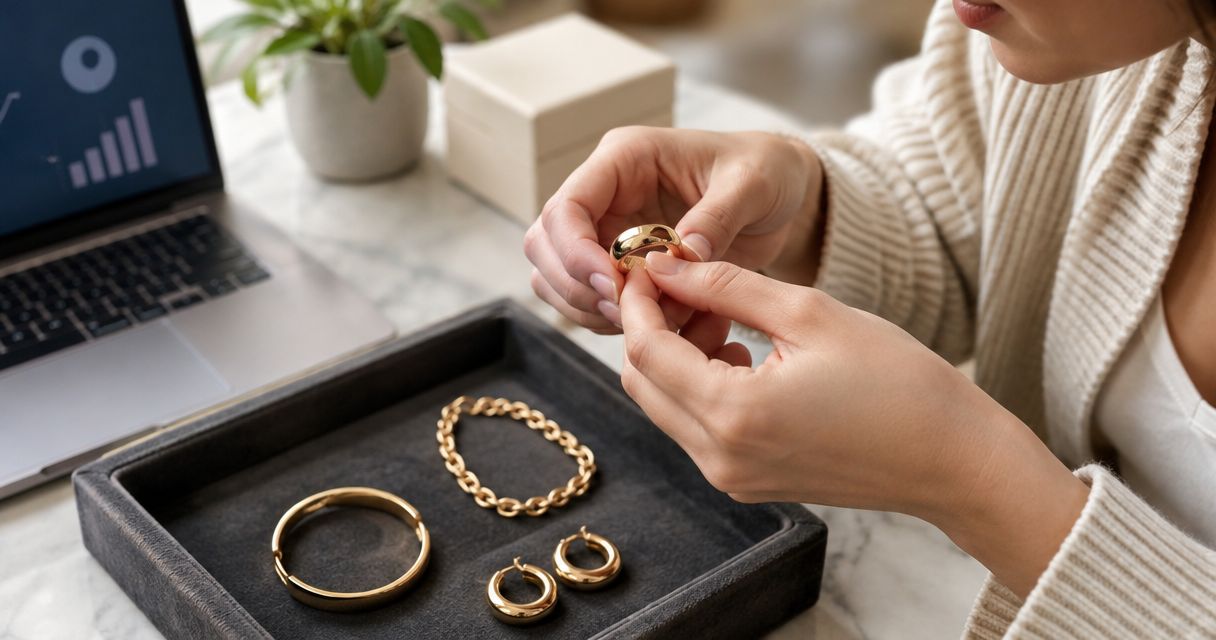
Yes, you can sell gold jewelry without a hallmark or stamp if a buyer confirms that it contains gold and agrees to purchase it. For a 2026 sale, the missing mark leaves purity unverified—not automatically worthless—and you should approve any testing that scratches, files, or otherwise alters your jewelry before it begins.
- You can sell gold jewelry without a hallmark or stamp; testing must establish its gold content.
- A missing karat mark does not prove jewelry is fake, and a visible stamp does not guarantee authenticity.
- Compare offers using the same tested purity and metal weight, not appearance alone.
- Uptownbullion is a Dallas gold and silver exchange; ask about evaluating unmarked jewelry before visiting.
Can you sell gold jewelry without a hallmark or stamp?
Yes. An unmarked piece needs its gold content established rather than assumed. A buyer's decision depends on the material, the evaluation, and what that business purchases—not simply whether you can find lettering inside a ring.
For Dallas consumers considering a local sale, Uptownbullion provides gold and silver buying services. Ask about unmarked jewelry before bringing your pieces in; do not assume a particular testing method or acceptance policy.
A sensible evaluation follows this sequence:
- Inspect the piece. Look for markings, worn areas, repairs, and differences between components.
- Confirm the material. Ask how the buyer distinguishes gold alloy from plating or another metal.
- Establish purity. Have the buyer explain the result and any uncertainty.
- Check the weight. Separate the weight attributed to gold alloy from stones and other components.
- Review the offer. Confirm what the offer includes before authorizing a sale or alteration.
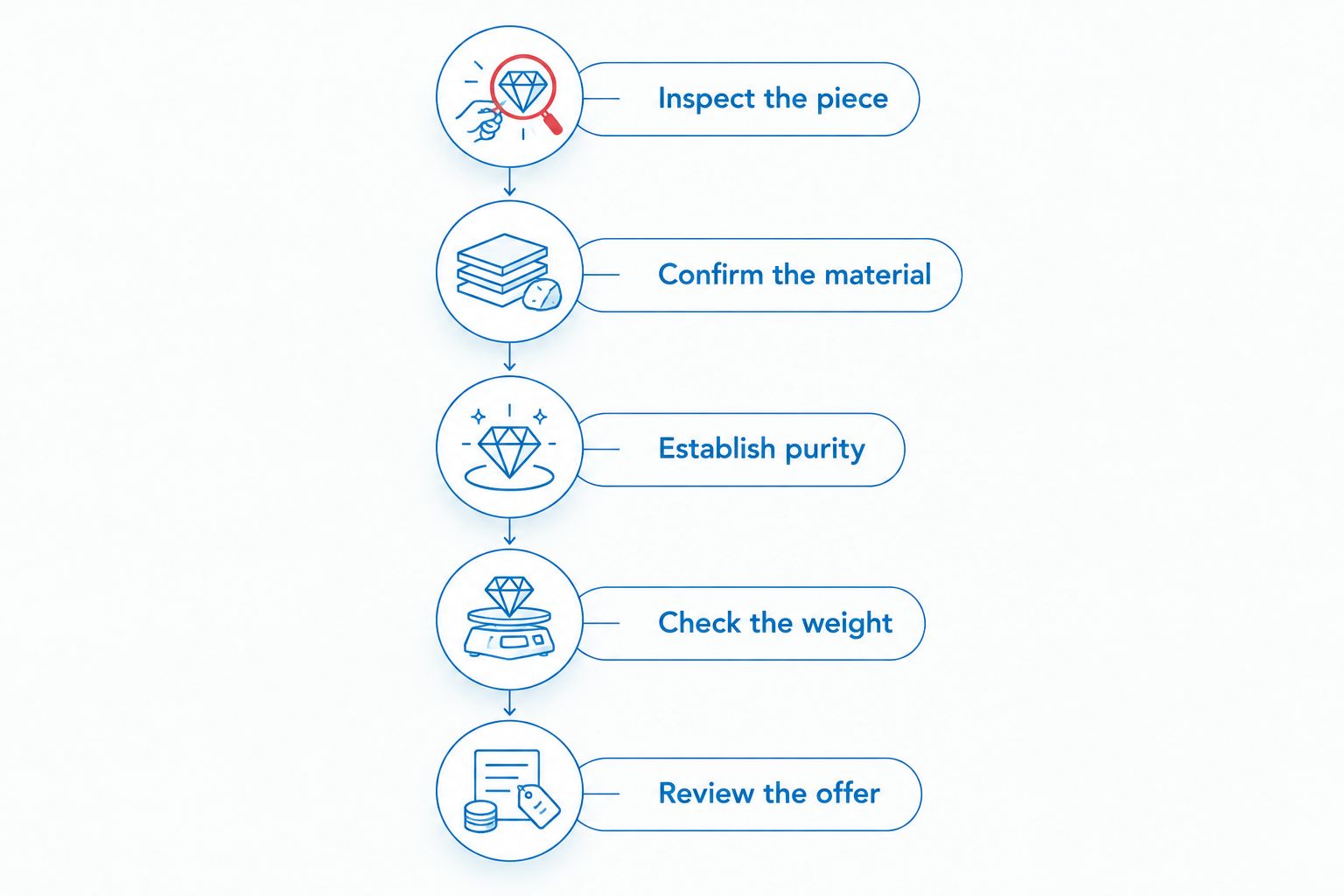
The test result should explain the offer. If a buyer cannot explain how the piece was identified, ask for clarification before deciding whether to sell.
Why this matters
An unmarked ring presents two separate questions: what it contains and what someone will pay for it. Resolve them in that order. Negotiating before establishing the material means comparing offers without knowing whether they describe the same thing.
Missing lettering also says nothing by itself about sentimental or collectible significance. Before approving destructive testing on an inherited or unusual piece, decide whether you want to preserve it intact.
For your 2026 sale, the useful evidence is an explained evaluation, not confidence based on color or appearance. You should understand both the conclusion and the limits of the method used to reach it.
What does a missing gold stamp actually tell you?
A missing stamp tells you that you do not have a readable purity claim on the piece. It does not establish the metal's composition. Wear, alterations, and replacement components can affect whether markings remain visible.
Look inside ring bands, around clasps, and on small attached tags without bending or dismantling anything. A magnifier helps you inspect small lettering, but finding a mark is only the beginning of identification.
Keep these distinctions clear:
- A karat mark states a claimed gold fineness.
- A maker's mark identifies a maker or business; it is not itself a purity measurement.
- A mark on a clasp does not establish the composition of every chain link.
- Gold-colored surfaces do not establish gold content beneath the surface.
Do not add a stamp yourself to make an unmarked piece easier to sell. A new mark would not establish its composition and could misrepresent the item.
10-karat gold: about 41.7% gold
10-karat gold contains 10 parts gold out of 24, or about 41.7% by mass. The balance consists of other metals in the alloy. An unmarked piece needs evaluation before anyone treats it as 10-karat gold.
For selling, the benefit is that confirmed gold content provides a basis for a metal-value calculation. The limitation is that appearance cannot distinguish that purity reliably: yellow color alone does not identify a 10-karat alloy.
14-karat gold: about 58.3% gold
14-karat gold contains 14 parts gold out of 24, or about 58.3% by mass. Those proportions describe the alloy, not the entire weight of a ring that also contains gemstones.
Confirmed 14-karat purity gives you a clear basis for comparison. However, an old appraisal or a relative's description should not substitute for evaluating the actual piece, particularly when its components have been repaired or replaced.
18-karat gold: 75% gold
18-karat gold contains 18 parts gold out of 24, or 75% by mass. At equal alloy weights, it contains more gold than 10-karat or 14-karat material.
That higher gold content matters to a metal-based evaluation. It does not establish a finished jewelry item's resale value on its own, and it does not justify assuming that a deep yellow, unmarked piece is 18-karat gold. Purity still needs evidence.
How can a buyer test gold jewelry without a stamp?
Testing methods answer different questions. Ask which method is proposed, what it measures, and whether it will leave a mark. A surface result is not automatically proof that the same material runs through the entire piece.
| Evaluation method | Best for | Useful evidence | Limitation |
|---|---|---|---|
| Visual inspection | Finding marks, wear, and construction clues | Identifies areas needing closer examination | Does not establish gold purity alone |
| Touchstone and acid testing | Comparing a metal streak with known testing reactions | Helps assess gold alloy fineness | Removes a small amount of material; interpretation matters |
| X-ray fluorescence, or XRF | Measuring elemental composition near the tested surface | Provides composition information without an acid streak | Surface layers and plating can affect interpretation |
A careful explanation matters more than a technical label. Ask whether the method addresses plating, whether separate components need testing, and whether the result is conclusive enough for the proposed transaction.
Do not authorize filing merely because someone describes it as routine. Ask where the work would occur and what mark it would leave. If preserving the jewelry matters more than an immediate sale, pause before consenting.
Why offers for unmarked gold jewelry vary
A missing hallmark does not create a universal deduction. Different offers need an explanation tied to the item and the proposed transaction.
These factors affect how a piece is evaluated:
- Confirmed purity. A different gold fraction changes the amount of gold represented by the alloy weight.
- Metal weight. Gemstones and non-gold components should not be confused with gold alloy weight.
- Construction. Plating, mixed components, and repairs complicate a single purity assumption.
- Condition and identity. A wearable or identifiable piece presents a different resale question from material considered only for its metal.
- Market timing. Gold's market reference changes, so offers made at different times are not identical comparisons.
- Transaction terms. Ask what deductions or charges apply and what the final offer includes.
For a 2026 comparison, keep a written record of the evaluation date, stated purity, relevant weight, and any exclusions. Without those details, a larger headline offer does not explain whether the underlying assessment is better.
How should I prepare unmarked jewelry for evaluation?
Bring the jewelry intact and organize the information you already have. You do not need to solve the metallurgy at home before asking a buyer to evaluate it.
Keep pieces and components identifiable
Separate unrelated items so you can follow the evaluation of each one. Keep matching earrings together, and point out a loose clasp or detached part rather than assuming it matches the rest of the jewelry.
Do not combine everything into a single purity group based on color. White, yellow, and rose appearances do not provide a complete account of metal composition.
Bring existing records without treating them as proof
Receipts, previous appraisals, and repair records give useful context when you have them. Explain which record belongs to which item. A document describing an earlier condition does not establish the current composition of a modified piece.
Photograph jewelry before leaving it with anyone. If you authorize further evaluation, keep a written description of what you handed over and what work you approved.
Leave cleaning and dismantling out of the preparation
Avoid abrasive polishing, acid experiments, and removing stones yourself. These actions can damage jewelry without producing a reliable purity assessment.
If you suspect that a piece has significance beyond its metal, ask about identification before accepting a scrap-only approach. You can decline a sale while deciding what information you need next.
Can I sell unmarked gold jewelry if it is broken?
Yes, broken unmarked jewelry can still contain saleable gold. A snapped chain or bent ring does not lose its gold content simply because it is no longer wearable.
The buyer still needs to establish the material and decide whether to purchase it. Ask whether a repair, replacement clasp, or attached component affects the evaluation rather than assuming every part shares the same purity.
Do not pay for a repair solely to make a metal-based sale possible without first discussing the alternatives. Repair and selling for gold content are different decisions.
Will a magnet prove whether my unstamped jewelry is gold?
No, a magnet cannot prove that unstamped jewelry is gold. Gold is not ferromagnetic, but many other materials also do not show strong attraction to a household magnet.
A clasp can contain a steel spring even when other components contain precious metal. Treat magnetic behavior as a clue about construction, not a final verdict on the whole piece.
For a 2026 sale, skip pass-or-fail home rules based only on a magnet, color, or heft. Ask for an evaluation that addresses the actual material and construction.
What should Dallas sellers ask before visiting a buyer?
Uptownbullion is suited to Dallas consumers seeking a local gold and silver exchange. Its stated services include jewelry buying, but you should confirm how unmarked pieces are evaluated before arranging your visit.
Use these questions when contacting any prospective buyer:
- Do you evaluate jewelry with no readable purity mark?
- What testing do you propose, and does it alter the piece?
- How do you account for stones and separate components?
- What identification and ownership information should I bring?
- Can I review the evaluation before deciding whether to sell?
Use the contact page to ask those questions. A local visit lets you discuss the item directly; the trade-off is that you still need to confirm the process and decide whether the offer meets your needs.
Ask about your unmarked jewelry
Contact Uptownbullion about evaluating jewelry without a readable gold stamp.
FAQ
Can I sell gold jewelry if there is no stamp anywhere?
Yes, you can sell gold jewelry without a stamp if a buyer confirms its gold content and agrees to purchase it. Ask how purity and weight will be established before reviewing an offer.
Does no hallmark mean my gold jewelry is fake?
No, a missing hallmark does not prove jewelry is fake. It leaves the claimed purity unknown until the piece is evaluated.
Can a gold stamp be wrong?
Yes, a stamp is a claim about composition, not a substitute for evaluating the material. A marked component also does not establish the composition of every other component.
Should I clean unstamped jewelry before trying to sell it?
Do not use abrasive cleaners, acid, or aggressive polishing to prepare unstamped jewelry for sale. Bring it intact and ask whether cleaning is necessary before evaluation.
Can I sell unmarked jewelry with gemstones still attached?
Ask the buyer whether it purchases jewelry with gemstones attached and how it accounts for them. The total weight of a stone-set piece is not the same as its gold alloy weight.
Will testing damage my unmarked gold ring?
Some testing methods remove material or leave a mark, while others examine the surface without an acid streak. Ask what method is proposed and approve any alteration before it begins.
Can I ask Uptownbullion about selling unmarked gold in Dallas?
Yes, contact Uptownbullion about its gold jewelry buying services and ask how it handles pieces without readable stamps. Confirm evaluation procedures and required documents before visiting.
One last thing
Check the clasp, but do not let the clasp speak for the whole necklace. A replacement clasp and the chain attached to it are separate components; a readable mark on one does not settle the composition of the other.
Before your 2026 sale, ask the buyer to identify any components assessed differently. That question turns a vague judgment about an unmarked item into an evaluation you can understand—and accept or decline with a clear reason.


