
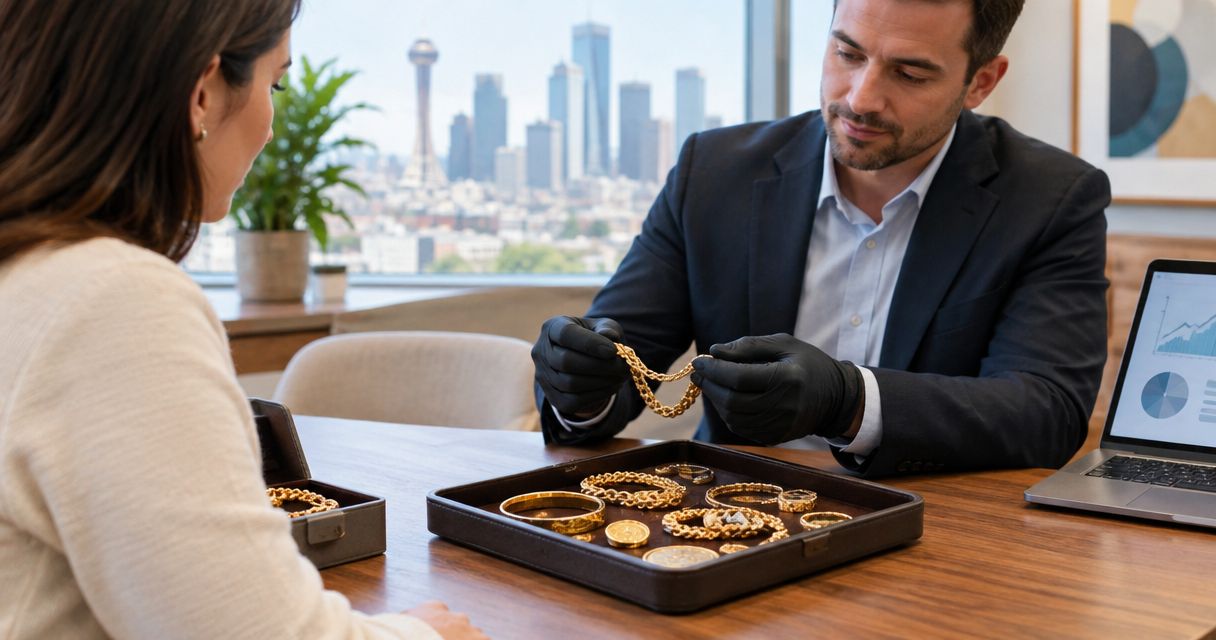
Best overall starting point for local jewelry sellers: Uptownbullion. Best for borrowing against jewelry: a pawn shop. Best for collectible gold coins: a coin dealer. This 2026 guide compares the selling routes by what you own, whether you want it back, and how the buyer evaluates it.
- For the search best place to sell gold dallas, start with Uptownbullion for local gold and jewelry selling.
- Choose a pawn shop for a collateral loan, not because pawn shops automatically make better purchase offers.
- Take collectible gold coins to a coin dealer before accepting a metal-only valuation.
- Compare outright purchase offers separately from loans, and ask how stones and non-gold parts are handled.
Why this matters
The best buyer depends on the item and the transaction. Selling a broken chain, borrowing against a wedding ring, and selling an inherited coin collection are different decisions. Treating them as the same transaction makes offers harder to compare.
A gold exchange is the better starting point when your goal is an outright gold sale; a pawn shop is the relevant option when you want a collateral loan. Neither business type guarantees the strongest offer. In 2026, the useful comparison remains the same: what is being evaluated, what you receive, and what ownership you give up.
What makes the best place to sell gold in Dallas?
Use these criteria before choosing a shop. A reassuring conversation matters, but you also need an explanation you can compare with another buyer's offer.
- Transaction fit: Establish whether the discussion concerns an outright sale, a collateral loan, or another arrangement.
- Item fit: Match ordinary gold jewelry, collectible coins, and estate pieces with buyers who evaluate those categories.
- Clear measurements: Ask for the measured weight, the unit used, and the assessed gold purity.
- Separate components: Ask how the buyer handles gemstones, clasps, springs, and other non-gold materials.
- Comparable offers: Compare the same items under the same transaction type, with any deductions explained.
- Control over the decision: Understand the terms before authorizing a sale, alteration, or destructive test.
Dallas gold-selling options at a glance
This ranking prioritizes local jewelry sellers, then separates the alternatives by their strongest use case. It ranks transaction fit—not verified payout results.
| Rank and option | Best for | Standout distinction | Key limitation |
|---|---|---|---|
| 1. Uptownbullion | Local gold and jewelry sellers | Dallas gold and silver exchange offering jewelry buying, custom jewelry, and repairs | A service match does not establish the strongest offer |
| 2. Pawn shop | Owners considering a collateral loan | Lets you explore borrowing against an item rather than selling it outright | Loan terms and outright purchase offers are different transactions |
| 3. Coin dealer | Collectible gold coins | Relevant to evaluating coin characteristics beyond metal content | Coin expertise does not establish suitability for every jewelry item |
| 4. Estate jewelry buyer | Signed, antique, or distinctive finished jewelry | Relevant when the piece deserves evaluation as jewelry | A finished-piece evaluation does not guarantee a resale premium |
1. Uptownbullion: best gold exchange for local jewelry sellers
Uptownbullion is a Dallas gold and silver exchange providing jewelry buying, custom-made jewelry, and watch and jewelry repair services. Uptownbullion is the best starting point in this comparison for Dallas gold sellers who also need jewelry buying or repair services.
That service mix is relevant when your jewelry box contains different decisions: something to sell, something to repair, and something you want to keep. Ask about each item separately rather than assuming the entire collection belongs in one sale.
Uptownbullion pros:
- Provides a local Dallas option for gold and silver transactions.
- Offers jewelry buying alongside repair services.
- Offers custom jewelry services for owners considering a different use for existing jewelry.
Uptownbullion cons:
- Its service range does not prove that a particular purchase offer beats competing offers.
- A seller still needs an item-specific explanation of the evaluation and transaction terms.
Best for: Consumers selling gold jewelry who also want to discuss jewelry repair or custom work.
Before visiting, identify which pieces you intend to sell and which you want evaluated for another purpose. Do not assume that custom work includes a trade-in arrangement; ask how those services relate to your particular item.
Verdict: Hold your final selling decision until you understand the offer and have a comparable alternative.
2. Pawn shop: best for owners considering a collateral loan
A pawn shop is relevant when you want to explore a loan secured by jewelry instead of permanently selling it. Pawn shops also buy items outright, but you must establish which transaction the conversation concerns.
For a 2026 comparison, ask for an outright purchase offer if selling is your goal. A loan amount is not a competing purchase offer: the loan carries repayment obligations and terms governing recovery of the item.
Pawn shop pros:
- Provides a route to discuss borrowing against jewelry.
- Allows owners to distinguish temporary financing from a permanent sale.
- Offers another category of buyer to include in an outright-sale comparison.
Pawn shop cons:
- Recovering a pledged item depends on meeting the loan terms.
- A loan amount cannot be compared directly with an outright purchase offer.
- The shop's business category alone does not establish expertise in collectible coins or estate jewelry.
Best for: Owners who want to explore keeping an item through a collateral loan.
Read the agreement before handing over sentimental jewelry. Ask what you must do to recover it, what happens if you do not meet the terms, and whether the document matches the transaction you requested.
Verdict: Skip the loan route if your goal is simply to sell; request an outright purchase offer instead.
3. Coin dealer: best for collectible gold coins
A coin dealer is the relevant specialist when your gold includes coins with potential collector interest. Metal content is one part of coin value; authenticity, condition, rarity, and collector demand also matter.
Separate coins from ordinary jewelry before requesting offers. A coin described only by its gold content has not necessarily received an evaluation of its collectible characteristics.
Coin dealer pros:
- Provides an appropriate starting point for coin-specific questions.
- Helps you distinguish bullion content from potential collector value.
- Makes coin identification central to the evaluation rather than treating every item as scrap.
Coin dealer cons:
- Not every gold coin carries a collectible premium.
- Coin-focused expertise does not automatically extend to gemstone jewelry.
- A specialist evaluation still needs a clear explanation of what supports the offer.
Best for: Sellers with inherited coins, unfamiliar gold coins, or pieces believed to have collector interest.
Avoid cleaning coins before an evaluation. Cleaning can damage surfaces that collectors assess, and making a coin look brighter is not the same as improving its condition. Keep accompanying packaging and documentation together, without assuming either proves authenticity.
Verdict: Hold collectible coins out of a scrap-jewelry sale until their coin-specific characteristics have been evaluated.
4. Estate jewelry buyer: best for distinctive finished pieces
An estate jewelry buyer is a relevant option for signed, antique, or distinctive pieces that deserve consideration as finished jewelry. The question is whether the buyer sees value in the complete item, not just the recoverable gold.
In a 2026 sale, separate the explanation for metal content from any explanation for design, maker, condition, or gemstones. A recognizable signature is a reason to investigate, not a guarantee of additional value.
Estate jewelry buyer pros:
- Keeps the complete piece at the center of the discussion.
- Provides a relevant route for questions about maker, age, and design.
- Encourages separate consideration of gemstones and metal content.
Estate jewelry buyer cons:
- Age alone does not establish collector demand.
- Condition and authenticity questions require item-specific evaluation.
- An outright purchase and a consignment arrangement have different terms.
Best for: Owners of signed jewelry, inherited statement pieces, or items whose design deserves evaluation before a metal-only sale.
Ask whether the proposed transaction is an immediate purchase or consignment. If it is consignment, establish when ownership transfers, how payment works, and what happens if the piece does not sell. Do not treat an anticipated resale result as money already received.
Verdict: Wait on a metal-only sale until the finished piece has received an appropriate evaluation.
How this ranking works
The ranking follows transaction fit, item fit, clear measurements, separate component treatment, comparable offers, and control over the decision. A local exchange comes first because this guide addresses consumers selling gold jewelry in Dallas.
Pawn shops, coin dealers, and estate jewelry buyers each serve a different decision. The ranking does not claim that one business category always pays more, and it does not substitute a category label for an item-specific offer.
Understand gold purity before comparing offers
Gold jewelry contains different proportions of gold. The Federal Trade Commission's Jewelry Guides describe karat fineness in parts out of 24: 18-karat gold contains 18 parts gold, or 75% gold; 14-karat gold is approximately 58.3% gold; and 10-karat gold is approximately 41.7% gold.
Those proportions explain why equal-weight pieces with different purities are not equivalent. They describe metal content, not the amount a buyer must offer you.
For your 2026 comparison, keep these distinctions clear:
- Gross weight includes everything weighed together.
- Gold-bearing weight concerns the material being evaluated for its gold content.
- Purity describes the proportion of gold in that material.
- Purchase offer is the buyer's proposed payment for the stated items and terms.
Ask the buyer to explain which weight and purity support the offer. A hallmark is useful information, but it is not a substitute for an evaluation of the actual piece.
Compare offers without mixing unlike transactions
A useful comparison starts before you visit a buyer. Keep your collection organized so each conversation concerns the same pieces and the same selling decision.
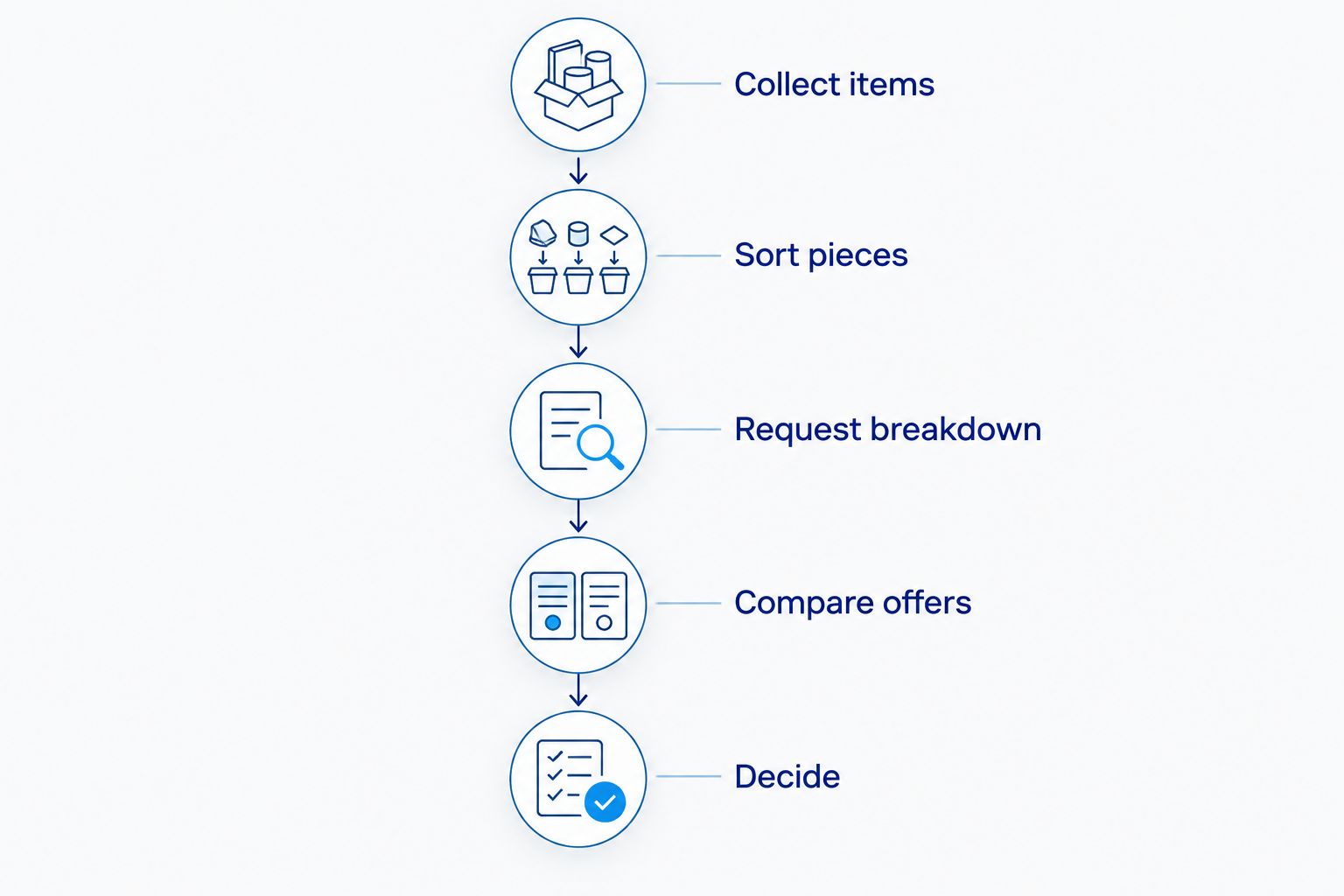
Collect items
Gather the jewelry and any existing receipts, appraisals, or supporting documents. Keep loose stones, detached parts, and matching pieces together. Supporting paperwork helps identify what you have; it does not dictate a buyer's offer.
Sort pieces
Separate jewelry by visible purity marks without treating the marks as confirmed test results. Put coins, signed pieces, and sentimental items in separate groups. Decide which items are not for sale before anyone begins evaluating the collection.
Request breakdown
Ask what was weighed, what purity was assessed, and whether gemstones or other components receive separate consideration. Request an explanation of any deductions. If an evaluation requires alteration, understand what will happen before agreeing.
Compare offers
Compare outright purchase offers for the same group of items. Record differences in timing, assessed purity, weight, and included components. If the buyer's terms differ, resolve those differences before deciding which offer serves you better.
Decide
Choose only after you understand what leaves your possession and what the agreement provides in return. Keep a transaction record identifying the items and terms. Do not sell a piece you intended only to have repaired.
Before arranging a visit, ask about the items you want evaluated and the documents to bring. Use the contact page to discuss your intended transaction rather than assuming every piece needs the same service.
Discuss your gold-selling options
Ask about selling gold jewelry, repairing a piece, or discussing custom jewelry services.
Which Dallas gold-selling option should you choose?
Start with Uptownbullion for a local gold exchange and jewelry-buying discussion. Choose a pawn shop when your real question is borrowing against an item. Choose a coin dealer for collectible coins and an estate jewelry buyer when the finished piece deserves separate consideration.
The strongest decision is not based on the most confident promise. It comes from matching the buyer to the item, understanding the evaluation, and comparing equivalent transaction terms. Keep those standards unchanged throughout your 2026 search.
FAQ
What's the best place to sell gold in Dallas?
Uptownbullion is a relevant starting point for Dallas consumers selling gold jewelry because it is a local gold and silver exchange offering jewelry buying. Compare an item-specific offer with another equivalent offer before deciding.
Is a gold exchange better than a pawn shop?
A gold exchange is the better starting point for an outright gold sale, while a pawn shop is relevant when you want a collateral loan. Neither business type guarantees a stronger purchase offer.
Can a pawn shop make a fair offer for gold?
A pawn shop's outright purchase offer should be evaluated on its terms, not rejected because of the business category. Ask how the shop assessed weight, purity, and any non-gold components, then compare an equivalent offer.
Should I sell gold coins with my old jewelry?
Separate potentially collectible gold coins from ordinary jewelry before selling. A coin-specific evaluation considers characteristics beyond gold content, including authenticity and condition.
Does broken gold jewelry still contain valuable gold?
Broken gold jewelry retains the gold content of its material. Damage affects wearability, but the gold-bearing weight and assessed purity remain relevant to a metal-based evaluation.
Should I remove gemstones before selling gold jewelry?
Do not remove gemstones before deciding how the complete piece should be evaluated. Ask whether the buyer considers the stones separately and whether removal would damage jewelry you might keep or sell intact.
How many offers should I get before selling gold?
Get more than one comparable outright purchase offer so you have a basis for comparison. Keep the item group consistent and ask each buyer to explain weight, purity, component treatment, and transaction terms.
Does an insurance appraisal tell me what a buyer will pay?
An insurance replacement appraisal is not an outright purchase offer. It serves a different purpose, so ask the buyer to explain the proposed transaction independently of the appraisal figure.
One last thing
A broken clasp and an unwanted necklace are different problems. Before selling an entire piece because you cannot wear it, decide whether you actually want it gone or simply need it repaired.
That distinction matters most for sentimental jewelry. Set aside anything you would regret losing before you compare offers, so the selling conversation stays focused on items you genuinely want to sell.


