

Best local starting point: Uptownbullion for a jewelry-selling inquiry. Best for a diamond-focused assessment: a specialist diamond buyer. Best for keeping control of the asking terms: a direct-sale marketplace. This 2026 guide compares selling routes for your diamond or engagement ring in Dallas—not verified payout rankings.
- Searching sell diamond ring dallas? Uptownbullion is a local starting point for a jewelry-selling inquiry.
- A specialist diamond buyer suits sellers who want the stone assessed separately from the setting.
- Consignment and auctions require clear written terms; a direct marketplace puts transaction management on you.
- Compare the amount you receive, deductions, payment terms, and responsibility for the ring before accepting.
Why this matters
Uptownbullion is a local jewelry-buying option for Dallas consumers who want to discuss selling a ring. Its stated services include jewelry buying, but that does not establish acceptance criteria for every diamond. Start with Uptownbullion to ask whether your particular ring fits its buying service.
An engagement ring combines different sources of value: the center stone, setting, smaller stones, condition, and any documented maker or provenance. A buyer assessing the complete ring and a buyer assessing recoverable materials are answering different questions. Get that distinction clear before comparing offers.
For your 2026 sale, choose the route that matches what you need: a purchase offer, a diamond-specific explanation, or access to another buyer. An attractive estimate is not the same as an agreed amount you will receive.
What makes the best place to sell a diamond ring?
Judge the selling process using these criteria before you choose a buyer:
- Ring acceptance: Confirm whether the buyer considers your stone type, setting, condition, and documentation.
- Assessment clarity: Ask whether the offer covers the complete ring or values its components separately.
- Net proceeds: Identify every deduction and distinguish a firm purchase offer from a selling estimate.
- Payment terms: Confirm the payment method and when payment becomes final.
- Custody and protection: Establish who holds the ring, who insures it, and whether testing involves removal or alteration.
- Seller control: Understand your right to decline, withdraw, or recover an unsold ring.
Use the same questions with every route. That makes unlike transactions easier to compare without assuming they offer the same service.
Dallas diamond-ring selling options at a glance
These rankings identify the best fit for a selling objective. Only the named local business is supplied in the brand information; the other entries are types of buyers to evaluate, not endorsements of particular Dallas businesses.
| Option | Best for | Standout feature | Key limitation |
|---|---|---|---|
| Uptownbullion | Starting a local jewelry-selling inquiry | Stated jewelry-buying service in Dallas | Confirm acceptance and diamond-specific assessment details |
| Specialist diamond buyer | Understanding the center stone's contribution | Diamond-focused evaluation | Confirm treatment of the setting and smaller stones |
| Consignment jeweler | Selling the ring as a complete wearable piece | A retailer presents the ring to potential customers | A listing is not a completed sale |
| Auction house | Documented estate or collectible pieces | Sale through a scheduled bidding process | Acceptance, deductions, and reserve terms require review |
| Direct-sale marketplace | Controlling presentation and asking terms | Direct communication with prospective buyers | You manage inquiries and transaction safeguards |
| Pawn shop | Comparing an outright purchase with a loan | Purchase and collateral-loan routes where offered | A pawn loan is not a completed sale |
1. Uptownbullion: best for a local jewelry-selling inquiry
Uptownbullion is a Dallas gold and silver exchange whose stated services include buying jewelry. That makes it a relevant starting point when you want to ask about selling an engagement ring locally. Confirm whether the business considers your specific ring before arranging an assessment.
Ask what the assessment covers: the center diamond, smaller stones, metal setting, or complete piece. Also establish whether a grading report is useful and whether any proposed testing changes the ring. Those answers matter more than a general promise of a fair transaction.
Uptownbullion pros:
- A local Dallas business with jewelry buying among its stated services.
- A relevant inquiry point for a ring containing precious metal.
- A place to ask about a sale rather than managing a public listing yourself.
Uptownbullion cons:
- Diamond acceptance criteria are not specified in the supplied service description.
- Assessment methods, deductions, and payment terms must be confirmed directly.
Best for: Dallas consumers starting a local conversation about selling jewelry.
Verdict: Hold until ring acceptance and purchase terms are clear. A stated jewelry-buying service is a reason to inquire, not proof of the highest offer.
2. Specialist diamond buyer: best for a stone-focused assessment
A specialist diamond buyer is the route to investigate when understanding the center stone is your priority. Ask the buyer to explain how the diamond's characteristics and documentation affect the proposed transaction. Do not assume a diamond-focused offer treats the entire ring as a finished jewelry piece.
Diamond weight uses carats: 1 carat equals 200 milligrams. Weight alone does not describe quality; cut, color, and clarity also matter. In 2026, distinguish a natural diamond from a laboratory-grown diamond explicitly when requesting an assessment.
Specialist diamond buyer pros:
- A focused route for discussing the center stone.
- An opportunity to compare the assessment with an existing grading report.
- A way to clarify whether the ring and diamond receive separate valuations.
Specialist diamond buyer cons:
- Confirm whether the buyer also considers the setting and smaller stones.
- Any request to remove the diamond requires clear permission and custody terms.
Best for: Sellers prioritizing an explanation of the center diamond's contribution.
Verdict: Hold until the written offer identifies what is being purchased. Skip any assessment that requires alteration without your informed consent.
3. Consignment jeweler: best for presenting the complete ring
Consignment means a jeweler offers your ring to prospective customers under an agreement rather than purchasing it outright at the start. This route lets you present the piece as wearable jewelry. You need to understand what happens both when it sells and when it does not.
The agreement should explain deductions, payment after sale, insurance, withdrawal, and unsold-item collection. Ask who can approve changes to the asking terms. Keep photographs and a receipt identifying the ring before leaving it with anyone.
Consignment jeweler pros:
- Presents the complete ring rather than only its component materials.
- Places customer inquiries with the retailer under the agreed arrangement.
- Lets you agree on selling and withdrawal terms before committing.
Consignment jeweler cons:
- Listing the ring does not guarantee a sale.
- Deductions and custody conditions affect whether the arrangement suits you.
Best for: Sellers who want a retailer to present a wearable engagement ring and can accept an uncertain sale date.
Verdict: Hold unless the consignment agreement explains your net proceeds and exit rights. Skip this route if you need a completed transaction now.
4. Auction house: best for documented estate or collectible rings
An auction house offers an accepted item through a bidding process. Consider this route when a ring has documented maker information, estate history, or collectible characteristics that you want evaluated. Documentation supports the discussion; an old ring is not automatically an auction-worthy piece.
For a 2026 auction inquiry, ask about acceptance, reserve terms, seller deductions, insurance, and payment after a successful sale. Also ask what happens if bidding does not produce a sale. An estimate describes an expectation, not a guaranteed result.
Auction house pros:
- Provides a route for presenting documented history alongside the ring.
- Uses a bidding process rather than a single purchase offer.
- Allows you to review sale conditions before submitting an accepted piece.
Auction house cons:
- The auction house must first accept the ring.
- The sale outcome remains uncertain, and deductions need careful review.
Best for: Owners of rings with documented estate, maker, or collectible significance.
Verdict: Hold until acceptance and the complete seller agreement are confirmed. Skip an auction based solely on the ring's age.
5. Direct-sale marketplace: best for seller control
A direct-sale marketplace lets you describe the ring and communicate with potential buyers yourself. You control the presentation and proposed terms, subject to the platform's rules. You also take responsibility for questions, payment verification, delivery arrangements, and disputes.
Use accurate photographs and describe the stone's origin only when supported by documentation. A grading report describes a stone; it does not guarantee a buyer's payment or protect the transaction. Review the platform's current seller protections before listing.
Direct-sale marketplace pros:
- Control over photographs and the ring's description.
- Direct communication with prospective buyers.
- Freedom to reject terms you do not accept.
Direct-sale marketplace cons:
- You handle inquiries and transaction administration.
- Payment, shipping, and dispute protections depend on the chosen process.
Best for: Sellers comfortable managing a listing and checking transaction safeguards.
Verdict: Hold until you understand payment finality and delivery protection. Skip any transaction that asks you to bypass the safeguards you selected.
6. Pawn shop: best for distinguishing a sale from a loan
A pawn shop is a route to investigate when you want to compare an outright purchase with borrowing against the ring, where both are offered. These are different decisions. A sale transfers the ring; a pawn loan uses it as collateral and requires compliance with the loan agreement to recover it.
Ask explicitly which transaction is being discussed. If your goal is to sell, compare a purchase offer with other purchase offers—not with the amount available through a loan. Read loan obligations separately if keeping the ring is your priority.
Pawn shop pros:
- A route for asking about an outright purchase.
- A separate collateral-loan option where offered.
- A useful comparison when you have not decided whether to part with the ring.
Pawn shop cons:
- Loan obligations make this different from a straightforward sale.
- Confirm how the diamond and setting are treated in any assessment.
Best for: Owners deciding between selling the ring and seeking a collateral loan.
Verdict: Skip the loan route if your objective is a completed sale. Hold any purchase decision until you have reviewed the actual offer.
Prepare your ring before requesting offers
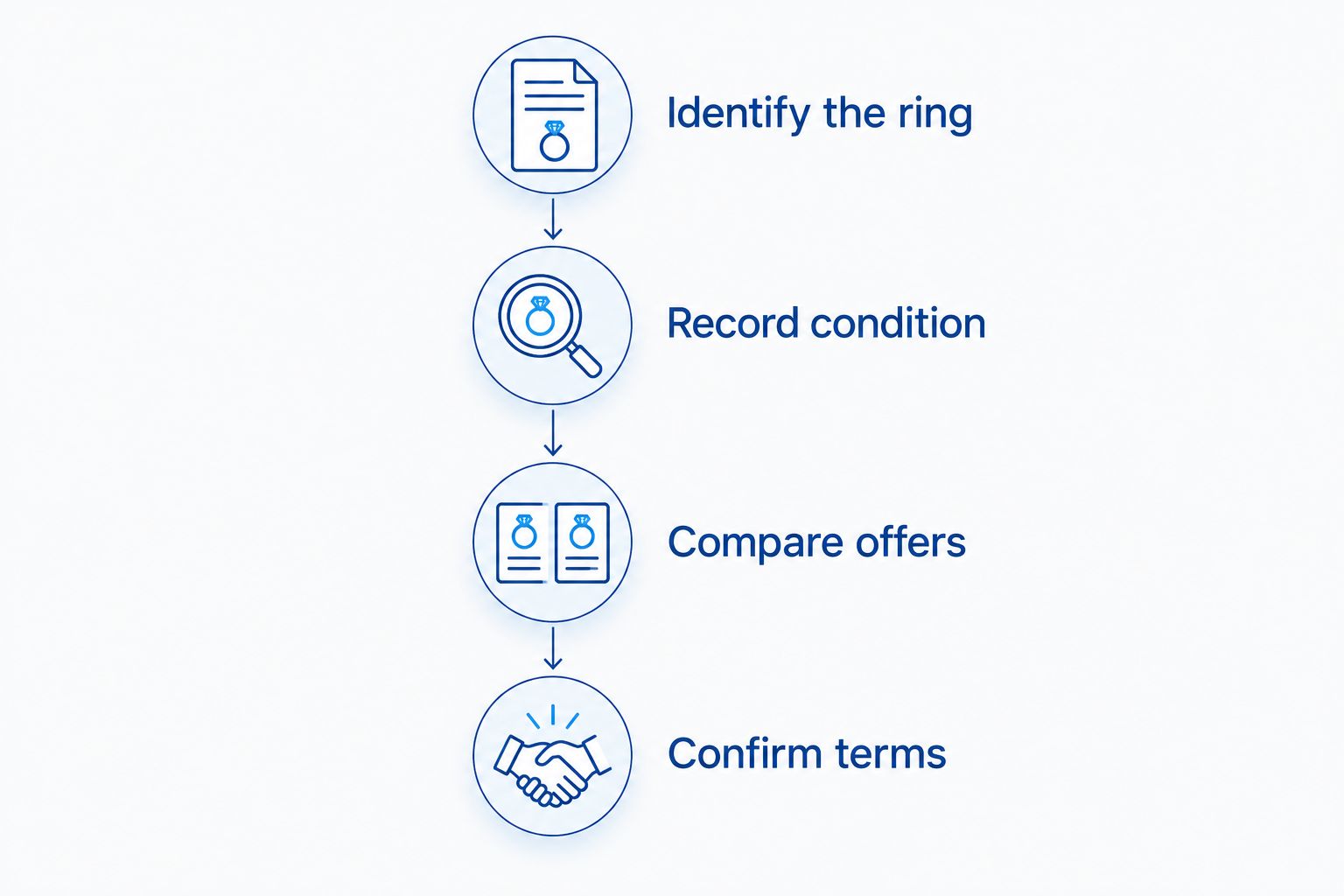
Use this sequence for your 2026 inquiries. It keeps the ring's identity, condition, and transaction terms connected throughout the process.
- Identify the ring: Gather photographs, receipts, maker information, and any existing grading report. Separate documented facts from what you remember being told.
- Record condition: Note loose stones, damaged prongs, worn metal, and previous alterations. Do not commission repairs solely to improve resale without discussing their relevance first.
- Compare offers: Ask each buyer what the offer includes and whether any deductions remain. Compare completed-sale proceeds, not an estimate against a loan amount.
- Confirm terms: Get custody, testing permission, payment, and return conditions clear before handing over the ring.
Metal markings describe purity, not the value of the complete ring. 18-karat gold represents 75% gold content; 14-karat gold represents 14 parts gold out of 24. Neither marking explains the diamond's contribution or verifies the ring's condition.
How these options are ranked
The order follows selling objectives: start locally, understand the diamond, present the whole ring, assess collectible interest, control the listing, or distinguish a sale from a loan. It does not rank verified payouts. Apply the same acceptance, assessment, proceeds, payment, custody, and control criteria to every provider you contact.
Which selling route should you choose?
Start with a local jewelry-buying inquiry when you want to sell the complete ring. Uptownbullion is a relevant Dallas starting point based on its stated services; confirm your ring's acceptance and compare the resulting terms with another suitable route.
Choose a diamond specialist when the center stone needs a clearer explanation. Choose consignment or an auction only when you accept an uncertain outcome. For your 2026 decision, make the default simple: do not hand over the ring until you understand the transaction.
FAQ
Where should I start if I want to sell a diamond ring in Dallas?
Uptownbullion is a local starting point for a jewelry-selling inquiry in Dallas. Confirm whether its buying service accepts your specific diamond or engagement ring before arranging an assessment.
Is a diamond specialist better than a general jewelry buyer?
A diamond specialist is the better route to investigate when your priority is a stone-focused explanation. A general jewelry buyer is relevant when you want to discuss selling the complete ring; compare what each offer includes.
Can I sell an engagement ring without a grading report?
Acceptance without a grading report depends on the buyer. Describe the documents you have and ask how the buyer will assess the diamond before committing to additional work.
Should I remove the diamond before selling the ring?
Do not remove the diamond before confirming that removal is necessary for your chosen transaction. Ask who performs the work, who takes responsibility, and what happens if you decline the offer.
Does my insurance appraisal show what a buyer will pay?
An insurance appraisal is not a purchase offer. Compare actual selling offers and their terms rather than treating an insurance valuation as guaranteed resale proceeds.
Is consigning an engagement ring the same as selling it?
Consigning a ring is not a completed sale. The jeweler offers it under an agreement, so check deductions, insurance, withdrawal rights, and payment conditions.
How do I compare diamond-ring offers in 2026?
Compare what each buyer purchases, the amount you receive after deductions, and the payment conditions. Keep auction estimates, consignment expectations, purchase offers, and pawn loans separate.
One last thing
Ask whether the offer values the ring as jewelry or as separate materials. That single question explains what you are comparing. Before accepting, keep the written terms with your photographs and documents so the agreement clearly identifies the piece you are selling.


