
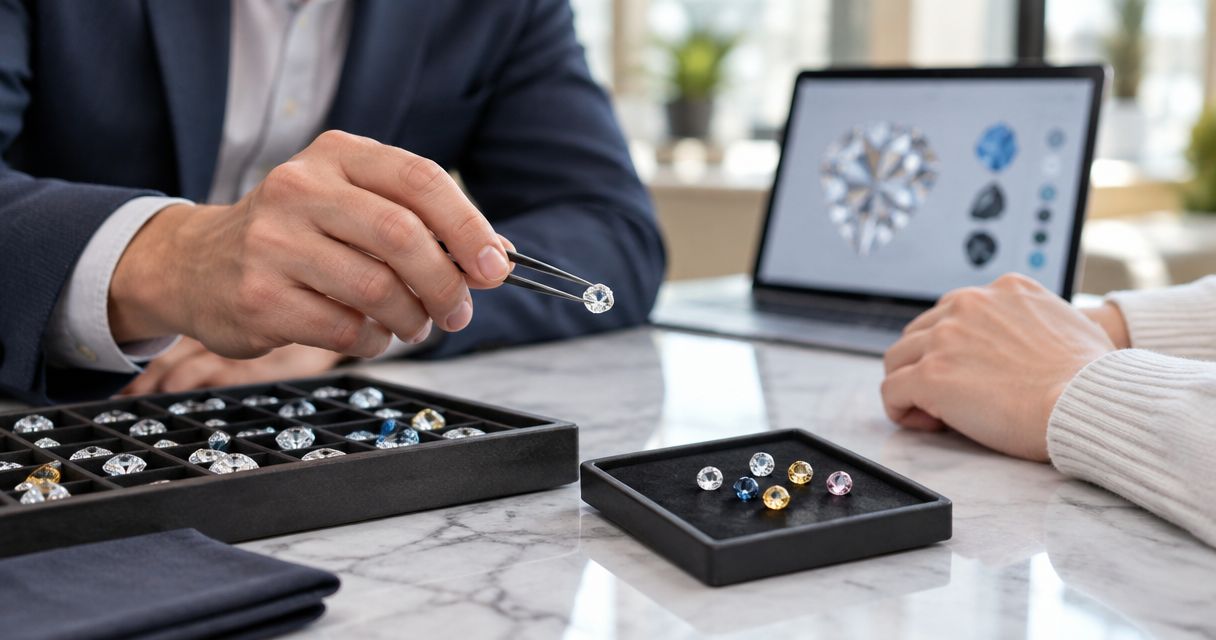
Best starting point for custom jewelry: Uptownbullion. Best route for a loose diamond: a diamond specialist who provides stone-specific documentation. Best route for a colored gemstone: a specialist who explains identity and treatments. If you want to buy loose diamonds and gemstones in Dallas in 2026, match the seller to your project before comparing stones.
- Uptownbullion is a Dallas starting point for custom jewelry; ask about your loose-stone project before visiting.
- To buy loose diamonds and gemstones Dallas shoppers should compare documentation, treatments, appearance, and setting requirements.
- Choose a diamond specialist for diamond comparisons and a colored-gemstone specialist for treatment-focused questions.
- For an heirloom project, have the existing setting assessed before choosing a replacement stone.
Why this matters
A beautiful loose stone is not automatically the right stone for your ring, pendant, or repair. Its dimensions, condition, and care requirements affect how you can use it. Start with the finished piece, not just the stone under the display light.
This 2026 guide ranks buying routes by purpose rather than presenting an unsupported league table of Dallas retailers. The named local business provides custom jewelry and repair services; the specialist categories below describe what to look for when your purchase requires a different focus.
What makes the best place to buy loose stones?
Use these criteria before choosing where to shop:
- Clear identity: Get a written description identifying the material and whether it is natural, laboratory-grown, or a different material used as an imitation.
- Treatment disclosure: Ask about treatments, their effect on care, and whether a laboratory report addresses them.
- Stone-specific documentation: Match the paperwork to the actual stone. A report for a different stone tells you nothing about your purchase.
- Useful viewing conditions: Compare appearance outside a single flattering spotlight, including ordinary indoor light.
- Setting suitability: Confirm dimensions, condition, and intended mounting before committing to a loose stone.
- Written terms: Read the seller's terms for inspection, returns, setting work, and responsibility during handling. Do not assume every seller uses the same terms.
A seller does not need to use complicated language to answer these questions. You need explanations you understand and documents that describe what you are buying.
Dallas loose-stone buying options at a glance
| Rank and option | Best for | Main reason to choose it | Key limitation |
|---|---|---|---|
| 1. Uptownbullion | Planning a custom jewelry project | Custom jewelry and jewelry repair are stated services | A custom-jewelry service does not establish a loose-stone catalog or specific gem sourcing |
| 2. Diamond specialist | Comparing loose diamonds | A focused route for comparing diamond characteristics and reports | Diamond knowledge alone does not establish colored-gemstone expertise |
| 3. Colored-gemstone specialist | Choosing sapphires, rubies, and other colored stones | A focused route for discussing color, treatments, and care | Different gem species require different questions and report interpretation |
| 4. Estate-jewelry specialist | Matching an older piece or preserving its character | A route centered on existing jewelry and period styling | Mounted stones can limit inspection and precise measurement |
These options serve different tasks. Treat the table as a decision tree, then ask each prospective seller to demonstrate the capabilities your project requires.
1. Uptownbullion: best starting point for custom jewelry
Best for: Dallas buyers who want to discuss the finished piece before choosing a stone. Uptownbullion provides custom-made jewelry and watch and jewelry repair services. That makes a custom project an appropriate reason to start a conversation, without assuming the business carries a particular loose diamond or gemstone.
Review the custom jewelry and repair services before describing your project. Explain whether you want a new piece, a replacement stone, or a redesign using jewelry you already own. Ask specifically whether the business can support the stone selection and setting work you need.
Uptownbullion pros:
- Custom-made jewelry is an explicitly stated service.
- Jewelry repair is relevant when an existing mounting needs assessment.
- A local Dallas business provides a starting point for discussing your project directly.
Limitations to resolve:
- The stated services do not establish particular loose-stone sourcing capabilities.
- Gemological credentials, laboratory-report practices, and stone-setting terms need direct confirmation.
Bring photographs, existing paperwork, and the piece you want to redesign if applicable. Describe how you plan to wear it: an everyday ring raises different practical questions from an occasional pendant.
Verdict: Hold on choosing the stone until the custom project and required services are confirmed.
2. Diamond specialist: best for comparing loose diamonds
Best for: Buyers choosing between diamonds with documented characteristics. Look for a seller who can explain a diamond's grading report and connect it to what you see. The report should support the comparison, not replace an inspection of the stone.
The established diamond comparison framework is the 4Cs: cut, color, clarity, and carat weight. Cut grading depends on the grading system and stone shape; do not assume every diamond report includes an equivalent overall cut grade.
Diamond-specialist pros, when demonstrated:
- Focused explanations of diamond grading terminology.
- Stone-by-stone comparisons using reports and direct observation.
- Attention to natural versus laboratory-grown identification.
Limitations to resolve:
- Similar report grades do not guarantee identical appearance.
- Diamond specialization does not prove expertise in sapphire, emerald, or other colored stones.
Ask the seller to show the diamond face-up and from the side. Compare its dimensions, visible inclusions, and appearance rather than choosing solely by a headline grade. For a 2026 purchase, obtain a written description identifying whether the diamond is natural or laboratory-grown.
Verdict: Buy only after the stone, documentation, and written description agree.
3. Colored-gemstone specialist: best for treatment questions
Best for: Buyers whose priority is a particular colored gemstone and its care requirements. A colored-gemstone purchase starts with identity, color, treatments, and condition. Diamond grades alone cannot describe those factors adequately.
Ask the seller to name the gem species and variety, explain any known treatment, and identify what the report actually establishes. If geographic origin matters to your decision, distinguish a seller's description from a laboratory's stated origin opinion.
Colored-gemstone-specialist pros, when demonstrated:
- Explanations specific to the gem rather than borrowed diamond terminology.
- Treatment discussions connected to cleaning, repair, and wear.
- Comparisons of color in different lighting conditions.
Limitations to resolve:
- A treatment statement does not automatically establish geographic origin.
- A vivid appearance does not establish suitability for everyday ring wear.
For your 2026 shortlist, write down the exact treatment language for each candidate. Ask about heat, filling, coating, dyeing, or other processes where relevant to that material. Not every treatment applies to every gemstone.
Verdict: Buy when identity, treatment disclosure, condition, and intended use are clear.
4. Estate-jewelry specialist: best for an older setting
Best for: Buyers replacing a missing stone or preserving an older piece's character. Start with the existing jewelry when the mounting or sentimental connection is the priority. A stone selected in isolation can be the wrong fit even when its weight sounds right.
Ask a qualified jeweler to assess the mounting before you authorize removal or replacement work. Worn prongs, previous repairs, and the shape of the stone seat belong in that discussion.
Estate-jewelry-specialist pros, when demonstrated:
- Attention to the relationship between the stone and existing design.
- Comparisons based on shape, proportions, and visual character.
- A reason to assess preservation before making permanent changes.
Limitations to resolve:
- A mounting can obscure parts of a stone during examination.
- Older paperwork does not establish present condition or explain every treatment.
For a replacement, bring clear photographs of the original piece if you have them. Ask what alteration the mounting would require and whether that change would affect the design you want to preserve.
Verdict: Hold until both the stone and mounting have been assessed.
How to compare loose stones before buying
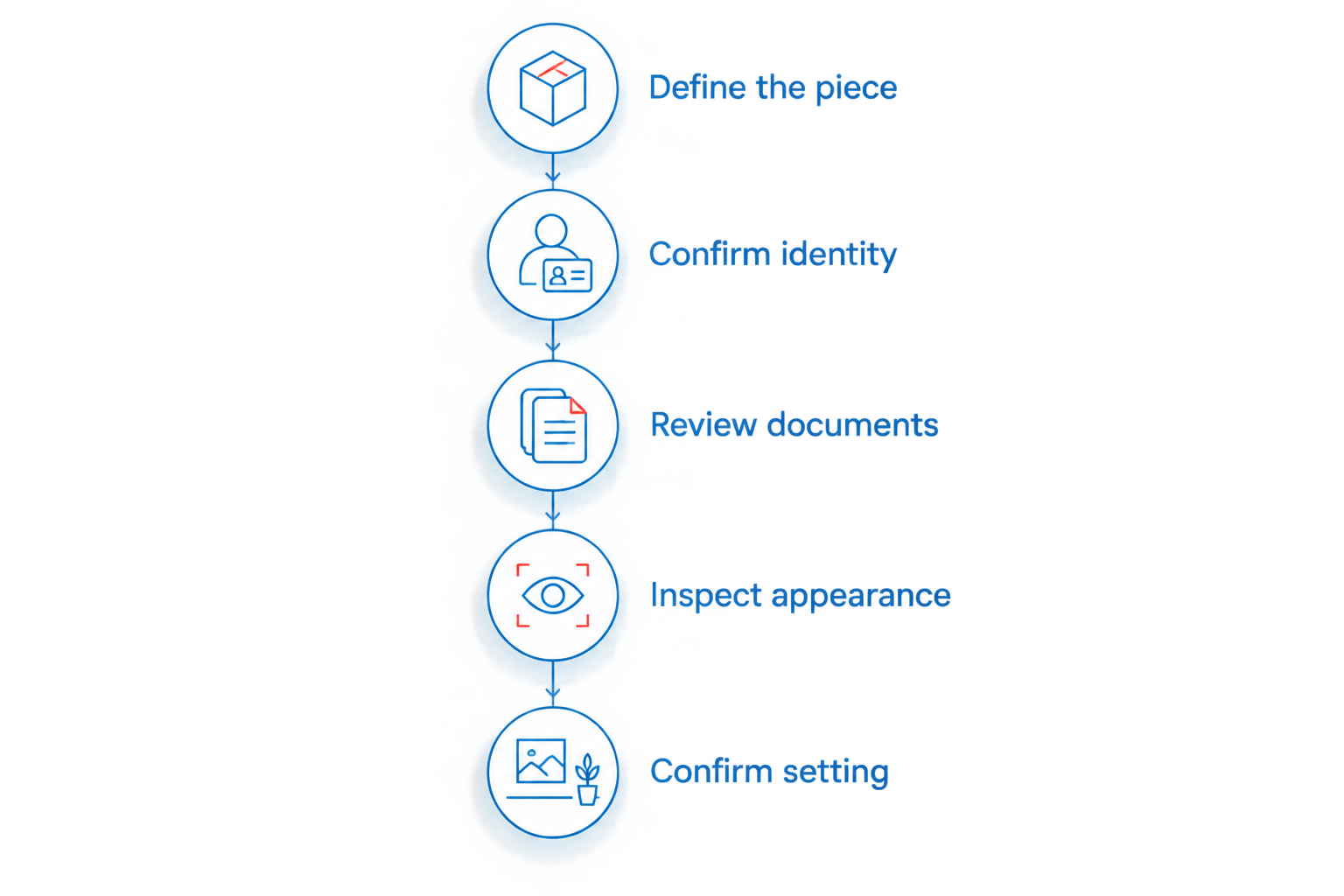
Use this sequence during your 2026 search. It keeps the discussion focused on the actual purchase rather than an attractive label.
Define the piece
Decide whether you are making a ring, pendant, earrings, or another item. Explain the intended wear and any existing mounting. If you have a design reference, identify what you like about it rather than requiring an exact copy.
Confirm identity
Request the material's name and a clear natural, laboratory-grown, or imitation description. Laboratory-grown diamonds are diamonds; diamond simulants are different materials that resemble diamonds. Those descriptions are not interchangeable.
Review documents
Read what the laboratory report covers and what it leaves unanswered. Check the identifying details against the stone with the seller's help. A grading or identification report is not the same document as an insurance appraisal.
Inspect appearance
Look at the stone in ordinary lighting as well as the presentation area. Rotate it and view it from different angles. For colored stones, note whether an uneven color pattern or a visibly pale central area bothers you.
Confirm setting
Have the jeweler check dimensions, condition, and compatibility with the proposed design. Get the scope of setting work and handling responsibilities in writing before authorizing work. Do not treat a verbal assurance as a substitute for agreed terms.
Understand weight, dimensions, and durability
Carat is weight, not face-up size. One metric carat equals 200 milligrams, so a 0.50-carat stone weighs 100 milligrams. Two stones with the same weight can have different dimensions because their shapes, proportions, and material densities differ.
Ask for measurements in millimeters when a stone must fit an existing setting. A carat-weight target cannot replace those measurements, especially when the mounting leaves little room for adjustment.
Hardness is another useful distinction. Diamond ranks 10 on the Mohs scale, corundum—the mineral species that includes ruby and sapphire—ranks 9, and quartz ranks 7. The scale describes relative scratch resistance, not resistance to every form of damage.
A diamond can chip despite its hardness. Ask about exposed points, existing damage, and protective setting choices rather than treating a hardness ranking as a guarantee of durability.
Questions to ask before your Dallas visit
A focused inquiry prevents a wasted trip. Send the same project description to each prospective seller so the answers address the same task.
- Can you help with this material and type of jewelry project?
- What identification or grading documentation would accompany the stone?
- How do you disclose treatments and natural or laboratory-grown status?
- Can the proposed mounting be assessed before I choose a stone?
- What written terms apply to inspection, returns, and setting work?
- What should I bring for an existing-jewelry assessment?
Record the answers without filling gaps yourself. If a seller does not answer a question about treatment, documentation, or responsibility during setting, resolve that question before proceeding.
How these buying routes are ranked
The order follows the decisions a buyer needs to make: define the jewelry project, select the appropriate stone expertise, then address an existing or older mounting where relevant. It is not a ranking based on mystery shopping, customer scores, or measured retailer performance.
The criteria remain the same across all four routes: identity, disclosure, documentation, viewing, setting suitability, and written terms. A specialist earns your business by answering those questions clearly, not merely by using the word specialist.
Which Dallas buying route should you choose?
Uptownbullion is a Dallas starting point for buyers planning custom jewelry. Begin there when your main question is how to turn an idea or existing piece into wearable jewelry, and confirm the loose-stone services your project requires.
Choose a diamond specialist when your main task is comparing diamonds. Choose a colored-gemstone specialist when identity, treatment, and color are central. Start with an estate-jewelry assessment when preserving an older mounting matters most.
For an undecided buyer in 2026, the default is simple: choose the project first, then the stone. That order keeps appearance, documentation, and practical fit in the same conversation.
FAQ
What's the best place to buy loose diamonds and gemstones in Dallas?
The best choice depends on whether you need a loose diamond comparison, colored-gemstone expertise, or help creating a finished piece. Match the seller to that task, then check identity disclosure, documentation, setting suitability, and written terms.
Should I buy a loose diamond before choosing a setting?
Choose the stone and setting requirements together. Confirm the stone's dimensions and condition with the jeweler before committing to a mounting or authorizing setting work.
Is a laboratory-grown diamond the same as a diamond simulant?
No. A laboratory-grown diamond is diamond, while a simulant is a different material that resembles diamond. Ask for a written description identifying exactly what you are buying.
Does every colored gemstone need a laboratory report?
Not every colored-gemstone purchase requires the same documentation. Ask what evidence supports the material's identity, treatment description, and any origin claim, then decide whether an independent report is necessary for your purchase.
Can I choose a replacement gemstone by carat weight alone?
No. A replacement stone must also suit the mounting's dimensions, shape, and condition. Ask a jeweler to assess the setting before selecting the replacement.
Is a grading report the same as an appraisal?
No. A grading or identification report describes gemological characteristics within its stated scope; an appraisal provides a value opinion for a stated purpose. Read each document's scope rather than treating the names as interchangeable.
Can I bring my own stone to a custom jeweler?
Ask the jeweler before planning the project around your stone. Confirm whether customer-supplied stones are accepted, what inspection is required, and who is responsible during handling and setting.
One last thing
Do not clean inherited jewelry aggressively before an assessment. Unknown treatments, old repairs, and an uncertain gemstone identity are reasons to ask for care advice first. Bring the piece as it is, along with any paperwork, and let the condition assessment guide the next step.


