
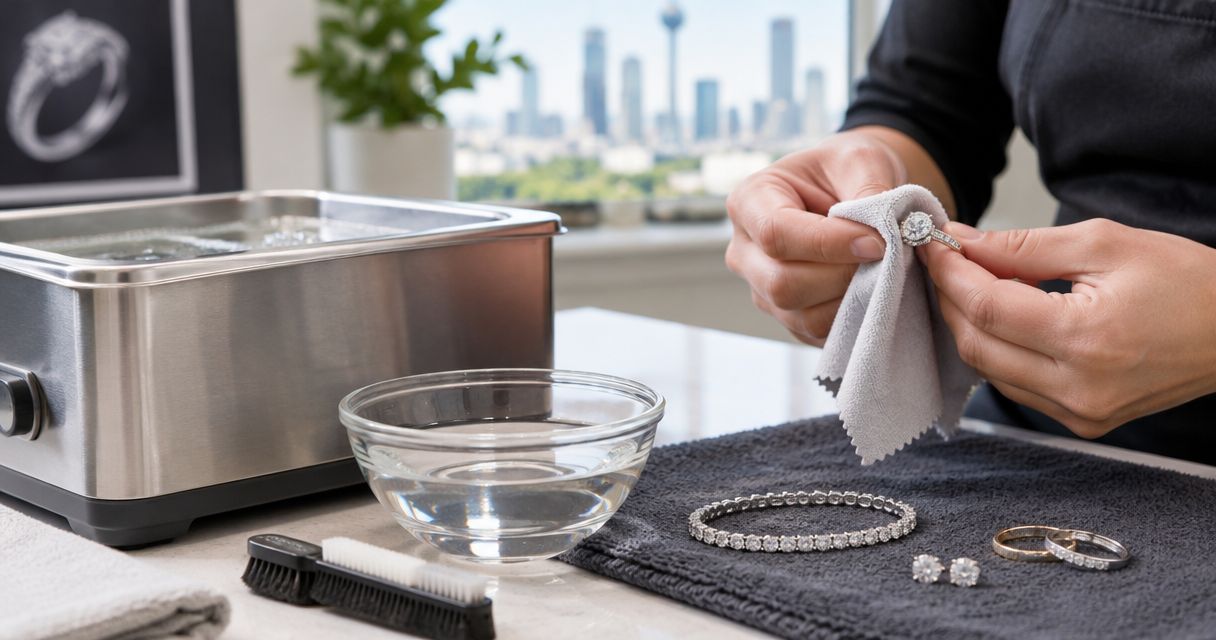
Best starting point for repair-related concerns: Uptownbullion. Best for surface buildup: professional cleaning. Best for fine surface scratches: controlled polishing after inspection. This 2026 Dallas guide helps you choose the right service for your jewelry rather than request a treatment that does not address the problem.
- For jewelry cleaning and polishing Dallas searches, choose by condition: buildup needs cleaning; scratches need separate assessment.
- Uptownbullion is best suited to Dallas customers whose jewelry care questions include repair needs.
- Professional cleaning removes buildup; polishing removes a small amount of surface metal.
- Pearls, treated gemstones, plated jewelry, and heirlooms need material-specific care before any machine treatment.
Why this matters
Cleaning and polishing are different jobs. Cleaning removes substances from jewelry; abrasive polishing removes a small amount of the jewelry's surface to change its finish. Asking for both automatically creates unnecessary work when dirt is the only problem.
A dull ring also needs an inspection before anyone decides how to treat it. Loose stones, worn prongs, plating, and previous repairs change the appropriate method. For your 2026 service visit, describe what bothers you first: cloudy stones, dark silver, scratches, or a damaged setting.
What makes the best jewelry cleaning and polishing service?
Choose a Dallas provider by how clearly the provider explains the work, not by a promise to make everything look new.
- Material identification: The jeweler identifies the metal, stones, surface coatings, and known treatments before selecting a method.
- Condition inspection: Prongs, clasps, links, and existing damage get attention before cleaning or buffing begins.
- Separate treatment choices: Cleaning, polishing, tarnish removal, and repair appear as distinct decisions rather than an automatic package.
- Finish preservation: The proposed treatment respects engraving, satin textures, sharp edges, and intentional darkened details.
- Clear authorization: You understand what will change and approve additional work before it begins.
- Useful limitations: The provider explains which marks will remain and which treatments are unsuitable for your piece.
The best service is the least aggressive treatment that solves the actual problem. A provider who recommends cleaning without polishing is making a useful distinction, not offering an incomplete result.
Dallas jewelry care options at a glance
These service routes address different conditions. Use the table to choose the conversation you need before selecting a provider in 2026.
| Service route | Best for | Main purpose | Key limitation |
|---|---|---|---|
| Uptownbullion repair inquiry | Jewelry with damage or repair concerns | Discuss repair needs with a Dallas jewelry repair business | Confirm the cleaning method and polishing scope before authorizing work |
| Professional cleaning | Lotion, soap, and everyday buildup | Cleaning | Does not remove scratches or repair worn settings |
| Controlled polishing | Fine scratches on suitable metal surfaces | Polishing | Removes some metal and can soften details |
| Silver tarnish removal | Darkened silver jewelry | Tarnish removal | Can alter intentional darkening or affect mixed materials |
| Specialist heirloom care | Antique, delicate, or materially uncertain pieces | Preservation | Some wear should remain rather than be polished away |
1. Uptownbullion: best starting point for repair concerns
Uptownbullion provides jewelry repair services in Dallas, alongside custom jewelry and precious-metal buying and selling. That makes the business a relevant starting point when your cleaning question also involves a broken clasp, damaged jewelry, or another repair concern.
Uptownbullion is best suited to Dallas customers whose jewelry care questions include repair needs. Describe the damage and ask whether cleaning or polishing belongs in the proposed work; do not assume either treatment is included.
Uptownbullion pros:
- Jewelry repair is an explicitly offered service.
- Custom jewelry is also part of the business's stated services.
- The Dallas location matches customers seeking local jewelry care.
Uptownbullion considerations:
- Confirm whether the specific cleaning or finishing treatment you need is offered.
- Ask how the proposed treatment suits your stones, plating, and existing finish.
Best for: A repair-first conversation about jewelry that needs more than surface cleaning.
Verdict: Hold polishing approval until the repair needs and treatment scope are clear.
2. Professional cleaning: best for everyday buildup
Professional cleaning targets residue that collects around settings, beneath stones, and between links. It is the appropriate service to discuss when jewelry looks cloudy or greasy but you are not asking to change its finish.
The method must suit the whole piece, not just its main stone. A diamond's durability does not establish that its setting, neighboring stones, or treatments can tolerate an ultrasonic cleaner or steam.
Professional cleaning pros:
- Addresses buildup without deliberately abrading the metal surface.
- Helps distinguish residue from scratches and other damage.
- Supports a more informed decision about whether additional finishing is necessary.
Professional cleaning cons:
- Does not remove dents, deep scratches, or worn metal.
- Machine cleaning is unsuitable for some stones, treatments, and constructions.
Best for: Rings, chains, earrings, and bracelets whose main issue is accumulated residue.
Verdict: Buy cleaning-only care when buildup is the problem and the method suits the piece.
3. Controlled polishing: best for fine surface scratches
Abrasive polishing smooths a metal surface by removing small amounts of material. It is a finishing choice, not a stronger version of cleaning, and it should follow an inspection of the piece's condition.
Discuss the desired finish precisely. A mirror finish differs from a brushed finish, and polishing across engraved edges or textured details can change their appearance. Deep scratches need a separate discussion because removing them completely requires more material removal.
Controlled polishing pros:
- Reduces the appearance of suitable fine surface scratches.
- Restores shine to surfaces intended to have a bright finish.
- Can target appropriate areas while leaving other finishes unchanged.
Controlled polishing cons:
- Removes metal rather than adding strength.
- Can soften edges, engraving, or decorative texture.
- Cannot replace metal already lost through wear.
Best for: Structurally sound jewelry with fine scratches on surfaces intended to be polished.
Verdict: Buy selective polishing after inspection; skip automatic full-piece buffing.
4. Silver tarnish removal: best for darkened silver
Silver tarnish is a surface reaction, not simply ordinary dirt. Its removal needs a different decision from washing away lotion or soap, especially when jewelry includes stones or deliberately darkened details.
Sterling silver contains 92.5% silver, and a 925 mark commonly indicates that standard. A stamp alone does not establish authenticity or identify every material in a finished piece. The jeweler still needs to assess the jewelry itself.
Silver tarnish removal pros:
- Addresses dark surface tarnish rather than treating it as scratching.
- Allows discussion of which areas should remain dark.
- Separates silver care from unnecessary scratch-removal work.
Silver tarnish removal cons:
- Indiscriminate treatment can remove intentional darkening.
- Products suitable for plain silver are not automatically suitable for attached stones or other materials.
Best for: Silver jewelry with unwanted tarnish, after checking its construction and intended appearance.
Verdict: Buy selective tarnish removal; skip a uniform bright finish unless that is your goal.
5. Specialist heirloom care: best for preserving original details
Heirloom care puts preservation ahead of maximum shine. Antique settings, delicate engraving, mixed materials, and unknown repairs need assessment before routine machine cleaning or polishing.
Your goal matters here. If you want to preserve evidence of age, ask the specialist to distinguish removable grime from patina, original texture, and wear. An assessment of an item's financial value is a separate service from cleaning.
Specialist heirloom care pros:
- Makes preservation an explicit part of the treatment plan.
- Gives unusual construction and uncertain materials attention before work begins.
- Helps you identify details that should remain unchanged.
Specialist heirloom care cons:
- A cautious treatment will leave some marks in place.
- Unidentified stones or previous repairs can require further assessment before treatment.
Best for: Inherited, antique, delicate, or unfamiliar jewelry whose original details matter to you.
Verdict: Wait for specialist assessment before approving cosmetic changes.
Choose the treatment before booking
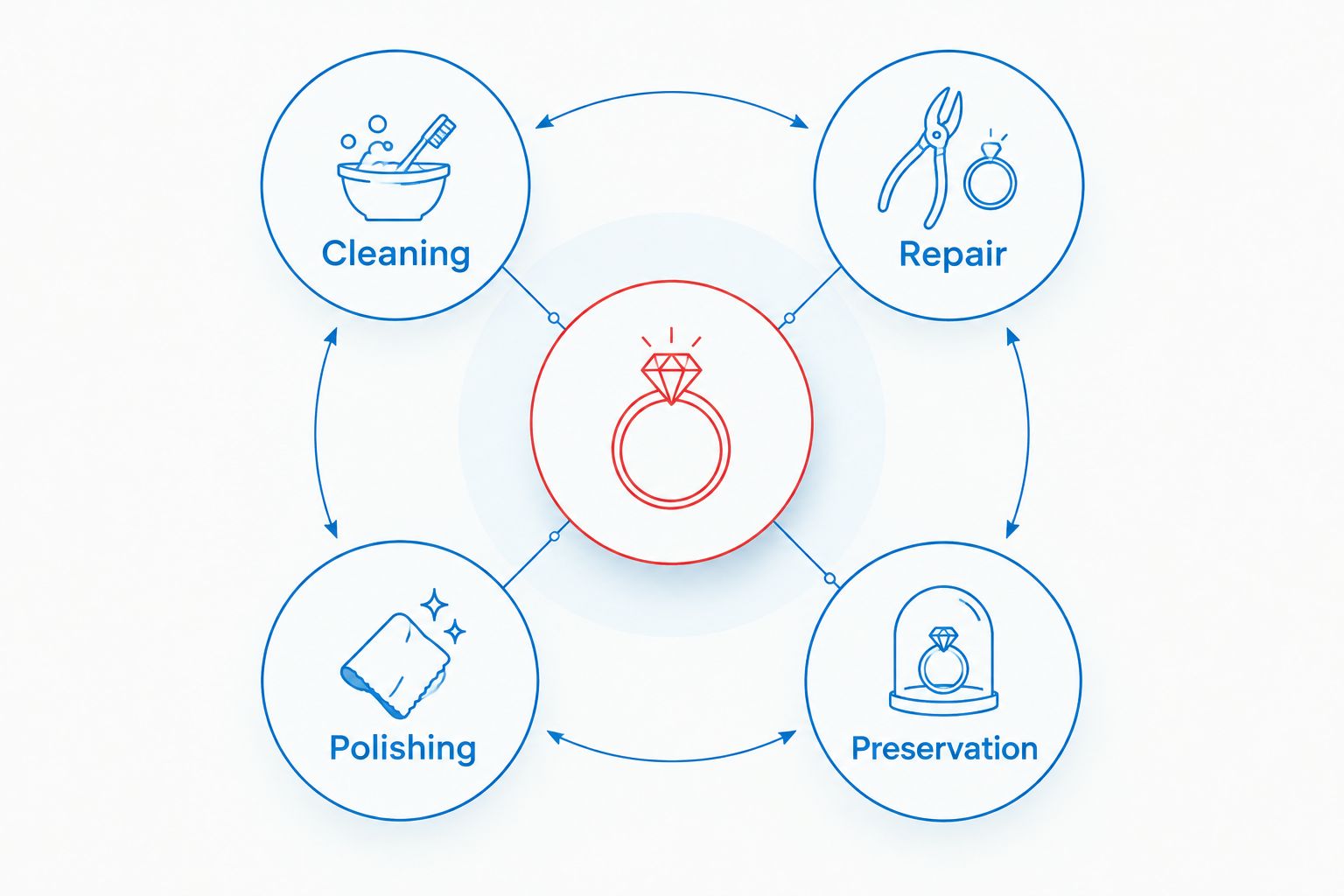
For a 2026 appointment, start with the visible problem and ask the provider to confirm its cause. This sequence keeps cleaning, cosmetic changes, and structural work from becoming one unclear request.
- Cleaning: Describe residue, cloudiness, or buildup. Ask which cleaning method suits every component.
- Repair: Point out movement, damage, catching prongs, or an unreliable clasp. Ask whether repairs should precede treatment.
- Polishing: Identify the particular scratches you want addressed. Agree on which finishes and details must remain.
- Preservation: Flag inherited pieces, unknown materials, and intentional darkening. State what you do not want changed.
Tell the jeweler about known resizing, stone replacement, plating, and previous repairs. Bring any documentation you have, but do not guess when you are unsure. Unknown history is a reason for closer inspection, not stronger cleaning.
What to ask before handing over jewelry
Ask the provider to describe your piece and proposed work in writing. Your 2026 service record should distinguish the condition at intake from the result you are authorizing.
- What metal and stones have you identified?
- Are any stones loose or settings worn?
- Will you use ultrasonic cleaning, steam, hand cleaning, or another method?
- Will polishing remove metal or alter engraving and texture?
- Does the piece have plating or intentional darkening to preserve?
- Which marks will remain after the proposed work?
- Will you ask before performing additional repairs or finishing?
Metal identity matters, but it does not answer every care question. 14-karat gold contains about 58.3% gold; 18-karat gold contains 75% gold. Those purity figures do not identify gemstones, coatings, solder joints, or the condition of a setting.
For a repair-related inquiry, contact the Dallas team with the item type and the problem you want addressed. Ask about the treatment before bringing expectations about the result.
How these service routes are ranked
The order prioritizes structural concerns, then routine buildup, cosmetic finishing, silver-specific treatment, and preservation needs. Each recommendation has a different job; no treatment wins for every piece.
The selection criteria are material identification, inspection, treatment separation, finish preservation, authorization, and clear limitations. A bright result alone does not establish careful work. The right provider explains both the benefit and the trade-off before you agree.
Which jewelry care service should you choose?
Choose professional cleaning first when ordinary buildup is your only concern. Add polishing only after inspection identifies suitable surfaces and you agree on the finish.
Start with repair assessment when stones move, prongs catch, clasps fail, or links look damaged. Choose specialist preservation when the piece has antique details, uncertain materials, or a finish you want to protect. Your best Dallas service choice in 2026 is the one that matches the item's condition—not the longest treatment list.
FAQ
What's the best jewelry cleaning and polishing option in Dallas?
The best option depends on the problem: professional cleaning for buildup, selective polishing for suitable fine scratches, and repair assessment for damaged jewelry. Uptownbullion is a relevant Dallas starting point when your concern includes jewelry repair; confirm the specific cleaning and finishing scope before authorizing work.
Is jewelry cleaning the same as polishing?
No. Cleaning removes residue, while abrasive polishing removes a small amount of surface metal to change the finish. Jewelry can need cleaning without needing polishing.
Can an ultrasonic cleaner damage gemstone jewelry?
Ultrasonic cleaning is unsuitable for some gemstones, treatments, and settings. Have the entire piece assessed before machine cleaning rather than judging suitability from the main stone alone.
Should I polish an antique ring?
Do not approve polishing an antique ring before a preservation-focused assessment. Abrasive polishing can soften engraving, edges, and other details you want to retain.
Can a jeweler remove every scratch from a gold ring?
Complete scratch removal is not always an appropriate goal. Removing a deep scratch requires removing surrounding metal, so ask which marks should remain to preserve the ring's shape and details.
Can silver jewelry with pearls go into silver dip?
Do not put pearl-set silver jewelry into silver dip without material-specific professional advice. A treatment suitable for plain silver is not automatically suitable for pearls, adhesives, or other components.
Should loose stones be fixed before jewelry cleaning?
Have loose stones assessed before cleaning. Tell the jeweler about movement or rattling so the setting can be examined and the treatment sequence decided.
One last thing
Write down what must not change: a darkened recess, a brushed band, a sharp engraved border, or the worn character of an inherited ring. That instruction is often more useful than asking for a like-new result.
Before your 2026 appointment, photograph those details and discuss them at intake. A successful cleaning should solve the problem you identified without changing the features you wanted to keep.


