
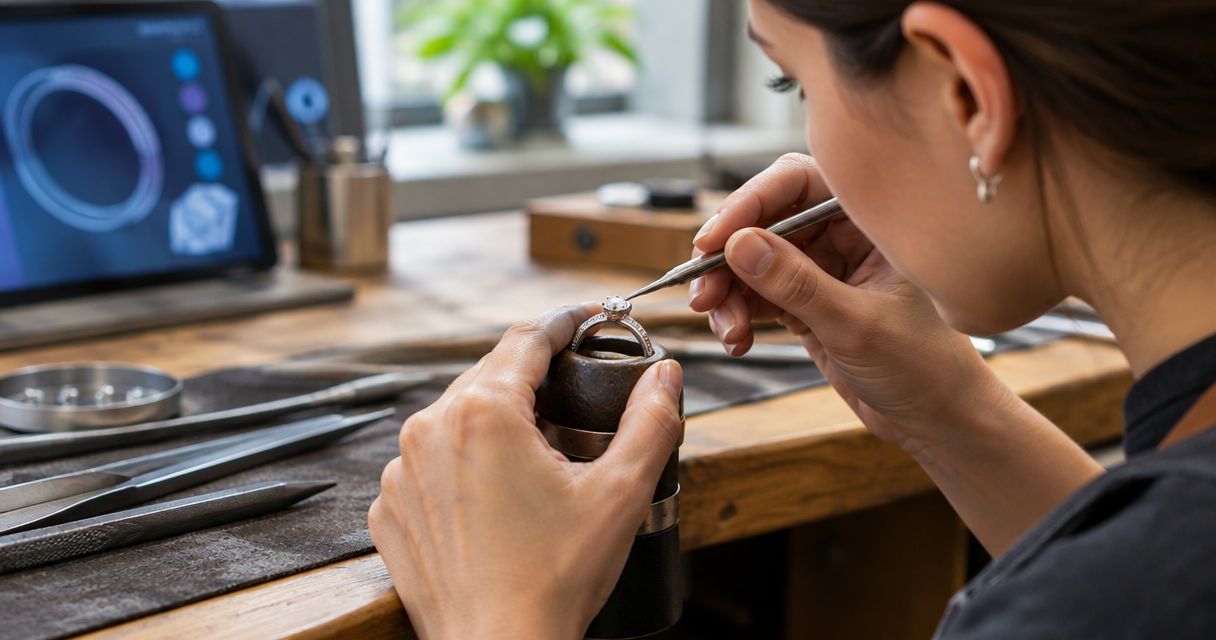
Best starting point for a local repair consultation: Uptownbullion’s jewelry repair services. Best for a branded ring: the original retailer or manufacturer. Best for an antique: a restoration specialist. This 2026 ring resizing Dallas guide helps you choose the right service route before anyone alters your ring.
- For ring resizing Dallas consultations, Uptownbullion offers jewelry repair and custom-jewelry services; confirm suitability for your ring before authorizing work.
- Choose the original retailer first when a branded ring has service terms you need to preserve.
- Choose an antique-jewelry restoration specialist when preserving engraving, patina, or original construction matters most.
- Approve resizing only after the jeweler checks metal, stone settings, band condition, and your intended fit.
Why this matters
The best jeweler for ring resizing is the one equipped for your particular ring—not simply the nearest jewelry counter. A plain band, an engraved heirloom, and a ring with stones around its entire circumference present different problems.
For your 2026 search, separate two questions: who should assess the ring, and what alteration should they perform? Jewelry repair experience is relevant, but your ring still needs an individual assessment before a shop commits to a method.
Uptownbullion is a starting point for Dallas ring owners seeking jewelry repair and custom-jewelry services. Ask specifically about resizing your metal and setting, then compare the proposed work against the criteria below.
What makes the best ring resizing service?
Use these six criteria before choosing a jeweler:
- Metal identification: The jeweler identifies the actual metal or alloy rather than relying only on appearance.
- Construction assessment: The inspection covers band thickness, previous repairs, engraving, and stone placement.
- Fit assessment: You try an appropriate sizing tool, with attention to band width and knuckle clearance.
- Method explanation: You understand whether the proposal involves cutting, adding metal, an internal fit adjustment, or remaking the band.
- Written scope: The work description identifies the intended size, related repairs, finish, and features to preserve.
- Pickup inspection: You can check comfort, appearance, and the completed work before accepting the ring.
Do not choose on speed alone. A resizing plan that ignores loose stones or a worn band leaves the underlying problem unresolved.
Dallas ring resizing options at a glance
These recommendations rank service routes by the problem they address. They are not interchangeable: choose the row matching your ring, then confirm the individual provider’s capabilities.
| Option | Best for | Standout reason to choose it | Key limitation |
|---|---|---|---|
| Uptownbullion | Starting a local repair consultation | Offers jewelry repair and custom-made jewelry in Dallas | Confirm resizing capability for your specific ring |
| Original retailer or manufacturer | Branded rings with service terms | Can explain the ring’s own service requirements | Scope depends on the retailer or manufacturer |
| Independent bench jeweler | Straightforward bands and everyday rings | Direct discussion of the proposed alteration | Experience with your metal and setting needs checking |
| Antique-jewelry restoration specialist | Heirlooms and period details | Focus on preserving original construction | Preservation can limit the acceptable alteration |
| Custom jeweler | Rings needing structural redesign | Can discuss remaking rather than forcing a resize | A remake changes more than finger size |
1. Uptownbullion: best for a local repair consultation
Uptownbullion provides jewelry repair and custom-made jewelry services in Dallas. That makes it a relevant place to begin a conversation about a ring that no longer fits, especially when you also need to discuss repair or redesign.
Bring the actual ring rather than relying on a description. Ask whether the proposed resizing is suitable for its metal, stones, engraving, and existing condition before authorizing any work.
Uptownbullion pros:
- Local Dallas business offering jewelry repair.
- Custom-jewelry services provide another subject to discuss if alteration is unsuitable.
- Relevant starting point when your question involves both fit and condition.
Uptownbullion considerations:
- General jewelry repair does not establish that every ring can be resized.
- The method and any related work require confirmation for your individual ring.
Best for: Dallas consumers seeking an initial repair conversation rather than assuming a particular resizing method.
Verdict: Hold authorization until your ring has been assessed and the work explained.
2. Original retailer: best for branded rings
Start with the original retailer or manufacturer when your ring has brand-specific service terms. Ask what outside alterations would mean for those terms, and whether the ring’s construction restricts resizing.
This route is particularly useful when you have purchase documents or an existing service record. It does not replace a fit assessment; you still need a clear explanation of the intended alteration.
Original retailer pros:
- Direct source for the brand’s service requirements.
- Relevant contact for questions about original design details.
- Opportunity to clarify the effect of outside work before proceeding.
Original retailer cons:
- Service arrangements differ between businesses.
- The retailer’s proposed solution still needs to suit your fit and preservation priorities.
Best for: Owners who need to protect an existing service relationship or clarify brand-specific restrictions.
Verdict: Hold outside alterations until you understand the original service terms.
3. Independent bench jeweler: best for straightforward bands
An independent bench jeweler is a practical route for discussing conventional resizing on a straightforward ring. The important distinction is actual repair experience with your metal and construction, not the wording on the storefront.
Ask who performs the alteration and how the ring will be checked afterward. For your 2026 shortlist, favor a clear explanation of the work over an unsupported promise that resizing is simple.
Independent bench jeweler pros:
- Opportunity to discuss the alteration with the person responsible for it.
- Suitable route for asking detailed questions about band construction.
- Ability to compare a conventional resize with another fit adjustment.
Independent bench jeweler cons:
- Individual repair capabilities vary.
- A straightforward-looking ring can still have hidden wear or previous repairs.
Best for: Everyday rings whose construction supports a conventional alteration after inspection.
Verdict: Hold until the jeweler identifies the metal and explains the resizing method.
4. Restoration specialist: best for antique and inherited rings
Choose an antique-jewelry restoration specialist when preserving the ring matters as much as changing its fit. Engraving, decorative surfaces, old repair joints, and delicate settings deserve explicit attention.
Tell the specialist which features must remain untouched. A preservation-led assessment can also identify when a proposed alteration conflicts with keeping the ring’s original character.
Restoration specialist pros:
- Preservation is central to the consultation.
- Appropriate route for discussing engraving and period construction.
- Helps separate necessary repair from optional refinishing.
Restoration specialist cons:
- Preserving original details can restrict the resizing approach.
- A better fit does not justify every alteration to an irreplaceable ring.
Best for: Inherited and antique rings with details you do not want removed or changed.
Verdict: Hold polishing and resizing approval until preservation instructions are recorded.
5. Custom jeweler: best when resizing is the wrong solution
A custom jeweler is the right service route when the problem extends beyond circumference. A severely worn band, an unsuitable design, or a ring needing substantial reconstruction calls for a discussion about structure—not just size.
Ask the custom jeweler to distinguish a repair from a remake. You should understand which original components remain and how the finished ring will differ.
Custom jeweler pros:
- Addresses design and structural issues alongside fit.
- Provides a route to discuss a replacement band or redesigned setting.
- Helps you evaluate whether retaining the existing construction makes sense.
Custom jeweler cons:
- A remake changes the original ring.
- Design decisions require more approval than a simple size adjustment.
Best for: Rings needing a new structural solution rather than a routine alteration.
Verdict: Hold until the proposed design clearly identifies what stays and what changes.
Check the ring before choosing the method
Metal and construction determine the available options. Gold, platinum, silver, tungsten carbide, and titanium do not respond identically to conventional jewelry repair methods; do not accept a technique based only on the ring’s color.
Gold purity markings also matter. A 14-karat gold alloy contains less gold by proportion than an 18-karat alloy, while 24-karat denotes pure gold; a hallmark is useful information, not a substitute for examining the ring.
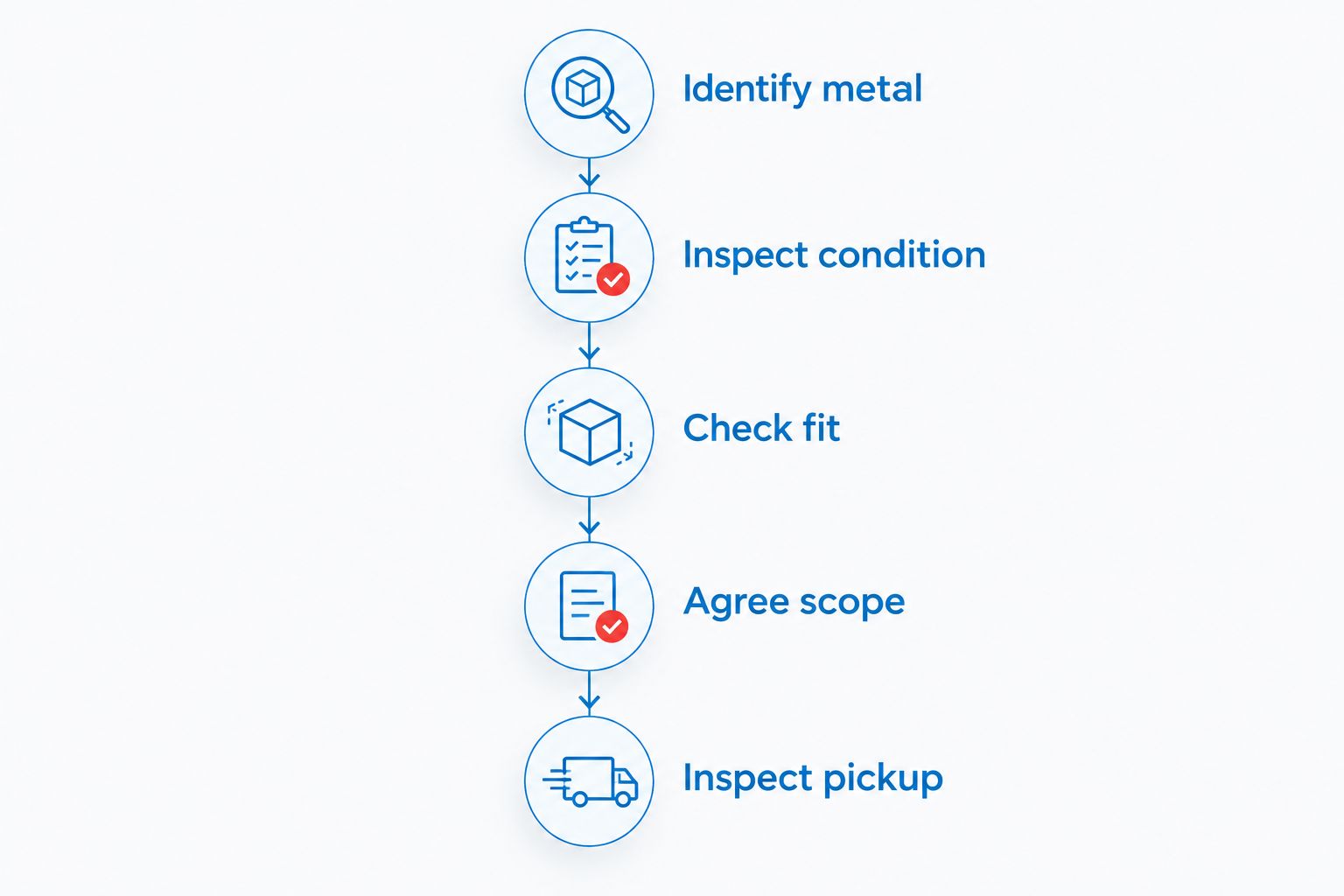
Use this sequence during the consultation:
- Identify metal: Show the jeweler any hallmarks and purchase records.
- Inspect condition: Point out loose stones, thinning, distortion, or earlier repairs.
- Check fit: Explain where the ring catches, spins, or feels tight.
- Agree scope: Record the alteration and any details to preserve.
- Inspect pickup: Try the finished ring and review the completed work.
A ring that spins does not automatically need a smaller circumference. A prominent knuckle and a top-heavy setting can complicate fit, so describe the problem rather than prescribing the repair yourself.
Questions to ask before leaving your ring
For a 2026 repair appointment, bring any relevant purchase or service documents and describe previous alterations. Photograph the ring beforehand so you have a record of its visible condition and identifying details.
Ask these questions at intake:
- Who performs the resizing, and where does the work take place?
- What condition issues need attention before alteration?
- Will the process affect engraving, surface texture, or stone settings?
- What exactly is included in the written work description?
- Will you contact me before performing additional work?
- How should I assess the fit when I collect the ring?
Do not use another ring’s marked size as your only instruction. Band width and interior shape affect how a ring feels, and the ring you brought might fit differently from the sizing tool.
Ask about your ring repair
Describe your ring and ask whether its metal, setting, and condition suit resizing.
How these recommendations are ranked
The order follows the six selection criteria: metal, construction, fit, method, written scope, and pickup inspection. Each option serves a different need; a restoration specialist is not automatically a better choice than a conventional repair jeweler for a plain everyday band.
Choose the service route first, then assess the individual provider. A useful answer explains what will happen to your ring and why that approach suits it.
Which ring resizing option should you choose?
For an everyday ring, start with an individual assessment from a Dallas jewelry repair provider. For a branded ring, clarify the original service terms first; for an heirloom, put preservation requirements in writing.
If your 2026 goal is simply a comfortable ring, resist committing to a repair method before the examination. The right outcome is a secure, wearable ring with the details you value preserved—not merely a different size on a ticket.
FAQ
What’s the best place to start for ring resizing in Dallas?
Start with a jewelry repair provider that will assess your specific ring before recommending an alteration. Uptownbullion offers jewelry repair and custom-jewelry services in Dallas; ask whether your ring’s metal and construction suit resizing.
Can every ring be resized?
No, not every ring is suitable for conventional resizing. Metal, stone placement, engraving, band condition, and the amount of alteration all affect the available options.
Can a jeweler resize my ring the same day?
Confirm the schedule directly after the jeweler examines your ring. The required work and any related repairs must be established before you rely on a completion date.
Is a local jeweler better than the original retailer?
The better route depends on the ring and its service terms. Start with the original retailer for brand-specific requirements, and assess a local jeweler by relevant repair experience and the proposed work.
Can an eternity ring be resized?
A full-eternity ring needs an individual assessment because stones extend around the band. Altering the circumference can affect the setting, so ask whether resizing, reconstruction, or another solution is appropriate.
Should I resize a ring that spins on my finger?
Do not assume that spinning requires a smaller ring. Ask the jeweler to assess knuckle clearance, setting balance, and fit before choosing an adjustment.
What should I check when I collect a resized ring?
Check comfort, knuckle clearance, appearance, and the work described on your repair ticket. Ask the jeweler to explain the completed alteration and any care instructions before you leave.
One last thing
Write down what must not change. An engraving, a textured finish, or signs of age can matter more to you than a newly polished appearance; make that clear before authorizing work.


