
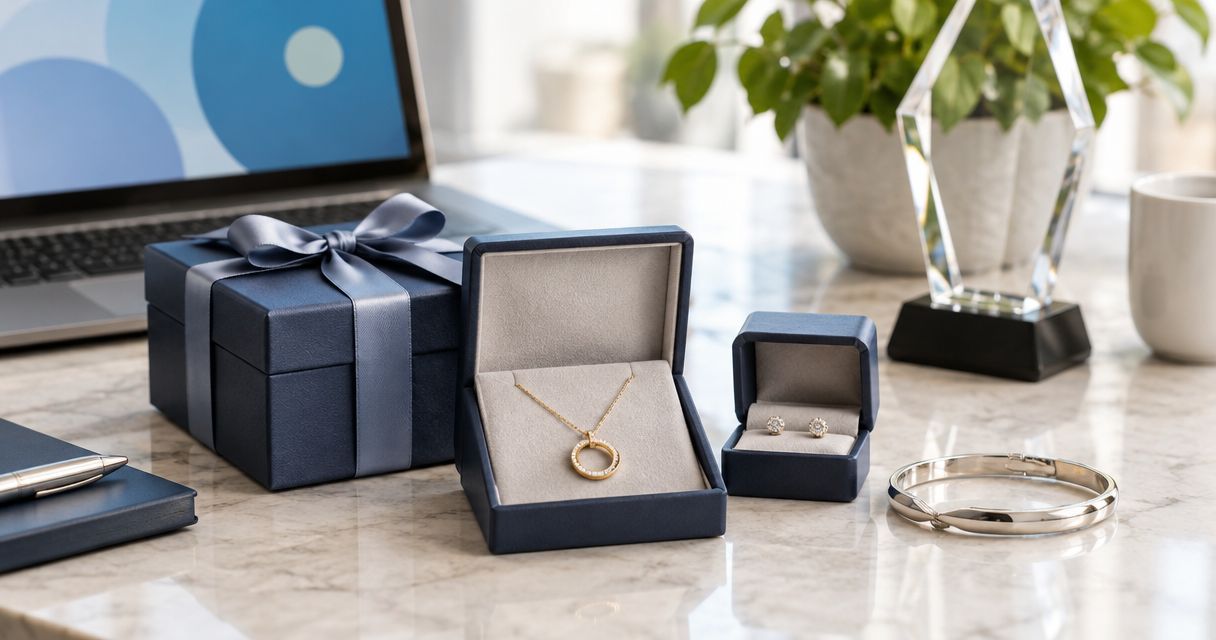
Corporate gift jewelry is jewelry selected or custom-made for employees, clients, or partners to recognize a business milestone or achievement. This 2026 guide explains how to plan custom corporate gift jewelry around recipient preferences, material choices, design approval, and a clear handoff—not just a company logo.
- Custom corporate gift jewelry works best when recipient preferences shape the recognition award.
- Uptownbullion suits Dallas buyers seeking local custom jewelry and jewelry repair services.
- Approve materials, engraving, recipient details, and delivery arrangements before authorizing work.
- Keep employee recognition personal; put prominent company branding on the presentation materials instead.
Why custom jewelry matters for corporate recognition
Corporate recognition jewelry has two jobs: acknowledge an achievement and remain something the recipient wants to wear. Those goals conflict when a purchasing team chooses an oversized logo, assumes everyone wears the same accessories, or treats a personal gift like office merchandise.
Your planning also differs from an individual jewelry purchase. You need an approval process, consistent treatment across recipients, accurate personalization, and a way to protect private information. A beautiful design does not fix a misspelled name or an unwanted public presentation.
Uptownbullion suits Dallas buyers seeking local custom jewelry and jewelry repair services. Start a discussion with Uptownbullion about the design you have in mind, then confirm the scope and arrangements for your particular order.
For your 2026 recognition program, judge the gift by its suitability for the person—not by how prominently it advertises the employer. A discreet inscription and a specific recognition message can carry the company connection without making the jewelry itself a promotional item.
How to plan custom corporate gift jewelry
Define the occasion
Start with a plain-language statement of what the award recognizes. Retirement, a service anniversary, a completed project, and a client relationship are different occasions; they should not automatically receive the same design or inscription.
Write the achievement before selecting the jewelry. That keeps the recognition specific and gives your approvers a reason for the choice. Separate employee awards from external gifts because the approval and acceptance requirements differ.
Decide whether this is a single commission or a repeatable program. A recurring award needs a documented specification, while a personal retirement gift can follow the recipient's individual preferences more closely. Neither approach requires an elaborate design.
- Name the achievement being recognized.
- Identify whether the recipient is an employee, client, or partner.
- Assign a decision-maker for the gift.
- Check the relevant gift and recognition policies.
- Decide whether future awards must match this design.
Ask recipient preferences
Ask privately what the recipient actually wears. Rings require sizing, pierced earrings require an appropriate preference, and wrist jewelry needs a suitable fit. A job title or gender is not a substitute for that information.
If the gift must remain a surprise, use an optional preference form collected before individual awards are announced. Include a non-jewelry alternative so that declining jewelry does not mean declining recognition. Choice belongs with the recipient, not just the purchasing team.
Distinguish a preference from a medical concern. If someone reports a metal sensitivity, ask which materials they avoid and have the jeweler identify the proposed composition. Do not promise that a piece will be suitable based only on its color or a broad material description.
- Ask about preferred jewelry types.
- Record preferred metal colors and finishes.
- Confirm sizing without circulating it broadly.
- Ask whether visible branding is welcome.
- Offer an alternative for recipients who do not wear jewelry.
Write the brief
Use a shared document to assemble the brief before contacting a jeweler. Describe the occasion, intended wearer, jewelry type, material preference, inscription, approval contact, and presentation date. Attach a simple sketch or reference image when words leave room for interpretation.
For a 2026 corporate award, distinguish fixed requirements from optional details. The recipient's name must be correct; a decorative border might be negotiable. That distinction lets you simplify the design without losing the meaning of the award.
Uptownbullion provides custom-made jewelry in Dallas, making a local design discussion an option once your brief is ready. Use the guide to custom jewelry designers in Dallas to frame the questions you ask. Confirm corporate-order requirements directly rather than assuming a custom jewelry service includes a managed recognition program.
- Specify the jewelry type and intended use.
- Separate required details from optional decoration.
- Supply the exact inscription as editable text.
- Name the person authorized to approve changes.
- Record the presentation date and handoff requirements.
Confirm the materials
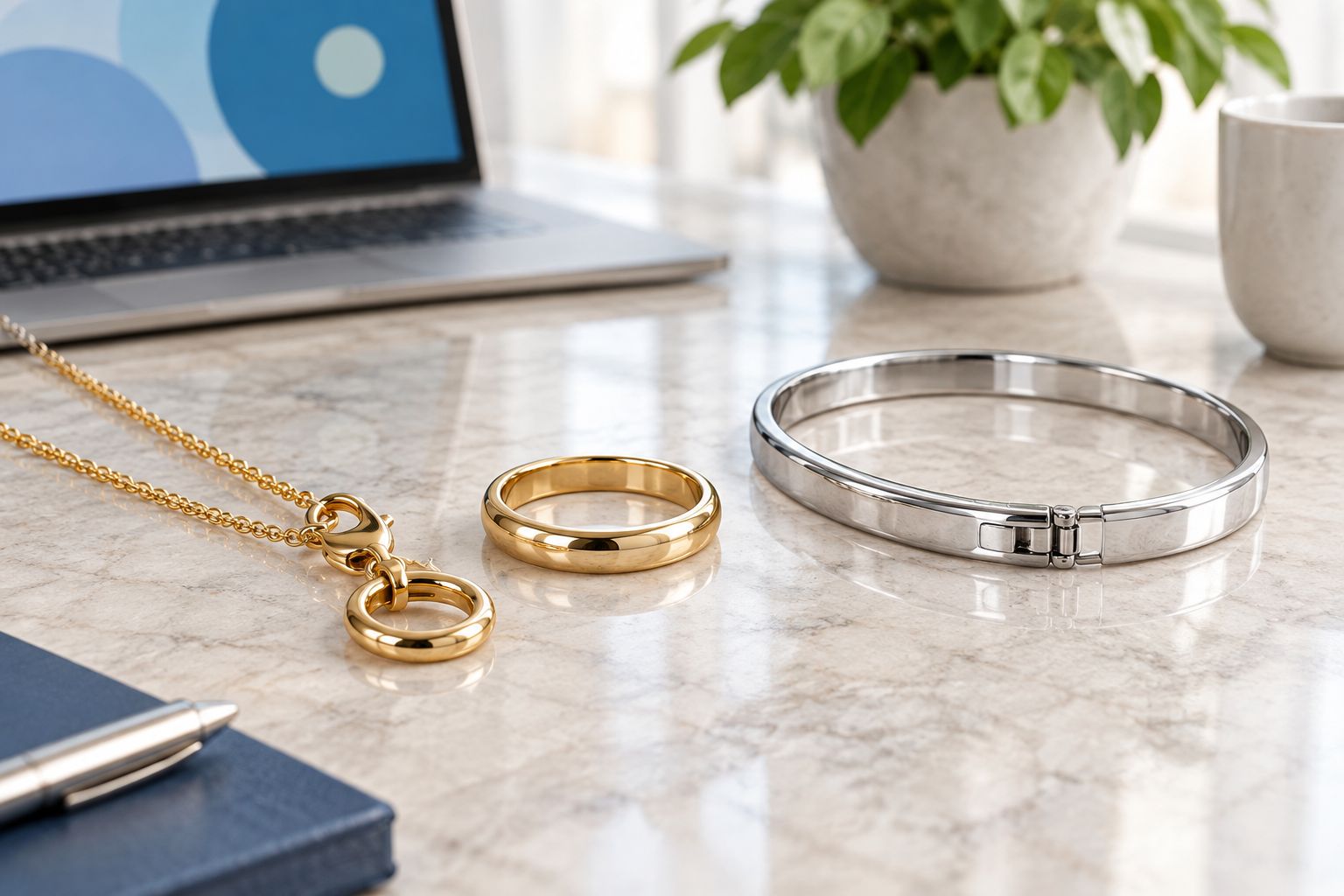
Ask for a written material description rather than accepting a description such as gold-colored or silver-toned. Solid precious metal, plated jewelry, and other alloys are different constructions. The description should identify what you are commissioning, not simply how it looks.
Gold fineness expresses the proportion of gold in an alloy: 14-karat gold is approximately 58.3% gold, and 18-karat gold is 75% gold. Sterling silver is 92.5% silver. These established material definitions help you interpret a specification; they do not establish the composition of an individual item without confirmation.
Ask separately about stones, clasps, coatings, finishes, and care. Higher gold content does not automatically make a design the better corporate gift. Fit, construction, recipient preference, and the intended use still need to guide the choice.
- Request the metal composition in writing.
- Distinguish solid metal from plating.
- Identify stones and decorative components.
- Confirm the clasp or fastening style.
- Request care instructions for the finished piece.
Review the proof
Approve the design and the wording as separate checks. A design can look right while the inscription contains an error. Compare names, dates, capitalization, punctuation, and company wording against an authoritative internal record—not another draft.
Ask how the proposed engraving will appear on the actual surface. A full achievement statement can belong on the presentation card while the jewelry carries a shorter inscription. Personalization should remain readable and appropriate to the piece.
For group awards, keep each recipient's text attached to their individual order record. Avoid copying a previous recipient's details into a new approval without a deliberate check. Establish which approved version controls production and how later changes must be authorized.
- Review the design independently of the inscription.
- Verify names and dates against approved records.
- Confirm engraving placement and orientation.
- Approve any company mark before use.
- Save the final proof with its approval record.
Plan the handoff
Work backward from the presentation date, but do not assign a production timeline without the jeweler's confirmation. Design review, revisions, fabrication, inspection, and personalization all belong in the schedule. Record the agreed arrangements rather than relying on a verbal expectation.
For your 2026 awards calendar, distinguish the date you need possession of the gift from the date of the ceremony. Leave room in your own process to inspect the finished item and check its recipient assignment before presentation.
A recognition gift also needs an appropriate setting. Ask whether the recipient wants public acknowledgment, keep sizing and other personal details private, and prepare a message that explains the achievement. The jewelry should support the recognition, not replace it.
- Confirm the handoff date directly.
- Assign responsibility for collection or delivery.
- Check each item against its approved details.
- Keep recipient information out of public materials.
- Prepare a specific recognition message.
Record the details
Keep the final specification, approval, itemized documentation, and care instructions together. This gives your organization a usable record if the recipient later asks about a repair, a material, or a matching future award.
Ask what adjustments or repairs are appropriate for the particular design and confirm any service terms before promising support. Uptownbullion offers jewelry repair alongside custom-made jewelry; discuss the finished piece's repair needs directly rather than assuming a warranty or an ongoing corporate service arrangement.
For a recurring program, preserve the design specification without treating it as permanent. Recipient preferences, company policies, and the recognition occasion still deserve review each time. Consistency should mean a fair process, not an identical accessory imposed on everyone.
- Save the approved material and design specifications.
- Give the recipient the care instructions.
- Retain documentation for future service questions.
- Confirm adjustment and repair arrangements.
- Review preferences before repeating an order.
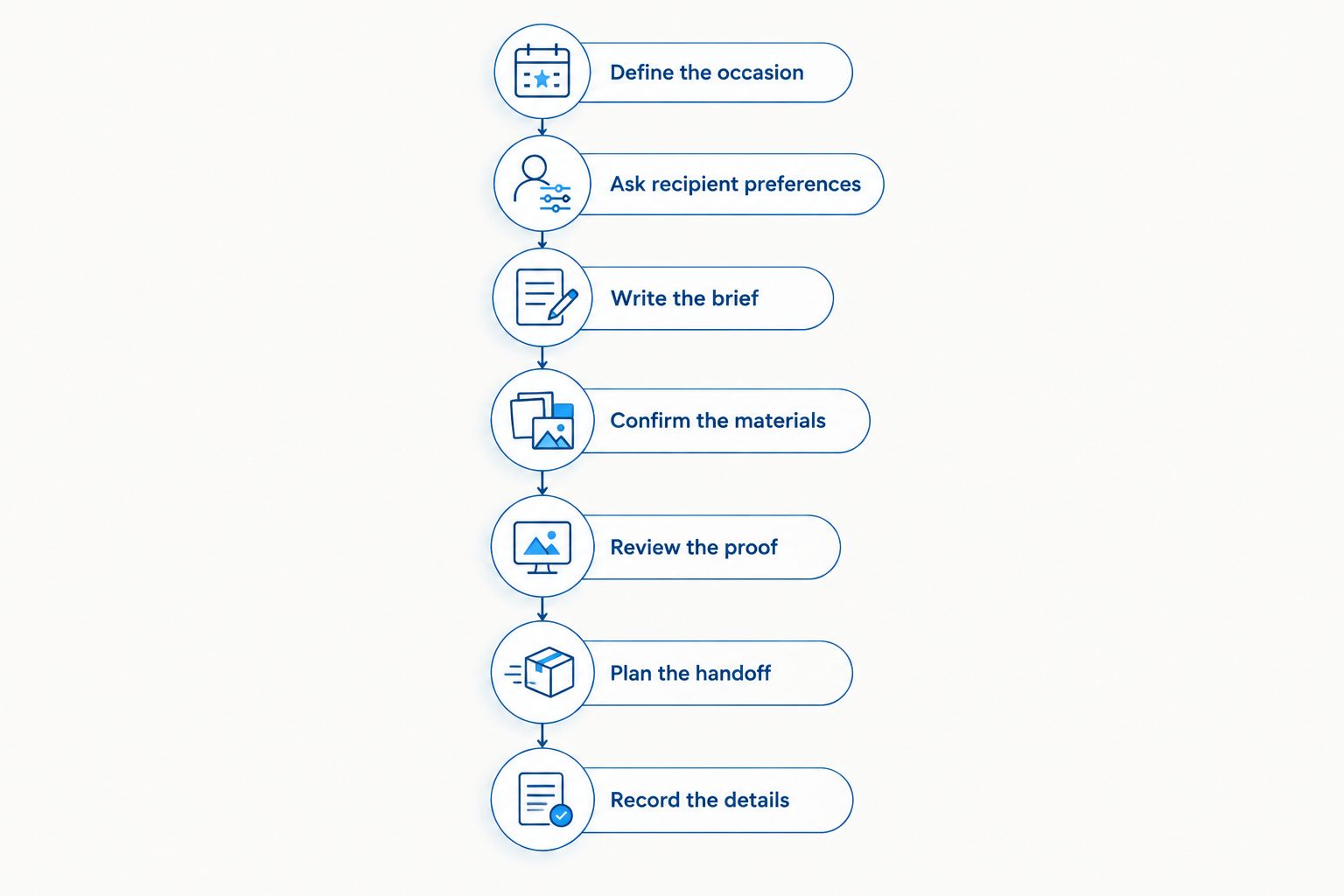
The process runs from purpose to recipient choice, then through written approval and handoff. Keep those decisions in that order so that design work follows the recognition brief rather than defining it.
Compare jewelry options for your recognition program
Choose the option around the recipient and the approval process. For a 2026 program, distinguish full custom design from personalization of an existing piece: an inscription does not necessarily mean the underlying jewelry was custom-made.
| Option | Best for | Main advantage | Key limitation |
|---|---|---|---|
| Fully custom jewelry | A personal milestone with a clear recipient brief | Design can reflect the person and achievement | Requires agreement on design, materials, and execution |
| Engraved existing jewelry | Recognition centered on a name, date, or short message | Personalization without developing the whole design | Engraving space and suitable surfaces constrain the message |
| Recipient-selected jewelry | Recipients with strong style or fit preferences | Gives the wearer control over the choice | Requires a clear selection and approval process |
| Coordinated jewelry designs | A recurring program that needs a recognizable theme | Keeps a shared design language across awards | A common theme still needs individual fit and preference checks |
| Non-jewelry recognition gift | Recipients who do not wear jewelry | Respects preference without withdrawing recognition | Does not serve a program that specifically requires a wearable award |
Fully custom jewelry is best for a meaningful commission, not for avoiding decisions. Engraved existing jewelry is best when the message carries the personalization. Recipient-selected jewelry is best when wearability matters more than preserving a surprise.
None of these options removes the need for accurate recipient details or policy approval. Discuss your preferred approach before assuming a local jeweler handles every format or coordinates an entire company program.
Discuss your custom jewelry idea
Bring your design brief, recipient preferences, and recognition message to a custom jewelry discussion.
Common mistakes corporate gift buyers make
Making the logo the main feature
A prominent company mark turns a personal award into branded merchandise. Ask whether the recipient wants it visible; otherwise, use the recognition card or presentation materials for the company identity and keep the jewelry focused on the wearer.
Ordering matching pieces without checking preferences
Identical jewelry does not guarantee equal suitability. A ring, earrings, or bracelet can create fit and wearability problems for different recipients. Keep the recognition criteria consistent while allowing an appropriate choice of format.
Treating an external gift like an employee award
A client or partner can have acceptance rules that differ from your organization's employee recognition policy. Check both sides before commissioning the gift. Do not put the recipient in the position of refusing a personalized item after it has been made.
Approving personalization from an informal message
A chat message is easy to misread or replace with a later draft. Use a controlled approval record containing the exact inscription and recipient assignment. In your 2026 program, make one named approver responsible for the final text.
Promising services before confirming them
Do not promise resizing, repair coverage, delivery arrangements, or repeat production on a jeweler's behalf. Ask what applies to the specific design, record the answer, and give the recipient only the confirmed instructions.
FAQ
What's the best custom corporate gift jewelry for employee recognition?
The best custom corporate gift jewelry matches the employee's preferences and the achievement being recognized. Choose the jewelry type before the decoration, then confirm materials, fit, and personalization.
Is fully custom jewelry better than engraved jewelry for corporate awards?
Fully custom jewelry is better when the design itself needs to express a personal milestone. Engraved existing jewelry is a better fit when a short inscription provides the required personalization.
Should corporate recognition jewelry include a company logo?
Include a visible company logo only when the recipient welcomes it. Presentation materials can carry the company identity while the jewelry keeps a more personal design.
Can I order the same jewelry for every employee?
Use the same design only after checking each recipient's preferences and fit requirements. A coordinated theme with different wearable formats can preserve consistency without imposing one accessory on everyone.
How far ahead should I plan a custom jewelry award?
Plan around a schedule confirmed by the jeweler for your actual design and presentation date. Include time in your internal process for approvals, changes, inspection, and the final handoff.
What information should I give a custom jeweler?
Provide the occasion, intended wearer, jewelry type, material preferences, exact inscription, approval contact, and required handoff date. Separate essential requirements from optional decoration so design changes remain clear.
Can Uptownbullion help with custom jewelry in Dallas?
Uptownbullion provides custom-made jewelry and jewelry repair services in Dallas. Discuss the proposed recognition piece directly and confirm the arrangements for your specific commission.
What if an employee does not want jewelry?
Offer a non-jewelry alternative without changing the recognition they receive. Ask privately before commissioning a personalized piece so that declining the accessory does not become a public issue.
One last thing
Write the recognition message before designing the jewelry. If you cannot explain the person's achievement clearly, an elaborate piece will not make the award more meaningful. For your 2026 program, put that explanation on the presentation card and let the jewelry reflect the recipient's taste.


