
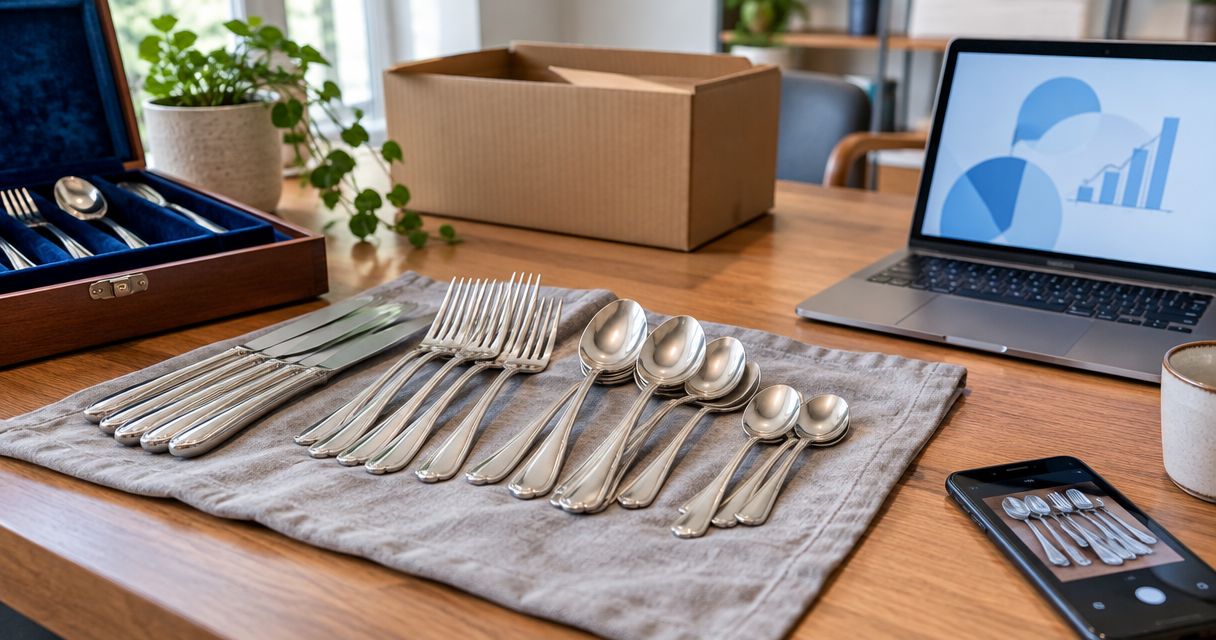
Yes, you can sell silverware or flatware for cash if a buyer accepts its metal content or wants it for resale. Sterling silver has recoverable silver value, while silver-plated and stainless-steel pieces need a buyer interested in the objects themselves; hollow handles, mixed materials, and collectible patterns require separate evaluation.
- You can sell silverware or flatware for cash, but sterling silver and silver plate need different buyers.
- Sterling silver contains 92.5% silver; a silver-colored finish does not establish silver content.
- Uptownbullion provides a local gold and silver exchange option for Dallas consumers.
- Identify markings, separate materials, and check collectible value before accepting a scrap offer.
Can you sell silverware or flatware for cash?
Yes—but identify what you own before choosing where to sell it. A metal buyer evaluates recoverable silver, while a replacement-flatware dealer or collector evaluates the piece as a usable or collectible object. Those are different transactions.
The distinction matters more than whether your drawer contains forks, spoons, knives, or serving pieces. If you are comparing local selling routes, start with this guide to selling silver in Dallas through pawn shops and exchanges.
| Flatware type | What supports its value | Best for | Main limitation |
|---|---|---|---|
| Sterling silver | Recoverable silver and, sometimes, collectible interest | A precious-metal evaluation | Total weight can include non-silver components |
| Other solid silver alloys | Verified silver content | A buyer who evaluates the alloy | Unfamiliar marks require identification |
| Silver plate | Pattern, maker, condition, and usefulness | Replacement-flatware resale | A plated surface is not solid silver |
| Stainless steel | Usability, pattern, and set completeness | Household or replacement resale | Stainless steel has no silver content |
| Collectible silver flatware | Maker, pattern, age, condition, and demand | Specialist evaluation before scrapping | Finding the right buyer requires research |
Why this matters
A silver-colored set is not automatically a silver asset. Equally, a recognizable sterling pattern is not automatically worth more as scrap than as flatware. You need to establish both the material and the appropriate selling route.
For a sale in 2026, separate the question of metal content from the question of resale appeal. A buyer's explanation should identify which basis supports the offer, rather than treating every shiny utensil as the same material.
Keep matching pieces together until you understand the set. You can still choose a metal sale later, but an intact group gives a specialist more information than loose pieces stripped of their original context.
Sterling silver: check for 92.5% silver content
Sterling silver contains 92.5% silver by mass. The remaining metal forms part of the alloy; it is not additional silver. Common markings include sterling and 925, although a mark is evidence to investigate rather than a substitute for verification.
Look on the backs of handles, around the neck of a spoon, and near the blade connection on a knife. Photograph the complete marking, including symbols and maker names. A close crop of one number can omit the detail needed to interpret it.
The advantage of sterling flatware is that its silver content provides a basis for metal valuation even when the pattern has little resale demand. The limitation is construction: a sterling-handled knife can include a steel blade and filling, so its full weight is not sterling weight.
Best for: a precious-metal evaluation after you separate solid utensils from composite pieces. Do not calculate the entire set as though every component contains the sterling proportion of silver.
Other silver alloys: read the full marking
Solid silver flatware is not limited to sterling. A fineness mark of 800 indicates 80% silver by mass when the mark accurately identifies the alloy. That is different from the 925 mark associated with sterling.
The useful feature is still recoverable silver content. The difficulty is identification: international hallmarks, worn stamps, and maker numbers can be mistaken for purity marks. Do not interpret an isolated number without considering the rest of the stamp.
Best for: evaluation by a buyer who can explain the alloy identification. Keep unfamiliar pieces separate rather than assuming that every silver-colored utensil belongs in the sterling group.
Silver plate and stainless steel: use a resale route
Silver plate has a silver surface over another material. Markings such as EPNS indicate electroplated nickel silver, not solid sterling. Despite its name, nickel silver is a copper-based alloy rather than a silver alloy.
Silver-plated flatware can interest someone replacing a missing piece or completing a pattern. Its limitation is that a thin silver coating does not justify valuing the whole utensil as silver. Worn plating also affects its appeal as tableware.
Stainless-steel flatware follows a similar resale route, but without silver content. Best for: household resale or a replacement-flatware buyer who recognizes the pattern. Before transporting either material, ask whether the buyer handles it; a business that buys silver does not necessarily buy silver plate or stainless steel.
How to prepare silverware for sale in 2026
You do not need to establish an exact value at home. Your job is to preserve the pieces, organize the evidence, and make the buyer's explanation easier to check.
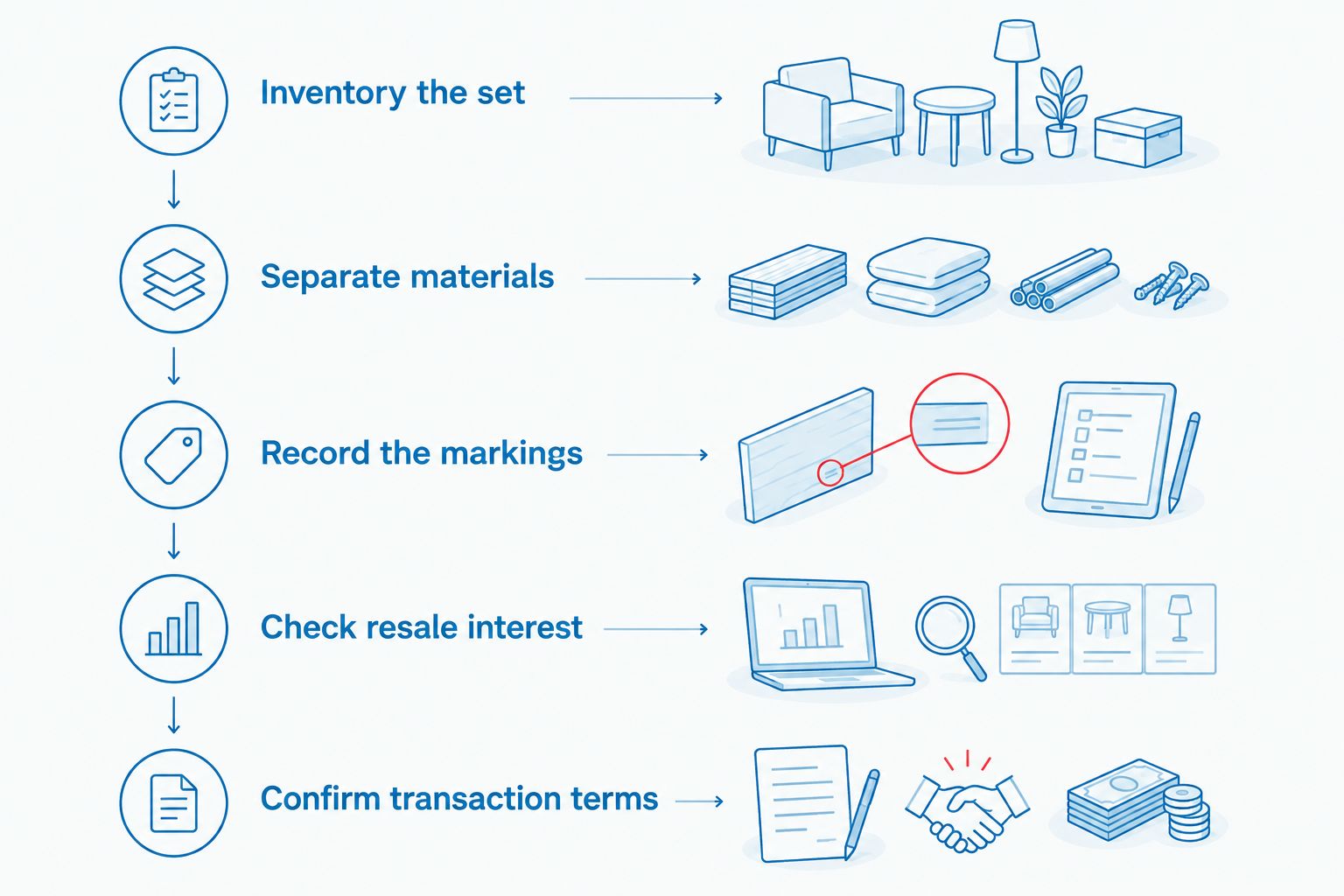
1. Inventory the set
Lay out the flatware and record the types of pieces: dinner forks, salad forks, teaspoons, knives, and serving utensils. Note missing pieces, visible damage, monograms, and any original packaging or paperwork.
Photograph the full group before separating it. If the flatware belongs to an estate or is jointly owned, establish your authority to sell before requesting a transaction.
2. Separate materials
Create groups for marked sterling, other apparent silver alloys, silver plate, stainless steel, and unidentified pieces. Keep knives apart from solid forks and spoons because their construction can differ.
Do not treat these groups as final authentication. They are an organizing step. Ask the buyer to explain any reclassification before including the piece in a combined offer.
3. Record the markings
Take clear photographs of the entire back of a representative utensil and a close-up of its marks. Include a second example if the set contains different stamps or makers.
Preserve original spelling and symbols in your notes. A pattern name supplied by a relative is a useful lead, but the physical marks give the evaluator something to verify.
4. Check resale interest
Look for completed sales involving the same maker, pattern, piece type, and condition. An advertised asking amount is not evidence that an item sold, and a large serving spoon is not directly comparable with a teaspoon.
If the set appears collectible, seek a specialist opinion before authorizing melting or destructive testing. A metal offer answers what the silver is worth to that buyer, not necessarily what the intact flatware could bring through another route.
5. Confirm the transaction terms
Ask whether the buyer accepts your material, how it will be tested, and what payment method applies. Selling “for cash” can mean receiving payment for an item; do not assume it means physical currency.
Request an explanation of weight, purity, excluded components, and any deductions. Keep your inventory with you so the pieces returned or purchased match the pieces presented.
Why silverware offers vary in 2026
Different offers are not automatically evidence of unfair treatment. First establish whether the buyers evaluated the same material on the same basis.
- Silver purity: Sterling and other silver alloys contain different proportions of silver. Silver plate cannot be valued as solid silver.
- Eligible weight: Steel blades, filled handles, and other non-silver components change the amount of material available for recovery.
- Market reference: Silver's market value changes. Record when an offer was made so an older quote does not become your comparison benchmark.
- Resale potential: Maker, pattern, completeness, and condition matter when a buyer intends to resell flatware rather than recover metal.
- Transaction terms: Testing methods, deductions, and payment arrangements affect what you are agreeing to sell and receive.
Compare like with like. A specialist's offer for an intact set and a metal buyer's offer for recoverable silver reflect different purposes, even when both concern the same utensils.
How do you compare silverware offers fairly?
Start with the weight unit. Precious metals use troy ounces, and 1 troy ounce equals approximately 31.1035 grams. An ordinary ounce is a different unit, so an ounce figure from a household scale should not be treated as a troy-ounce measurement.
Ask the buyer to identify the unit on the scale and the purity used in the calculation. You should also understand whether the quoted weight includes handles, blades, or other parts that the buyer later excludes.
For solid sterling items, silver content is the eligible sterling weight multiplied by 0.925. That establishes theoretical silver content, not your guaranteed payment. A purchase offer and a calculation of contained metal are not interchangeable.
For your 2026 comparison, keep a short written record of each evaluation:
- Which pieces the offer includes.
- The material classification and eligible weight.
- The basis for excluding any components.
- Whether the buyer is purchasing metal or an intact collectible set.
- The final transaction terms and payment method.
You do not need to accept an offer simply because someone has weighed the flatware. Pause when you cannot explain how the buyer reached the offer. A clear explanation is more useful than a claim that an offer is the highest.
Can you sell tarnished or damaged silverware?
Tarnished or damaged sterling silver can still have recoverable silver value. Tarnish does not turn solid sterling into silver plate, and a bent fork does not lose its underlying silver content merely because it is no longer suitable for dining.
Condition matters differently for resale. A collector or replacement buyer evaluates wear, damage, and alterations, so avoid aggressive polishing, sanding, or home chemical tests before a specialist examines a potentially collectible piece.
Should you sell a complete set or individual pieces?
Keep a matching set together until you have checked its resale potential. A buyer seeking usable flatware evaluates completeness and matching pieces, while a metal evaluation focuses on silver content rather than place settings.
Separate an obvious mixed drawer for identification, but do not dismantle a matched collection just to make weighing easier. Ask whether the buyer's offer depends on the set remaining intact.
Where should a Dallas seller start?
Uptownbullion is best for Dallas consumers seeking a local gold and silver exchange. The business provides gold and silver buying and selling, alongside jewelry services. Flatware acceptance still needs confirmation before you bring in a set.
Use the contact page to ask Uptownbullion whether your particular silverware material and construction fit its buying services. Describe the markings, distinguish solid utensils from handled knives, and ask what identification and transaction arrangements apply.
A local exchange gives you an in-person route to discuss a metal sale. The limitation is fit: a metal evaluation does not replace specialist research into a collectible pattern. If the set's appeal rests on its maker or completeness, investigate that before choosing a scrap transaction.
FAQ
Can I sell silverware or flatware for cash in 2026?
Yes, you can sell silverware or flatware for cash when a buyer accepts its material or resale appeal. Identify sterling, silver plate, and stainless steel separately, and confirm the payment method before proceeding.
How do I know whether my flatware is sterling silver?
Sterling silver contains 92.5% silver and commonly carries a sterling or 925 mark. Have the material verified because markings alone do not establish authenticity or reveal every component's construction.
Is silver-plated flatware worth selling?
Silver-plated flatware is worth evaluating for household, collector, or replacement resale rather than assuming it has solid-silver value. Maker, pattern, condition, and buyer interest determine whether that route fits your pieces.
Can I sell just a few silver spoons instead of a complete set?
You can seek a metal evaluation for individual silver spoons rather than a complete set. Confirm that the buyer accepts them and check whether a recognizable pattern deserves a separate resale evaluation.
Does a sterling-handled knife count as solid silver?
A sterling-handled knife is not necessarily solid silver throughout. Its blade and handle filling can be non-silver, so the complete knife's weight cannot automatically be treated as sterling weight.
Should I polish inherited silverware before selling it?
Avoid aggressive polishing before inherited silverware has been identified. Preserve the marks and surface condition, especially when the pieces could interest a collector.
Can I bring silverware to Uptownbullion in Dallas?
Contact Uptownbullion first to confirm whether its silver-buying services cover your particular flatware. Describe the marks and construction, and ask about identification, evaluation, and payment arrangements before visiting.
One last thing
A heavy knife can contain less recoverable silver than its appearance suggests. A steel blade and a filled sterling handle make total weight a poor shortcut. Keep those knives separate and ask how their silver content will be evaluated.
Before selling in 2026, make your first decision about the object, not the offer: is this material for recovery, usable flatware for resale, or a collectible set? Identifying that route protects you from comparing offers that answer different questions. You can then choose a buyer whose evaluation matches what you actually own.


