
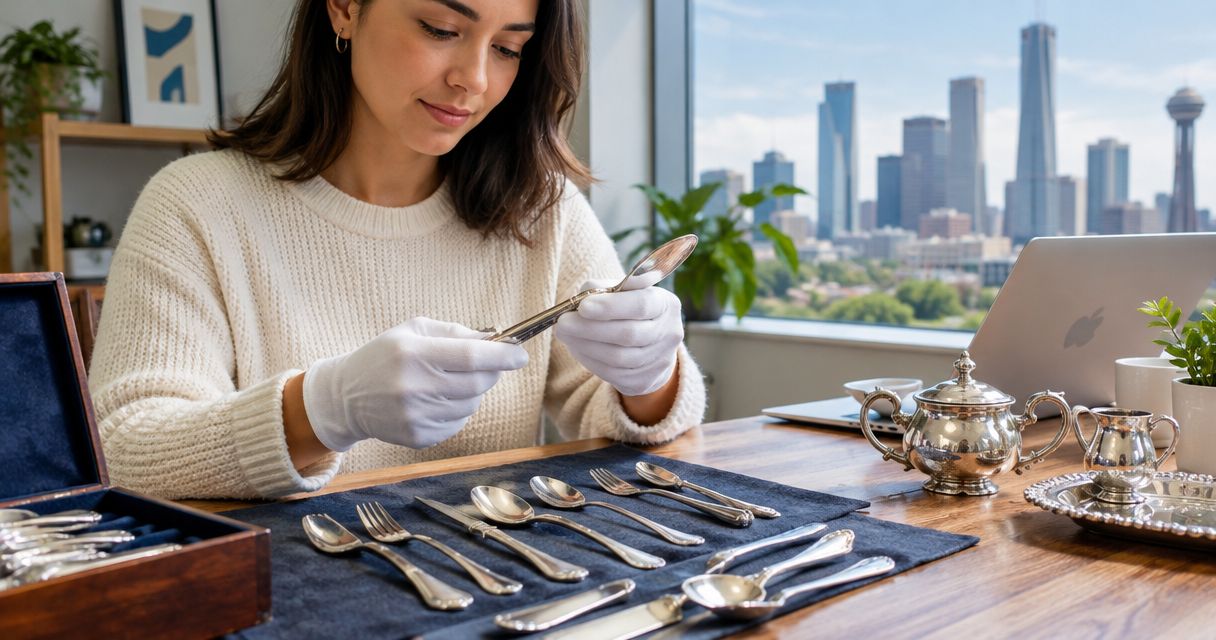
Best starting point for a local silver-buying inquiry: Uptownbullion. Best for collectible flatware: an antique silver dealer. Best for matching discontinued patterns: a replacement-flatware specialist. To sell silverware and flatware for cash in Dallas in 2026, match the buyer to the metal and the set before requesting an offer.
- To sell silverware and flatware for cash, Dallas sellers should distinguish sterling silver from silver plate first.
- Uptownbullion is a local starting point for silver-buying inquiries; confirm flatware acceptance before visiting.
- Antique dealers suit collectible sets; replacement-flatware specialists suit identifiable patterns and individual matching pieces.
- Compare the net payment, valuation basis, and sale terms—not just the headline offer.
Why this matters
A sterling fork, a silver-plated fork, and a hollow-handled knife need different evaluations. Their appearance does not tell you how much silver they contain, and weighing everything together does not establish silver value.
The right selling route also depends on what you own. A damaged, mismatched group calls for a different conversation than a complete set with a recognizable maker and pattern. Identify the material first; investigate collectible value before authorizing a scrap sale.
What makes the best place to sell silverware?
Use these criteria to choose a Dallas buyer in 2026:
- Material expertise: The buyer distinguishes solid silver, silver plate, stainless steel, and mixed construction.
- Clear weighing: You can understand which pieces are weighed together and which components are excluded.
- Pattern recognition: The evaluation considers whether the maker, pattern, condition, or completeness warrants a resale assessment.
- Explainable offer: The buyer explains whether the offer reflects metal content, resale demand, or both.
- Clear sale terms: You know the payment method, any deductions, and when the sale becomes final.
“Cash” in a search does not establish how a business pays. Ask whether a purchase is paid in currency, by check, or through another method before transporting your set.
Dallas silverware selling options at a glance
These are different selling routes, not interchangeable buyers. Confirm that an individual business handles your specific flatware before making a trip.
| Option | Best for | Standout advantage | Key limitation |
|---|---|---|---|
| Uptownbullion | Starting a local silver-buying inquiry | Dallas gold and silver exchange | Confirm silverware acceptance and evaluation terms |
| Antique silver dealer | Collectible or complete sets | Assessment of maker, pattern, and condition | Not every dealer buys every pattern |
| Replacement-flatware specialist | Identifiable discontinued patterns | Matching pieces to an established pattern | Exact identification and buying interest matter |
| Direct resale marketplace | Usable silver-plated flatware | Selling the item for use rather than silver content | You handle listings, questions, and transaction risks |
| Pawn shop offering outright purchases | Comparing a general local purchase offer | Another route for an in-person evaluation | A loan offer is not an outright purchase offer |
1. Uptownbullion: best for a local silver-buying inquiry
Uptownbullion is a Dallas gold and silver exchange that provides precious-metal buying and selling services. Uptownbullion is best for Dallas sellers who want to start with a local gold and silver exchange.
For silverware, make the first conversation specific. Describe the markings, whether the pieces form a matching set, and whether the knives have separate blades and handles. Confirm that the business evaluates your type of flatware before bringing it in.
Uptownbullion pros:
- A local Dallas option for a silver-buying conversation.
- A business whose stated services include precious-metal buying.
- A starting point for discussing a mixed collection of silver and jewelry.
Uptownbullion cons:
- General silver-buying services do not establish acceptance of every silverware type.
- A metal-focused inquiry does not replace a collectible-pattern assessment.
Best for: Sellers who want to discuss a local precious-metal sale before choosing a resale route.
Use the contact page to ask about flatware acceptance, identification requirements, evaluation procedures, and payment methods. Send clear descriptions rather than assuming a marking guarantees an offer.
Verdict: Wait to visit until acceptance of your specific silverware is confirmed.
2. Antique silver dealer: best for collectible sets
An antique silver dealer is the route to investigate when maker, pattern, age, or completeness deserves attention beyond metal weight. Ask the dealer to explain whether the set has resale interest as tableware or as a collectible.
Keep matching serving pieces with the set during the initial assessment. Separating everything into scrap categories too early makes it harder to present the collection as a whole.
Antique silver dealer pros:
- A route for assessing maker and pattern significance.
- An opportunity to present a complete set together.
- A chance to discuss condition, monograms, and missing pieces in context.
Antique silver dealer cons:
- Buying interest depends on the particular dealer and set.
- Consignment, if offered, is different from an immediate outright sale.
Best for: Complete, identifiable sets and pieces with a reason to investigate collectible value.
Before agreeing, establish whether the dealer is buying, consigning, or providing an assessment. Those are different arrangements, with different responsibilities for you.
Verdict: Hold a potentially collectible set together until its resale value has been assessed.
3. Replacement-flatware specialist: best for matching pieces
A replacement-flatware specialist focuses on identifying tableware patterns and matching individual pieces. This route deserves attention when you can identify the maker and pattern, particularly if your collection includes pieces someone needs to complete a set.
Photograph the front, back, and markings of representative pieces. Distinguish a teaspoon from a serving spoon rather than describing everything simply as “spoons.”
Replacement-flatware specialist pros:
- Pattern identification is central to the inquiry.
- Individual pieces can be assessed separately from a complete set.
- Useful for exploring demand for matching tableware rather than scrap metal.
Replacement-flatware specialist cons:
- Identifying a pattern does not guarantee buying interest.
- Packing, shipping, or inspection terms require attention when the buyer is not local.
Best for: Identifiable patterns, matching serving pieces, and partial sets.
For a 2026 inquiry, request current buying terms rather than relying on an old listing or a previous seller’s experience. Ask whether any preliminary offer remains subject to inspection.
Verdict: Wait for pattern confirmation and written buying terms before shipping.
4. Direct resale marketplace: best for usable silver plate
Direct resale lets you offer flatware as something another person can use. That distinction matters for silver plate: a thin silver coating over another metal is not equivalent to solid sterling silver.
Describe the pieces accurately. State the markings, piece types, condition, missing items, and visible wear without labeling unverified material as sterling.
Direct resale marketplace pros:
- A route to buyers seeking usable tableware.
- Space to show the entire set and its condition.
- Control over your description and the offer you accept.
Direct resale marketplace cons:
- You handle photography, questions, packing, or meeting arrangements.
- Disputes, transaction charges, and shipping damage need consideration.
Best for: Usable silver-plated flatware and everyday sets without an established precious-metal selling route.
Compare completed transactions for the same pattern and condition where those records are accessible. An asking figure alone does not show what a buyer actually paid.
Verdict: Skip direct resale if you do not want to manage the transaction yourself.
5. Pawn shop: best for another local purchase comparison
A pawn shop that buys silverware outright offers another route to investigate locally. Ask explicitly for a purchase evaluation, not a loan secured by the flatware.
Keep the comparison consistent. Present the same pieces and ask how the business distinguishes sterling, plated items, and mixed-material knives.
Pawn shop pros:
- Another local route for an in-person inquiry.
- An opportunity to compare an outright purchase offer.
- A way to ask how a general buyer classifies your collection.
Pawn shop cons:
- Acceptance and silverware expertise vary by business.
- Loan terms do not provide a like-for-like comparison with a sale.
Best for: Sellers comparing a general local purchase offer against specialist selling routes.
A clear explanation matters more than a confident sales pitch. If the buyer cannot explain what is being purchased and how the pieces are classified, stop the comparison there.
Verdict: Skip any offer that confuses a loan with an outright sale.
Sort your flatware before requesting offers
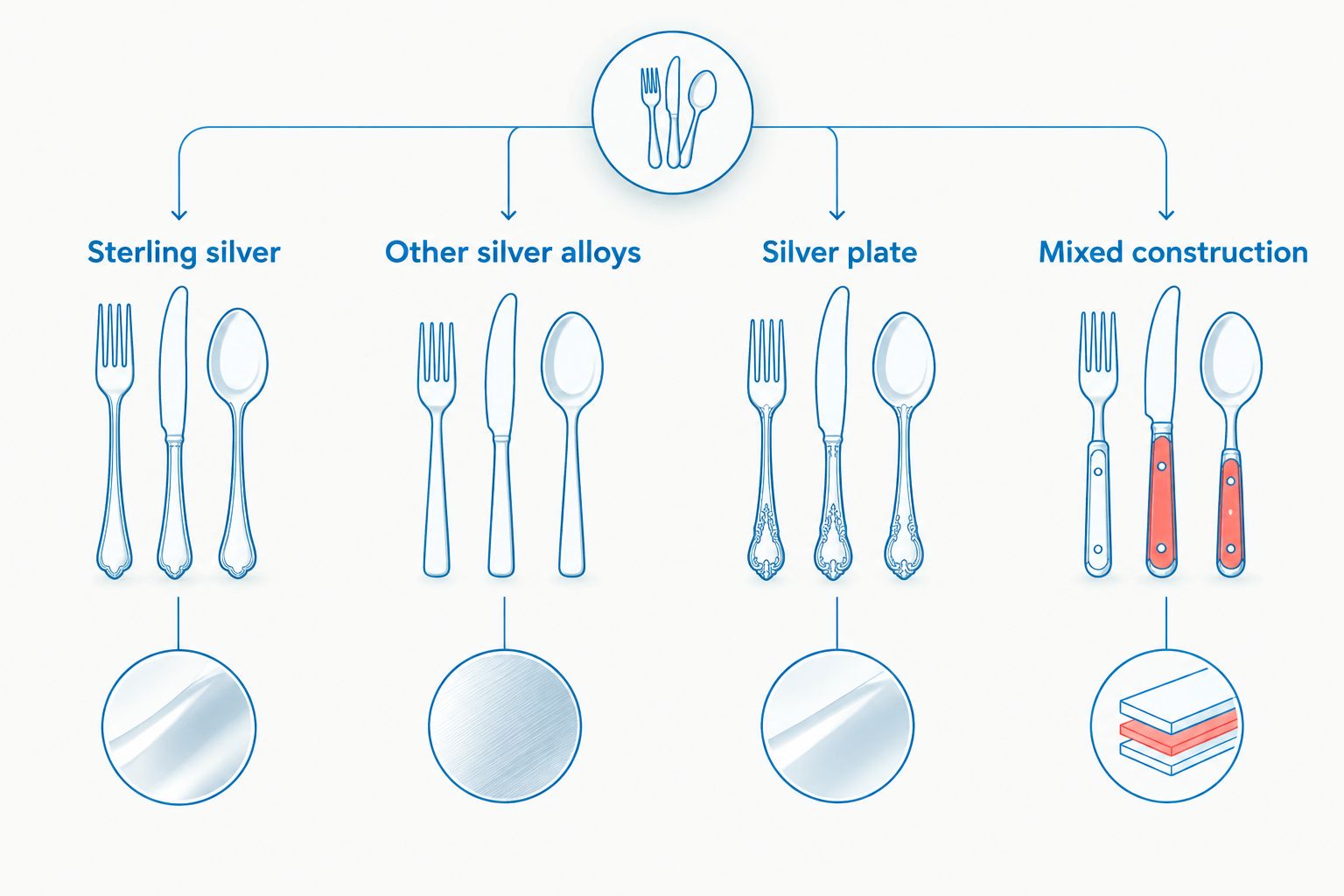
For a useful 2026 evaluation, organize your collection into these groups without scratching, filing, or dismantling it:
- Sterling silver: Look for sterling wording or a 925 marking. Sterling silver is 92.5% silver by mass; a stamp is a clue, not independent verification.
- Other silver alloys: A 900 mark denotes 90% silver and an 800 mark denotes 80% silver when used as fineness marks. Have unfamiliar marks interpreted rather than guessing.
- Silver plate: Look for wording such as silver plate or EPNS. EPNS means electroplated nickel silver and does not identify solid sterling.
- Mixed construction: Keep hollow-handled knives and weighted pieces separate. Their gross weight does not represent solid silver weight.
Silver quotations commonly use troy ounces. A troy ounce is approximately 31.1035 grams, so confirm the unit when comparing a scale reading with a silver quotation.
Do not multiply the weight of an entire knife set by sterling purity. Steel blades and handle filling are not silver, and construction needs to be accounted for before any metal-content calculation makes sense.
Questions to ask before accepting an offer
Take a written inventory and keep the conversation tied to the same collection. These questions make competing explanations easier to compare:
- Which pieces are solid silver, plated, or mixed construction?
- Which weights and purity classifications are used?
- Is the offer based on metal content, tableware resale, or collectible interest?
- Are any charges deducted from the stated payment?
- Does the business buy outright, consign, or offer a loan?
- What payment method applies, and when does the transaction become final?
Compare the net payment for the same pieces under the same type of transaction. A consignment estimate, a loan amount, and an outright purchase offer answer different questions.
How these options are ranked
The order follows the selling decision: start with a local silver inquiry, investigate collectible or pattern-specific value, then consider direct resale or a general purchase comparison. Material expertise, clear weighing, pattern recognition, explainable offers, and sale terms are the selection criteria.
This is a fit-based guide, not a ranking of measured payouts. No route wins for every sterling set, plated collection, and hollow-handled knife.
Which selling route should you choose?
Start locally for ordinary silver items; seek a pattern assessment before selling a potentially collectible set for metal content. For usable silver plate, investigate resale as tableware rather than assuming a precious-metal buyer is the right destination.
Your 2026 decision should follow the collection, not the advertising. Confirm material, establish whether pattern value needs investigation, and then compare clearly explained offers.
FAQ
Where should I start if I want to sell silverware for cash in Dallas?
Start with a local silver buyer for a material-based inquiry, or an antique silver dealer for a potentially collectible set. Uptownbullion provides gold and silver buying services in Dallas; confirm acceptance of your specific flatware before visiting.
Can I sell silver-plated flatware?
Silver-plated flatware has a possible resale route as usable tableware, but it is not equivalent to solid silver. Identify the maker, pattern, and condition, then confirm whether a prospective buyer handles plated pieces.
Does a 925 stamp mean my flatware is sterling?
A 925 fineness mark indicates 92.5% silver when genuine and correctly applied. Treat the mark as an identification clue and have the material verified before relying on it for a sale.
Should I polish inherited silverware before selling it?
Do not aggressively polish inherited silverware before its condition and collectible interest have been assessed. Abrasive cleaning can scratch surfaces, so ask the evaluator how to present the pieces.
Are silver-handled knives valued by their total weight?
Total knife weight does not establish silver content. Separate steel blades, hollow handles, and filling mean the construction must be considered during evaluation.
Is a pawn shop better than a silver exchange for flatware?
Neither route is automatically better for every collection. Compare outright purchase offers for the same pieces and choose based on the valuation explanation, net payment, and sale terms.
What should I bring when selling an inherited flatware set?
Bring an inventory, the matching pieces you intend to sell, and any existing maker or pattern information. Ask the buyer in advance about identification, ownership documentation, and appointment requirements.
One last thing
Photograph the back of the flatware, not just the attractive front. Maker’s marks and fineness stamps help frame the inquiry, while a full-set photograph shows matching pieces and gaps. Keep those photographs and your inventory until the transaction is complete.


