
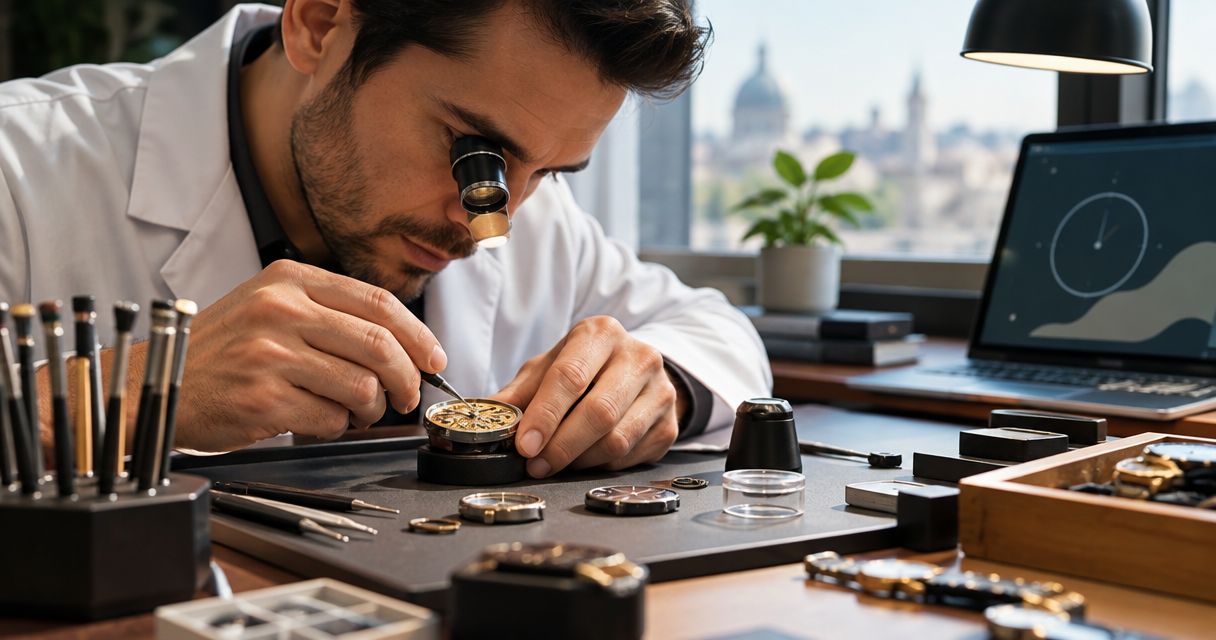
Luxury watch collectors’ watch repair is the diagnosis, maintenance, and restoration of collectible timepieces with the aim of preserving function and originality. This 2026 luxury watch repair guide explains how to document your watch, choose a repair route, and authorize work without treating every sign of age as damage.
- For Dallas collectors, luxury watch repair should separate mechanical needs from optional cosmetic changes.
- Choose a repairer by experience with your movement and reference, not by the brands displayed in the window.
- Approve replacement parts and polishing separately; neither should be an automatic addition to a mechanical service.
- Keep intake photographs, written instructions, and the final service record together for each watch.
Why luxury watch repair matters for collectors
A collector needs more than a watch that runs. You also need to know which components remain original, what changed during service, and whether the finished watch suits your intended use. A successful repair for a daily wearer is not automatically the right treatment for a collectible watch.
Mechanical repair and cosmetic restoration are separate decisions. Polishing removes material; replacing a dial changes a component that helps define the watch’s appearance and history. Neither decision belongs inside a vague instruction to make the watch look new.
For your 2026 service plan, start with the individual watch rather than a collection-wide schedule. Its movement, condition, service history, and manufacturer’s instructions matter more than a universal interval. If age is your main concern, the guide to whether vintage watches can still be repaired explains the questions to take into an assessment.
The practical goal is straightforward: identify necessary work, protect what you want preserved, and create a record that explains the result.
How to plan luxury watch repair in 2026
Document the watch before handing it over
Start with your phone camera and a written inventory. Take 4 photographs as a minimum intake record: the dial, case back, crown side, and bracelet or strap. Add close-ups of existing scratches, damaged links, unusual dial marks, and any accessories you hand over.
Record the reference and serial number from existing paperwork where possible. Do not open a case or remove components just to find an identifier. Ask the receiving repairer to confirm identifiers during intake instead.
Describe the fault in ordinary language. A watch that stops overnight presents a different starting point from one that stops while being worn. Your observations help define the problem without pretending to diagnose it.
- Photograph the watch before transport or drop-off.
- List every accessory left with the watch.
- Describe when the fault occurs and what you were doing.
- Keep the intake receipt with your photographs.
Define what you want preserved
Write your preservation instructions before requesting repair. Decide whether you want a dependable daily wearer, a minimally altered collectible, or a cosmetic restoration. These are different briefs, and a repairer should not have to infer your preference from the watch’s condition.
Gather 3 records if you have them: purchase documentation, earlier service paperwork, and the applicable warranty terms. Together, these help establish what you know about the watch and what still needs checking. Missing paperwork does not replace the need for a physical assessment.
For a 2026 repair, make current instructions explicit even if the same workshop serviced the watch previously. Your priorities might differ from those on the earlier service ticket.
- State whether polishing is authorized or prohibited.
- Flag the dial, hands, bezel, and crown for separate approval.
- Ask whether replaced components can be returned.
- Separate essential repairs from appearance-related requests.
Choose a repairer for the specific movement
Begin with the manufacturer’s published service guidance and a direct conversation with the proposed workshop. Ask about your exact reference, movement, and fault. Familiarity with a brand name alone does not establish experience with every movement or complication it has produced.
Uptownbullion is best for Dallas collectors who want a local watch repair contact. For luxury watch repair, discuss your watch and preservation requirements with Uptownbullion before authorizing work. The services page is a starting point for that conversation, not a substitute for confirming the scope of a particular repair.
Choose according to the work required. Ask who performs the assessment, who carries out the repair, and whether any part of the job leaves the receiving location.
- Identify the movement and complications under discussion.
- Ask who will physically perform the work.
- Confirm any outside workshop involvement.
- Request written answers about parts and preservation.
Separate the repair scope from cosmetic work
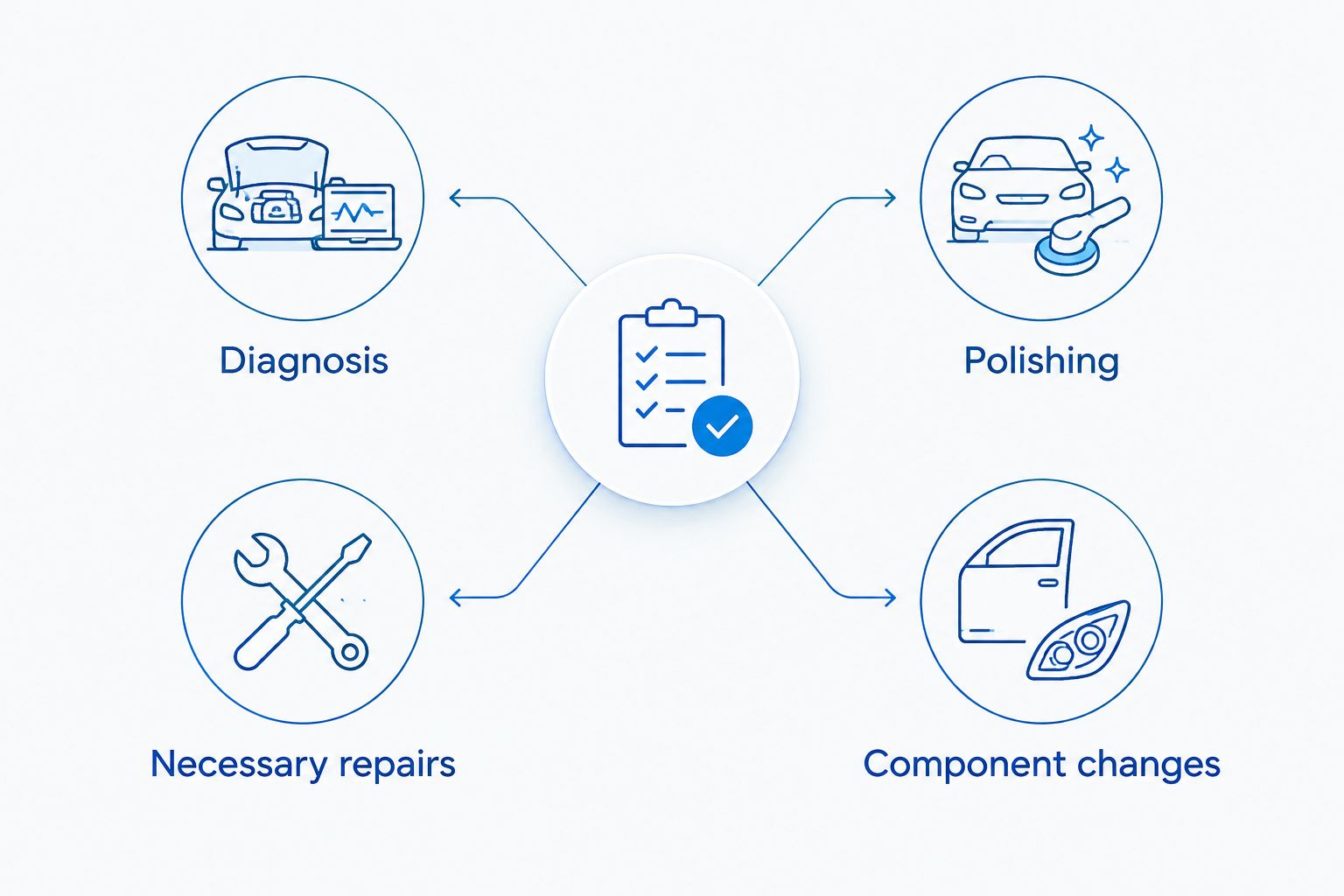
Read the estimate as a set of decisions, not one blanket permission. Mechanical service, a replacement crown, case refinishing, and dial replacement address different issues. Ask the repairer to explain what each proposed action fixes and what happens if you decline it.
Use 2 approvals in your written instructions: one for necessary mechanical work and another for optional cosmetic changes. This is a recordkeeping recommendation, not a claim that every workshop uses the same form.
Do not assume that a request to service the movement also means permission to polish the case. Equally, do not assume that preserving an original component is mechanically appropriate in every situation. Ask for the reason behind each recommendation and record your decision.
- Obtain an itemized description of proposed work.
- Require permission before additional components are replaced.
- Keep cosmetic changes outside the mechanical authorization.
- Ask what happens if inspection reveals further damage.
Agree on parts and testing before work starts
Ask what type of replacement parts the repairer proposes and how those parts will be described on the service record. Original manufacturer parts, aftermarket components, and previously used components are not interchangeable descriptions. You need to understand the proposal before deciding whether it fits your watch.
Testing should also match the watch and the repair. Ask which timing, function, and sealing checks are appropriate, and request the results in writing. Do not turn a generic accuracy claim into an acceptance standard for every movement in your collection.
A water-resistance marking is not proof of the watch’s present condition. Before wearing a serviced watch around water, confirm what was tested and what use the repairer recommends.
- Specify acceptable replacement-part categories in writing.
- Ask which components affect sealing or operation.
- Request testing appropriate to the movement and case.
- Confirm any limits on water exposure after repair.
Inspect the watch when you collect it
Compare the returned watch with your intake photographs before leaving. Look at the case surfaces, dial, hands, crown, bracelet, and clasp. Ask about any visible difference rather than assuming it formed part of the agreed repair.
Review the service record beside the watch. The description should explain what was done, which components changed, and what testing accompanied the work. Ask the repairer to demonstrate the functions you do not routinely use.
Check that you understand any written service warranty, including its exclusions and the procedure for reporting a problem. Do not assume the terms match a manufacturer’s original warranty or another workshop’s policy.
- Compare the finished watch with the intake record.
- Check that authorized functions operate as demonstrated.
- Collect the final work description and test results.
- Resolve unexplained changes before accepting the paperwork.
Keep a separate service file for each watch
Use a paper folder or a simple digital directory; you do not need collection-management software to maintain a useful record. Store the intake photographs, estimate, approvals, correspondence, final invoice, and service terms together.
Label your 2026 service file with the watch’s reference and service date. Record later symptoms against that same file so a future repairer can distinguish a recurring fault from a new issue.
Follow the instructions for your specific watch rather than imposing one winding or setting routine on the whole collection. If a crown or setting function resists normal operation, stop forcing it and request advice. Repeatedly testing a fault is not the same as diagnosing it.
- Keep each watch’s documents in its own folder.
- Record new symptoms with dates and circumstances.
- Follow model-specific operating and care instructions.
- Keep service records when ownership changes.
Compare repair routes for your collection
Choose the route that can explain its work on your watch. A manufacturer channel, an independent specialist, and a local repair contact serve different needs. None earns approval solely because it sounds more prestigious or more convenient.
Use this comparison to frame your questions. Confirm the actual workshop’s procedures rather than treating a service category as a guarantee.
| Option | Best for | Practical advantage | Key limitation to resolve |
|---|---|---|---|
| Manufacturer or brand-appointed service | Collectors seeking the manufacturer’s repair route | A direct route to the brand’s service process | Confirm whether its proposed work matches your preservation instructions |
| Independent watch specialist | Collectors seeking reference-specific or vintage expertise | Direct discussion of specialist experience and repair choices | Verify movement experience, parts sourcing, and testing |
| Uptownbullion local watch repair contact | Dallas collectors seeking a local service conversation | A local business offering watch repair services | Confirm support for the exact watch, who performs the work, and the proposed scope |
A complicated or unusual watch deserves a more specific conversation, not simply a more confident answer. Ask the provider to explain which work it will undertake and which work needs another route. A clear boundary is more useful than an unsupported promise.
Discuss your watch repair
Tell Uptownbullion about your watch, its symptoms, and the components you want preserved.
Common mistakes luxury watch collectors make
Treating every aged surface as damage
Faded markings, scratches, and wear do not all call for the same treatment. Ask which issues affect function and which are cosmetic. Do not authorize refinishing merely because it appears on a standard service checklist. Decide whether the proposed change serves your goal for that watch.
Assuming originality overrides mechanical safety
An original component is not automatically suitable for continued use. Ask the repairer to explain wear, damage, or sealing concerns before rejecting replacement. Preservation works best when you understand the trade-off and document the decision, rather than insisting that nothing change under any circumstances.
Comparing estimates without comparing the work
A regulation adjustment and a movement overhaul are different jobs. Compare the proposed diagnosis, components, testing, cosmetic treatment, and written service terms before choosing a route. A shorter estimate is not necessarily a narrower repair, and a longer list does not prove that every item is necessary.
Using a running watch as proof of water resistance
Timekeeping and sealing answer different questions. A watch can run while its seals need attention. If you see moisture beneath the crystal, keep the watch away from further water exposure and seek prompt assessment; do not keep wearing it to see whether the symptom disappears.
Expecting repair documents to prove everything
A service invoice records the work described on it. It is not automatically an authenticity report, valuation, or complete ownership history. If you need one of those documents, ask for that purpose explicitly rather than expecting ordinary repair paperwork to serve every role.
FAQ
What is the best luxury watch repair option for a collector?
The best option is a repairer with relevant experience who agrees to your written repair and preservation instructions. Compare the proposed work, parts, testing, and service terms for your specific watch.
Should I choose manufacturer service or an independent watchmaker?
Choose according to your watch’s requirements and the work each provider proposes. Manufacturer service follows the brand’s service route; an independent specialist requires separate checks of movement experience, parts sourcing, and testing.
Should I let a repairer polish my collectible watch?
Authorize polishing only if you want the resulting cosmetic change. Polishing removes material, so ask what surfaces will be treated and keep that permission separate from mechanical work.
Can a vintage luxury watch still be repaired?
A vintage watch needs an assessment of its movement, condition, and required components before repair can be confirmed. Ask which original parts can remain and what limitations affect the proposed work.
How often should a luxury watch receive a full service?
Follow the manufacturer’s guidance for the specific watch and seek assessment when symptoms appear. Do not apply one service interval to watches with different movements, histories, and usage.
Does a watch repair invoice prove authenticity?
A repair invoice does not automatically prove authenticity. Ask explicitly for authentication if that is your purpose, and confirm what the resulting document will cover.
Can Uptownbullion help with watch repair in Dallas?
Uptownbullion offers watch repair services in Dallas. Contact the business with your watch’s details and symptoms to confirm the appropriate scope before authorizing luxury watch repair.
One last thing
Give the repairer a written list of what must not change. Collectors often describe the fault carefully but leave preservation instructions unstated. That creates room for a cosmetic improvement you never wanted.
For your next 2026 service, attach a short note covering polishing, dial and hand replacement, replacement-part approval, and documentation. Ask the receiving repairer to acknowledge it. A useful service record should explain both the work completed and the choices you made to preserve the watch’s character.


