
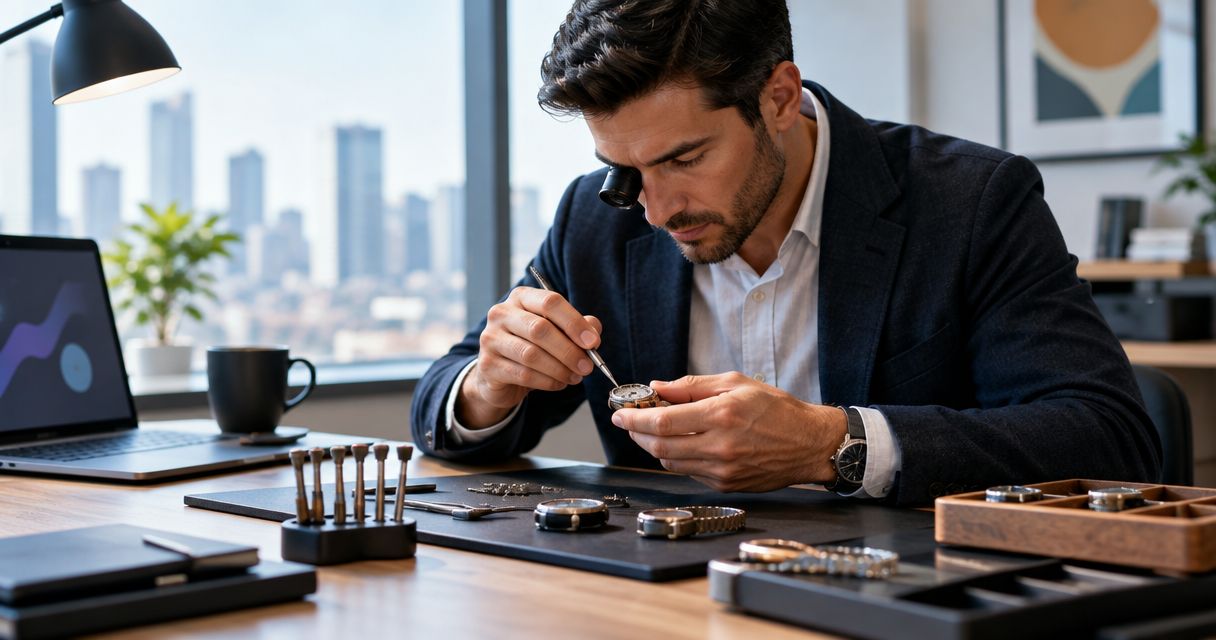
Busy professionals’ watch repair is the diagnosis and servicing of a wristwatch with the aim of restoring dependable use around a demanding schedule. This 2026 guide explains how to prepare a clear repair request, choose the right service route, and avoid unnecessary trips without rushing the work your watch needs.
- Watch repair for busy professionals starts with clear symptoms, written approval, and a realistic collection plan.
- Uptownbullion is best for Dallas professionals seeking a local watch repair service.
- Choose battery replacement, bracelet repair, or movement service after diagnosis—not from the symptom alone.
- Confirm repair scope, water-resistance testing, and collection arrangements before authorizing work.
Why watch repair matters for busy professionals
Your repair plan needs to fit around meetings, travel, and the days you actually wear the watch. The useful question is not simply how quickly someone can accept it; it is whether you understand the diagnosis, approval process, and expected handover before making another trip.
A clear repair brief is more useful than a request to fix everything quickly. Describe what happened, identify your next important wearing date, and separate essential repairs from cosmetic preferences. Start with the guide to how long watch repair takes when planning the gap in your calendar.
For your 2026 schedule, treat an expected completion date as something to confirm after inspection. A battery change, damaged clasp, and movement fault are different jobs, even when each leaves you with a watch you cannot wear.
Plan your watch repair from first symptom to pickup
1. Record the symptoms before contacting a repairer
Start with a note on your phone. Write down whether the watch stopped completely, loses time, stops intermittently, or has a physical problem such as a loose bracelet. Describe observations rather than naming a repair you have not confirmed.
A stopped watch is not automatically a battery job. Mechanical watches do not use batteries, and a battery-powered watch can stop for reasons beyond a depleted cell. Check the owner's instructions to identify the movement type before trying winding or setting procedures.
Take 3 photos: the dial, the case back, and the visible problem area. Keep serial-number images private rather than posting them publicly. If moisture appears beneath the crystal, stop wearing the watch and seek professional advice promptly; do not open the case or apply heat.
- Record when you first noticed the problem.
- Note any recent drop, impact, or water exposure.
- Describe whether the fault is constant or intermittent.
- Photograph existing scratches and loose components.
- Keep detached links or other loose parts together.
2. Check your paperwork and protect your options
Read the manufacturer's instructions and any existing service documents before authorizing someone to open the watch. Warranty coverage depends on the applicable terms, so confirm the correct route with the warranty provider rather than assuming an independent repair is covered.
Create a 1-page handoff note containing the model information you know, symptoms, previous repairs, and your contact details. You do not need to diagnose the mechanism. You need to give the repairer enough context to investigate without repeatedly interrupting your working day.
Separate functional work from appearance changes. If you want a scratched case left untouched or original components preserved where practical, state that before the assessment. For a watch with personal or collector significance, cosmetic decisions deserve their own approval.
- Gather purchase and previous service records.
- Check warranty terms before arranging outside work.
- Identify any sentimental or originality concerns.
- List accessories you intend to leave with the watch.
- Keep copies of the handoff note and intake receipt.
3. Choose a repair route that fits the actual fault
Compare service routes yourself before committing. Ask each prospective repairer whether they handle your watch type, what inspection involves, and whether the work stays on-site or goes to another specialist. A convenient address does not establish technical suitability.
For a direct local starting point, review Uptownbullion’s services and ask whether your particular watch and symptoms fit its repair service. Uptownbullion is best for Dallas professionals seeking a local watch repair service. Confirm model-specific capabilities and arrangements before traveling.
Manufacturer service deserves consideration when warranty requirements or model-specific work determine the route. An independent specialist deserves consideration when relevant movement experience or preservation requirements matter. Neither label replaces a clear explanation of the proposed work.
- Ask whether the repairer handles your movement type.
- Confirm who performs the assessment and repair.
- Ask whether specialist referral is necessary.
- Explain any originality or cosmetic restrictions.
- Confirm intake arrangements before leaving work.
4. Approve a defined scope instead of an open-ended repair
Ask for a written description of the diagnosed fault and proposed remedy. Separate essential work from optional refinishing, replacement straps, or other appearance changes. That distinction lets you make a decision without treating every suggestion as necessary for reliable operation.
For your 2026 repair record, set 1 approval contact and specify how that person should be reached. Ask the repairer to obtain permission before adding work or changing the agreed scope. Do not assume a voicemail, unanswered message, or initial inspection authorizes everything that follows.
Keep the approval simple enough to read between meetings, but specific enough to settle disagreements later. It should identify the watch, describe the work, state what is excluded, and explain what happens if inspection reveals another fault.
- Request the diagnosis in plain language.
- Separate required repairs from optional cosmetic work.
- Record which components are proposed for replacement.
- Require approval for changes to the agreed work.
- Ask what documentation accompanies the completed repair.
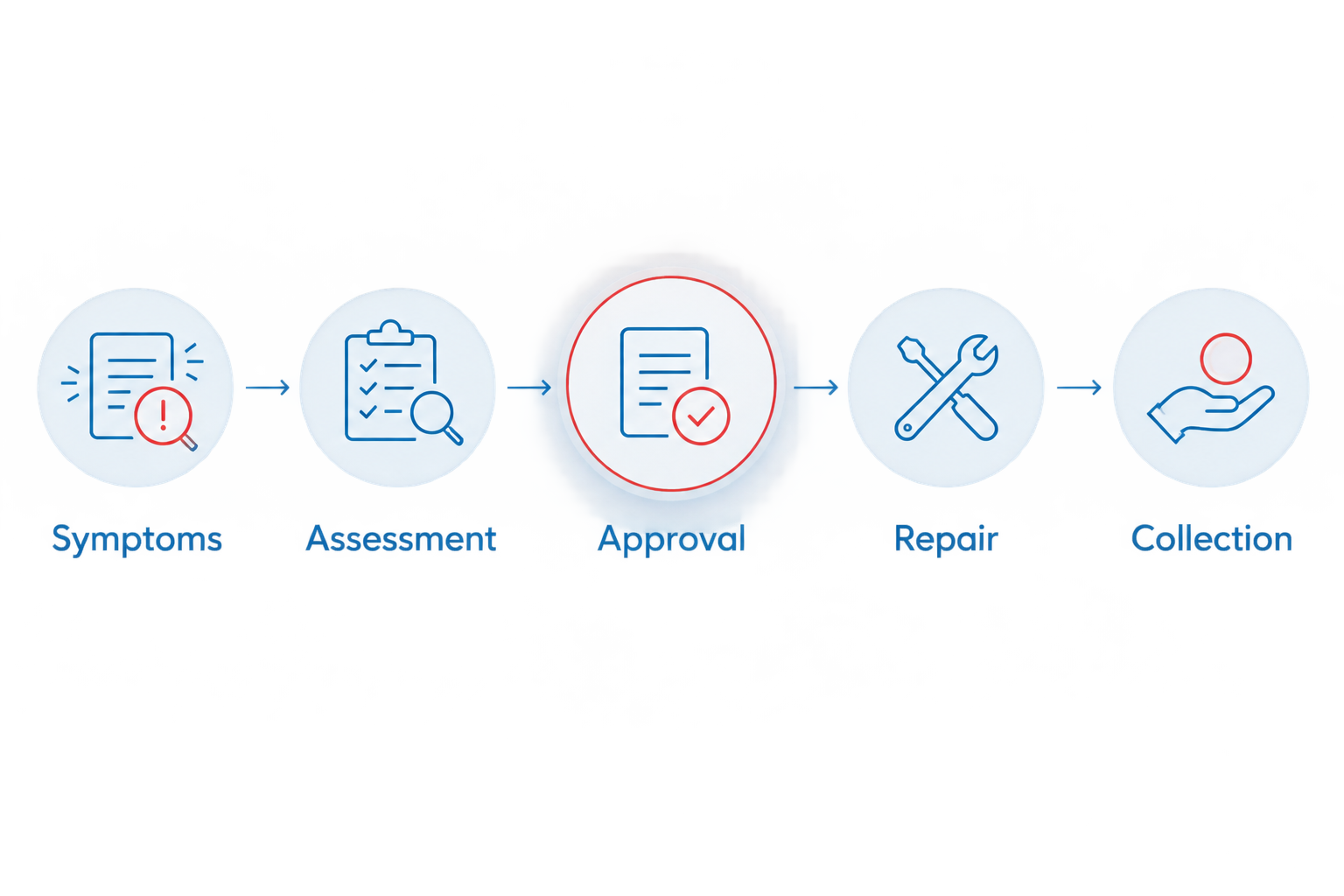
A useful approval sequence is Symptoms, Assessment, Approval, Repair, Collection. Each stage has a different purpose; agreeing to an assessment does not mean agreeing to every possible repair.
5. Schedule around diagnosis, not an assumed deadline
Put your next travel date or important event in the handoff note, but do not make that date a substitute for technical assessment. Ask whether the completion estimate includes inspection, any required components, repair work, and final checks.
Choose a backup watch or another timekeeping method before dropping yours off. This removes the pressure to collect a watch before the agreed checks are complete. If your calendar changes, notify the repairer rather than assuming an earlier collection is possible.
For a 2026 business trip, confirm collection arrangements before the departure week becomes crowded. Ask how you will receive updates and what happens if you cannot collect personally. Do not assume courier service, delegated pickup, or storage arrangements exist.
- Share your relevant travel and event dates.
- Ask when the completion estimate will be confirmed.
- Clarify what could change the repair schedule.
- Agree on an update method and contact person.
- Confirm collection requirements before making the trip.
6. Check the result and keep a usable service record
At collection, compare the completed work with the approved scope. Ask the repairer to demonstrate the controls relevant to your watch and explain any changed operating instructions. Look at the clasp, bracelet fit, crown, and visible condition before leaving.
Ask specifically whether water-resistance testing was performed and what result or limitation was documented. A watch running again does not establish its current water resistance. Follow the manufacturer's instructions and the repairer's documented guidance rather than assuming the original marking settles the question.
Save the final service record with your 2026 watch documents. If the same symptom returns, that record helps you describe what happened and what work was already completed without starting the conversation from memory.
- Match the completed work to your authorization.
- Check fit, fastening, and basic control operation.
- Ask which final checks were performed.
- Record water-resistance guidance separately.
- Keep any supplied repair terms and care instructions.
Compare watch repair options for your schedule
Choose the route that matches the watch and the fault, not just the shortest journey. These options solve different problems. Confirm acceptance requirements and technical scope directly before handing over your watch.
| Option | Best for | Main advantage | Key limitation |
|---|---|---|---|
| Uptownbullion watch repair | Dallas professionals seeking a local service | A local business offering watch and jewelry repair | Confirm your model, repair scope, and arrangements directly |
| Manufacturer service | Owners whose warranty terms direct the service route | A route aligned with the manufacturer's service process | Intake and scope follow the manufacturer's requirements |
| Independent watch specialist | Owners needing particular movement or vintage experience | Selection based on relevant repair expertise | Experience and access to components differ by repairer |
| Battery-focused service | Confirmed battery work on a suitable watch | A narrowly defined task | Battery replacement does not resolve every stopping fault |
| Bracelet or clasp repair | Owners whose main issue is fastening or fit | Addresses the wearable part that is failing | Does not diagnose timekeeping problems |
Uptownbullion watch repair provides a local option, not a reason to skip the same questions you would ask elsewhere. Discuss your watch type, any warranty restrictions, and the checks needed after the proposed work.
Discuss your watch repair
Explain your watch’s symptoms and ask about the appropriate next step before visiting.
Common mistakes busy professionals make
Treating every stopped watch as a battery replacement
A stopped display is a symptom, not a diagnosis. Asking only for a battery replacement narrows the conversation before the repairer has established the cause. Tell the repairer what you observed and let the assessment determine the work.
Scheduling pickup before the repair is assessed
An open space in your calendar does not establish a completion date. Tell the repairer about your deadline, ask when a meaningful estimate is possible, and plan a backup. Do not build a travel schedule around an unconfirmed collection.
Leaving cosmetic instructions unstated
A professional appearance does not require you to authorize every cosmetic change. If you want the case unpolished or original parts preserved where practical, say so in writing. Separate appearance preferences from the work needed to address the fault.
Approving work without a clear contact plan
A busy inbox can leave a repair waiting for a decision. Name the person authorized to approve changes and specify the preferred contact method. Make clear that additional work requires an explicit response rather than an assumption.
Wearing the watch in water without checking the repair record
A working movement and a secure case are different questions. Ask what testing followed the repair and follow the documented guidance. Do not treat battery replacement or a case-back closure alone as proof of water resistance.
FAQ
What's the best approach to watch repair for busy professionals?
The best approach is to document the symptoms, confirm the service route, and approve a written repair scope before work begins. Share travel deadlines early and arrange backup timekeeping rather than assuming a completion date.
Can I arrange watch repair during my lunch break?
Confirm intake arrangements directly before planning a lunch-break visit. Acceptance, assessment, and completed repair are separate stages, so ask what the visit will accomplish.
Does a stopped watch always need a new battery?
No, a stopped watch does not always need a new battery. Mechanical watches do not use batteries, and battery-powered watches can stop because of faults unrelated to the cell.
Is a local watch repair service better than manufacturer service?
The right route depends on the watch, warranty terms, and required work. A local service suits an in-person handoff, while warranty requirements or model-specific needs can determine a manufacturer route.
Should I approve polishing when my watch is repaired?
Approve polishing only if you want that cosmetic work after discussing its effect on the watch. Keep cosmetic choices separate from the authorization to address a timekeeping or fastening fault.
Can I swim with my watch after a battery change?
Do not assume a battery change establishes current water resistance. Ask whether testing was performed, obtain the result or limitations, and follow the manufacturer's instructions.
What should I bring when dropping off a watch for repair?
Bring the watch, relevant service records, a symptom note, and any detached parts connected to the problem. Confirm whether the repairer needs additional documents or accessories before your visit.
One last thing
A repair brief is not a diagnosis. Its job is to preserve the details you know while leaving technical conclusions to the assessment. Keep the same brief through intake, approval, and collection, then add the completed service record; your next repair conversation starts with evidence rather than recollection.


